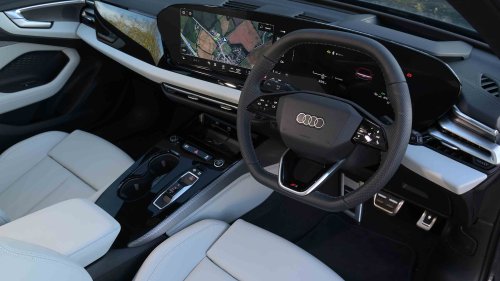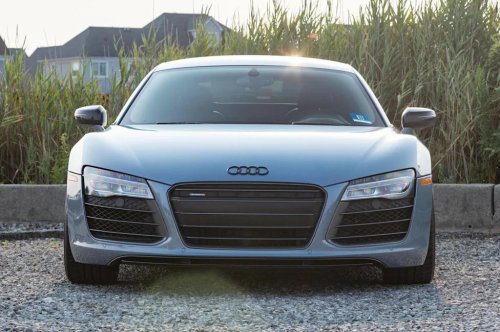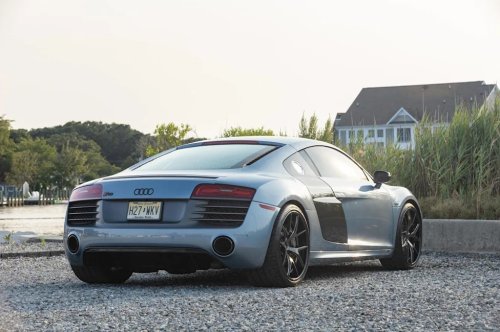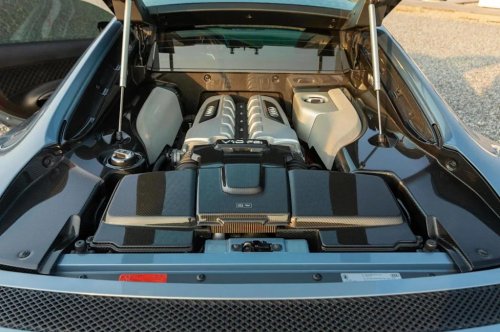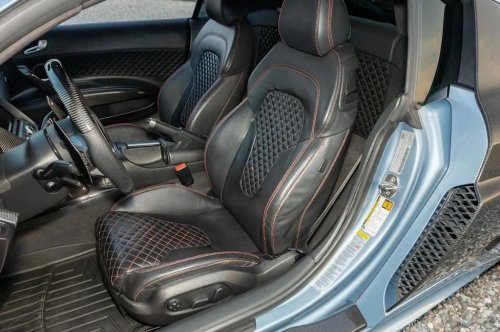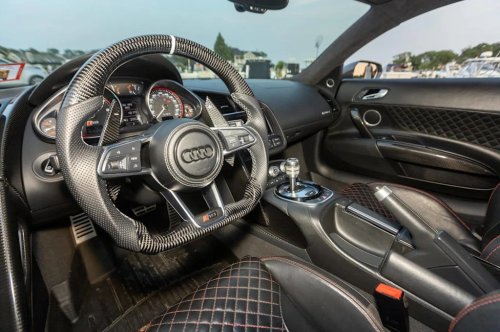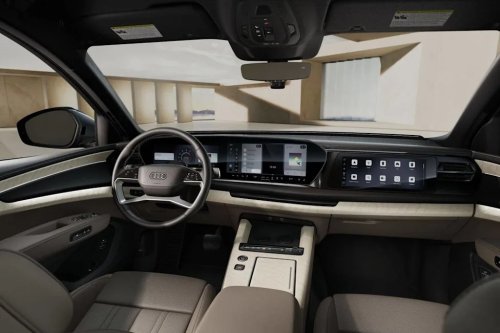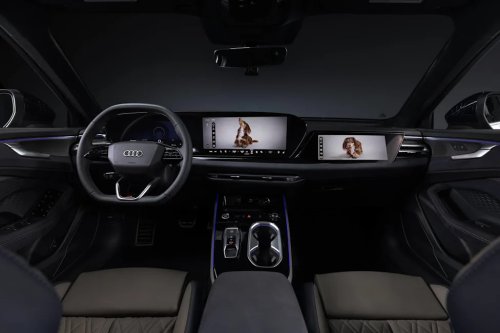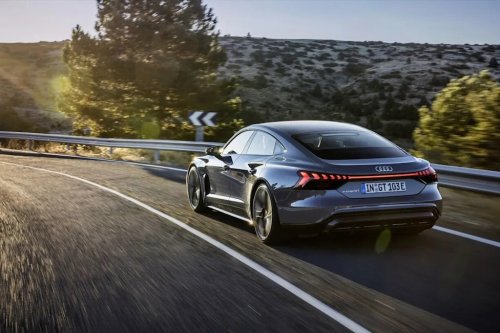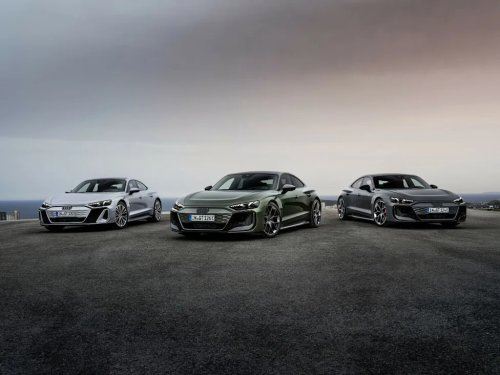
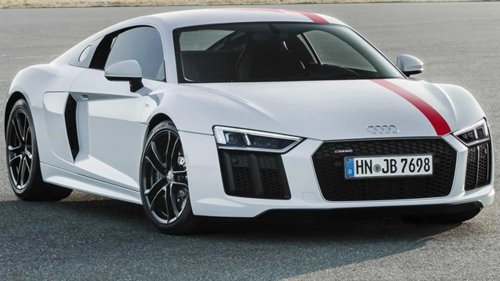
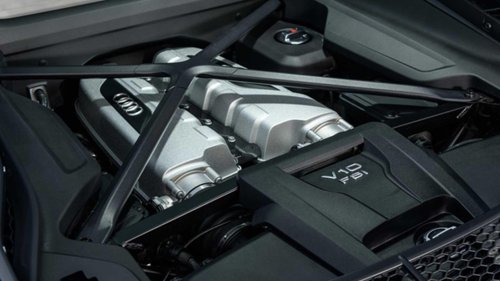
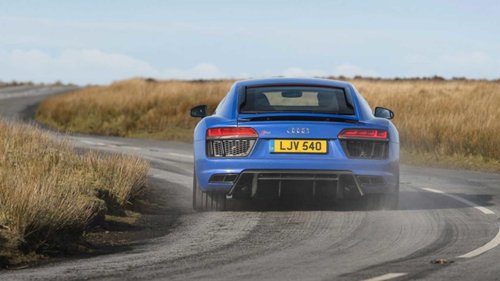
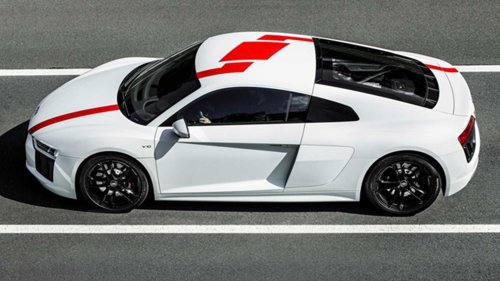
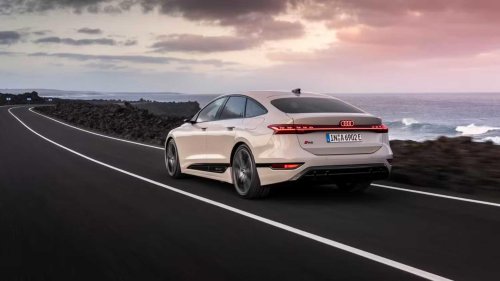



















When it comes to making an impression on the automotive world, most manufacturers have their own signature piece of engineering that sets them apart from the others. Porsche has its legendary flat-six engine, while Subaru has its Boxer powerplant to shout about. Then we come to Audi, which has made waves over the last half-century with its revolutionary quattro all-wheel drive system. AWD was pretty much reserved for off-road vehicles in the late 1970s, but Audi showed the world that it could bring pace and stability to performance cars.Having dominated Group B rallying in the 1980s with its Quattro coupe, Audi had carved out its niche. While it also used a cheaper-to-build front-wheel drive layout for many of its cheaper offerings, the German marque stayed well away from rear-wheel drive. At least until 2018, when it decided to splash some danger upon its V10-powered supercar. Audi Prioritized Its quattro AWD System For Its Performance Road Cars AudiThe quattro AWD setup was so prolific due to how much grip it afforded to the vehicles equipped with the system. The beauty of it was that the engine's power could be channeled between all four wheels thanks to a center differential, which could work out which tires had the most grip. With each wheel receiving the optimal amount of power for the grip level, the car could thus get moving much more effectively, and not throw its power away due to wheel spin. Audi built up its name in the performance world, both on track and on the rally stages with the system, so it built upon this by making its road cars follow the same recipe.Plus, rivals such as BMW and Mercedes-Benz had made using RWD for their performance machines their thing, so Audi felt sticking with AWD not only provided some key advantages, but also ensured they wouldn't be stuck in the shadow of these more established marques. The R8 Became The First RWD Audi AudiNo matter the vehicle, from the practical S4 sedan to the R8 supercar, the quattro AWD system was an ever-present influence. Eventually though, Audi felt that perhaps it should take a stroll to the dark side. The R8 had built up a reputation of being a thrilling but forgiving supercar due to the quattro setup ensuring that no wheel had too much work to deal with. It tasked its engineers with building a special version of the model that sent all its power to the rear wheels only, in an attempt to create a more raw and collectible specimen that could get its owners' pulse racing that little bit faster.The result was called the R8 RWS, and it marked the first Audi-badged production car to arrive with pure RWD. The company itself hadn't built such a machine since the 1930s, though back then it was known as Auto Union. Audi Wanted The R8 RWS To Thrill Its Driver AudiThen Audi CEO Stephen Winkelmann declared that the R8 RWS "is for purists" and for those with "an appreciation for essential driving enjoyment" upon its 2018 release. Rather than go all Lamborghini on the R8 though, Audi kept the changes to its halo car rather subtle. It looked pretty much the same as the standard quattro version, aside from some extra gloss black trim and an optional red stripe that hinted at some of that hidden naughtiness. It was the same underneath too, with the standard 5.2-liter naturally aspirated V10 from the normal car making an appearance. It was left untouched in the R8, so it sent 540 horsepower to the rear wheels via a seven-speed automatic transmission.None of Audi's six-speed manual units could deal with the sheer might of that glorious V10, so the auto was the only option available.To make the R8 RWD, Audi's engineers ditched the front and center differentials, as well as the front driveshafts. Aside from the front wheels being given more respite, the changes also shaved a useful 110 pounds from the car's total weight. Some minor revisions were made to the R8's underpinnings to compensate for these alterations, with the primary changes being a 10% stiffer front anti-roll bar, as well as revised damper settings. Audi also ensured that some drifting fun could be had when you selected the 'Dynamic' driving mode, as this switched off the stability control for a brief time. If you managed to go too far and breach the limit, it would instantly re-engage. It Didn't Feel Massively Different From The Base Car AudiWhile the driftability was a welcome change from the surefooted quattro version, the RWS didn't feel all that different from its sibling for the most part. Its overall chassis setup was very similar to that of the quattro, meaning it had a familiar handling balance that favored slight understeer as opposed to some tail wagging action. Reviewers at the time felt that Audi could have gone a little further in trying to set it apart from its AWD counterpart, in a similar way to how Lamborghini had developed its Huracan STO.Ultimately, the R8 RWS felt like a normal version, but without the extra security if you managed to turn off all the electronic safety nets. Audi arguably missed a trick by not livening up the rest of the car in conjunction with ditching the quattro system, as it could have brought a more powerful variant of the V10, or at least provided a revised exhaust that exerted an angrier growl. Stiffening up the car to make it feel more alive and direct in your hands to make use of the weight saving would also have been welcomed, but alas, it wasn't meant to be. The RWS Is Ultra-Rare AudiIt may have lacked the outright excitement that ditching an AWD system initially promised, but the R8 RWS at least stands out these days as a rare collectible. Just 999 examples of the car were ever constructed, with only 320 of these making the trip across the Atlantic to the United States. Despite its extreme exclusivity, RWS' are surprisingly good value at the moment. Despite having retailed for $139,950 back in 2018, which translates to over $184k in today's money, the used market shows that they're only worth an average of $110,000 today.Expect the machine to rise in value over the coming years though, and not just because it's jolly rare. The fact that it's the first real-wheel drive Audi road car makes it a crucial piece of the brand's history, as that feat will never be repeated. On top of that, the R8 will stand out as a notable heritage model now that its mighty V10 engine has been carted off to retirement. In a world full of electrified or turbocharged engines, anything with a shreiking V10 is likely set to become ultra-desirable on the used market before too long. Audi Has Started To Embrace The RWD Life AudiThe R8 RWS wasn't destined to be a one-off for Audi, either. The manufacturer elected to make the RWD R8 a permanent fixture within its line-up in 2019, and it carried on this approach with some of its electrified models. The Q4 e-tron SUV debuted in 2022 and was available with a single rear-mounted electric motor that powered the rear wheels only, while the A6 e-tron became the first Audi sedan ever to feature RWD when it reached the market in 2024.It doesn't end there either, as the recently-released larger Q6 e-tron luxury crossover SUV can also be had with a rear-driven electric motor. Whether Audi intends to produce any other ICE models that send their go-faster juice to the rear wheels remains to be seen, but for now, the R8 remains the only such example to feature the layout. As a result, it holds a very special place in the heritage of the brand.