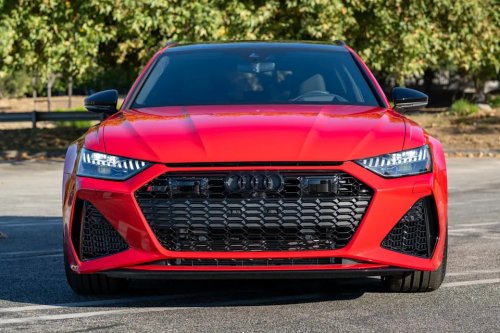
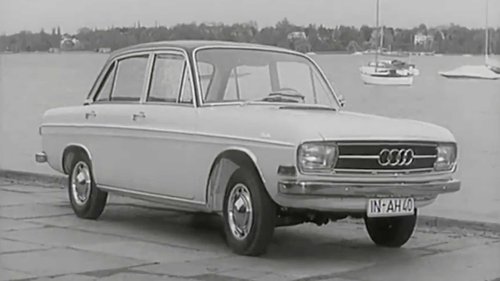
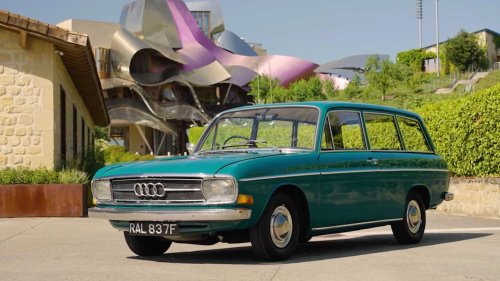
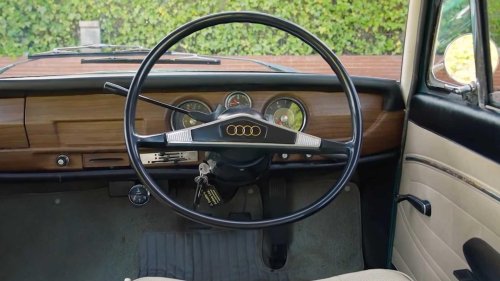
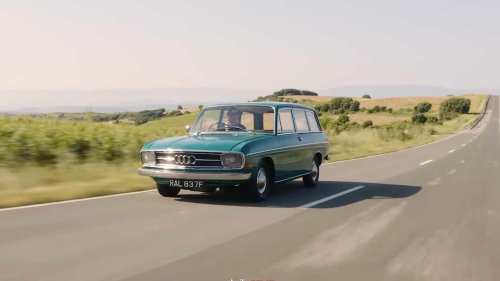
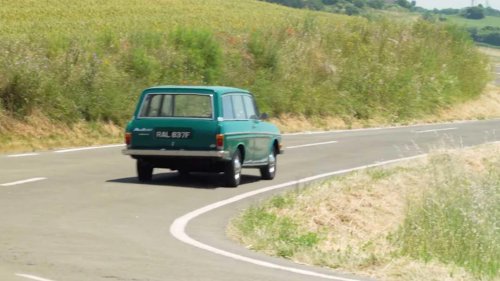
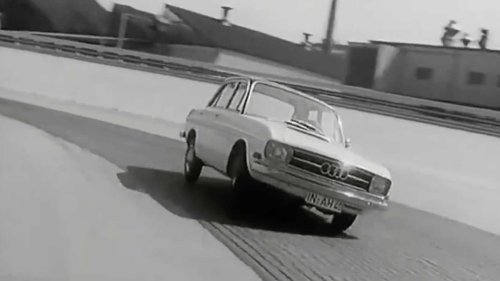
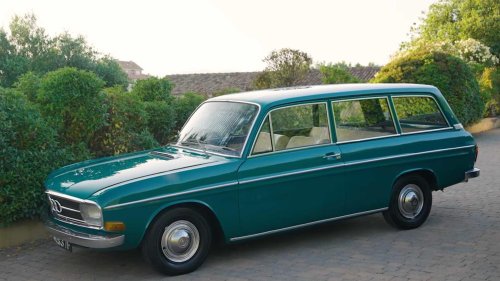



















Back in the day, wagons existed not to be fun, but to deliver practicality for the mundane, like taking your damp dog home after a walk, carrying awkward furniture to the tip, or ferrying the in-laws home after Thanksgiving.They were like the automotive equivalent of a pair of shoes you could wear all year round - dependable, and for any occasion. Sure, nobody would turn around for a second look at one in the parking lot of a BestBuy, and if you’d predicted they’d become cool, desirable, or collectible, you’d have been laughed out of the local car meet.Which makes Audi’s forgotten little experiment from the late 1960s so fascinating. Long before the RS6 Avant became the four-ringed king of fast wagons, Audi quietly built an estate that mixed understated luxury, surprising pace, and engineering sophistication in a car almost nobody remembers today. Even Audi enthusiasts are hardly quick to ever remember it. Which is strange, because in a way, it predicted what Audi would eventually become best known for. Audi Was Already Experimenting With Premium Performance Wagons Before The Segment Existed Audi In the late 1960s, Audi had a bit of an identity crisis, still trying to figure out what it wanted to be after the Auto Union years. Was it to be a family-friendly carmaker, or an ambitious junior luxury brand? This predicament, however, led to some pretty interesting creations, and one of them was a forward-thinking, upmarket wagon with some genuine performance to match. There wasn't much competition in this segment from its German rivals either - Mercedes-Benz wagons were still years away from becoming tire-shredding AMGs, and as for BMW, it offered nothing for the segment at all. When Audi presented it as part of a family of vehicles in the mid-to-late 60s, it was like turning up to a bougie black-tie dinner wearing Converse trainers, twenty years before anyone realized the look kinda worked. One Forgotten Audi Quietly Combined Family-Car Practicality With Sports-Sedan Character Toaster Oven/YouTube That brings us neatly to the Audi Super 90, which was part of Audi’s early F103 family - a range of compact saloons Audi produced in the late 60s. While still trying to navigate what its future was going to look like, Audi was wanting to prove it could become known for building genuinely sophisticated cars. Models with enough polish and finesse, that they could actually go toe-to-toe with the likes of Opel, and even lower-end cars from Mercedes-Benz. The Super 90 was the beginning of this new chapter for Audi, and today, is mainly remembered among enthusiasts as a handsome sedan. However, within the same F103 family, there were variations and body styles that don’t get nearly the same attention, because they are so incredibly rare. The Audi Super 90 Variant Was One Of The Brand’s Earliest Hidden Performance Wagons Daily Revs The Audi Super 90 Variant was a wagon that blended middle-class practicality with the character of a compact sports sedan. While it reflected some genuinely forward-thinking design for its time, it remained a highly uncommon configuration within the wider F103 range as a limited-production estate version. It appeared in select markets, including the U.S., but thanks to being so rare and obscure, is largely forgotten today.Mechanically, it made most mainstream wagons of the late 1960s feel pretty prehistoric in comparison. The “90” in the name referred to how much power it made - 90 horsepower from a 1.8-liter inline-four. While this was hardly impressive, especially compared to a 1960s Dodge Coronet wagon, it was very lightweight, thanks to a unibody chassis that tipped the scales at just over 2,200 pounds. By the late 1960s, this helped make the 90 Variant one of the quicker front-wheel-drive family estates of its time.Its engine was paired to a four-speed manual gearbox, and stopping power came from front disc brakes. Contemporary road tests recorded a top speed of roughly 100 mph, which was brisk for a wagon at the time.Daily Revs/YouTubeTechnically, how it delivered those 90 horses was impressive too. Unlike other wagons of this era, the Super 90 had proper mid-range torque and refined road manners that made it a legit player in the upper-market of premium German cars. Thanks to Audi’s rather messy engineering lineage, the Super 90 also had an advantage over cheaper rivals from Fordand Opel. Its longitudinally mounted engine traced back to a Mercedes-Benz-derived design that was inherited during the Auto Union years, giving the car a level of refinement and smoothness that felt unusually high-end for a humble wagon. Audi Super 90 Variant Specifications It Was Advanced In Ways Most Buyers Never Noticed The engine and lightweight construction weren't the only clever tricks the Super 90 Variant had up its sleeves, and it was ahead of its time in other ways too. In the 60s, front-wheel drive was still uncommon in this segment, especially in Germany, where rear-wheel-drive sedans largely dominated the market.screenshot-2026-05-20-at-174220-1 The benefits of front-wheel drive were often overlooked, but with the Super 90, it was taken full advantage of. The drivetrain layout created a flatter cabin floor, more usable interior space, and strong handling in wet weather conditions. Even the suspension setup followed the same F103 engineering approach, using torsion bars front and rear to keep the ride composed and stable, even at autobahn speeds.Though its primary purpose was to be practical, Audi still managed to avoid it looking like a typical utilitarian wagon too. Instead, subtle chrome detailing typical of the era gave it a slightly more upmarket feel than most utilitarian wagons of the time. The Super 90 Variant Hinted At Audi’s Future Long Before The Avant Arrived Daily Revs/ YouTube When you think of the Super 90 Variant, and begin to appreciate it for what it was, you start to understand why it perhaps foreshadowed the Audi estates we know of today. The restrained, but classy styling. The obsession with refinement. The idea that practicality and understated speed could come together as one. Okay, it was hardly a tire-smoking godfather to the Audi RS4 and RS6 - such a car wasn't part of Audi's identity yet. But it did quietly make a car that could haul luggage and humans around during the week, while sustaining high-speeds on the autobahn without sounding strained. For the other wagons at the time, few, if any, could say the same thing. What A Super Rare Audi Like This Would Be Worth Today Toaster Ovan/ YouTube Trying to put a firm value on a Super 90 Variant is where things get a little blurry, because it exists awkwardly between documented production rarity and almost total absence from the mainstream market.The Super 90 saloon was broadly the more common car, and so has appeared occasionally in classic listings, typically ranging anywhere from roughly €8,000 to €20,000 (about $9,000 to $22,000 US) depending on condition, originality, and restoration quality. But these sales are still very sporadic, which makes pricing one up feel more like a rough, educated guess.For the Variant estate, the problem is even more pronounced. Surviving examples are so scarce, and so inconsistently recorded in the wider classic car market, that any valuation is effectively derived from saloon equivalents rather than direct sales. In reality, if a genuine, well-preserved Super 90 Variant surfaced today, it would almost certainly command a premium - not because of outright performance, but because of its rarity and the novelty of a configuration most enthusiasts don’t even realize existed. The Audi Super 90 Variant Helped Lay The Groundwork For Audi’s Modern Wagon Identity Daily Revs/ YouTube What makes the F103-era Super 90 Variant so significant is not just its rarity, but the direction it quietly pointed Audi towards when it was still deciding what it wanted to be. With the wagon version, Audi was experimenting with a blend of restraint, practicality, and high-speed composure that would later become associated with its Avant lineup.The Super 90 saloon carried the performance brief, but it was the Variant estate that added a layer of everyday usability - two characteristics that were still rarely combined in a single mainstream estate at the time. Seen as a forward-thinking obscurity then, the Super 90 Variant isn’t just a forgotten wagon, but a glimpse of the thinking that would eventually shape Ingolstadt’s estate identity decades later.