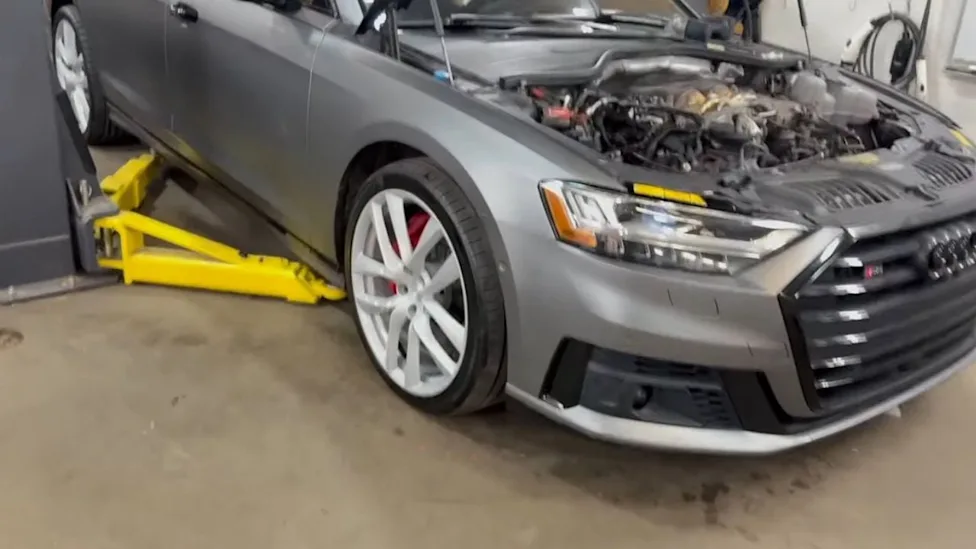



















Image Credit: R!cky W/X.The modern luxury performance car is no longer defined only by horsepower, suspension tuning, or handcrafted interiors. Increasingly, it is defined by layers of interconnected software, high voltage electrical architecture, and proprietary diagnostic systems that can turn a single failed component into what appears to be catastrophic mechanical failure.That reality exploded into public view after a D5-generation Audi S8 was reportedly declared mechanically totaled by an Audi dealership. According to a viral X post, technicians concluded the sedan needed a replacement engine estimated at roughly $35,000.The car eventually landed in the hands of YouTuber Rich Benoit, better known online as RichRebuilds, for just $9,500. Instead of catastrophic engine damage, the actual culprit turned out to be a failed starter generator tied to the vehicle’s 48-volt mild hybrid system.AdvertisementAdvertisementThe incident has people across the automotive industry talking about dealer diagnostics, electronic complexity, and the growing pressure for stronger right-to-repair protections. For many enthusiasts and independent technicians, the story illustrates how modern vehicle architecture can produce misleading failure symptoms that even dealership networks may misinterpret.The Hidden Complexity of the D5 Audi S8Image Credit: R!cky W/X.The D5-generation Audi S8 is one of the most technologically dense sedans Audi has ever produced. Powered by a twin turbocharged 4.0-liter V8, the flagship luxury sedan integrates a 48-volt mild hybrid electrical system designed to improve efficiency, smooth stop-start operation, and support auxiliary systems.Central to that setup is the belt-driven starter generator. Unlike conventional starter motors, the unit functions as both an alternator and an engine starting device while also interacting with energy recuperation systems and onboard electronics.When the component fails, the symptoms can appear severe. Cranking irregularities, communication faults, low voltage conditions, and cascading electronic errors can all create the impression of major drivetrain failure. On highly networked vehicles, one failed module can trigger diagnostic chaos across multiple control units.AdvertisementAdvertisementThat complexity creates a difficult environment even for dealership technicians. Modern premium vehicles contain dozens of interconnected modules communicating over high-speed CAN and Ethernet networks. Fault tracing increasingly depends on proprietary software logic rather than traditional mechanical troubleshooting.Why a Failed Starter Generator Can Mimic Engine FailureThe significance of the failed 48-volt starter generator lies in how integrated the system is with engine operation. On many modern German luxury vehicles, the starter generator is deeply tied to ignition sequencing, battery management, and drivetrain control strategies.If the unit locks up mechanically or fails electronically, the engine may not crank properly or may appear seized. Voltage instability can also corrupt diagnostic readings, leading to misleading fault codes across unrelated systems.For independent specialists familiar with these systems, the symptoms may point toward electrical architecture before internal engine damage. But dealership service departments often operate under flat-rate time structures and standardized diagnostic pathways that favor module replacement over deeper forensic troubleshooting.AdvertisementAdvertisementThat economic reality can produce staggering repair estimates. Replacing an entire engine assembly is sometimes viewed as more predictable from a warranty and labor standpoint than isolating intermittent electrical failures buried within complex hybrid systems.Right-to-Repair Debate Gains Fresh FuelThe story has also fueled criticism surrounding proprietary diagnostics and restricted repair ecosystems. Many modern automakers limit access to factory scan tools, software authorizations, calibration files, and technical service documentation.Independent repair shops frequently face barriers when diagnosing advanced electrical systems, particularly on European luxury vehicles. Critics argue this environment concentrates repair authority inside dealership networks while increasing ownership costs for consumers.This D5 Audi S8 was misdiagnosed by an Audi Dealer service department and declared mechanically totaled because they assumed it had an Engine failure which would cost about $35,000 to replace, So YouTuber RichRebuilds then bought it for $9,500 only to discover that a failed… pic.twitter.com/iIdRJqKTMR— R!cky W. (@wayne_m159) May 13, 2026Supporters of right-to-repair legislation say cases like this demonstrate why broader access to schematics, software tools, and component-level repair information matters. They argue that more open diagnostic ecosystems could reduce unnecessary write-offs and prevent expensive assemblies from being replaced when smaller components fail.AdvertisementAdvertisementFor enthusiasts watching the saga unfold online, the outcome felt almost surreal. A luxury performance sedan allegedly written off as needing a $35,000 engine returned to life because one YouTuber traced the issue to a failed starter generator that cost a fraction of the original estimate.In an era where software increasingly dictates how vehicles are repaired, stories like this expose the widening gap between mechanical failure and diagnostic interpretation.If you want more stories like this, follow Guessing Headlights on Yahoo so you don’t miss what’s coming next.