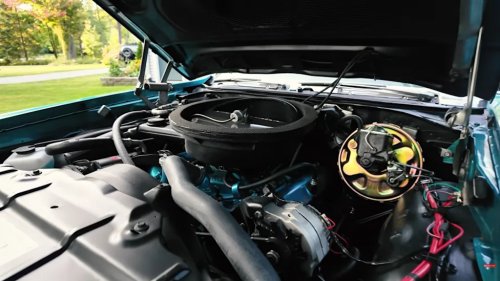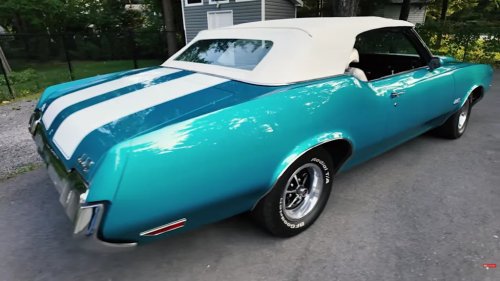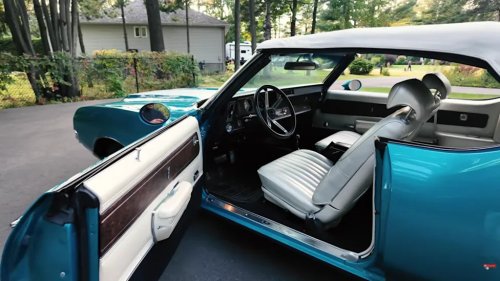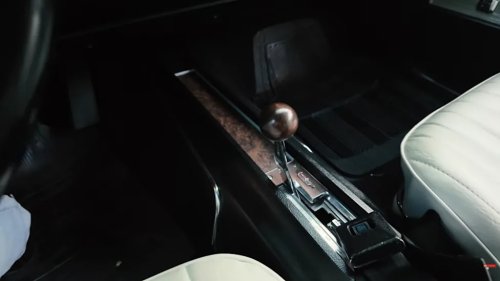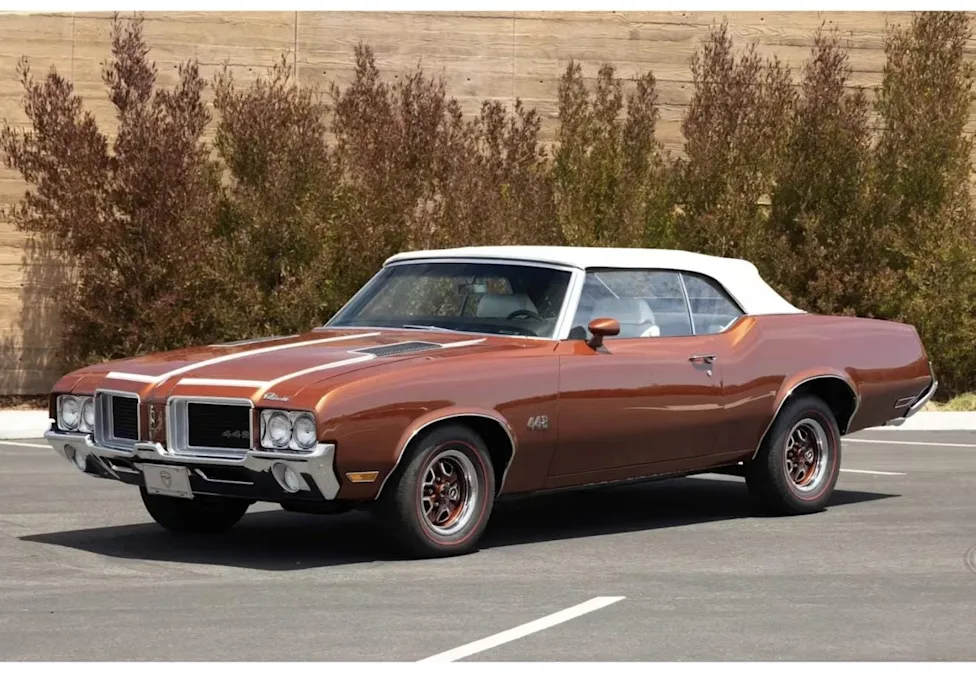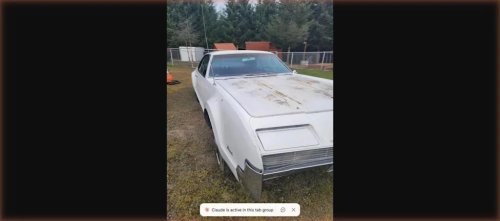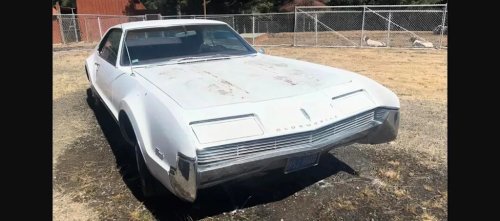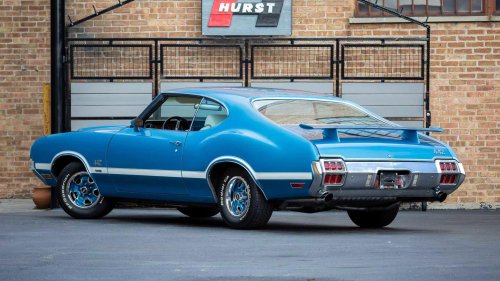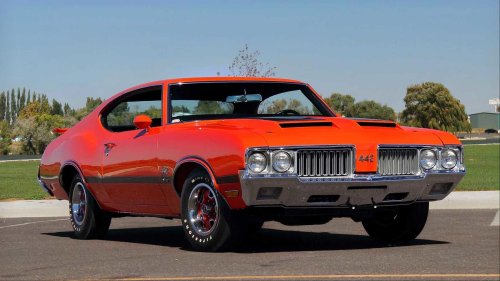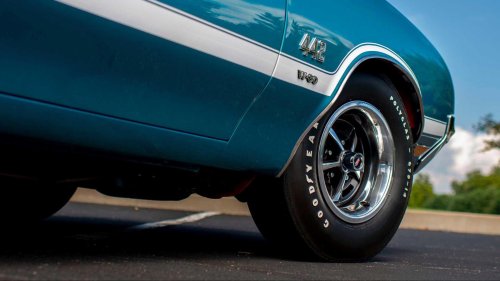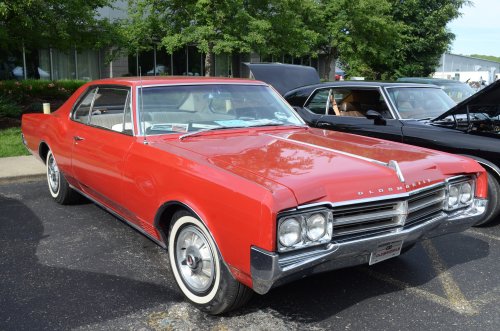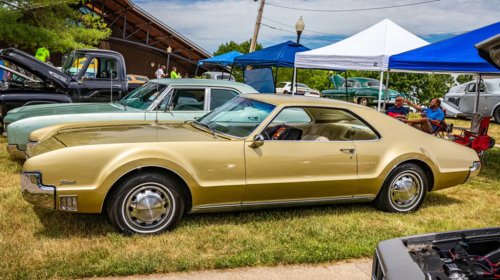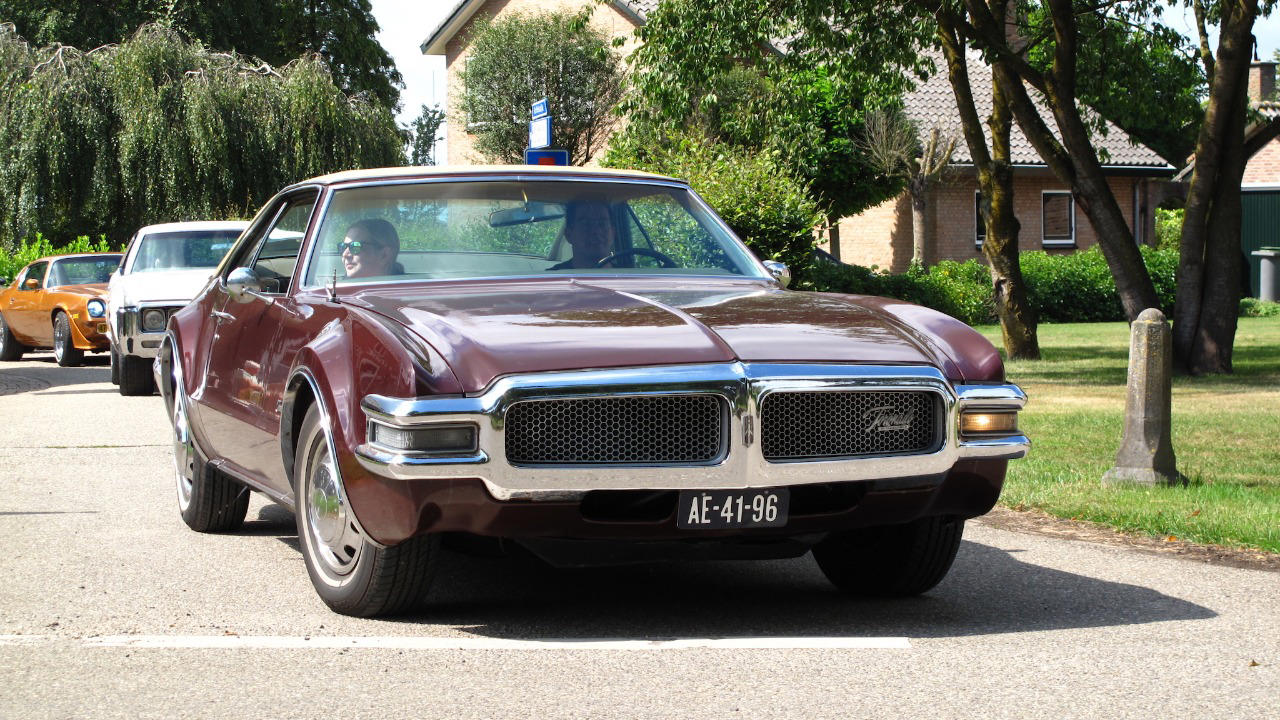



















When the 1968 Oldsmobile Toronado pushed boundaries againThe 1968 Oldsmobile Toronado arrived at a difficult moment, when its own maker seemed unsure how far to keep pushing a radical front wheel drive experiment that had stunned Detroit only two years earlier. Rather than retreat, the car quietly sharpened its engineering, refreshed its styling, and spawned one of the strangest offshoots in American luxury history. In doing so, the Toronado showed that Oldsmobile would keep stretching the limits of what a big American coupe could be, even as the muscle car era peaked around it. From bold idea to second act The original Toronado had already reset expectations by sending V8 power to the front wheels, and by the late 1960s Oldsmobile was wrestling with how to refine that formula without losing its edge. Over the next three years, over the development cycle, the division experimented with gearing, suspension tuning, and power output in search of a more mature grand touring character. By 1968, the Toronado adopted taller gearing to calm engine revs at highway speeds and better match the car’s luxury brief. That decision reflected a broader shift inside Oldsmobile, which was trying to reconcile the Toronado’s technical bravado with expectations for quiet, long distance comfort. Yet the front wheel drive layout remained the defining statement. In an era when most American performance cars still relied on traditional rear drive, the Toronado’s configuration continued to mark it as a technological outlier. Big block power, now more focused Oldsmobile did not abandon performance in this second phase. The company kept leaning on its big block V8, and by the late 1960s it was willing to send a full 455 cubic inch engine to the front wheels. A later account of the program notes that in 1966 Oldsmobile dropped 455 cubic in of V8 into a car and sent all that power to the front wheels, presenting what one source calls the most powerful front drive machine of its time, with 455 cubic inches defining the package. Oldsmobile, too, would continue to push the limits of its front wheel drive experiment by way of a 375 horsepower 455 cubic inch engine, a combination that made the car a credible threat to contemporary muscle machines. That pairing is described as a 375 horsepower 455 cubic inch V8 in later coverage of how Oldsmobile kept refining its front wheel drive design. The 1968 Oldsmobile lineup marked a turning point with fresh styling and impressive engineering, and the Toronado sat at the center of that story. Contemporary descriptions of the range highlight the Cutlass and the futuristic Toronado side by side, with the latter showcasing bold front wheel drive technology as one of the year’s key highlights. Underneath, the TH425 gearbox did not stand still. A later technical summary points out that the TH425 gearbox was recalibrated for quicker shifts and received a higher stall speed torque converter for more urgent acceleration, turning the transmission into a more responsive partner for the big V8. That recalibration, described in a period overview of a 1968 Oldsmobile with 455 V8, framed the TH425 as a TH425 gearbox that was a harbinger of things to come. Later variants would go even further. Promotional material for the early 1970s notes that Toronado ( Oldsmobile Toronado ) now has available a W 34 performance package which increases output to 400 horsepower, underlining how the platform evolved into a 34 coded option that pushed the car into a new performance bracket. That W 34 package, described as raising the Toronado to 400 horsepower, shows how the 1968 car set the stage for even more aggressive specifications. Styling revision and driving character Externally, the 1968 model year signaled that Oldsmobile was ready to refresh the Toronado’s dramatic shape. One retrospective account uses the phrase Renovations Imminent to describe how Ford decided to make the Oldsmobile Toronado new and exciting for 1968, giving it an extensive makeover with details such as revised trim and a black wrinkle finish on key interior elements. That Renovations Imminent framing, which oddly credits Ford while discussing the Oldsmobile Toronado, still captures the sense of change around the car. Despite its 5,000-pound weight, the Toronado handled quite well and could reach the then noteworthy top speed of 135 miles per hou, according to a period description of a 1968 two door example. That account, which emphasizes that Despite its mass the 5,000-pound Toronado could reach 135 miles per hou, reinforces how the chassis and powertrain worked together to deliver genuine speed. Later testers would criticize subsequent Toronado generations for handling and braking that did not fully match their power. One period review of a 1970 model bluntly states that Handling and braking were our biggest disappointments in this car, noting that the front end showed excessive plowing under pressure. That critique of handling and braking suggests that the 1968 car’s balance between speed and control was not fully sustained as the line grew heavier and more powerful. Even so, the Toronado’s front drive layout continued to attract attention from enthusiasts who valued its ability to put big block power down cleanly in poor weather. At a time when front wheel drive was mostly a curiosity in European city cars, Olds took that configuration and bolted it to a 400 horsepower V8, creating what one retrospective calls the only front drive car that could outrun muscle cars in the 1960s. That combination of European style packaging and Olds muscle, described as a 400 horsepower design that was anything but conventional, further contextualizes the Toronado’s place in performance history. AQC Jetway 707 and the outer limits of luxury The most vivid proof that the 1968 platform still inspired boundary pushing thinking came from outside Oldsmobile itself. The 1968 Oldsmobile Toronado AQC Jetway 707 is one of the strangest and most extravagant vehicles ever built, a hand crafted limousine that stretched the Toronado’s front drive hardware into a rolling executive lounge. Described in enthusiast circles as the 1968 Oldsmobile Toronado AQC 707, it took the already unconventional coupe and turned it into a statement about American excess. Created by American Quality Coach, the Jetway conversion used the Toronado’s low, flat floor and compact powertrain layout to carve out an expansive passenger compartment. The fact that it was Created by American coachbuilders who saw potential in a front drive luxury base, and that they labeled it a created American one off, shows how the underlying engineering opened doors that a conventional rear drive coupe could not. The Jetway 707 did more than stretch the Toronado’s wheelbase. It demonstrated that the car’s mechanical layout could support entirely new body concepts, from airport shuttles to high end limousines, without the driveshaft tunnels and rear differentials that limited packaging in rival products. Legacy of a quiet rule breaker Later retrospectives have argued that Oldsmobile’s most powerful vehicle was the 1968 to 1970 Toronado, which could be specified with serious output while still presenting itself as a refined luxury coupe. One such account states that the 1968 Oldsmobile Toronado embodied bold design and cutting edge engineering, standing apart as one of the most innovative Ameri can grand tourers of its time. That description of the Oldsmobile Toronado as a bold Ameri icon captures how the 1968 refresh helped cement its reputation. Contemporary enthusiasts often look back at the 1970 Toronado GT, which with 400 horsepower and 500 lb ft of torque became the most powerful machine in the Oldsmobile lineup for that year. That later Toronado GT, described as carrying 400 horsepower and 500 lb ft, built directly on the engineering and market groundwork that the 1968 version had already laid down. The Toronado went on for the 1966 and 67 seasons with few changes, however, there were changes coming, as one later muscle car focused history notes. That same account explains that a special option code called W 34 would later fold in hotter engine tuning and additional cooling hardware, confirming that The Toronado’s early years, including the Toronado in 67 and its 1968 successor, formed the foundation for that evolution. More from Fast Lane Only Unboxing the WWII Jeep in a Crate 15 rare Chevys collectors are quietly buying 10 underrated V8s still worth hunting down Police notice this before you even roll window down