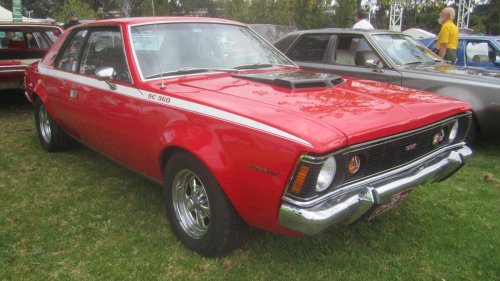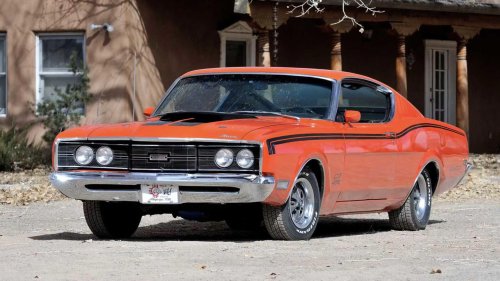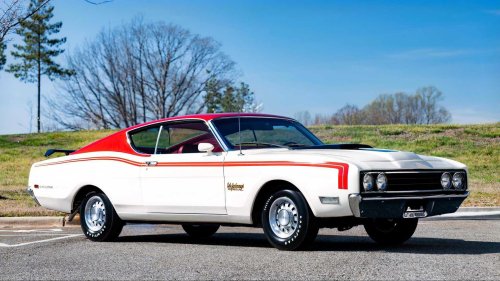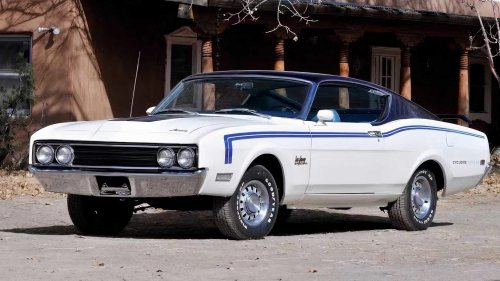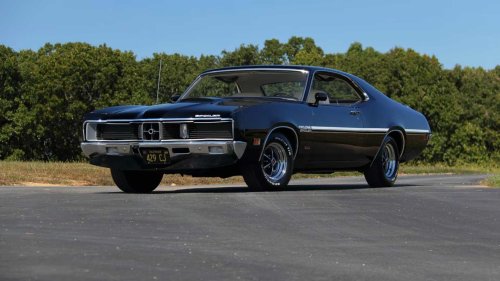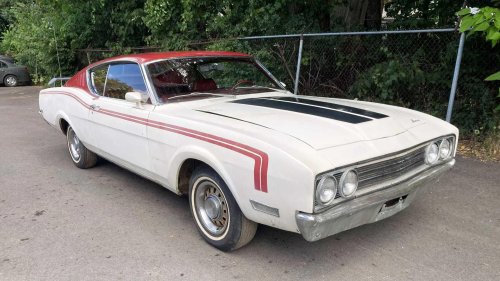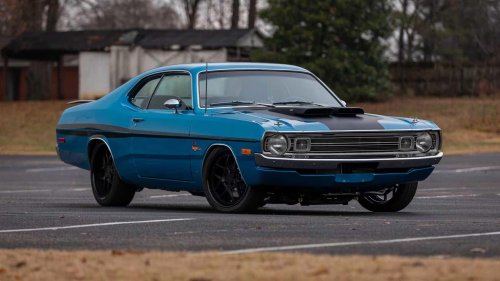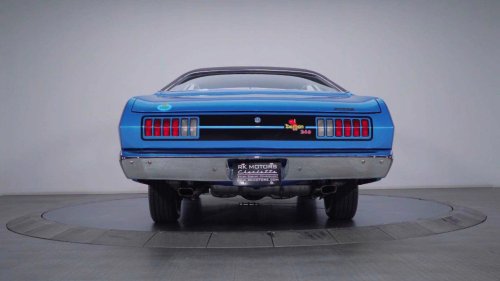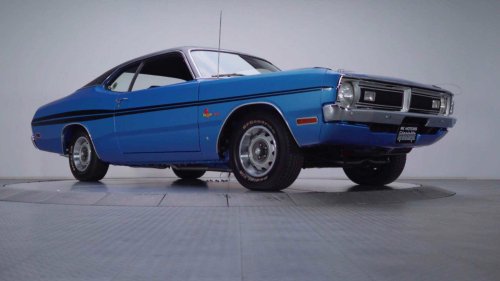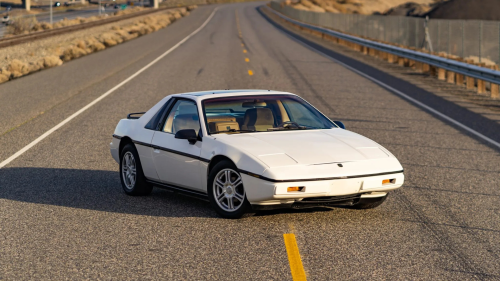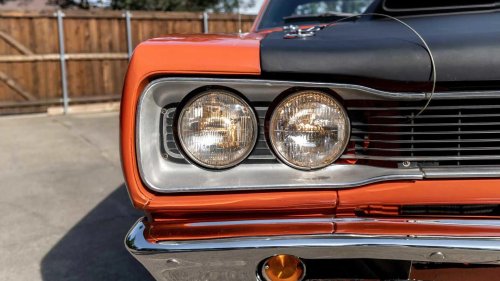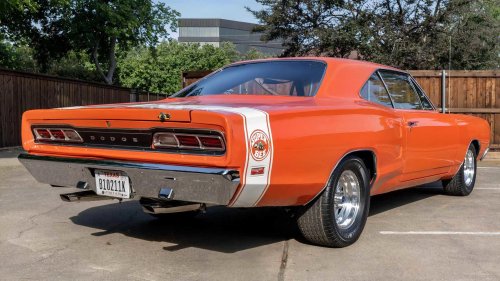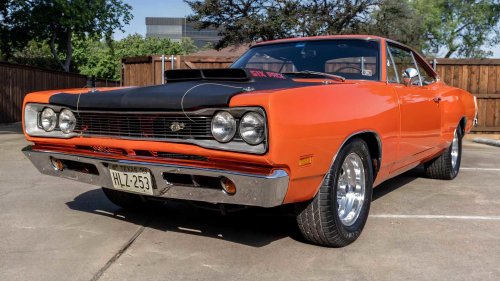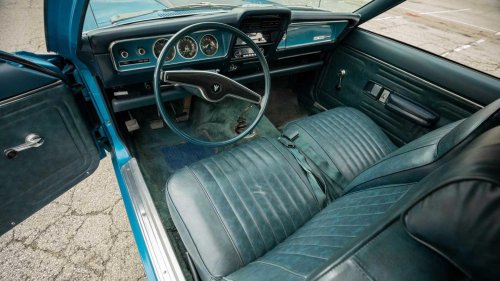
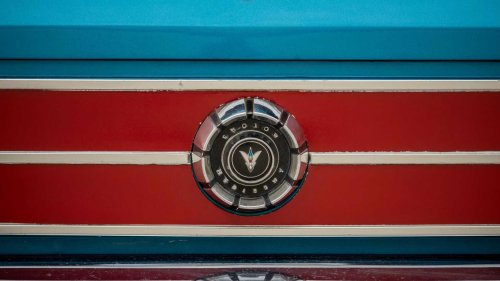
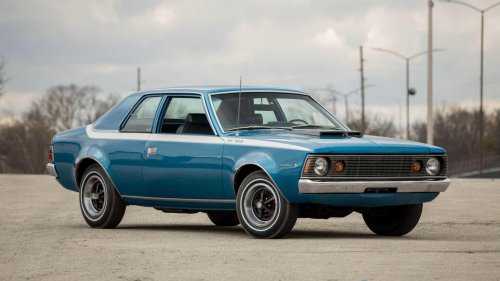
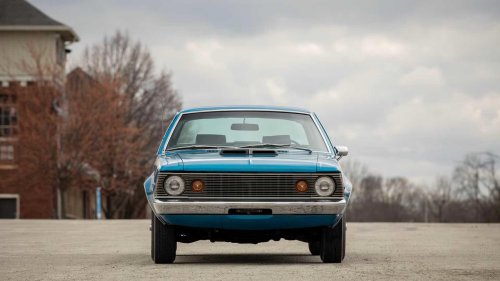
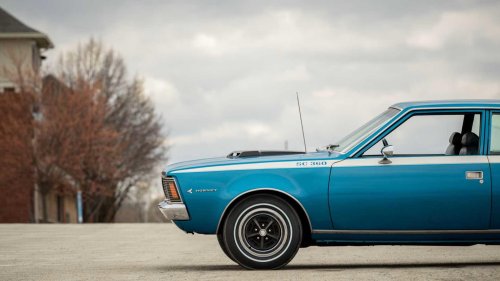
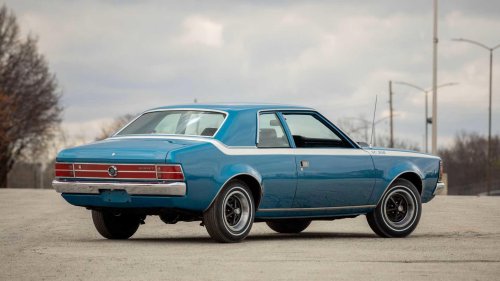
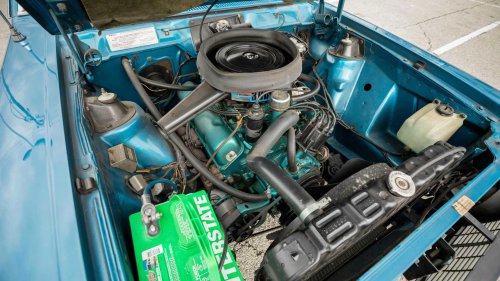



















By the time 1971 rolled around, the muscle car era was visibly bleeding out. Insurance surcharges were suffocating buyers, emissions regulations were strangling engines, and the automakers who had spent five years chasing horsepower headlines were quietly retreating. Most of them, anyway.American Motors Corporation, the perpetual underdog of the American car industry, chose that exact moment to go on offense. With a fraction of the budget available to the Big Three and a platform that nobody took seriously, the company quietly engineered something the compact muscle segment had never quite seen. It did not make the cover of every magazine, it did not sell in huge numbers, and most casual muscle fans could not name it today. That's exactly why the people who do know it wear that knowledge like a badge. The Year Detroit's Compact Wars Turned Vicious Mecum The compact muscle segment arrived almost by accident. Plymouth engineers dropped a 340-cubic-inch V8 into the modest Duster in 1970 and discovered they had a hit. The car was light, it was cheap, and it embarrassed plenty of larger and more expensive machinery at the drag strip. Ford answered with the Maverick Grabber, stuffing a 302 under the hood of its own compact platform. Mercury countered with the Comet GT. Suddenly, every manufacturer with a small, rear-wheel-drive platform was asking the same question: how much engine can we fit in here?The math was simple. Full-size muscle cars had become expensive targets. Insurance companies had started rating vehicles by engine displacement, and a big-block Chevelle or a 440-equipped Road Runner could carry an insurance premium that made ownership genuinely painful for the young buyers who most wanted them. A smaller engine in a lighter car, priced below the radar, was a way around the problem. The segment was crowded fast, and the window for easy wins was already closing by the time anyone fully understood it had opened. A Brand With Something to Prove Mecum American Motors had spent the better part of a decade arguing for economy, practicality, and value. It had watched the muscle car era unfold from the sidelines, making noise with the AMX and the Javelin, but never quite landing a knockout blow against the Big Three in the performance compact class. The company's compact platform was already well-developed and lighter than most of what it competed against. What it needed was an engine worth talking about, a price point that could undercut the competition, and a story that fit the moment. The insurance crisis gave it exactly that narrative hook.The engineering team knew what the platform could handle. They had already proven the compact's bones with performance variants, and the chassis had headroom for something considerably more serious than the standard specification. The challenge was not whether the car could perform. The challenge was whether the public, already nervous about insurance costs and increasingly skeptical of muscle car excess, would respond to a car positioned specifically as the sensible alternative. What they built for 1971 answered that question definitively, even if the buying public barely noticed in time. The AMC Hornet SC/360: 784 Reasons It Matters MecumThe car was the 1971 AMC Hornet SC/360. American Motors produced exactly 784 of them over the course of a single model year, making it rarer than the Hurst SC/Rambler's 1,512 units and rarer still than the Rebel Machine's approximately 2,326 units. That production figure was not by design. AMC had projected sales of four thousand units and had hoped for ten thousand. What it got instead was one of the most precisely documented failures in compact muscle history, and one of the most interesting cars the company ever built.The performance table tells a story that the SC/360's market reception never did. Against the Plymouth Duster 340, the car held its own on paper and gave up very little in practice. Against the Ford Maverick Grabber, it was in a different class entirely. At 3,057 pounds, the Hornet matched the Duster's weight class closely enough that the two cars competed on comparable terms. In period testing, a Go Package automatic car recorded 14.80 seconds at 94.63 mph through the quarter mile, which was competitive with everything else in the segment. The car performed. It just never got the audience it deserved. The 360 V8 That Made AMC a Contender Mecum The standard SC/360 came with a 5.9-liter, 360 V8 breathing through a two-barrel carburetor, rated at 245 horsepower and 365 lb-ft of torque. That was already enough to make the car interesting. The optional Go Package, priced at $199, upgraded to a four-barrel carburetor with functional ram-air induction through a hood scoop, lifting output to 285 hp and 390 lb-ft of torque. A Hurst-shifted four-speed manual was available exclusively with the Go Package, making the highest-specification cars the rarest of an already scarce run. The majority of buyers opted for the Go Package, and four-speed cars are the most sought-after examples on the market today.American Motors marketed the car with a directness that cut against the bombast of the era. The advertisement read: "Introducing a sensible alternative to the money-squeezing, insurance-strangling muscle cars of America." The company understood exactly what moment it was building for and said so in plain language. The 360 V8 had exterior dimensions nearly identical to the 304, which meant it fit the Hornet's engine bay without structural modification. That piece of engineering pragmatism was characteristically AMC: solve the problem with what you have, spend nothing you do not need to spend, and make the result look effortless. One Year Only: Why 1971 Was the Last Chance Mecum The insurance industry's assault on muscle cars was already well underway before the SC/360 reached showrooms. By 1971, companies were flagging high-displacement vehicles for surcharges, and the combination of rising premiums and tightening emissions standards was collapsing demand across the segment. AMC had tried to position the SC/360 below the insurance radar by using the mid-tier 360 V8 rather than the larger 401. It worked to some degree, but not enough. Even at a base price of $2,663, roughly forty dollars below the Duster 340, the car could not overcome the broader headwinds killing the segment it had been built to compete in.American Motors discontinued the SC/360 after 1971 without replacing it. The 360 V8 continued in other Hornets in milder tune, but the performance compact was gone. The timing meant the car existed precisely at the inflection point where the muscle car era ended and the malaise era began, which gives it an unusual historical position. It is not the last of the big-block monsters. It is something more interesting: the last gasp of a smaller, smarter approach to performance that the market briefly embraced and then abandoned entirely. What an AMC Hornet SC/360 Costs Today MecumThe current market range runs from approximately $34,700 at the good end to $64,200 for a four-speed Go Package car in concours condition. The high-water mark in recent auction history is the $55,000 example that sold in May 2022. Restoration projects and modified cars trade considerably lower, with some changing hands below $15,000, but those figures reflect condition rather than any softening in collector appetite for the model. Good survivors are simply scarce. Finding one that has not been modified, stripped, or poorly repainted takes patience.What drives value here is a specific combination of factors. Originality matters more than almost anything else: numbers-matching cars with documented history command a meaningful premium over unverified examples, and the SC/360's one-year production window means there is no later variant to fall back on if key components are missing or wrong. Transmission spec is the single biggest variable; the four-speed Go Package cars sit at the top of the range, and the gap between a well-documented four-speed survivor and an automatic driver-quality car is substantial. Color plays a role too, with rarer factory shades attracting attention from serious collectors. What the market does not have is supply. Owners rarely sell, and when a clean high-specification car does surface, it moves quickly. Why the SC/360 Still Matters to Underdog Collectors Mecum The Hornet SC/360 is a litmus test. It separates the enthusiasts who have done the reading from those who stop at the headline muscle cars. The car existed for one year, in fewer than 800 units, at the precise moment the segment it was designed to compete in collapsed under the weight of external forces AMC had no control over. It was not a failure of the car. It was a failure of timing, and that distinction matters to the kind of collector who values story over status.The AMC underdog narrative is real, and the SC/360 is one of its purest expressions. The company took a platform nobody respected, fitted an engine nobody expected, priced it below the competition, and produced something the automotive press genuinely admired. Publications called it "just a plain gas to drive" and praised its handling in terms usually reserved for more expensive machinery. Then the market moved on, the model was discontinued, and the car spent fifty years being exactly as forgotten as its builder.That's changing. AMC values have moved steadily upward, documented owner communities are active, and the documentary record surrounding the SC/360 is more complete than for many far more famous cars of the same era. The collectors paying attention now are not chasing a rumor. They are recognizing a car that was right all along.Sources: Hagerty, Classic.com, Hot Rod Magazine.