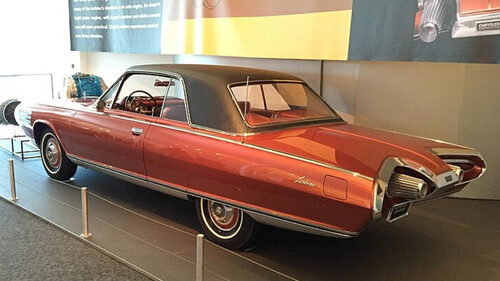
The forgotten era when automakers experimented with turbine enginesYou live in a car era defined by batteries, software updates and quiet efficiency, yet not long ago major manufacturers tried to put jet-style turbine engines under your right foot. For a brief stretch of the mid twentieth century, you could have looked at the family driveway and imagined the same technology that powered airliners humming away in a sleek coupe. That forgotten chapter shows you how far automakers were willing to go when they believed the future would be written in whistling turbines instead of pistons. Tracing that story from early prototypes to the last surviving examples in museums and private garages reveals a pattern that still shapes how you think about innovation today. Turbine cars promised cleaner running, fewer moving parts and an almost science fiction aura, yet they collided with cost, fuel realities and politics long before they reached your local showroom. Understanding why that happened helps you read current tech hype with a sharper eye. The jet-age dream in your driveway You first feel the pull of turbine cars in the optimism of the jet age, when designers covered dashboards in chrome and tailfins mimicked aircraft. General Motors leaned into that mood with its futuristic Firebird concepts, part of what one retrospective describes as The Firebird era. You were not meant to buy those wild show cars, but you were meant to believe that the kind of turbine that pushed jets across the sky might soon move you down the interstate. Across the Atlantic, you would have seen a more practical attempt when, In March, Rover rolled out the JET1 prototype, described as the first car powered with a gas turbine engine shown to the public. That car placed its turbine behind the seats and exhausted through the tail, turning a technical experiment into something you could actually imagine driving. The idea spread so widely that, In the UK, Rover and Jaguar ( CX-75, initially ) had jet-powered prototypes that showed you this was not a one-off curiosity but a serious line of research. Chrysler bets big on the Turbine Car The boldest moment comes when you step into the world of Chrysler and its copper-colored Turbine Car. In a bold venture, Carrozzeria Ghia built the bodies for fifty-five experimental Chryslers fitted with gas turbine engines, each one a rolling test bed that looked ready to taxi onto a runway. The Chrysler Turbine Car was a revolutionary experiment that put jet-engine technology into a car for the real world, and it was Equipped with a jet inspired A-831 turbine that could run on everything from gasoline to exotic fuels. To understand how seriously you would have been courted as a driver, you can look at the consumer test program. They built just 55 of them and handed them to regular families across America for three month test drives, a detail echoed when you see that Chrysler built 55 cars powered by jet engines and handed them to regular families across America for three month terms. The deal was simple: they clocked up lots of miles over three months and in return they made detailed notes on every aspect of the car under its gas turbine programme, as described in a look back at Cars That Time. Of the 55, a subset of 47 went into what you would recognise as a structured Consumer Test Program Turbine Cars of, and TIL Chrysler’s 47 Consumer Test Program Turbine Cars of 1963 reportedly burned through at least one engine each, a reminder that you were participating in a live engineering trial, not a finished product. Living with a turbine under your right foot If you picture yourself behind the wheel, the experience would have felt unlike any piston sedan you know. Instead of a lumpy idle and gear changes, you would have heard a smooth whine as the turbine spooled up, then a continuous surge of power. Turbines as used in jet aircraft were run mostly at wide open throttle, and cars were run normally at half throttle or less, which meant engineers like Williams had to rethink how to make a turbine respond to the stop start rhythm of city traffic, as explained in a technical look at Turbines. You would have noticed the lag between pressing the pedal and feeling the thrust, a quirk that made the cars feel like small aircraft more than muscle machines. At the same time, you would have been part of a cultural moment that treated these cars as rolling celebrities. The Chrysler Turbine Car became a huge attention grabber at events, and you can still watch it glide through traffic in enthusiast footage, from a modern restoration by Williams, where Greg Williams talks about his father Sam as the genius behind the original turbine project, to the 1963 Chrysler Turbine: Ultimate Edition segment from Jay Leno’s Garage. Browse period-style catalog images or a modern product listing of scale models and you see how much the look and sound of these cars still capture your imagination even if you never hear one in person. Why the turbine age stalled For all that excitement, you would have run straight into the reasons turbine cars never made it to your local dealer. Gas turbines like the A-831 thrived at steady high speeds, which made them attractive for aircraft and heavy trucks, but your daily driving involved cold starts, idling at lights and constant throttle changes. A deep dive into turbine powered big rigs recounts how Ford and Chevrolet, in their Turbine Semi Saga, explored similar technology for long haul trucks, only to find that a practical turbine powered passenger car proved elusive, and that even a showcase rig like Big Red completely vanished from the road, as detailed in an account of Ford and Chevrolet. You would have faced high production costs, complex materials and fuel economy that struggled once emissions rules tightened. There was also the simple fact that you, as a buyer, had already been trained to love instant response and low sticker prices. Even though Ever since the earliest days of the automobile, manufacturers have chased alternative power sources, from steam to electricity, a detailed history of the Chrysler Turbine Car notes that this experiment still had to compete with cheap, well understood V8s. When you add in the reality that only 55 Turbine Cars were ever built and just a handful survive, as highlighted in modern engineering retrospectives that point out how few examples remain compared with the hype they generated, you see how quickly a bright future can fade once it collides with the economics of mass production. What you carry forward from a lost experiment Even if you never see a turbine car on the street, the story shapes how you think about every new powertrain pitched as the next big thing. When you watch a short film that tells you the 1960s were charged with a sense of possibility, with the space race heating up and jet travel reshaping how you moved around the world, you can place turbine cars alongside rockets and early satellites as part of the same impulse, captured in a modern Jet Powered Car recap. You understand that you are always being asked to buy not just a machine but a vision of the future, whether that is a whistling turbine or a silent electric motor. More from Fast Lane Only Unboxing the WWII Jeep in a Crate 15 rare Chevys collectors are quietly buying 10 underrated V8s still worth hunting down Police notice this before you even roll window down