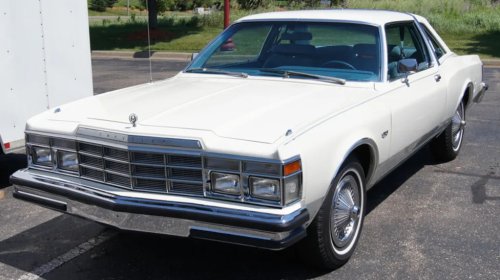
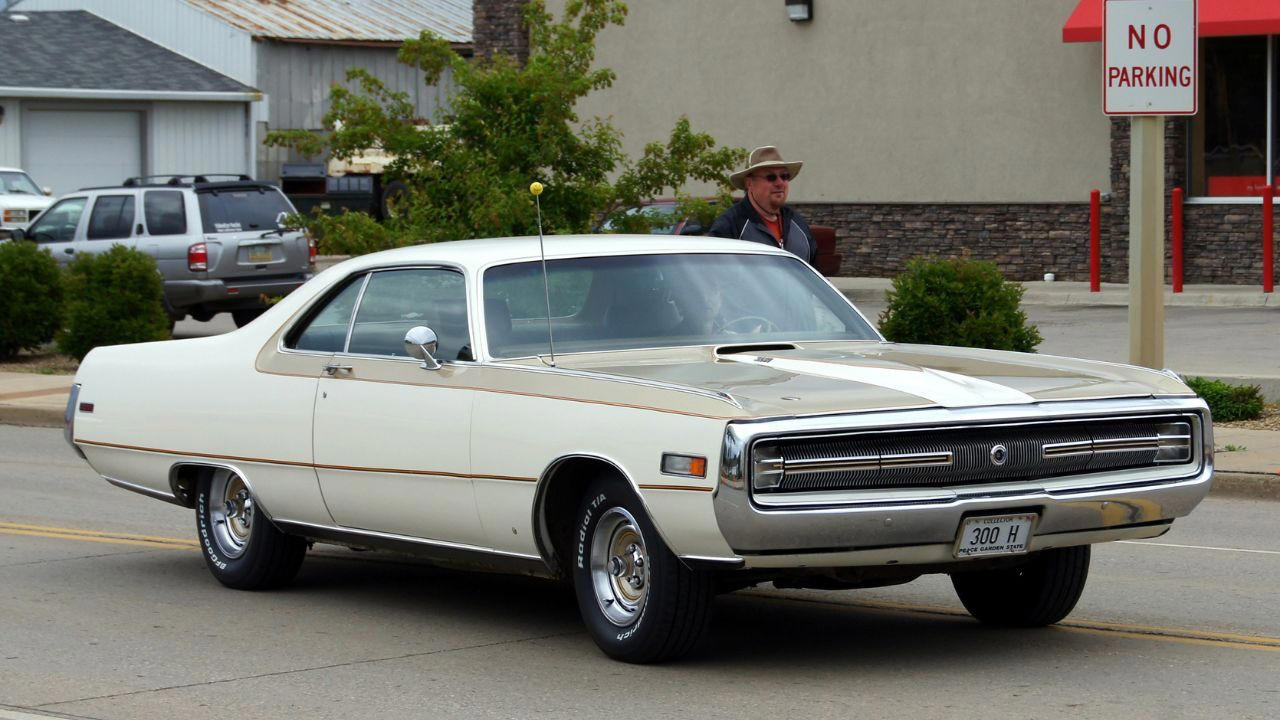
Chrysler experimented with the 300 Hurst and it didn’t last longThe 1970 Chrysler 300 Hurst was meant to prove that a full-size luxury coupe could still throw a punch in the muscle car era. Instead, it became a brief, intriguing cul-de-sac in Chrysler history, a one-year experiment that never turned into a lasting line. Today, it survives as a cult favorite that shows how quickly the market shifted away from big, brash performance coupes. The brief return of Chrysler’s Letter Series swagger By 1970, Chrysler wanted to recapture some of the aura of its famed Letter Series performance cars. The 300 Hurst, often called the 300H, arrived as a limited-production halo model that revived the Letter Series name for a new generation of buyers. Unlike the earlier, more understated 300s, this one leaned into showmanship, conceived as a collaboration between Chrysler and Hurst Performance to create a high-profile luxury muscle flagship. The partnership was more than a marketing slogan. Chrysler built the basic cars, then Hurst added its signature cosmetic and hardware touches, from the fiberglass body panels to the distinctive shifter. Together they produced a car that tried to sit at the intersection of country club respectability and drag strip attitude, an approach that would prove both its greatest selling point and its biggest problem. Big body, bigger attitude The 300 Hurst was anything but subtle in size. One detailed description notes that the massive coupe stretched about 224 inches from nose to tail, rode on a 124-inch wheelbase, and tipped the scales at nearly 4,300 pounds. In footprint, it was closer to a formal luxury coupe than a typical late-sixties muscle car, which made its performance ambitions even more audacious. Styling pushed that audacity further. The car wore Hurst’s trademark white and gold paint scheme, a fiberglass hood with a power bulge and scoop, and a unique rear deck treatment that visually stretched the trunk and integrated a spoiler. Period observers later grouped it with other last-gasp big coupes like the Mercury Marauder X-100 and the final Buick Wildcats, cars that tried to keep the full-size performance idea alive just as the market was pivoting to smaller platforms. The 300 Hurst looked like a high-flying fuselage coupe that had wandered into the muscle car conversation almost by accident. Under the skin, serious hardware If the styling was theatrical, the mechanical package was straightforward and serious. Chrysler equipped the car with a 440 cubic inch big-block, offered in high-output form. One enthusiast description of the forgotten C-body performance cars cites a 440 M Magnum as the heart of the 1970 Chrysler 300 Hurst, backed by a heavy-duty automatic. Another period-style review of the 300H concept refers to a 440 TNT engine and a Hurst ratchet shifter as core to the original specification. Whatever the exact tune, the idea was clear. Chrysler wanted a torquey, highway-devouring drivetrain that could move more than two tons of sheetmetal with authority. Contemporary enthusiasts have described the 300 Hurst as “over 2 tons of fun,” a car that could cruise at high speed in comfort while still delivering the kind of straight-line thrust buyers expected from a serious big-block. It was less a nimble street brawler than a luxury express that happened to wear muscle car war paint. Inside, a gentleman’s muscle car The interior aligned with that positioning. Surviving examples show plush seating, power accessories, and the kind of appointments expected from Chrysler’s upper-tier models. A detailed feature on a survivor car, sometimes called the Gentleman’s 300 Hurst, highlights how its long-term owner trusted it as a reliable daily driver for decades. That kind of use speaks to the car’s dual mission. It was not a stripped-out drag special, but a comfortable, confident cruiser that happened to pack serious displacement under the hood. Hurst’s influence showed up in the details. The shifter, badging, and color scheme all tied the car to a brand that performance fans already associated with competition hardware. For buyers who wanted to arrive at the golf club in something more interesting than a standard luxury coupe, this combination of comfort and attitude had real appeal. Rarity by design and by outcome From the start, the 300 Hurst was never intended to be a mass-market car. Production was limited, and surviving documentation points to a very small run. One enthusiast record notes a specific 1970 Chrysler 300 described as “1 of 485 produced in 1970,” with a comment thread that includes “David Herbst and 362 others” and reactions from names like “Barry Teahan” and “Surpri.” Another summary of the model’s history states that Chrysler only built 485 Hurst Edition 300s in that single model year. These figures align with descriptions that frame the car as a rare, limited-edition high-performance luxury muscle machine. A separate overview of the 300 Hurst calls it a one-year-only affair for Chrysler, built in small numbers and positioned as a special run rather than the start of a new mainstream series. Some enthusiasts round that production to “approx 500 made,” but the more specific 485 figure appears repeatedly across collector circles. Dealers who did not know what they had For any Halo car, the showroom experience matters. In the case of the 300 Hurst, that is where the experiment started to wobble. One detailed account of the launch notes that when the 1970 Chrysler 300 Hurst Edition arrived at dealerships, most salesmen had what they were looking at. Chrysler built it and Hurst finished it, but neither side seems to have fully prepared the dealer network to explain why this big, white and gold coupe justified its premium positioning. That confusion mattered. Muscle car shoppers of the period were often drawn to more obvious choices, from E-body Mopars to mid-size Chevelles and GTOs. Luxury buyers, meanwhile, might have been puzzled by the spoilers, stripes, and Hurst branding on what was otherwise a plush Chrysler. Without clear messaging, the 300 Hurst risked falling between categories, admired by a small group of enthusiasts but misunderstood by the broader market. Competing in a shrinking niche The 300 Hurst did not exist in a vacuum. It entered a segment already under pressure, where full-size performance coupes were fighting for relevance. As one retrospective points out, cars like the Mercury Marauder X-100 and the last of the Buick Wildcats were still playing in this disappearing league as late as 1970, but the handwriting was on the wall. Insurance costs were climbing, emissions rules were tightening, and buyers were gravitating toward smaller, lighter muscle cars that delivered similar thrills with less bulk. A later assessment of Chrysler’s least-known muscle offerings notes that this shift in the market was eventually disrupted by changing regulations, rising premiums, and new priorities, which turned the 300 Hurst into an interesting yet overlooked luxury performance. The car arrived just as the performance boom that had defined the late sixties was about to hit a wall. Why the 300 Hurst did not turn into a dynasty Given its specification and pedigree, it might seem surprising that Chrysler did not follow the 300 Hurst with a series of similar models. The reasons appear to be a mix of timing, positioning, and economics. The car’s one-year-only status is highlighted in multiple sources that describe the 1970 Chrysler 300H as a rare revival of the Letter Series that never continued beyond that single season. At the most basic level, the market for big, thirsty coupes was shrinking. The 300 Hurst’s nearly 4,300-pound curb weight, combined with a large-displacement 440, made it vulnerable to the fuel and insurance concerns that were already starting to shape buyer behavior. Its identity also sat in a gray area. It was not as overtly sporty as a smaller muscle car, yet more aggressive and specialized than a standard luxury Chrysler. That ambiguity likely limited its sales potential. The partnership model added further complexity. Chrysler built the cars, then Hurst finished them, which introduced additional cost and logistical steps. Without clear evidence that the 300 Hurst could become a profitable volume program, the business case for repeating or expanding the experiment would have been hard to justify in the early seventies climate. One-off twists and collector fascination The story of the 300 Hurst did not end with the factory production run. Enthusiasts have documented at least one unique convertible, a car that takes the already rare Hurst package and removes the roof entirely. A detailed feature on that droptop describes how there was a time when Chrysler decided to make Thunder Wear a three-piece suit, and the one-off 300 Hurst convertible pushes that metaphor to an extreme, making even Hemi Cuda convertibles look almost ordinary by comparison. Survivor hardtops also attract attention. A carefully preserved example has been described as a time capsule, the 1970 Chrysler 300H Hurst Gold, with coverage that emphasizes how the car remained largely untouched and serves as a reference point for how these cars left the factory. Another listing of a tired but complete example highlights how even a 300H that “requires total restoration” still commands interest because of its rarity and the appeal of its 440 cubic inch engine, framed again as a revival of Chrysler’s Letter Series heritage. From showroom curiosity to undervalued classic Despite its rarity, the 300 Hurst has long lived in the shadow of more famous muscle cars. One enthusiast summary observes that Chrysler only built 485 Hurst Edition 300s in 1970, then notes that you might expect such scarcity to make them among the most expensive muscle cars, yet they remain relatively attainable compared with high-profile models from the same era. That disconnect reflects how collector markets often reward name recognition and racing pedigree more than production numbers alone. Valuation tools and auction listings back up the idea that the 300 Hurst sits in a niche. Specialist guides describe it as a rare, one-year-only model, while auction catalogs for cars like a documented 1970 Chrysler 300H outline the car’s specifications and history for bidders who may never have seen one in person. Coverage of a survivor car that crossed the block through a major auction house underlines how the model has gradually gained recognition among enthusiasts who appreciate its blend of comfort, power, and scarcity. How enthusiasts keep the story alive Today, much of what is known about the 300 Hurst comes from owners, restorers, and dedicated communities. A detailed video presentation by Tom from Rocket Restorations walks through the history of the 1970 Chrysler 300 Hurst, referring to it as a tale of two 300s and explaining what makes the Hurst package distinct. Another enthusiast video titled “Over 2 Tons Of Fun” frames the car as the ultimate luxury muscle car and describes it as a joint venture of Chrysler and Hurst Performance, INC. More from Fast Lane Only Unboxing the WWII Jeep in a Crate 15 rare Chevys collectors are quietly buying 10 underrated V8s still worth hunting down Police notice this before you even roll window down


















 +58 others