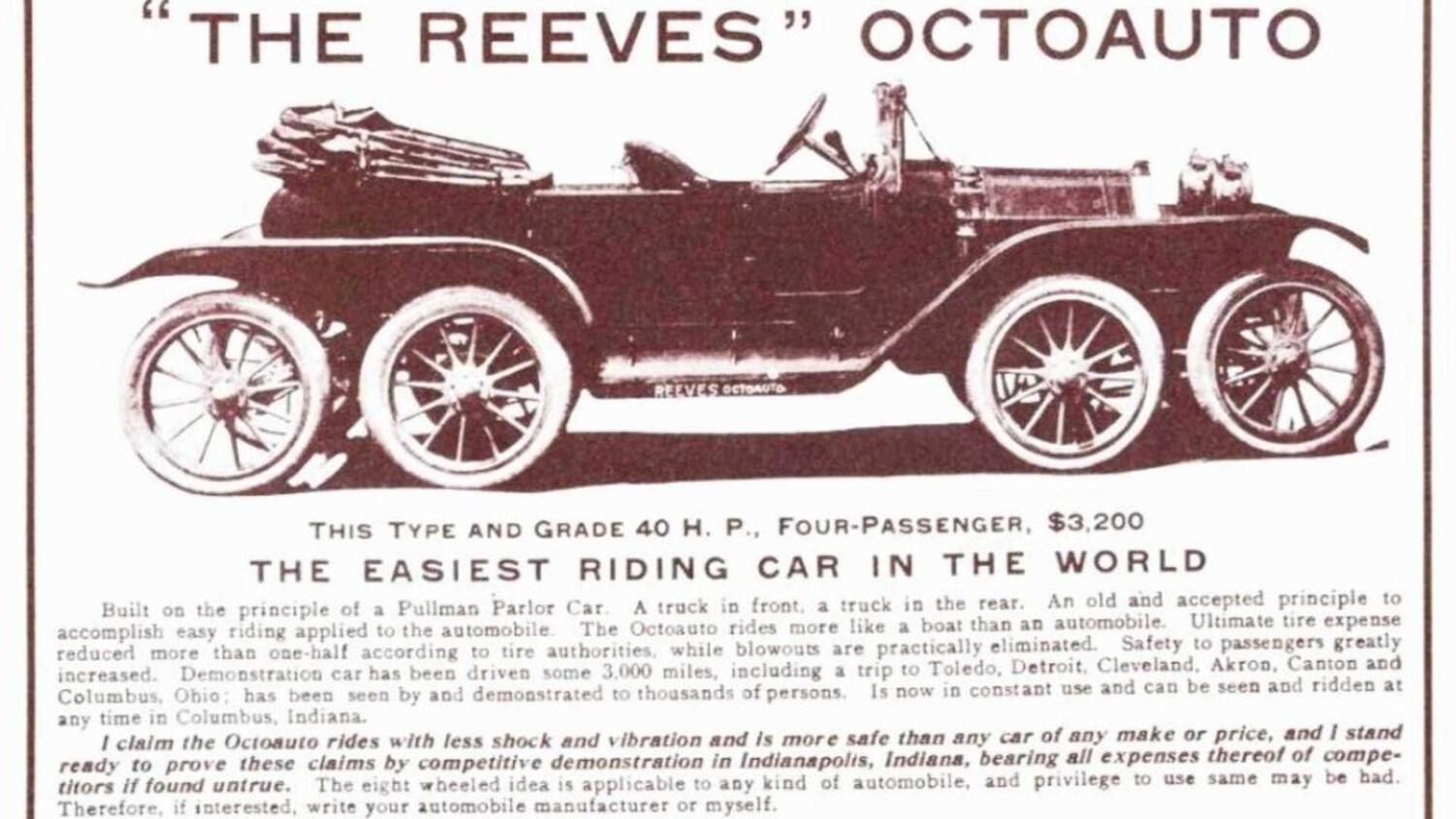
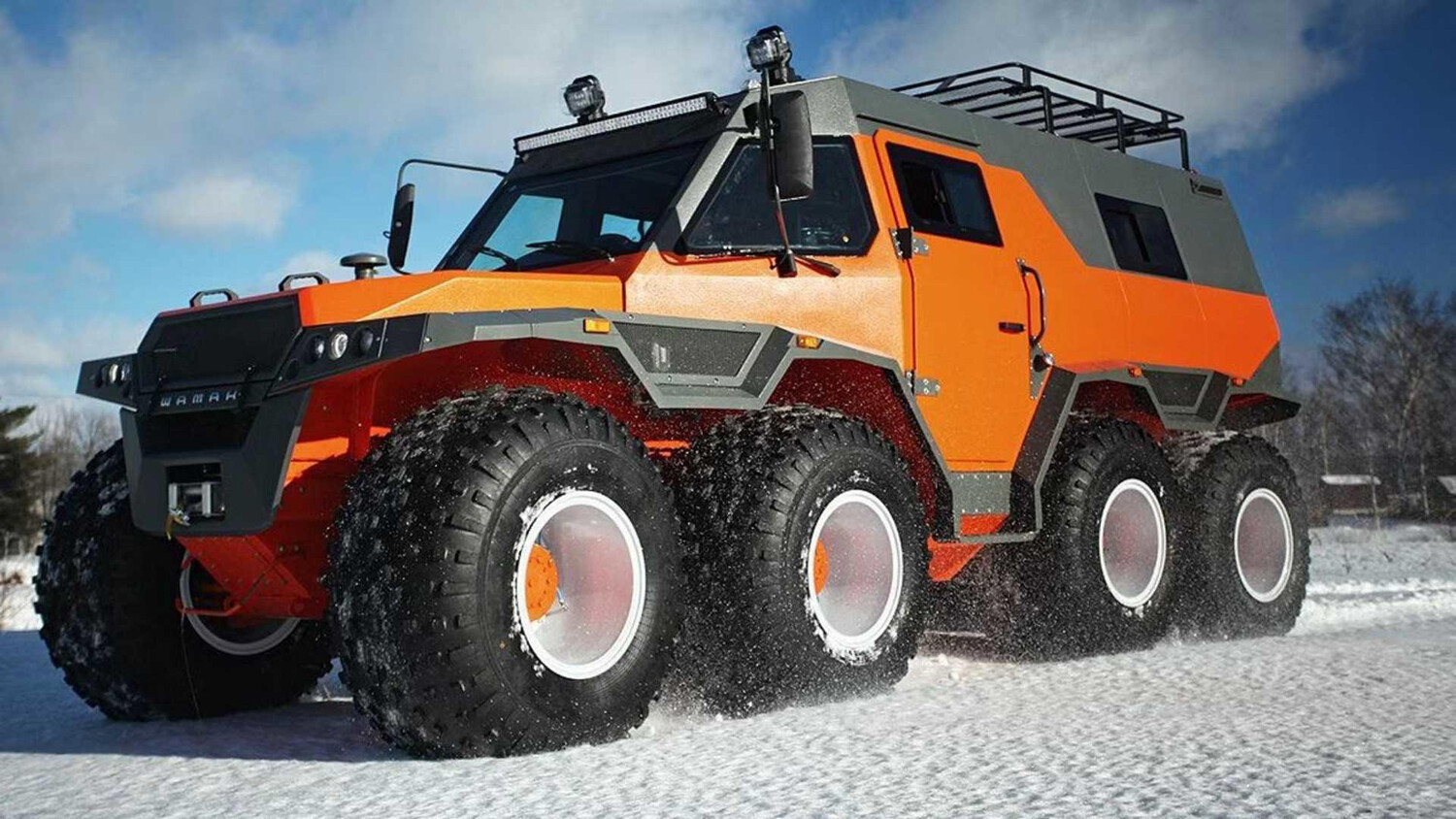
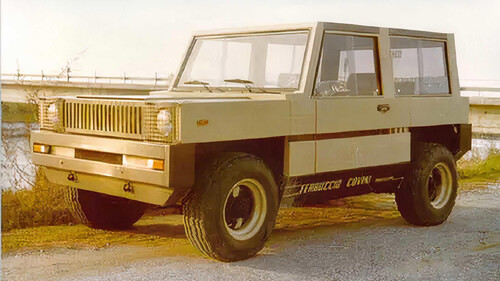
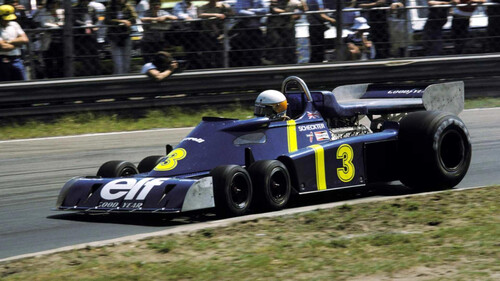
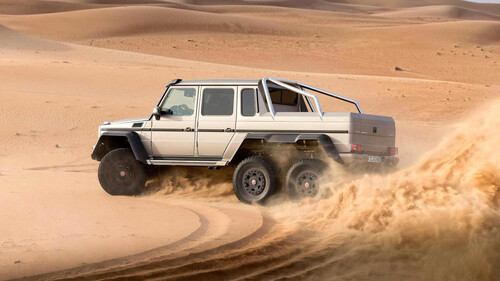
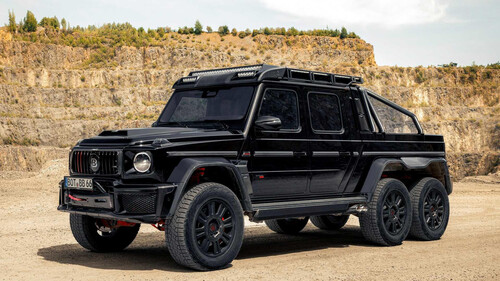
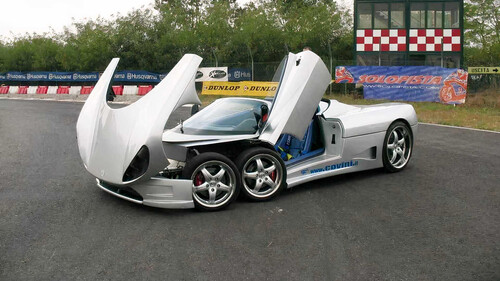
Whether they’re sports cars ready for the track, or sensible family haulers, classic or modern, coupes or sedans, most cars on the road today have one thing in common: they all have four wheels. There have been some, very rare, three-wheeled cars produced over the course of automotive history. There have also been cars and trucks with six wheels, such as the famous six-wheeled version of Mercedes’ iconic G-Wagen. But these vehicles are also vanishingly rare, and most car enthusiasts are unlikely to spot one on the street.Over a century ago, however, someone dreamed even bigger, and built a car that had not four, not six, but eight wheels. Despite not being commercially successful, the Reeves Octoauto remains a fascinating and little-known chapter of car history. Let’s take a closer look at this many-wheeled wonder and the history that surrounds it. The Reeves Octoauto: Four Wheels Good, Eight Wheels Better Hippymoose17/Wikimedia CommonsAt the start of the 1910s, an automotive entrepreneur and a pioneer of motoring by the name of Milton Reeves decided to embark on a highly ambitious project. Reeves had been working on motor vehicles since the end of the 19th century, and had built one of the earliest American cars (referred to, at the time, as a “motocycle” — yes, without the R).Just over a decade after that, the world of cars had begun to evolve, and several companies around the world had started to build their own models. One dominant characteristic had emerged: although some very early cars (such as the legendary Benz-Patent Motorwagen) only had three wheels, the industry had pivoted towards four-wheeled vehicles. Reeves, however, clearly thought that number was not high enough for his liking. The roads of the era were little more than dirt tracks, and suspension systems were still primitive. Inspired by the design of train carriages, Reeves believed that additional wheels could be the key to making a vehicle’s ride more comfortable.The car he chose to use as the basis for this unique project was an Overland, built by a company you might be familiar with due to its association with a far more famous model. Overland Automobile was one of the founding companies of Willys-Overland, the firm that would later go on to build the very first Jeep.Pauk/Wikimedia Commons Reeves fitted the Overland with four additional wheels, creating what he dubbed the “Reeves Octoauto”. Completed in 1911, it was powered by a 40-horsepower engine of unknown size and layout. It had enough seating to accommodate four passengers, and was over 20 feet long.The Octoauto, however, failed to capture consumers’ attention. Aside from its unique layout, which already stood out as strange even in a world with very few cars circulating, it was also eye-wateringly expensive. It was advertised with a price of $3,200, or over $100,000 today. Reeves, undeterred by the Octoauto’s failure, decided to update his design and create another car with additional wheels on board. The Octo-Auto's Six-Wheeled Sister: The Sextoauto Scriptadd/Wikimedia Commons In 1912, a year after the Octoauto’s failed debut, Reeves embarked on a new project that employed similar design principles: the Sextoauto. As the name might have given away, this car was fitted with six wheels rather than eight, once again with the same intention of making the ride more comfortable.Reeves built two examples of the Sextoauto. One was simply an updated version of the Octoauto, based on the original Overland chassis. For the second car, however, Reeves chose a Stutz as the basis for his project. This choice was made with the intention of giving the Sextoauto some more legitimacy among the press and the public: Stutz was a luxury brand of the era, and its cars were considered prestigious and high-quality. In Reeves’ vision, this would attract the wealthy buyers who could afford to cover the Sextoauto’s high manufacturing costs.Telecineguy/Wikimedia Commons Information about the Sextoauto’s engine or specs is even scarcer, and little is known about how it performed, although we do know it was able to go on several cross-country drives. In commercial terms, however, the Sextoauto was another failure. Its price was even higher than the Octoauto’s: around $5,000, or over $150,000 in today’s money. The Stutz was converted back to a regular four-wheeled vehicle, and served as the Reeves’ own family car for a few years. The Overland-based Octoauto/Sextoauto, meanwhile, was lost or destroyed shortly afterwards and did not survive to the present day. Milton Reeves never built another vehicle, and died just over a decade later. An Early Automotive Entrepreneur: Milton Reeves' History Of Innovation Nick Numbers/Wikimedia CommonsThe figure responsible for the creation of the Octoauto was a pioneer of American motoring. Milton Reeves was born in 1864 in Rush County, Indiana. Growing up on the family farm, he began to take an interest in agricultural machinery and engineering at a very young age. His older brother, Marshall, established a firm called the Hoosier Boy Cultivator Company in 1874, with some help from his father and uncle. Five years later, it was renamed Reeves & Company; young Milton, then fifteen, began to get involved with the firm and created one of his most successful inventions.Steve Morgan/Wikimedia Commons Observing sawmill workers struggling to control the speed of a saw, which resulted in excess waste, he created a device which can still be found in modern vehicles today: the “variable speed transmission”, now known as the continuously variable transmission, or CVT. With a new firm, the Reeves Pulley Company, he would go on to use this transmission in several areas of industry.Towards the tail end of the 19th century, Reeves began to take an interest in motor vehicles, then referred to as “motocycles” regardless of how many wheels they had. He is widely regarded as responsible for having built either the fourth or the fifth American automobile. He built one initial prototype that seated three people, then created the “Big Seven”, a car with seven seats. He also branched out into larger vehicles, such as a twenty-seater bus. After creating a few more models, such as the Model D and Model E, in 1911 Reeves founded the Sexto-Octo Company, under which the Octoauto and Sextoauto were both built. Their lack of success spelled the end for both the newly-established company and Reeves’ vehicle building career. He died in 1925 in Columbus, Indiana, having patented over a hundred inventions. Other Cars With More Than Four Wheels From Across History Avtoros The Octoauto may have been a slight anomaly in automotive history, but it wasn’t the only vehicle out there to sport more than four wheels. Six-wheeled vehicles are far more common than eight-wheeled ones, but there is one other notable example of a vehicle built with eight wheels from the factory, rather than being a custom job.The Avtoros Shaman, built just over a century after the Octoauto, is a Russian all-terrain vehicle with an 8x8 drivetrain. Much like the Octoauto, it was built with eight wheels with the goal of easily driving over rough terrain. The vehicle also has a “crab” mode for sideways driving, as well as fording capabilities that allow it to drive through water at up to 1.2 mph.As far as six-wheeled vehicles go, there are a few more examples scattered across the decades. Just a decade after the Sextoauto, Spanish automaker Hispano-Suiza built a six-wheeled version of its H6 model, dubbed the H6A. It was created as a one-off for the King of Greece, and after going through a few more owners over the following century, it is now displayed in a museum in Denver.At the turn of the millennium, Italian designer Ferruccio Covini built the C6W, a six-wheeled sports car powered by an Audi V8 engine. The C6W’s extra wheels were meant to provide additional safety, for example in the event of a tire blowout.Mercedes-AMG One of the most well-known six-wheeled cars out there is the 6x6 version of the Mercedes-AMG G63, or “G-Wagen”. Originally built for the Australian army, it was later produced commercially as well between 2013 and 2015. Only around 100 units were built, plus a handful of vehicles built by Mercedes-adjacent tuning firm Brabus.