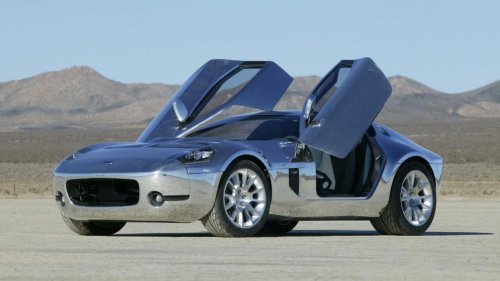
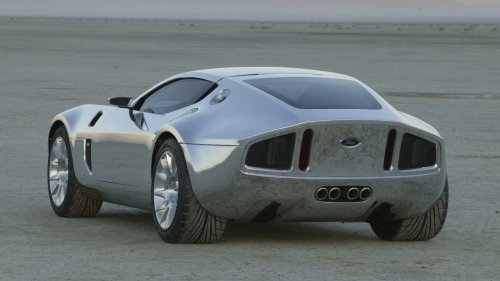
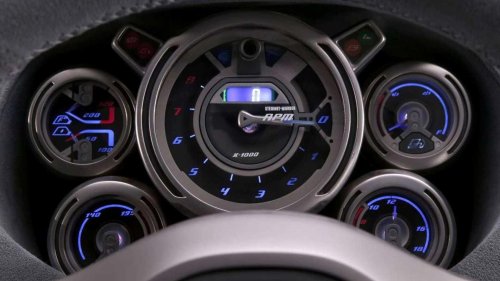
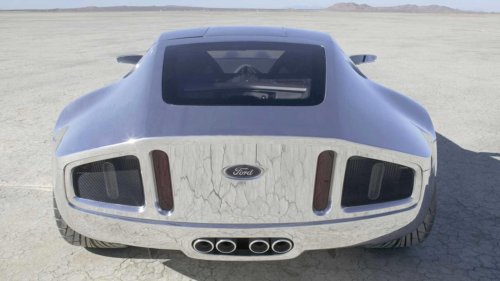
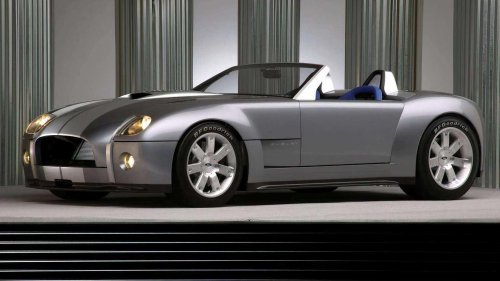
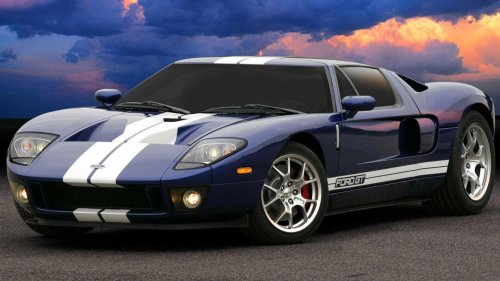
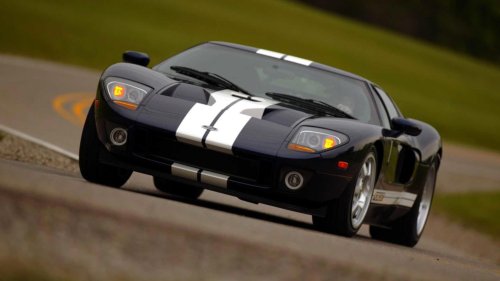
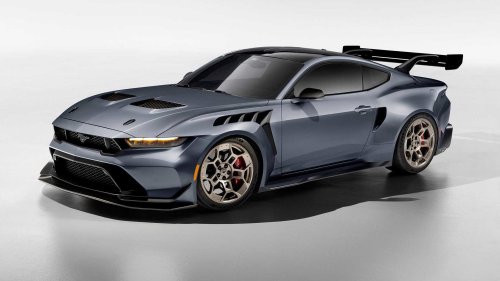
Jump LinksThe history of Ford is full of obscure concept cars that have never seen the light of day as a production model. From a bizarre V10-powered eco-truck, to a six-wheeled space-age car with gullwing doors, the Blue Oval has had a go at all sorts of interesting automotive ideas, even if many of them did not lead to any mass-produced creation.If you’re a fan of the Ford GT, and have an interest in the high-performance side of Ford in general, you will love this one-off concept car, which carries a name that has a lot of historical significance in Ford’s history. The Shelby GR-1 was developed in 2005, and despite being originally set to have its own production run, it never made it past the concept stage. Let’s explore its history and why it remained the only one of its kind. Meet The Ford Shelby GR-1 FordThe Ford Shelby GR-1 was developed by the company’s “Advanced Product Creation” division, under the direction of Manfred Rumpel. It borrowed some components from the Ford GT, which had been launched a few years earlier, in 2002.The GR-1’s chassis was borrowed from the Ford Shelby Cobra concept car, which in turn used the chassis from the GT production car. This chassis was then given slight modifications, which allowed an all-aluminum V10 engine to be fitted. Power is sent to the rear wheels, via a six-speed manual trans-axle equipped with a limited-slip differential.FordOne of the most distinctive features of the car is its door design: the GR-1 has “butterfly” style doors, most commonly associated with McLaren models. The polished aluminum bodywork and the short wheelbase (the GR-1 is about two feet shorter than the GT) all contribute to its unique, retro-turned-modern style.The GR-1’s interior features a similar combination of vintage-inspired and high-tech elements: the dashboard is a mix of analogue and digital instruments, with speakers built into the seats’ headrests and a “TireIQ” system that records a variety of metrics including G-force. What Happened To The GR-1? FordWhen the one-off GR-1 was first introduced to the world, there was an interest in starting a small production run; after Ford had analyzed its situation with a greater level of detail, however, it became clear that achieving this would be very difficult, if not outright impossible. Several of its characteristics – like its height and its wheelbase – would need to be altered; its weight was on the higher side as well, and would have needed to be reduced by around 400 pounds (from 3,900 to 3,500 lbs) before production could start.FordAt the same time, Ford had just launched the production version of the GT that year, and had found that customer demand wasn’t as high as it originally hoped; the first generation of the GT did not quite achieve the 4,500 units Ford had hoped to build, instead stopping just above 4,000 over the course of a single year on the market. Wanting to avoid a similar fate for the GR-1, Ford decided to leave it at the concept stage, without ever letting it enter production.There were some efforts on the part of hardcore enthusiasts to take up the project: Superformance – a small firm based in California that specializes in recreations of iconic models – initially put itself forward as a potential candidate to build the GR-1, or at least a modified version of it. In 2019, it looked like Superformance had succeeded in its goal, and the company began to take orders from devoted enthusiasts.FordHowever, due to federal government regulations, Superformance was not able to obtain the required exemption from safety standards needed to start a low-volume production run for the GR-1. The project was killed off, leaving the GR-1 concept car as the only evidence of the model’s existence. The GR-1's Many Ancestors: Daytona, Cobra, Cobra Concept Mecum AuctionsThe GR-1’s origins can be traced back to three other cars from Shelby’s and Ford’s history, going all the way back to the early 1960s. We’re talking about the Shelby Daytona, the Shelby Cobra, and the Ford Shelby Cobra one-off concept. All three cars served as a source of inspiration for various elements of the Shelby GR-1’s mechanical and visual design.Shelby Daytona: The Shelby Daytona was produced in 1964 and 1965. It is somewhat of a coupe-bodied sibling of the Cobra roadster, on whose chassis it is based. Only six examples of the Shelby Daytona were built in total, making it an extreme rarity; today, you will need upwards of $7 million if you hope to get your hands on one. The Daytona was powered by a 4.7-liter Ford V8.Shelby Legendary CarsShelby Cobra: The Shelby Cobra, also known as the AC Cobra outside of the States, was a roadster produced between 1962 and 1967. The British version was built by AC Cars, while the American version was built by Shelby; both were powered by a range of Ford V8 engines, including a 2.6-liter unit and a 6.4-liter unit. As is the case with the Daytona, several continuation models and replicas of the Cobra have been built over the years.Mecum AuctionsFord Shelby Cobra Concept: this unique concept car from 2005 borrows the Cobra’s name and several elements of its design, adapting them for the modern age. A roadster powered by a 6.4-liter V10 engine, the Cobra Concept borrows its chassis from the production version of the GT, as well as several other components. The Cobra Concept has a clean, minimalist look, true to Carroll Shelby’s vision; some of the design cues taken from the original Cobra include the grille, wheel arches, and side vents.Ford What Ford Made Instead: The GT And Mustang GTD FordWhile the Shelby GR-1 never progressed past the concept stage, Ford did get several other opportunities to showcase its engineering capabilities in building high-performance cars. One of these is the GT itself, the first generation of which had been revealed not long before the GR-1. The Ford GT was created as a celebration: a modern successor to the legendary GT40 that had become famous in the 1960s with Ford’s Le Mans victory. It adapted the GT40’s design and updated it for the present day, offering incredible performance and striking design.FordThe GT40 concept car arrived first, in 2002 (before Ford had to change the production car’s name, due to legal issues). This car would end up influencing not just the GT, but the Shelby GR-1 prototype as well. Three years later, the GT was released, remaining in production for one year with 4,038 cars built. A second generation arrived nine years later, in 2015; this version remained in production until 2022, with just 1,350 examples built (including two one-off, track-only versions).Rog jAnother example of Ford’s excellence in the high-performance domain arrived earlier this year: the Mustang GTD, the “fastest Mustang ever”. Before entering production, the GTD became the first American car in history to lap the Nürburgring in under seven minutes. It went back, and went even faster. FordThe Mustang GTD, although street-legal, is heavily oriented towards track use, with a number of high-performance features borrowed from the world of motorsport. These include active aerodynamics and a drag reduction system, a pushrod suspension, and an active height control system (borrowed directly from the GT). It's also extremely exclusive, but Ford has a sort of remedy if you can't get your hands on one. The Mustang Dark Horse SC uses some of the GTD's components, but retails for a (relatively) more affordble price of $103,490.Sources: Ford