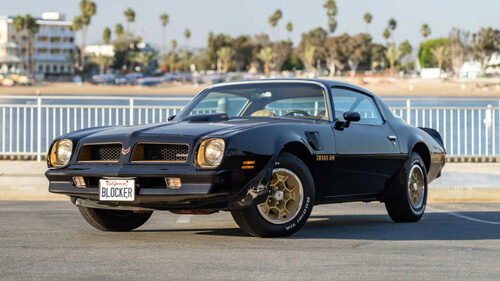
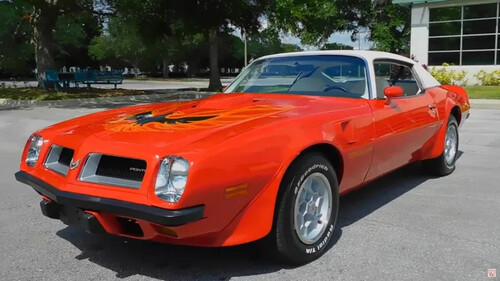
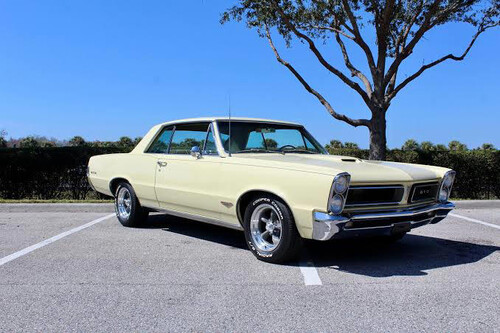
Early Trans Am models barely sold before becoming iconsThe Pontiac Trans Am began life as a low-volume curiosity that dealers struggled to move, long before it became one of America’s most recognizable performance cars. Early buyers balked at the cost and timing of the first models, yet those same cars now sit at the center of six-figure auctions and breathless collector chatter. The story of how a slow-selling option package turned into an icon tracks not just the rise of a nameplate, but shifting ideas about racing, style, and nostalgia. Racing dreams, tiny volumes The original Trans Am arrived in 1969 as a homologation special, created so Pontiac could take part in Trans Am racing with a Firebird-based entry. Period descriptions explain that Pontiac wanted a model it could present for sanctioning, built around big block power from the V8 engine and the Ram Air III, and that ambition shaped the car’s specification. The package focused on handling and road-race capability more than straight-line drag racing, which already set it apart from many muscle contemporaries. From the start, the Trans Am was positioned as a premium step above the regular Firebird. The 1969 option was expensive, adding $1,163.74 to the price of a Firebird, and buyers could spend another $558.20 for the howling Ram Ai V8 upgrade. Those figures mattered in a market where a base Firebird already sat close to entry-level muscle from other brands. Contemporary accounts describe the 1969 Trans Am as among the rarest of the rare Birds, with fewer than 700 built and specific references to the numbers 69 and 700 in enthusiast breakdowns of that first-year production. Enthusiast groups and marque historians emphasize that the early Trans Am models did not fit neatly inside the Sports Car Club of America displacement rules. The earlier models of the Trans Am carried engines that exceeded the Sports Car Club of America, or SCCA, five-liter limit, which meant the car’s nameplate connection to the series was more about marketing and image than strict compliance. That mismatch between branding and technical eligibility did little to help showroom traffic in the short term. Sticker shock in 1969 For ordinary buyers walking into a Pontiac showroom in 1969, the Trans Am’s pricing was a serious hurdle. One detailed breakdown of the option structure notes that the cost of the Trans Am package was a little over $1,000 at a time when a base 1969 Firebird hardtop was around $2,800. That meant the Trans Am kit alone represented more than a third of the cost of the entire car, before any additional performance or appearance options. That premium pushed the Firebird’s final price toward what one analysis calls the dreaded $4,000 range once the Trans Am package was added. Period commentary framed the decision bluntly: it was an expensive proposition for a compact pony car that still carried a Pontiac badge, not a Cadillac crest. When buyers could choose from cheaper big block intermediates or more heavily advertised rivals, the Trans Am’s balance of cost and perceived benefit looked less compelling. Internal voices within Pontiac echoed that skepticism. A recollection shared by enthusiasts describes how David Wood, involved in the program, stated that he could not justify any advertising dollars for such a low-volume model and recommended that production ramp up to 3,000 units only if demand proved out. That lack of marketing support meant the car arrived almost quietly, just as the 1969 model year was winding down. The result was predictable. The 1969 Trans Am would be the best-handling car Pontiac had at the time, yet only 697 Trans Ams were sold that first year, making the car a sales disappointment by any normal corporate measure. Some sources also mention that Pontiac sold 634 Firebird Trans Ams under the homologation effort, a figure that underscores how tiny the initial footprint really was. From disappointment to blue-chip rarity Those same numbers now define the 1969 Trans Am’s appeal. Collectors point to the fact that the ’69 Trans Am is among the rarest of the rare Birds with fewer than 700 built, and that the package added $1,163.74 plus an optional $558.20 Ram Ai upgrade, as key reasons the car commands such attention. Limited production, high original cost, and direct ties to racing heritage have combined to turn an early commercial miss into a blue-chip collectible. Modern auction houses build entire catalog sections around low-production muscle cars, and the Trans Am sits near the top of that hierarchy. The 1969 examples that do appear at events such as the high-profile Mecum auctions or the equally visible Barrett-Jackson sales routinely attract intense bidding, precisely because they were so hard to find new. The car that once languished on dealer lots now barely shows up at auctions at all, simply because so few were built and even fewer owners are willing to let them go. That scarcity has spilled over into later high-spec Trans Am variants. The 1973 Super Duty represents the most powerful big bird embellished Trans Am model of them all, with Values described as ranging from $105,000 for an example in good condition to significantly more for the best cars with a four-speed manual transmission. A separate commentary on classic muscle notes a related Pontiac model selling at Mecum Kissimmee 2025 for almost $100,000, presented as a bargain for the last great classic American muscle car, which frames how collectors now value peak era American performance machines. The fragile second act Even after the first year’s stumble, Pontiac did not abandon the Trans Am idea. The Trans Am was drawn up at the very beginning of the second generation Firebird’s development, but its production was not guaranteed. Corporate planners had to weigh the poor initial sales against the marketing cachet of a halo performance model that could keep enthusiasts engaged with the brand. The 1970 Trans Am arrived with a cleaner, more modern shape and a focus on handling and balance. However, early second-generation sales remained modest, with references to sales of only 3,196 in 1970 for the Trans Am line. That figure, while higher than the 1969 total, still represented a tiny slice of Pontiac’s overall volume at a time when insurance costs, emissions rules, and fuel concerns were already starting to squeeze the muscle segment. Styling changes in the early 1970s also helped the Trans Am stand out. The large screaming chicken hood graphic that debuted in 1973 became one of the most recognizable visuals in American car culture, and the twin scoop design on the hood was eventually incorporated on the Formula models as well. These visual cues turned the Trans Am into a rolling billboard for Pontiac’s performance image, even when raw power figures were under pressure. Yet through this period, the Trans Am still operated as a niche car. The earlier models of the Trans Am had engines that exceeded the Sports Car Club of America five liter limit, which meant they remained more of a marketing homage to SCCA competition than a direct on-track counterpart. For buyers, that blend of race-inspired engineering and extroverted styling created a distinct identity, but it did not immediately translate into mass market sales. Pop culture lights the fuse The turning point came later in the decade, when the Trans Am shifted from enthusiast secret to pop culture star. The 1977 Pontiac Trans Am Special Edition is remembered as a black and gold muscle car that gained fame as the movie car in Smokey and the Bandit, with its T-top roof and gold Firebird decal becoming instant visual shorthand for rebellious cool. Another retrospective notes that the 1977 Trans Am, with its gold Firebird decal and T-top roof, transcended automotive circles and entered pop culture stardom, cementing the car’s image far beyond traditional car magazines. That exposure had a direct impact on showroom demand. Enthusiast discussions of sales trends explain that Sales peaked in 1979, with over 116,000 units sold, partly due to its popularity from films like Smokey and the Bandit. A separate analysis of production totals states that the 1979 Pontiac Firebird Trans Am was the highest-selling Trans Am of all time, with more than 117,000 units sold, accounting for over half of all Firebird sales that year. The nameplate that had once struggled to clear a few hundred units now dominated its own lineup. By this point, the Trans Am had become so popular that it was widely described as one of America’s most iconic cars and one of the most iconic cars ever created by General Motors. Another overview of classic muscle emphasizes that the Pontiac Trans Am is one of the most recognizable American muscle cars to ever burn rubber and that, despite being discontinued more than 20 years ago, the Pontiac Trans Am remains one of the most recognizable American performance nameplates. Cultural memory had locked in the shape of the car, the screaming chicken graphic, and the movie associations. Video retrospectives on the 1970 to 1981 Pontiac Trans Am era point out that as American muscle cars started disappearing throughout the 1970s because of the oil crisis, skyrocketing insurance costs, and tightening emissions rules, the Trans Am managed to keep its performance image alive. That persistence through a difficult regulatory and economic period is a key part of why later enthusiasts look back on the model as a survivor of a fading muscle era. From SCCA outlier to auction star The irony is that much of the Trans Am’s current allure rests on the same traits that made the earliest cars hard to sell. The homologation intent tied to Trans Am racing, the engines that exceeded SCCA displacement limits, and the high original prices all limited volume. Those constraints now create scarcity and a clear narrative for collectors, especially around the 1969 cars and the later Super Duty variants. Modern buyers who chase these cars at auction are often responding to a mix of technical specification and cultural memory. The 1973 Super Duty Trans Am, with its status as the most powerful big bird emblazoned version and Values that start at $105,000, speaks to enthusiasts who want the peak of factory performance. The 1977 and 1979 cars, especially in Special Edition or Bandit style trims, appeal to those who grew up watching Smokey and the Bandit or who associate the black and gold Pontiac Trans Am Special Edition with a certain kind of swagger. Beyond the headline models, the broader collector ecosystem around Pontiac performance has grown. Auction platforms such as online bidding connected to major sales, along with financing arms like Mecum Financial, make it easier for buyers to chase six-figure muscle cars. Branded merchandise, from auction exclusives to apparel and accessories, reflects how deeply events centered on cars like the Trans Am have embedded themselves into enthusiast culture. More from Fast Lane Only Unboxing the WWII Jeep in a Crate 15 rare Chevys collectors are quietly buying 10 underrated V8s still worth hunting down Police notice this before you even roll window down