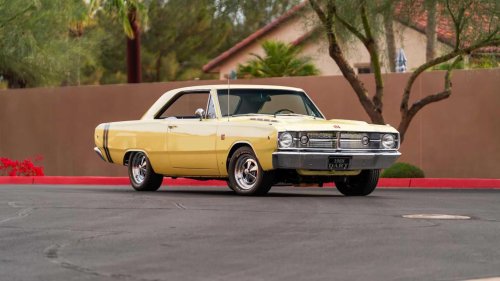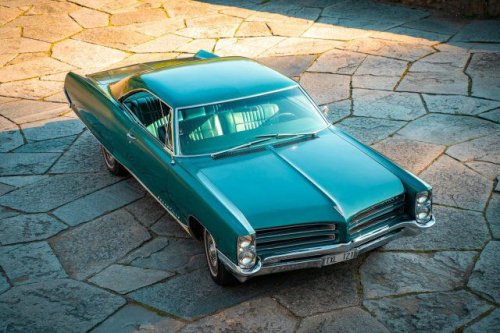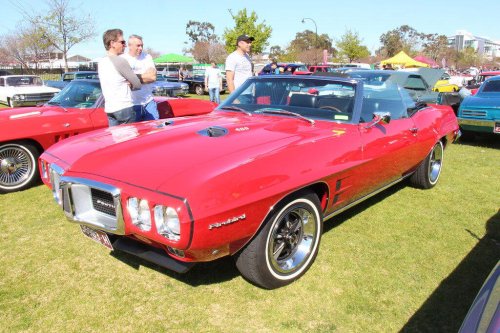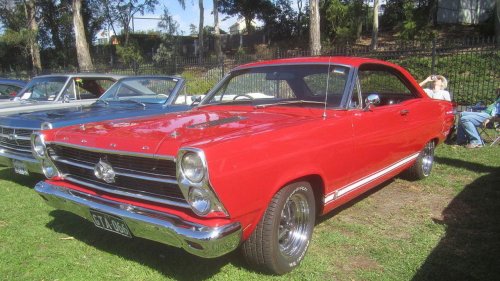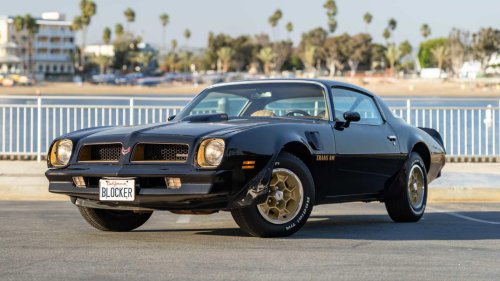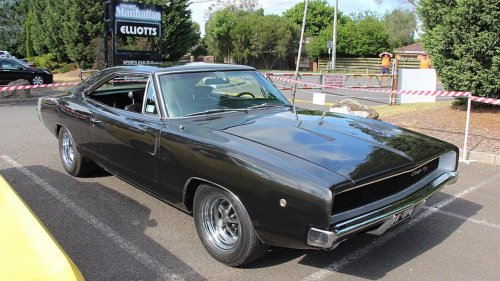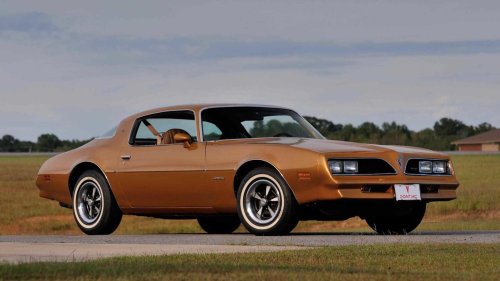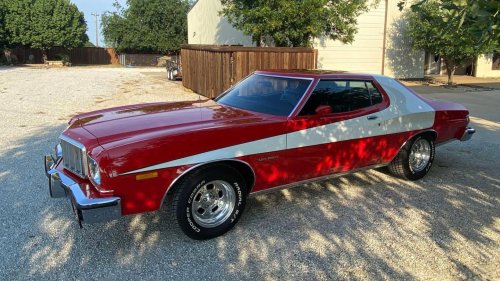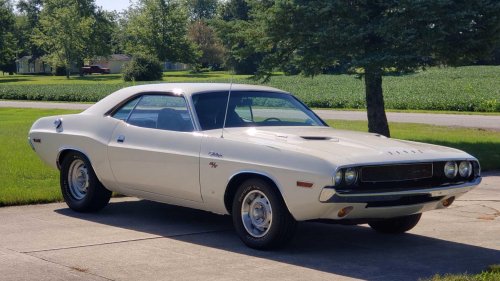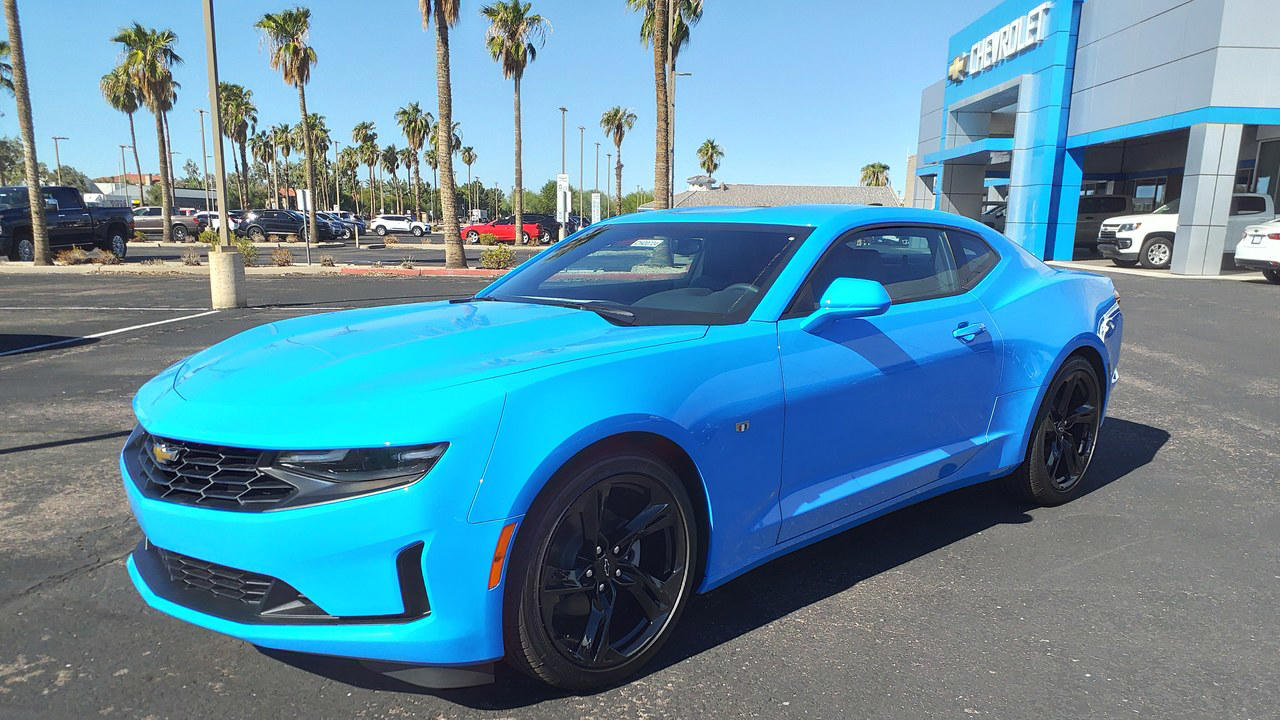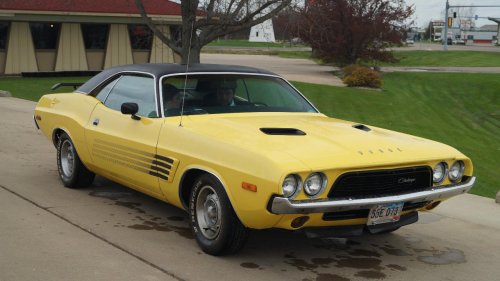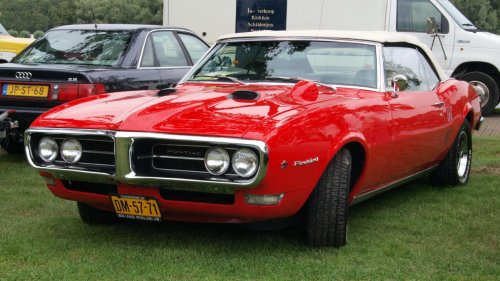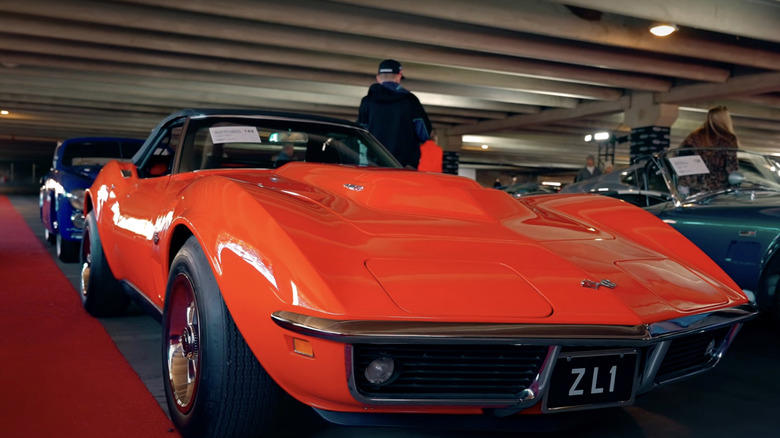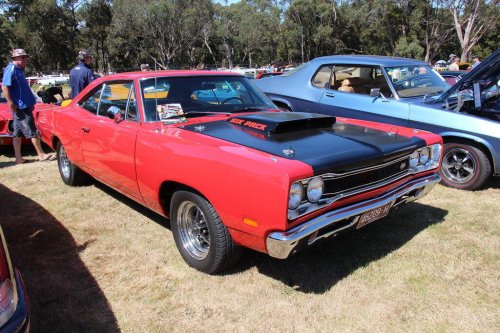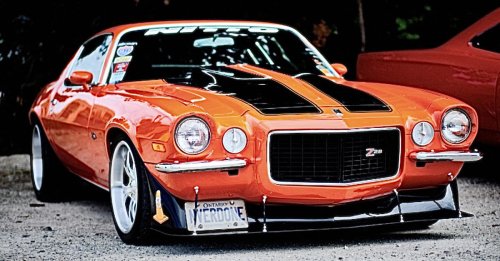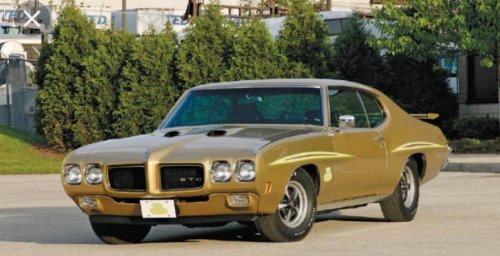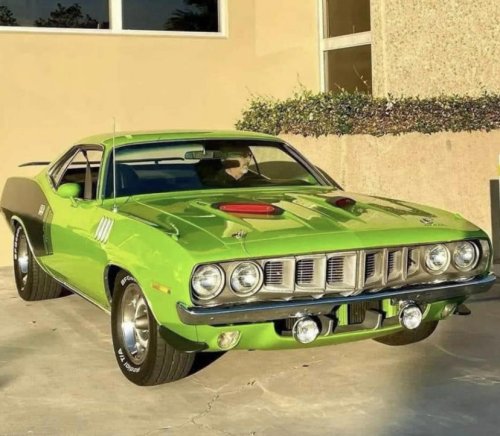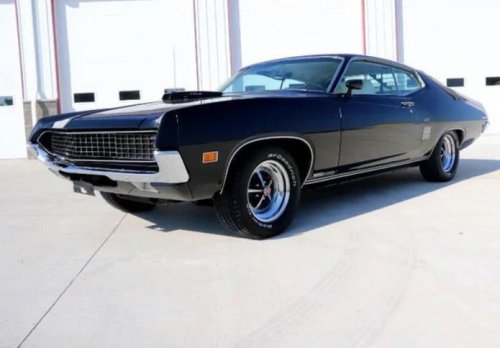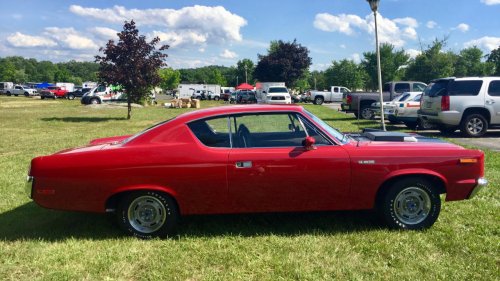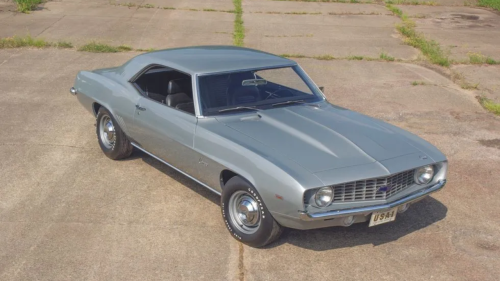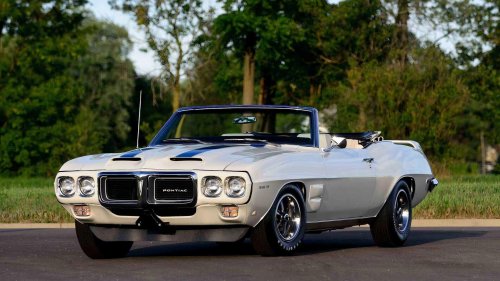
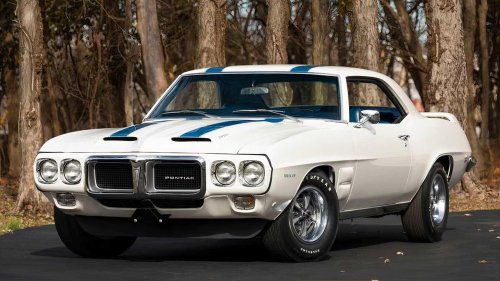
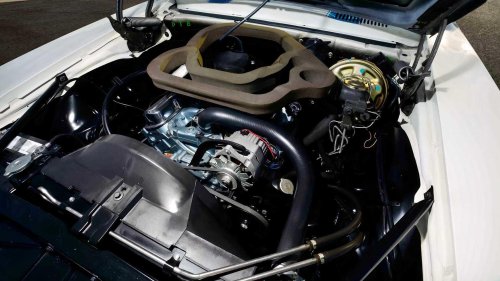
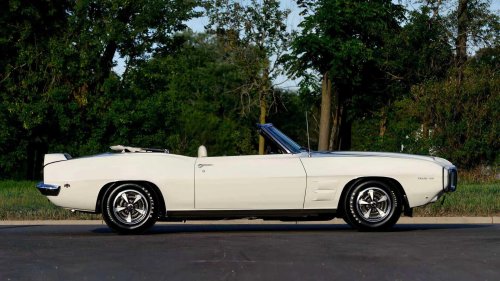
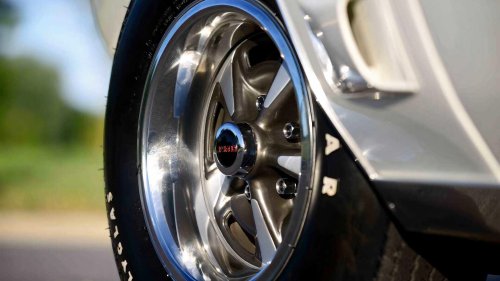
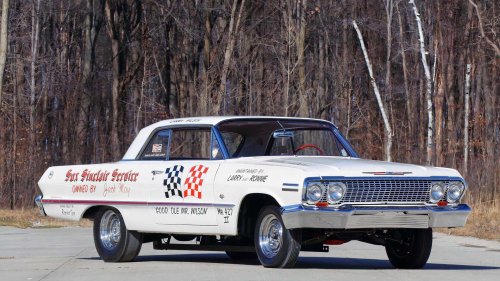
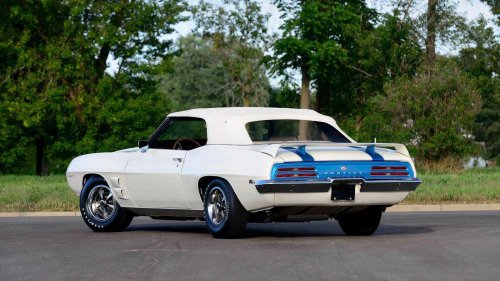
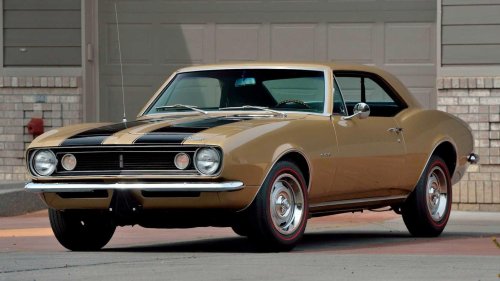
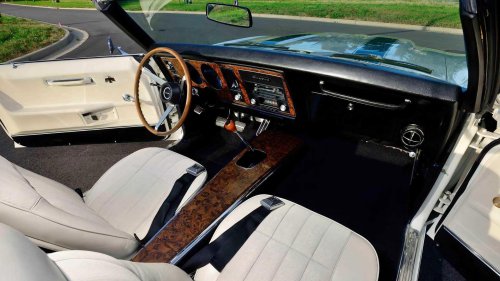
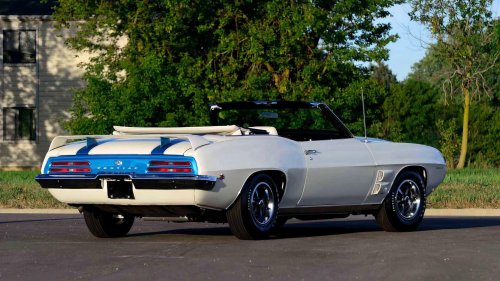
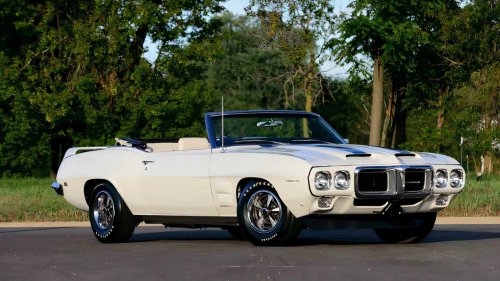
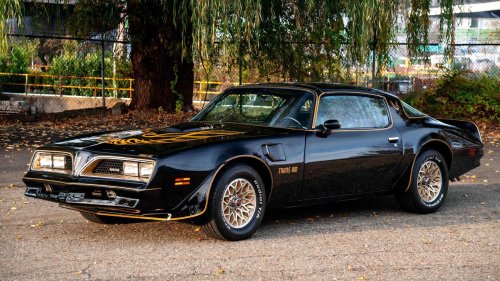



















There's always that one guy at every car meet who swears he has one of the rarest muscle cars in the world, and then wonders why no one is impressed when they reveal that the car in question is just a late-model Camaro with a weird color combination no sane person would have ever thought of. That's not the kind of “rare” we're discussing today.The kind of rare we're interested in here is based on production numbers — a car built in such low numbers in the '60s that only a handful of people have ever laid eyes on it, let alone get behind the wheel. And before you think of cars like the 1969 Chevrolet Camaro ZL1 (69 built) or 1963 Chevrolet Impala Z11 (57 built) - yes, those qualify as “rare” — the car we're talking about here is even more of a unicorn since it had single-digit production numbers. Even if you were a billionaire who wanted to add this car to your collection, you'd probably never get a chance, since it never pops up at public auctions. The Factory Spec That Turned This Pontiac Firebird Into A Million-Dollar Collectible Via Mecum AuctionsMost cars that appear on any “rare cars” list do so because their manufacturers were unable or unwilling to produce more units. The reasons may vary from high production costs, the manufacturer wanting to maintain exclusivity, only producing the minimum number required to meet homologation requirements, among others. However, things are quite different in the case of the 1969 Pontiac Firebird Trans Am Convertible because even though Pontiac was able and willing to build as many as needed, only 8 visionary buyers ended up ticking that box.In 1969, the Ford Mustang was running circles around GM pony cars in the sales department, even though the Chevy Camaro and Firebird had only been introduced two years earlier. To keep pace, Pontiac gave the Firebird a major facelift that gave it a new front end design and other key changes, but the more exciting Firebird news that year was the introduction of a new top trim that would inject more excitement and muscle into the Firebird lineup — the Trans Am package.Interestingly, the package was named after the SCCA's Trans Am racing series, but the street-legal Firebird wasn’t a homologation-special in the way the Camaro Z/28 was, since the smallest engine in its lineup exceeded the competition's 5.0-liter engine displacement limit. The WS4 Trans Am Performance And Appearance Package Cost $750 In 1969 Mecum Auctions Officially known as the WS4 Trans Am Performance and Appearance Package, the package added a host of equipment to the top-of-the-range Firebird 400 for just under $750, including a special Cameo Ivory paint job with Tyrol Blue dual stripes, a special Ram Air hood with dual scoops, a front spoiler, blacked out grille openings, a rear spoiler mounted on the deck lid, and Blue “Trans Am” decals on the front fenders and rear spoilers.The interior was pure Firebird, which meant it had bucket seats wrapped in Morrokide upholstery. Six of the eight cars had blue upholstery, with one having black upholstery and the other having parchment upholstery. The standard engine was the 400 cubic-inch Ram Air III V8 engine, generating 335 hp, but buyers who wanted more performance could get the incredibly coveted Ram Air IV option.While the Trans Am package was superb, it arrived too late into the 1969 model year and was quite expensive, pushing the Firebird's price towards the dreaded $4,000 range. As such, only 697 Firebird buyers opted for the Trans Am package in 1969 and of those, only 8 bought the convertible.What those 8 convertible buyers didn't realize back then is that they had bought an instant collectible that future collectors would be willing to pay millions for today if given a chance. The Trans Am Package Launched A Generation Of Performance Via Mecum AuctionsEven though the Firebird never participated in the racing competition it was named after, performance was at the forefront of its development process. The only engine available for Trans Am buyers was the 400 cubic-inch big-block V8, but buyers could choose between two configurations.The Ram Air III configuration produced 335 hp thanks to a 10.75 compression ratio, a Quadrajet-style four-barrel carb, cast-iron manifolds, and a hot camshaft. Option B, known as the Ram Air IV, turned the Firebird Trans Am into a factory-built race car thanks to improvements like an aluminum intake manifold, a cast-iron heat crossover, an even hotter cam, and beefed-up internals. However, the eight convertibles were all Ram Air III cars.Transmitting the power to the rear wheels was a standard three-speed manual transmission, with a Muncie four-speed manual and three-speed Turbo Hydra-Matic automatic optional. But among the eight convertibles, production was evenly split between a four-speed manual and TH400 automatic.Also included in the Trans Am package was the Y96 Ride and Handling package that added high-density control arm bushings to prevent deflection from the mandated addition of larger 14x7-inch wheels wrapped in F70-14 white-stripe tires, power front disc brakes with single-piston calipers, heavy-duty coils, a high-effort variable-ratio power steering box, and a 1-inch-diameter anti-roll bar that improved cornering ability. A Safe-T-Track limited-slip differential with a 3.55:1 gear set came standard with the Trans Am but was optional on other Firebird models. The 1969 Pontiac Firebird Trans Am Is An Elusive Collector Car Via Mecum AuctionsWith only 8 units built, the 1969 Pontiac Firebird Trans Am Convertible is one of the rarest American cars ever and a rolling piece of history. People who own these kinds of cars typically don't want to sell, but when they do, this is the type of car that can sell for any price the owner desires since buyers know they'll probably never get another chance to buy it.As far as we know, the most documented public auction appearance in recent years was in 2016 at Mecum's Kissimmee auction, and despite a stratospheric bid of $1.9 million, the car was never sold. Had it been sold, it would easily have earned a spot on the list of the most expensive muscle cars ever, which paints a picture of just how hard it is to acquire one, even if you have the money. It Costs Millions Via Mecum AuctionsSource: Hagerty Valuation ToolIf $2 million wasn't enough to buy the 1969 Firebird Trans Am Convertible in 2016, we don't even want to imagine the price you'd have to pay today if one popped up for auction with inflation considered and the fact that we're edging closer to muscle car extinction.Thankfully, Hagerty believes that the next one might be more affordable, with a valuation of just $662,000 in fair condition and up to $1,350,000 in concours condition. However, you might want to take this information with a grain of salt, since Hagerty relies on sales data, which are virtually non-existent in the case of the 1969 Firebird Trans Am Convertible. Other 1960s Muscle Car Unicorns MecumThe 1969 Trans Am Convertible is not the only muscle car from its era with minimal representation on auction floors in recent years. With so many muscle car models, special versions, trims, and engine options offered in the '60s, some unique models appear to have fallen off the face of the earth, which is why it's always a special occasion whenever one of them is even rumored to be going on sale. Using Classic.com data, we found several other '60s muscle cars that rarely appear on auction floors, ranging from homologation specials like the 1966 Ford Fairlane 500 R-Code to overlooked gems like the 1968 Dodge Super Bee. The Pontiac Firebird Was A Proper Ford Mustang Rival Via Mecum Auctions In the mid-1960s, Ford built the Mustang, altering the course of the American auto industry forever. The Ford Mustang's formula of a beautiful, compact design, powerful V8 engines, and an attractive price instantly won over gearheads, making it a sales sensation with over 418,000 units sold in its first year alone. This formula also birthed the “pony car” segment that became a smash hit among a new generation of gearheads who wanted a stylish and sporty car that didn't cost an arm and a leg.Detroit Rivals GM initially hoped that the Chevrolet Corvair would offer strong competition to the Mustang, but its aging styling, rear engine placement, and infamous swing-axle rear suspension were no match for the Stang. As such, the GM top brass decided to develop a new bespoke pony car in a project codenamed “Panther”. The new car would be built on a new platform called the “F-body”, which was largely derived from the compact GM X platform. The Firebird Was Developed Quicker Than The Camaro Mecum Auctions As GM's leading performance brand, Chevrolet was initially tasked with building the Mustang rival, and by 1966, Chevy had already announced that the new car would be called the “Camaro” and would be available in the fall of 1966. As work on the Camaro was progressing, GM got word that Ford was working on an upscale version of the Mustang that would be sold under the Mercury brand, and that Chrysler was also working on a pair of pony cars in the form of the Dodge Challenger and Plymouth Barracuda.To keep up with the competition, GM asked Pontiac to develop a second F-body car that would be released within six months of the Camaro, resulting in the Firebird. The Firebird's development was overseen by legendary executive John DeLorean (yes, that DeLorean) long before the DMC-12 drama that most gearheads associate him with today. While he had to create the Firebird in half the time Chevrolet had to create their Camaro, the end result birthed an iconic nameplate that would be part of Pontiac's lineup for the next 35 years.Due to budget constraints, the Camaro and Firebird had the same upper body design. However, both brands were allowed to have unique below-the-belt designs, and Pontiac designers William L. Porter and Jack Humbert made sure that the Firebird could be differentiated from the Camaro with ease. Porter gave the Firebird a more curvaceous and rounded look that contrasted with the Camaro's angular design.Via Mecum Auctions The 'Bird nailed the Coke Bottle style to a tee and had a more streamlined look featuring a front bumper that was integrated into the front end design, round quad headlights inset into a chrome-surrounded split grille, and twin slit taillights similar to those on the Pontiac GTO and Grand Prix. Inside, the Firebird was a step up from the Camaro, offering niceties such as power steering, air conditioning, cruise control, a hood-mounted tachometer, a center console, expanded instrumentation, and an eight-track tape stereo.Since GM policy at the time prevented its brands from sharing engines, the Firebird only used Pontiac engines, but their displacement and power figures were similar. Options included a 230 cubic-inch inline-six with 165 hp on tap, a 326 cubic-inch V8 producing 250 hp or 285 hp in the High Output (HO) version, and the top-of-the-range 400 cubic-inch V8 cranking out 325 hp in the standard Firebirds. The 1969 Trans Am Package added the Ram Air III option to the 400 cubic-inch V8 to push its output to 335 hp, but buyers who needed more could opt for the Ram Air IV option, which pushed power output to 345 hp and added other performance-focused features.Despite its rushed development process, the first-generation Firebird ended up being a proper Ford Mustang rival in design and performance, but it lagged far behind the Blue Oval pony's sales. Where Are The 1969 Firebird Trans Am Convertibles Today? Via Mecum AuctionsWith so few production numbers and scant sales records, it's hard to know where all the 8 Firebird Trans Am Convertibles built in 1969 are. Thankfully, Hot Rod writer Tim Costello tracked them all down and revealed their location in a 2018 article about the “Lost” eighth 1969 Pontiac Trans Am Convertible.According to Costello, six of the eight convertibles were on display at the 2014 Muscle Car and Corvette Nationals (MCACN), where a special exhibit celebrated the Trans Am's 45th anniversary. The seventh car, owned by car collector Rick Mahoney, was displayed by Mecum Auctions the following year, leaving a mystery about the last one's whereabouts. Wanting to find the missing eighth convertible, Rick hired several private investigators who traced the last owner to Michigan.Mecum Auctions Though the owner was reluctant at first, he finally agreed to let Rick have a look at the car together with restoration expert Scott Tiemann. Unlike the other cars that were in good condition, the eighth convertible was in terrible condition after decades of hard use and several accidents, and it didn't even have the original engine and other key parts. However, everything proved that the car was the lost Trans Am convertible, making it an ideal candidate for a full restoration.After several months of negotiations, Rick bought the car and began an extensive restoration process that brought it back to near-perfect condition. The restored convertible then made its debut at the 2016 MCACN, leaving gearheads in awe. While none of the cars have made it to an auction floor since 2016, aspiring collectors can take comfort in knowing that all eight convertibles have caring owners who've kept them in good shape to date. The 1969 Firebird Trans Am Inspired Future Legends Bring a TrailerWhen John DeLorean created the first Firebird Trans Am in 1969, he never imagined that the car would become one of the most successful Pontiac models of the next three decades, spawning some absolute icons along the way. Today, the mere mention of the words “Trans Am” brings some excitement to gearheads’ hearts, especially those who were old enough to witness its evolution over its four generations.Apart from the rare 1969 Firebird Trans Am we're discussing here, there are other famous Firebird Trans Am models that left a mark on the industry, such as the sporty fourth-gen Firebird Trans Am WS6, the 1980 Firebird Trans Am that became Pontiac's first turbocharged car, and the 455-powered Trans Ams of the early '70s. However, when it comes to fame and cultural significance, none of them comes close to the 1977 Firebird Trans Am Special Edition, which earned worldwide fame when Burt Reynolds drove it in the 1977 film Smokey and the Bandit. Finished in a black paint job with gold accents and a “Screaming Chicken” graphic on the hood, the 1977 Firebird Trans Am is one of the coolest muscle cars of the Malaise era.Sources: Pontiac, Mecum Auctions, Hot Rod, Hemmings, Classic.com