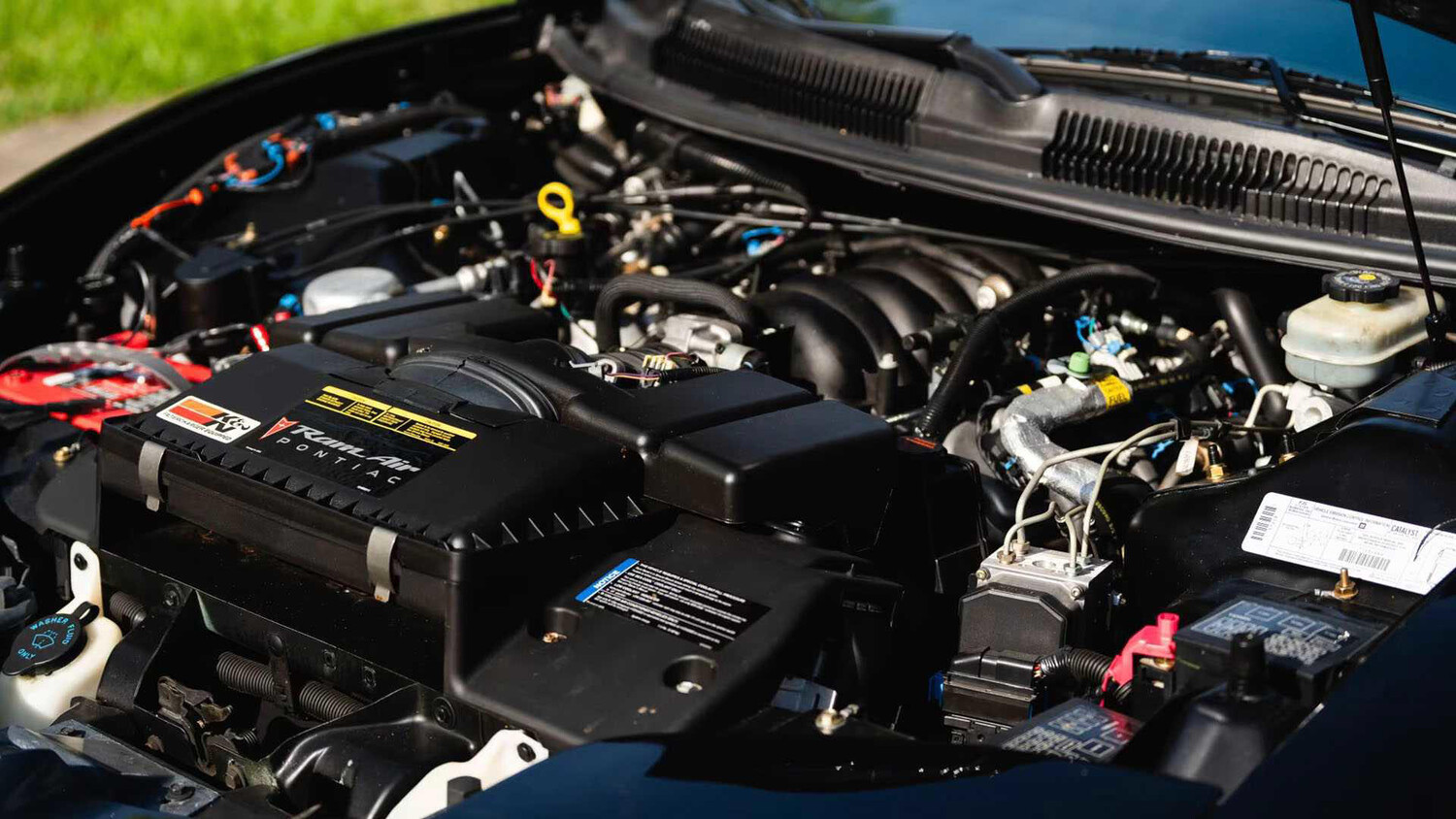
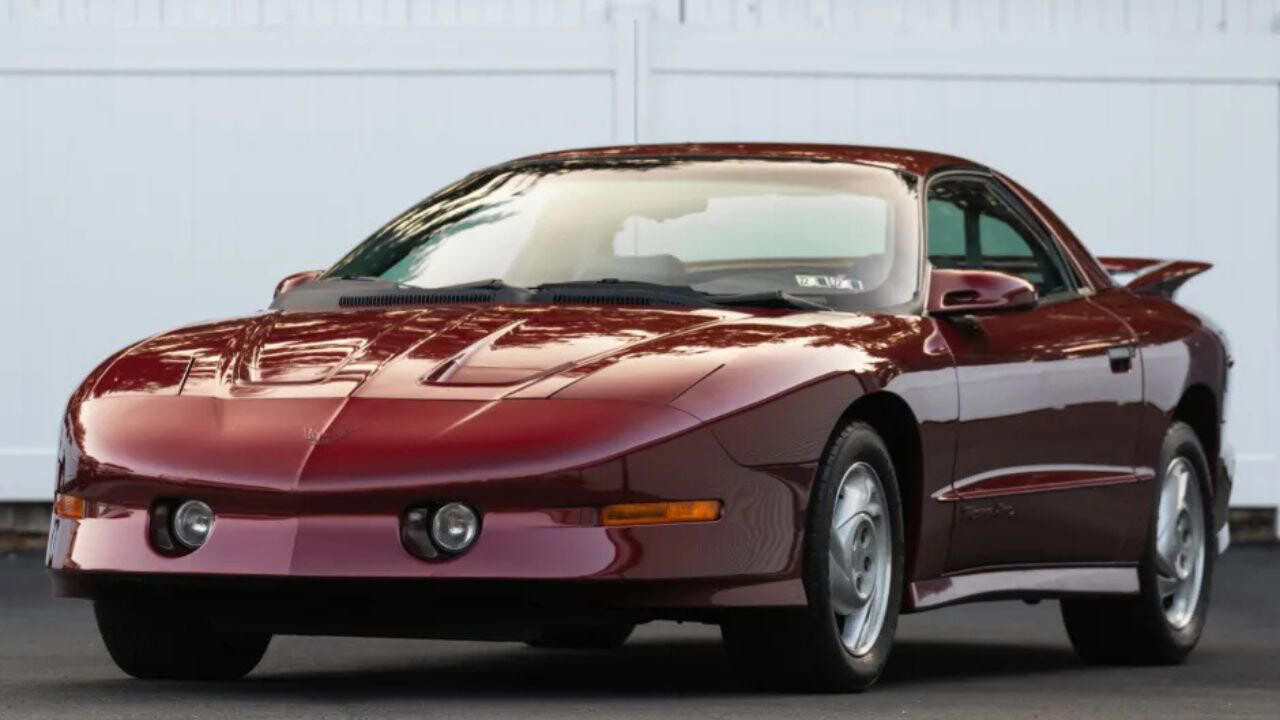
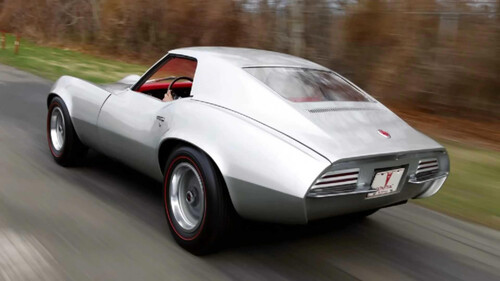
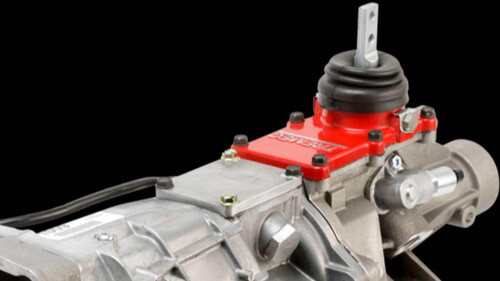
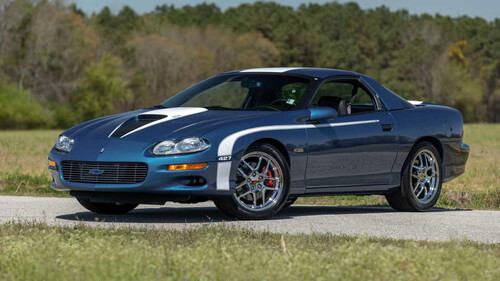
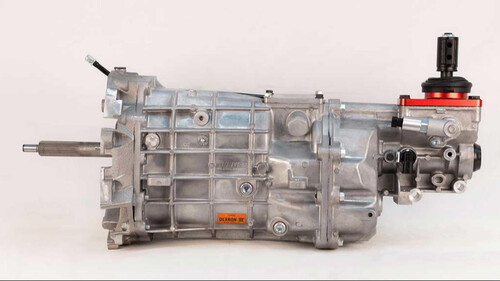
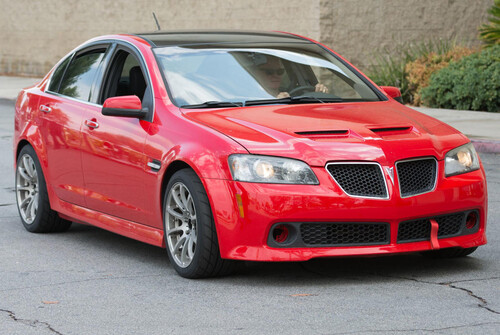
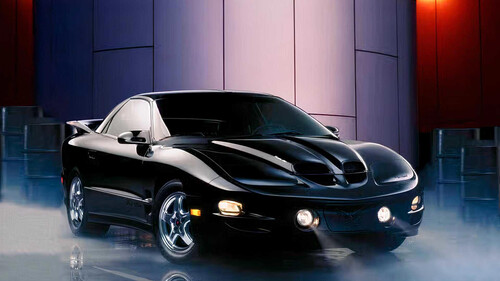
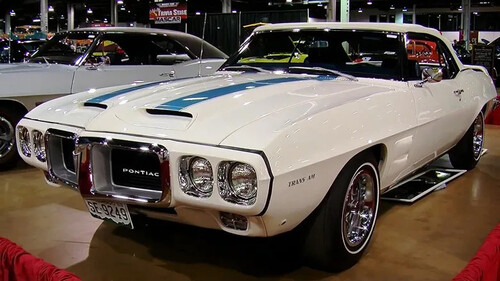
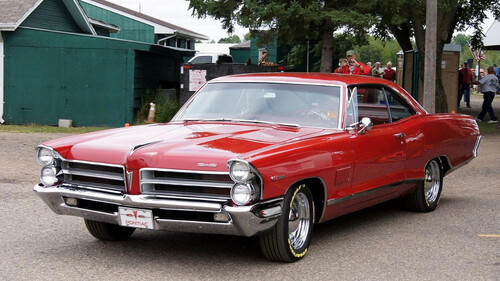
For years, rumors have swirled about a possible revival of Pontiac. Some claim a modern Firebird is in the works. Others share heavily doctored renderings of concept GTOs. But the truth is simpler: Pontiac isn't coming back. At least, not officially. General Motors closed the book on the brand in 2010, and despite fan hopes, no new chapter seems likely. Still, memories of Pontiac's boldest years haven't faded. Especially the era when it secretly challenged Chevrolet's crown jewel.Back in 2001, a car rolled off the line that didn't just match the Corvette in performance – it did it for thousands less. To the untrained eye, it was just another muscle-bound coupe. But to those who knew better, it was a wolf in Firebird clothing. It had a Corvette's heart, brutal acceleration, and a road presence that left no doubts. The 2001 Pontiac Trans Am WS6 Was A One-Year Wonder 1998 Pontiac Trans Am WS6 Front Three QuarterThe 2001 Trans Am WS6 didn't introduce a new model, but it did perfect a formula. This was the high-performance version of the Firebird Trans Am, equipped with the WS6 performance and handling package. Though Pontiac offered WS6 variants before, the 2001 model stood out for one reason: it marked the peak of the Firebird's fourth and final generation.Only available for a single model year in its most refined form, the 2001 WS6 combined power, looks, and legacy into one sharp-edged package. It came with a functional Ram Air hood, aggressive styling, and a muscular stance. Pontiac had fine-tuned the performance to its limit, giving enthusiasts a last great ride before the brand faded away.The WS6 package included performance suspension, upgraded wheels and tires, and a freer-flowing exhaust. But most important was the engine. Under the hood sat a 5.7-liter LS1 V8 – the same engine found in the C5 Corvette. With 325 horsepower and 350 lb-ft of torque, the WS6 could rip from 0 to 60 mph in just over five seconds. All of that power was channeled through either a six-speed manual or a four-speed automatic.Pontiac offered the WS6 on both the coupe and convertible Trans Am models. Enthusiasts could choose their flavor, but the recipe stayed the same: Corvette-like performance in a package that cost thousands less. In a year when the C5 Corvette started at over $40,000, the WS6 began at just under $30,000. It was a value proposition that turned heads and emptied wallets. LS1 Power For Corvette Rivaling Performance Via: Mecum Auctions Pontiac Firebird Trans Am WS6 Key Specs Source: PontiacAs mentioned above, at the heart of the WS6 was GM's LS1 V8 engine, shared with the Corvette C5. But in the WS6, Pontiac made tweaks to deliver a unique driving experience. The Ram Air intake system provided a real performance boost, improving airflow and helping the car achieve its 325-horsepower rating. Combined with low-restriction exhaust, the WS6 breathed easier and roared louder.The WS6 wasn't just about straight-line speed, though. It featured stiffer springs, thicker sway bars, and upgraded shocks, all designed to improve handling without compromising ride quality. The result was a car that could corner with confidence and keep pace with more expensive sports cars.The transmission options made a big difference in driving dynamics. The six-speed manual was the enthusiast's choice, offering direct engagement and full control of the power band. The four-speed automatic, while less thrilling, was smooth and convenient for daily driving. Both options paired well with the car's power output and suspension setup.Inside, the WS6 featured leather seating, a Monsoon premium sound system, and optional T-tops. Though it wasn't luxurious by modern standards, it offered everything a performance car needed: supportive seats, good visibility, and driver-focused controls. The dash layout was simple and effective, putting the tachometer and speedometer front and center.Braking was handled by four-wheel disc brakes with ABS, offering solid stopping power. The WS6 also featured traction control, which could be disabled for those who wanted to experience the full muscle car thrill. With its wide rear tires and balanced chassis, the car offered impressive grip when pushed hard. All told, the WS6 package elevated the Trans Am from muscle car to near-supercar levels. It was a precision-tuned machine wrapped in a bold American design. The Fourth-Gen Firebird Was The Last Of Its Kind Bring a Trailer The 2001 Trans Am WS6 sat near the end of the fourth generation of the Firebird, a model that debuted in 1993 and ended in 2002. This generation was a departure from the boxy shapes of the past, embracing smooth lines, pop-up headlights, and a more modern aesthetic.The fourth-gen Firebird shared a platform with the Chevrolet Camaro, but it took a more flamboyant approach. Where the Camaro looked clean and straightforward, the Firebird was aggressive and dramatic. The WS6 trim pushed that look even further, with its Ram Air hood and pronounced rear spoiler.What made the WS6 truly special, though, was its mechanical kinship with the Corvette. The LS1 engine made the connection undeniable. While the Corvette used a slightly different intake and tuning, the bones were the same. That meant the WS6 had the same core potential, but in a different shell.GM positioned the Corvette as the top-tier performance car, but the WS6 nipped at its heels. In real-world conditions, the performance gap was narrow. Some drivers even claimed the WS6 felt more raw and connected, thanks to its less refined interior and firmer ride.But the fourth-gen Firebird's days were numbered. GM announced the end of the F-body platform in 2002, closing the chapter on both the Camaro and Firebird. The WS6 went out near the top, offering enthusiasts one last taste of Pontiac performance before the brand faded into history. Fourth-Generation Pontiac Firebird Highlights By Model Year 1993 (Debut Year) - All-new fourth-generation Firebird introduced; Shared GM's F-body platform with the Camaro; Sleek aerodynamic body with pop-up headlights; Base model had a 3.4L V6; Formula and Trans Am used a 5.7L LT1 V8 (275 hp). 1994 - Passenger-side airbag added; Introduction of the 4L60-E electronic automatic transmission; Trans Am GT package discontinued; most GT features integrated into base Trans Am. 1995 - Minor interior updates and new color options; Diagnostic system upgraded to OBD-IIB standards (partial implementation); Base V6 upgraded to 3.8L Series II (late in the year for some models). 1996 - Full adoption of OBD-II across all models; Dual catalytic converters added for LT1 V8 models; Minor trim and color changes. 1997 - Limited-edition 30th Anniversary Trans Am released (white with blue stripes); New standard 500-watt Monsoon premium sound system introduced; Final year for the Firebird Formula convertible. 1998 - Major mid-cycle refresh; Introduction of the 5.7L LS1 V8 (305–320 hp depending on model), replacing LT1; Front-end redesign with fixed composite headlights replacing pop-ups; New wheel designs and updated rear bumper styling. 1999 - Minor trim updates and optional 10-speaker Monsoon audio system refined; WS6 package horsepower officially rated at 320 hp; Steering and suspension tuned for slightly improved road feel. 2000 - Optional Hurst short-throw shifter for 6-speed manual models; Interior switchgear and controls slightly updated; Exterior colors and wheels revised. 2001 - WS6 performance boosted to 325 hp and 350 lb-ft torque; Slight engine tuning improvements and better intake/exhaust efficiency; Ram Air hood design revised for improved airflow; T-tops standard on most performance models. 2002 (Final Year) - Final production year for both Firebird and Camaro; 35th Anniversary of the F-body platform celebrated (mainly by Camaro); No major changes; final run models now highly sought-after by collectors. The Most Powerful Factory Pontiac Firebird 1970 Pontiac Firebird Trans Am 400 Ram Air IVTo understand the significance of the 2001 WS6, it's worth looking back at its roots. The most powerful factory-built Firebird before it came during the muscle car golden era: the 1969-1970 Firebird Trans Am Ram Air IV.That car packed a 400 cubic-inch V8 rated at 370 horsepower, though real output likely exceeded that figure. It was a monster in its time, built for street and strip domination. Like the WS6, it featured functional scoops, aggressive looks, and a no-nonsense attitude.The Ram Air IV was rare, expensive, and brutal. It marked the pinnacle of old-school Pontiac muscle. But emissions regulations and fuel crises soon ended that era. By the late '70s, Firebirds were shadows of their former selves.The WS6 brought that fire back. While the numbers were lower than the Ram Air IV on paper, the LS1's efficiency, reliability, and power-to-weight ratio made it more capable. The 2001 WS6 could outperform the old muscle cars while being safer, more comfortable, and far more drivable.In many ways, the WS6 was the spiritual successor to the Ram Air IV. It took the same philosophy – maximum performance in a street car – and updated it for the modern era. It honored Pontiac's past while pushing the envelope in its present. 1969-1970 Firebird Trans Am Ram Air IV Key Specs Engine Type: 400 cubic-inch (6.6L) Ram Air IV V8 Power: 370 hp @ 5,500 rpm (underrated; actual output likely higher) Torque: 445 lb-ft @ 3,900 rpm Carburetion: Quadrajet 4-barrel carburetor Compression Ratio: 10.5:1 Intake/Exhaust: Aluminum intake manifold, cast iron headers, high-flow exhaust Transmission Options: 4-speed manual or 3-speed automatic 0-60 mph: Approx. 5.5–6.0 seconds (varied by test and setup) Top Speed: Around 130+ mph Production Numbers: Very limited - only a few hundred units produced over both years Special Features: Functional twin-scoop hood, rear spoiler, heavy-duty suspension, unique badging Legacy: One of the most powerful and collectible factory-built Firebirds ever made