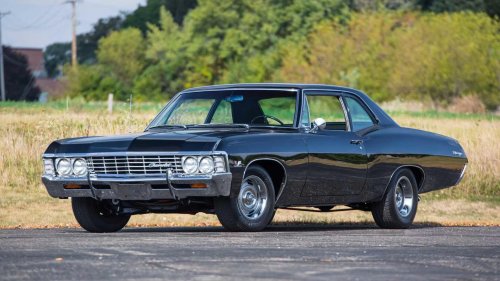
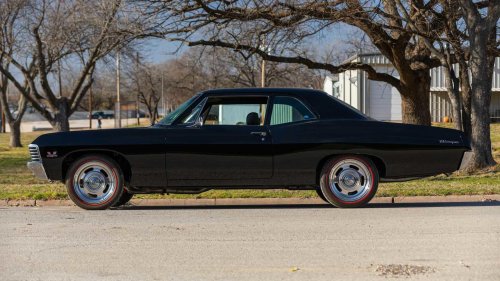
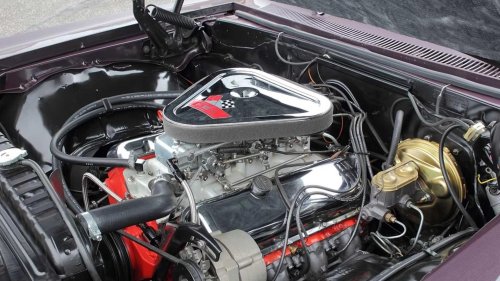
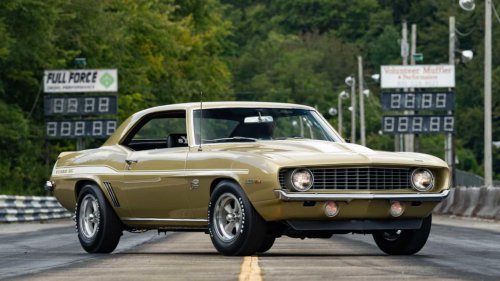
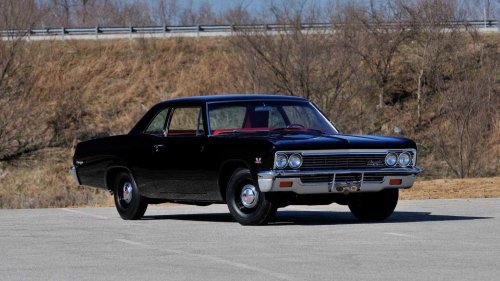
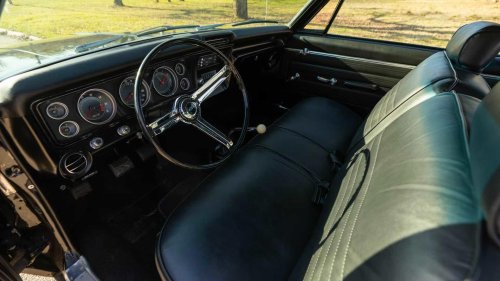
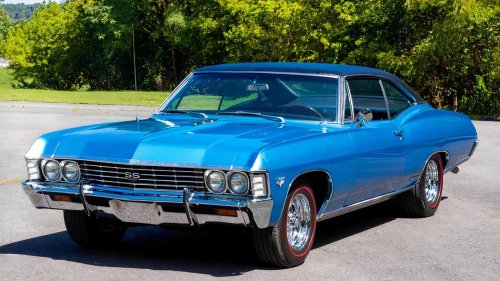
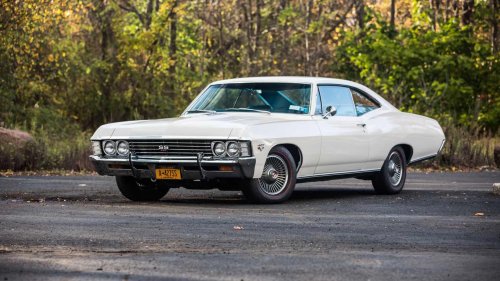
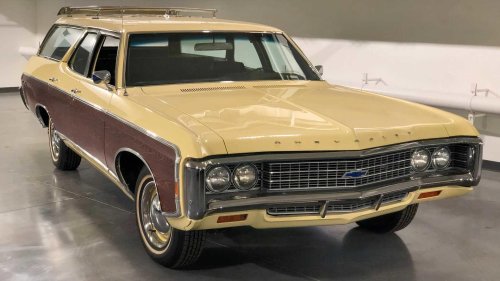
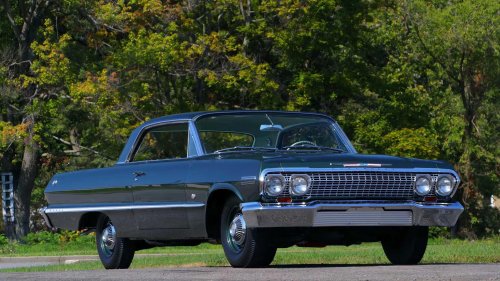
















The Impala has long been Chevrolet’s full-size flagship. If you wanted the best in comfort and performance, that was the name you called on. That doesn’t mean it was your only option. There was another choice better-suited for buyers who wanted maximum quarter-mile potential from a big Chevy.In 1966, you could walk into a Chevrolet dealership and order a stripped-down fleet sedan with 425 horsepower — enough to outrun most sports cars of the era — for less than the price of a loaded Impala. If that was still a bit rich for your blood, you could bump back horsepower output while still taking advantage of a simplified package. Best of all, nobody would know what was coming because the car in question was a true sleeper right from the showroom floor.We've updated this article with more information about the legendary L72 427 V8 and the 1963 Z11 Impala to help readers better understand the performance legacy of Chevrolet's full-size platform. The 1966-1969 Chevrolet Biscayne 427 Is One Of Detroit's Greatest Sleeper Cars MecumWhen it came to Chevrolet's model line-up, the Biscayne was supposed to be a utility player. It was intended mainly for fleet sales, and any private customers who prioritized bang-for-your-buck over everything else. But, that didn't mean that you couldn't do something cool with the Biscayne's platformThe Biscayne could be optioned with proper American big-block power, too! From 1966 to 1969, this was typically in the form of the 7.0-liter (427) L36 V8 engine, producing 390 hp and 460 lb-ft of torque. That power went to the rear wheels through either a 4-speed manual or a 3-speed automatic transmission.Mecum That kind of power may seem par for the course for a big-block muscle car of the mid-late '60s. Certainly on the more powerful end, but not unheard of. That's where the Biscayne's relatively mundane image comes into play. The super-powerful big-block Biscaynes barely looked any different from the more normal inline-6 and small-block V8 models. If you saw one parked up on the street, you'd probably think that it was a normal big Chevy from that era. The only thing that would give it away was if the engine was running. Then, you'd hear the unmistakable rumble of a classic big-block V8. It Could Be Optioned With The Legendary L72 Engine Mecum AuctionsThe coolest thing about the Chevrolet Biscayne 427 is that one of its engine options was one of the most legendary big block engines Chevrolet ever made. That's the 7.0-liter L72 V8 rated at 425 hp (primarily for insurance reasons) and 460 lb-ft of torque. That gave Biscaynes equipped with that engine genuinely dangerous levels of power. You have to remember that, back then, cars like the Chevrolet Biscayne barely had any kind of driver aids or safety equipment. The only thing stopping you from wiping out was raw driving skills.If you know about the L72 engine, it's likely not because of the Biscayne. It's probably because of the sportier models that used it. This included variants of the Corvette, as well as some of the early crazy COPO creations that entrepreneurial car dealers came up with. Those cars are what gave the L72 the legendary reputation it has now.Mecum No COPO cars were quite as famous or responsible for the lore of the L72 than those coming from the former Yenko Chevrolet dealership in Canonsburg, Pennsylvania. Don Yenko famously stuffed the same engine into the Yenko Camaro, which promptly ran an 11-second quarter-mile. If that wasn't insane enough, he dropped the same engine into a select few Novas that could cut a 10-second pass. These cars were so fast that insurance companies refused to cover them. The more humble Biscayne, having this engine option tucked away in its arsenal, only makes the Biscayne 427's existence cooler.That being said, it’s important to emphasize that the L72 wasn’t common in the Biscayne. In fact, it's hard to say exactly how many Biscaynes were built with this rare engine. GM Scene Magazine estimates just 200 were built in 1966. It’s also estimated that only a few hundred were built in 1968 and 1969. The L72 wasn’t available on full-size cars in 1967; however, the regular 427 still made an appearance and was very potent for its time. Here’s What Made The Biscayne Big Block A Sleeper MecumSeveral factors made a Biscayne equipped with a big block a certified sleeper. Chief among them was the fact that it featured minimal badging declaring its performance potential. Unlike the Impala, the Biscayne was never officially offered as an SS. While fender badges declaring the engine displacement were present, this detail could easily be missed, especially compared to SS callouts.Also, unlike the Impala, the Biscayne was a no-frills car. It featured fewer bells and whistles, with amenities like power brakes being optional. While the “stripper” nature wasn’t in the name of performance, it did ultimately save weight and give the car a more mundane appearance. Looks didn't help get down the quarter-mile more quickly, but the lower weight did. Hemmings cites an issue of 1968 Super Stock and Drag Illustrated that showed a 1968 Biscayne with an L72 and 4.56 gears accelerated from 0 to 60 mph in 6.3 seconds and cleared the quarter-mile in 13.65 seconds. Additionally, the 1966 model discussed in the aforementioned GM Scene Magazine article ran an 11.76-second quarter with 4.88 gears.The lack of features helped keep costs down. Also according to Hemmings, the base 1966 Biscayne cost just $2,484 when new. Adding the L72 427 was a $450 upgrade, bringing the total cost up to just $2,934—about the same as a '66 Impala SS. For perspective, a base 1968 Road Runner started around $2,800, which was coveted for its affordability.The Biscayne with a big block had much of being a budget performance car that was all business, but for the full-size segment. Remember, features like power steering and power brakes were often ditched in favor of straight-line performance, which is all many buyers cared about anyway. The packaging of the Biscayne put them on the fast track to winning drag races. A Collector's Dream Come True Mecum There was a time when the Chevrolet Biscayne 427 was a bit of a bargain in the muscle car world. In fact, you can still find well-built clones like this L72-engined 1966 Biscayne that sold for $32,000 in September last year. Though, that's certainly not the case for highly original cars.According to Classic.com, the highest recorded sale for a 1966 L72 Biscayne is $145,000, which was auctioned off in 2014. While few original examples pop up, those that do command prices of $90,000 or more. Other Crazy Chevrolet Sleepers From The Same Era Bring A TrailerThe Chevrolet Biscayne 427 may have been one of the coolest sleeper muscle cars to come from Chevrolet. But it was definitely not the only one that Chevy made during this period. There were a couple of other secretly fire-breathing big-block cars Chevrolet could sell you back then. Both of them used the engine options that were available in Biscayne 427s, and they both gained a similar reputation for being ludicrously powerful for their era and for what they were. 1967-1969 Chevrolet Impala SS 427 Mecum AuctionsConsidering that the Biscayne was the value-for-money big Chevy option aimed mainly at fleet sales, it's not surprising that the plusher Impala also got the option to have the same big-block power. The 1967-1969 Chevrolet Impala SS 427 was available with both the L36 and L72 engines. As a result, it had exactly the same power as the Biscayne 427. This made it a real handful to handle like the big-block Biscaynes were, and gave it those same sleeper car credentials. Some even consider the Impala SS 427 to be the last 'real' SS – a car that actually earned the SS badge, instead of it just being a trim package on slabs of American malaise. 1969 Chevrolet Kingswood 427 Bring A TrailerA family wagon is the last place you'd expect to find a proper, big-block V8 engine. But, Chevrolet let you spec the Kingswood with exactly that! The 1969 Kingswood 427 has the L36 engine that the Biscayne 427 and the Impala SS 427 both used in their lower-powered versions, meaning that it has the same 390 hp and 460 lb-ft of torque. That means it doesn't necessarily get that ultimate tire-shredding performance you get from an L72-engined Biscayne, but that's probably not what you'd want when you need something that's more of a daily driver. Plus, as sleeper car credentials come, it doesn't get any better than this. Even today, most enthusiasts would just think you're driving around in a chintzy and unassuming woody wagon. 1963 Chevy Impala Z11 Mecum The Z11 Impala wasn’t exactly a sleeper in its day. It was Chevrolet’s leading performance car that it proudly used to dominate drag strips across the nation. With an aluminum front clip and special 427 cubic-inch W motor under the hood, this monster would crush the quarter-mile in the 10-second range. Street-going versions could retain a rather mundane appearance, helping it blend in with other Impalas of the era, taking many would-be contenders by surprise.Sources: Bring A Trailer, Chevrolet, Hemmings, GM Scene Magazine, Classic.com