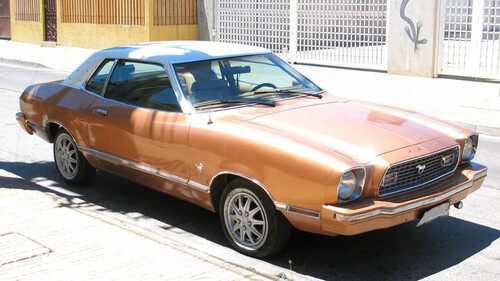
Ford’s 1969 Boss 302 Mustang was built to take on Trans-Am racing head-onThe 1969 Boss 302 Mustang was not a styling exercise or a marketing package. It was a purpose-built weapon aimed squarely at the SCCA Trans-American Sedan Championship, where Ford wanted to beat Chevrolet’s Camaro on Sunday to sell Mustangs on Monday. To do it, the company created a tightly focused homologation special that blended a race-bred small-block V8, sharpened chassis tuning, and aggressive bodywork into one of the most focused factory Mustangs of the muscle-car era. More than half a century later, the Boss 302 still stands out because it was engineered from the rulebook up. Instead of chasing quarter-mile glory, Ford’s program prioritized high-rpm durability, road-course grip, and balance, which gives the car a very different character from the big-block street bruisers that usually dominate muscle-car nostalgia. What happened By the late 1960s, the Trans-Am series had become a key battleground for Detroit’s pony cars. The rules capped engine displacement at 5.0 liters, or 305 cubic inches, and required manufacturers to sell street versions of their race cars in meaningful numbers. Chevrolet already had the Camaro Z/28 in the fight, and Ford needed a direct answer that could carry the Mustang nameplate to championships. Ford’s solution was to take its Windsor small-block architecture and create a dedicated 302 cubic inch V8 that could survive the relentless high rpm demands of Trans-Am competition. The resulting engine combined a 4.00 inch bore with a 3.00 inch stroke, a forged rotating assembly, and cylinder heads that borrowed heavily from the company’s 351 Cleveland design, all in the service of airflow and durability. Period coverage of the project describes how the Boss-spec 302 became one of the most respected iterations of Ford’s small-block family, a reputation that still shapes how enthusiasts talk about the 302 small-block today. On paper, the street version of the Boss 302 was rated at 290 horsepower, a figure that many period observers considered conservative given the engine’s compression, camshaft profile, and breathing. It arrived with a four-speed manual transmission, a performance rear axle, and a suspension package that was significantly firmer than a standard Mustang’s. The goal was to deliver a showroom car that mirrored the race machines closely enough for homologation while still being usable as a daily driver. Bodywork was more than cosmetic. The Boss 302 package included a blackout hood, front and rear spoilers, and bold side stripes that made the car instantly recognizable. The spoilers were not just decoration, since Trans-Am teams needed improved high-speed stability on long straights and through fast corners. Street cars carried that aero kit, which helped visually separate the Boss from other Mustangs and signaled its competition focus. The development effort was not limited to the 1969 model year. The Boss 302 returned for 1970 with refinements to trim and detailing, and collectors today often debate the relative appeal of each year. Detailed profiles of surviving examples, such as a well-preserved 1970 Boss 302, highlight how closely the production cars followed the original racing brief, from the high-revving engine to the heavy-duty cooling and braking hardware. On track, the Boss 302 quickly justified its existence. Trans-Am teams used the homologated engine and chassis pieces to build full race cars that fought for championships against factory-backed Camaros, Challengers, and Javelins. Technical breakdowns of the period describe how the Mustang’s short-wheelbase platform, combined with the rev-happy 302, produced a car that was nimble, durable, and well suited to the series’ mix of tight circuits and faster road courses. Coverage of a 1970 Trans-Am Mustang build illustrates how race teams pushed the platform even further with revised suspension geometry, weight reduction, and engine tuning that extracted far more power than the street rating. The Boss 302’s racing story is inseparable from the drivers who exploited its capabilities. Parnelli Jones became the model’s most iconic wheelman, hustling the Trans-Am Mustangs with an aggressive, sideways driving style that fans still associate with the car. Modern owners of surviving Boss 302s frequently reference that heritage. One enthusiast who restored and drives a 1969 Boss 302 describes how the car’s raw, mechanical feel on modern tracks connects directly to its late-1960s competition roots. Production numbers were relatively low compared with mainstream Mustangs, which adds to the Boss mystique. The limited run was driven by the homologation requirement rather than mass-market demand. Ford needed just enough cars to satisfy the sanctioning body and promote the racing program, not a full-scale volume model. That strategy helped keep the package focused on performance rather than comfort or luxury, which in turn preserved the car’s character. Why it matters The Boss 302 matters because it represents a different branch of muscle-car evolution. While many contemporaries chased ever larger engines and straight-line bragging rights, Ford’s Trans-Am special prioritized balance, cornering, and sustained high-rpm power. That focus gave the Boss 302 a personality that feels closer to a European touring car than to a traditional Detroit drag-strip hero. Enthusiast retrospectives often single out the Boss 302 as one of Ford’s most successful high-performance packages, precisely because it combined a race-proven engine with a cohesive chassis and visual identity. Analyses that look back at Ford high-performance history consistently place the Boss 302 alongside the later Boss 429 and other halo Mustangs as a key part of the brand’s performance story, but with a more road-course oriented flavor. From an engineering standpoint, the Boss 302’s small-block layout foreshadowed later thinking about performance cars. The relatively light engine helped the Mustang turn in more eagerly and reduced understeer compared with big-block variants. That tradeoff between peak straight-line speed and overall drivability is now standard thinking in performance car design, but in the late 1960s it set the Boss apart from many of its peers. The car’s Trans-Am success also reinforced the value of genuine motorsport credibility in marketing. Ford could point to race wins and championships as proof that the Mustang was more than a styling statement. That argument resonated with enthusiasts who wanted a car that felt connected to real competition rather than to advertising slogans. The homologation link was not just a talking point, it was baked into the hardware that customers could buy. Today, the Boss 302’s legacy shapes both the collector market and modern factory performance programs. Surviving cars, especially those with documented racing history or rare option combinations, command significant attention at auctions and in private sales. Collectors often compare the Boss 302 with its big-block sibling, the Boss 429, which was created to support Ford’s NASCAR efforts and required extensive reengineering of the Mustang’s engine bay. Coverage of rare Boss 429 Mustangs and hand-built 1969 Boss 429 highlights how Ford pursued parallel racing agendas in different series, with the smaller Boss 302 aimed squarely at Trans-Am. That context helps explain why the Boss 302 is often described as the driver’s choice among classic Mustangs. Where the Boss 429 impresses with sheer displacement and rarity, the 302 variant offers a more approachable, responsive experience that suits road courses and back roads. Period tests and modern track impressions describe a car that rewards commitment, with a powerband that comes alive at higher revs and a chassis that feels more composed when pushed than many of its contemporaries. The model’s influence extended into later generations. When Ford revived the Boss 302 nameplate for a modern Mustang, engineers again emphasized circuit performance, adjustable suspension components, and a high-revving V8 that paid clear homage to the original formula. Comparisons of the modern Boss 302 with its 1969 ancestor show how the core idea remained intact: a track-focused Mustang built in limited numbers to celebrate and support real racing. The original car also occupies an important place in the broader story of American road racing. Trans-Am in the late 1960s and early 1970s drew factory teams, top-tier drivers, and large crowds, with Mustangs, Camaros, and other pony cars trading paint on circuits that still host major events today. The Boss 302 was Ford’s sharpest tool for that environment, and its success helped cement the Mustang’s identity as more than a straight-line machine. For enthusiasts and historians, the Boss 302 serves as a reminder that regulations and constraints can produce some of the most compelling performance cars. The 5.0 liter cap forced Ford’s engineers to focus on breathing, revs, and chassis tuning rather than brute displacement. The homologation requirement forced the company to share that engineering with the public. The result was a car that still feels purposeful and coherent decades later. What to watch next The Boss 302’s story continues to evolve through restorations, vintage racing, and the way collectors and manufacturers reinterpret its legacy. As more original cars age, the quality and philosophy of restorations become increasingly significant. Some owners prioritize absolute originality, preserving factory finishes and components wherever possible. Others choose sympathetic upgrades that make the cars more usable on modern roads and tracks while retaining their essential character. High-profile builds and race-prepared examples keep the model in the public eye. Detailed features on Boss 302 and show how builders today mix period-correct parts with modern safety equipment, improved cooling, and updated tires to run these cars hard at historic events. Those efforts help demonstrate what made the original package so effective, since the cars are used in a context similar to their original mission rather than sitting as static display pieces. Vintage Trans-Am style racing remains a key stage for the Boss 302. Historic grids that feature Mustangs alongside Camaros, Challengers, and other period rivals give spectators a sense of how tight and aggressive the original racing was. The sound of a high-compression 302 at full song, combined with the visual drama of the car’s squat stance and spoilers, reinforces why the model still commands such loyalty among fans. The collector market will also shape how the Boss 302 is perceived in the coming years. As values for rare muscle cars fluctuate, the balance between usability and investment may shift. Owners who choose to track and enjoy their cars rather than preserve them as untouched artifacts help keep the Boss 302’s racing spirit alive, but they also face decisions about originality and wear. Auction coverage of significant examples, particularly those with documented competition history or unusual specifications, will offer clues about how the market prioritizes different aspects of the car’s story. For Ford and other manufacturers, the Boss 302 provides a template for future limited-run performance models. The idea of a street-legal car built directly to support a specific racing program remains compelling. Modern regulations and safety requirements make direct one-to-one homologation more complex, but the core strategy of aligning engineering, marketing, and motorsport around a focused product still resonates. The success of later special editions that echo the Boss formula suggests that customers respond strongly to cars that feel genuinely connected to competition. More from Fast Lane Only Unboxing the WWII Jeep in a Crate 15 rare Chevys collectors are quietly buying 10 underrated V8s still worth hunting down Police notice this before you even roll window down