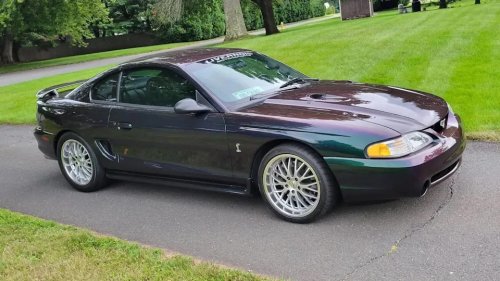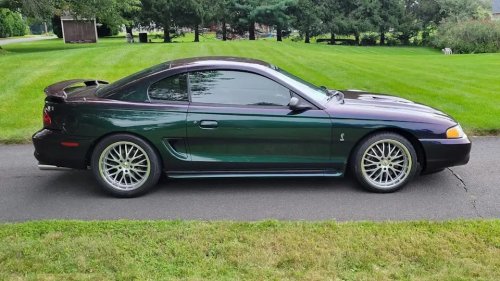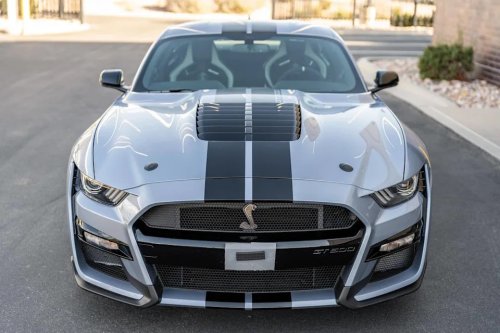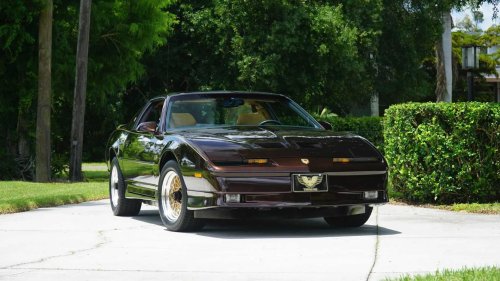
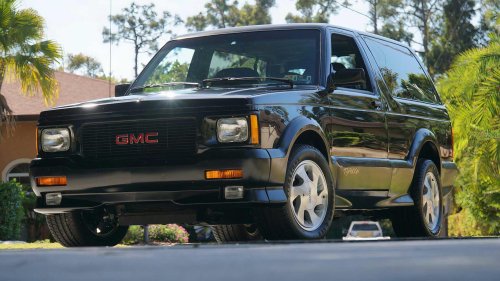
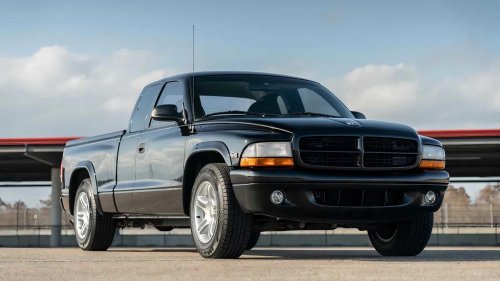
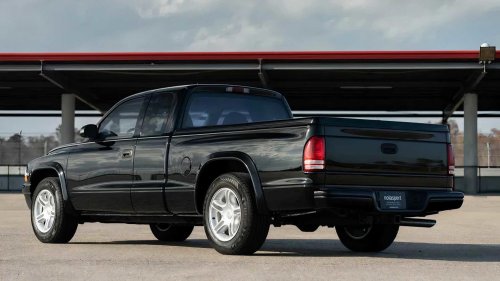
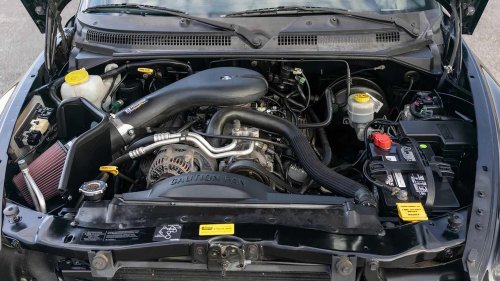
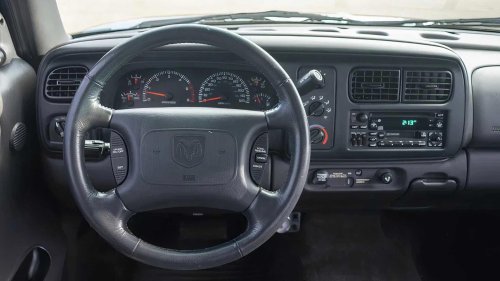
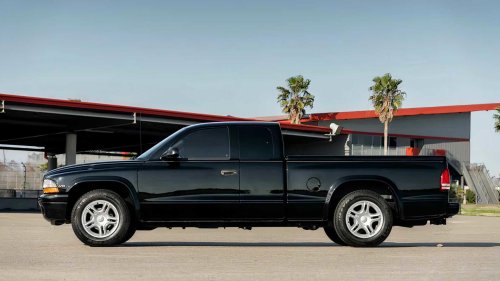
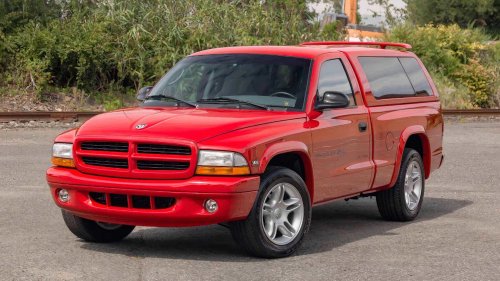



















Muscle cars were thin on the ground in the '90s, and carmakers were looking for new ideas. Stylish sports coupes with giant V8s had disappeared and the good old days of American muscle seemed long gone. Turbochargers and bulletproof six-pots had taken over, in the form of BMW M3s and Nissan Skylines, and it seemed for a moment that no one needed a V8 and a ton of torque anymore.Even Dodge, the brand that brought us the Charger and Challenger in the '60s and '70s, seemed to have given up on producing big V8 muscle cars. Or had it? There is one model from the '90s that ticks all the boxes. Two doors, big V8, surprising performance, affordable price, it's just most people will have forgotten about it. This vehicle could go toe-to-toe with a Mustang, and pick up a few sheets of drywall on the way home. The Muscle Car Era Had Stalled By The '90s Bring a Trailer It seemed, for a time, that no one was really interested in muscle cars anymore. By the end of the '80s, the performance car market was being flooded with excellent and affordable fast imports, with light weight and punchy performance. The early '70s had been a knockout blow for the American muscle car, with an oil crisis and emissions regulations reining in power. The Malaise Era that followed saw illustrious names reduced to pootling around with four-bangers that had the same amount of power as a lawnmower.By the '90s, the Detroit V8 was struggling to find relevance in a world that had become hooked on WRC and two-doors from Bavaria. But while muscle cars had become more of a niche, Dodge and other American carmakers were finding new ways to offer performance to customers. Carmakers Were Offering Performance In Odd Places GMC The 1989 Pontiac 20th Anniversary Trans Am showed that American performance cars could change the rules a little. Fitted with a 3.8-liter turbocharged V6, the boosted Trans Am could get to 60 mph in an incredible 4.6 seconds. Then came the Dodge Viper, with its Lamborghini-developed V10 (which was loosely based on a truck engine) and the GMC Typhoon, an SUV that packed a 4.3-liter turbocharged V6 engine (producing 280 horsepower and 360 lb-ft of torque) and could drag race a Ferrari Testarossa. In this environment of lateral thinking, it was decided that Dodge would bring out a V8-powered machine to take on the surviving Ford Mustang, it just wouldn't be what anyone expected. The Dakota R/T Was A Muscle Car For The Hardware Store Bring a Trailer Chrysler didn't have a rear-drive passenger car with a punchy V8 in the late '90s, and was looking to fill the vacuum. There were still 5.0-liter Mustangs, LT1 Camaros, and Pontiac Trans Ams getting column inches in the press. How about Dodge comes out with something a bit left field to take on these muscle car survivors? A souped-up Dodge Dakota pickup certainly seemed like a novel idea. But, in fact, it had been done before.The Dodge Li'l Red Express pick-up truck sidestepped some emissions regs and picked up a 5.9-liter V8, making it the fastest US vehicle in 1978. Perhaps it was a coincidence, but at least one of the Dodge Dakota 5.9 R/Ts that was handed out to journalists in 1998 when it was launched was finished in bright Flame Red paintwork. And it could take on the dedicated performance cars of its time. The R/T Had Almost Everything A Muscle Car Fan Needed Bring a Trailer Two doors? Check. 17-inch alloy wheels wrapped with beefy Goodyears. Check. Rear-wheel-drive? Check. Mighty 360 (5.9-liter) Magnum V8? Check. Unique wheel-opening flares? Check. 6.5-foot load bay at the back? Oh, thanks, I'll take that too. Yes, the Dakota R/T was based on the lightest truck in the lineup, and was essentially a load-lugging workhorse, but it had pretty much all the ingredients you need for a muscle, or perhaps pony car of the time.One respected magazine at the time wrote: "Dropping a healthy V-8 in a relatively light truck yields the same glorious results as a healthy V-8 in a small automobile. Since there are no rear-drive passenger-car platforms at Chrysler to showcase this drivetrain, Dakota wins the prize. Yahoo!" The Dakota R/T Was One Powerful Truck Bring a TrailerThat 5.9 Magnum up front is good for 250 hp, which might not sound like a huge amount, but there is also a healthy 345 lb-ft of torque. The engine benefits from multiport electronic-fuel-injection system and a hydraulic roller-tappet valvetrain. The extra power is handled by a four-speed 46RE auto gearbox. To give the truck a chance in the corners, the ride height was dropped by two inches lower and it was fitted with a 21mm rear sway bar. If you were driving a ponycar in the late '90s and this thing pulled up alongside you, you better have brought your A game. The R/T Could Take On A Ford Mustang Bring a Trailer 1998 Dodge Dakota R/T Specs If you were driving a '90s Mustang with a 3.6-liter V6, then forget about it. The six-cylinder would wheeze to 60 mph in anything between 9 and 11 seconds. You'd be smoked by a Dakota R/T. Things get interesting when lined up against a Mustang GT. For starters, the Mustang GT only has 215 hp, and 285 lb-ft of torque, so the Dakota R/T outguns it on paper. At the traffic lights, it would be a hard one to call. The Mustang, predictably, is a touch quicker, reaching 60 mph in 6.6 seconds, and covering the quarter mile in 15.1 seconds. The Dakota wouldn't be far behind, with 60 mph arriving in 7 seconds, and the quarter mile disappearing in 15.5 seconds. The R/T Was Quickly Forgotten Bring a TrailerThe Dakota R/T did muscle car duties at Dodge for five years (between 1998 and 2003) but things began to change in the 2000s. The muscle car was awakening, and a renaissance was brewing. The S197 Mustang leading the charge with its retro looks and heavy performance. Dodge also introduced the old school Charger and Challenger, and within a few years the swashbuckling days of eye-watering V8 power and chunky good looks were back again. Credit where credit is due, however, with the Dakota R/T carrying the torch in the meantime. Picking Up An R/T Pick-Up Is Easy Bring a Trailer Ultimately, the Dakota R/T is an intriguing and desirable throwback to a simpler time. It has the power of a muscle car of the era, but the practicality and usability of a workhorse, which should make it easier to justify it to your other half. Excellent R/Ts do fetch big money, with more than $20,000 needed for a pristine example, but there are plenty of decent-looking trucks out there that sell for a third of that. If you don't mind 100,000 miles on the clock, then $7,000 to $10,000 should get you an R/T in your driveway. The only way to get this much power and practicality from the late '90s would be to buy a Mustang GT and cut the rear hatch off — but we definitely wouldn't advise that.