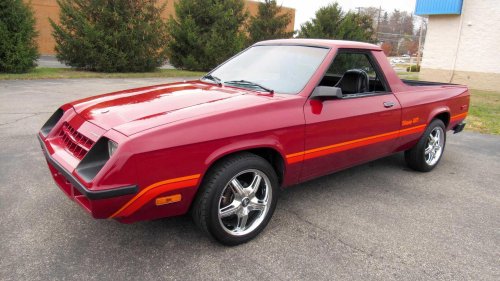
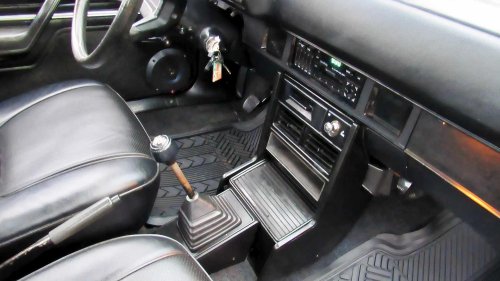
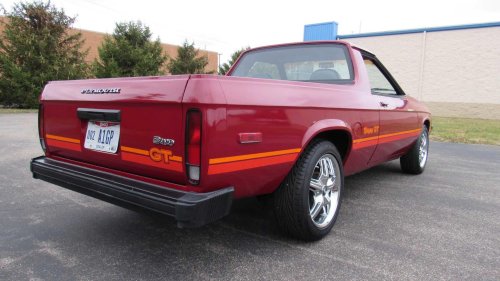
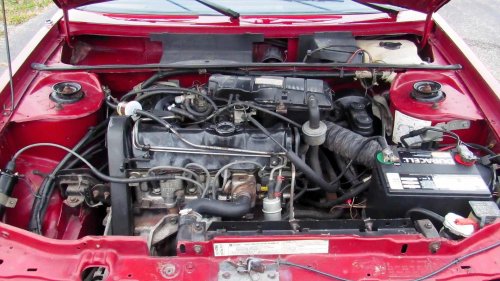
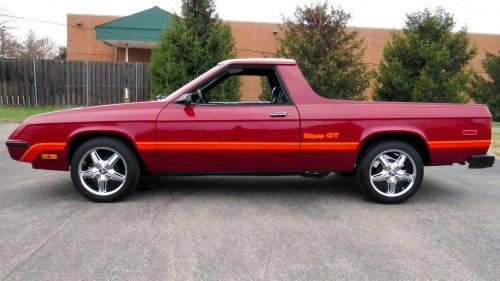
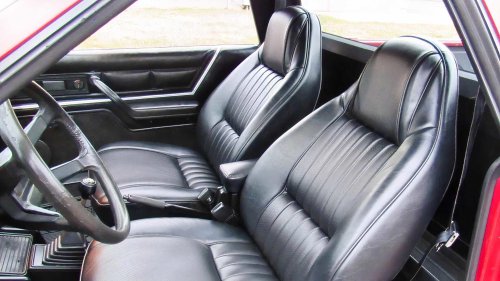
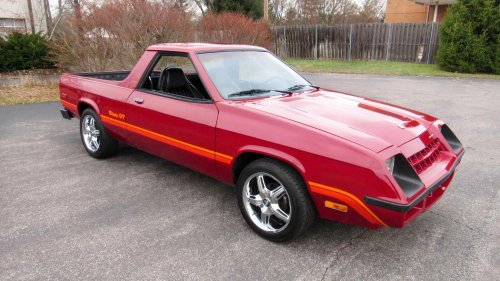
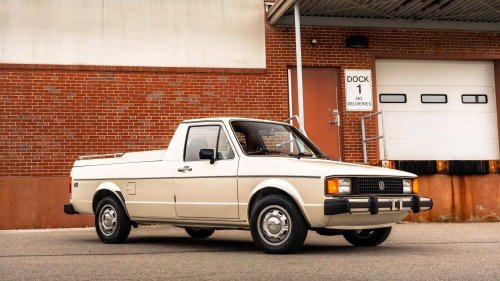
Some pickup trucks earn their place in history by being ultimate workhorses. However, others earn it by being an outcast to the very category they were sold under. In the late 20th century, automakers weren’t afraid to experiment, and nowhere is that more obvious than in the strange gray area between cars and pickup trucks.This was a time when fuel economy mattered more than muscle, practicality mattered more than prestige, and the definition of a “truck” was far more flexible than it is today. The result was a handful of factory-built oddities that looked like pickups, carried like cars, and left buyers wondering exactly what they were supposed to be used for.One of those experiments stands out for how brief, how misunderstood, and how odd it truly was. It lasted just long enough to make a point, then vanished. And decades later, that questionable identity has become the very reason gearheads still admire it today. Alright, it's time to rev those engines, because you’re about to meet the weird little pickup truck that only lasted one model year, and, quite frankly, was barely even a truck. The Rare Plymouth That Was Barely Even A Truck: Meet The 1983 Plymouth Scamp via Bring A TrailerBy the early 1980s, American automakers were looking to evolve. Fuel prices were volatile, compact cars were booming, and traditional pickups were starting to feel oversized for buyers who just wanted something cheap and practical. Chrysler’s answer was the Dodge Rampage, a front-wheel-drive, car-based pickup that straddled the line between hatchback and truck. Plymouth’s version of that experiment arrived quietly in 1983, wearing a different badge and a familiar name: the Plymouth Scamp. The Scamp Was A Surprisingly Practical Ute via Bring A TrailerNow, calling the Scamp a “truck” was always a stretch. According to Mac’s Motor City Garage, it rode on a front-wheel-drive Omni/Horizon platform, used a unibody chassis, and came exclusively with four-cylinder power. All were equipped with Chrysler’s 2.2L inline-four producing around 85 horsepower, paired with either a five-speed manual or a three-speed automatic. Towing was essentially nonexistent, and the bed was short, shallow, and clearly designed for light duty.Bring a TrailerStill, this little Plymouth was a truck in all the ways that mattered for the gearheads it was designed for. The Scamp had an open cargo bed, a usable payload rating of roughly 1,100 pounds, and enough practicality for hardware store runs, small deliveries, or the work commute. It was cheap to buy, cheap to run, and easy to live with.That oddball practicality is exactly why the Scamp is interesting today. It represents a forgotten moment when automakers were willing to experiment, even if the result didn’t quite fit any category. For collectors, it’s a genuine one-year curiosity. For gearheads, it’s proof that “truck” has always been a more flexible idea than we remember. Here’s Why Plymouth Turned The Dodge Rampage Into The Scamp via Bring A TrailerTo understand why the Plymouth Scamp existed at all, you first have to look at the Dodge Rampage. Introduced for the 1982 model year, the Rampage was Chrysler’s attempt to carve out a niche between compact cars and full-size pickups. This little Dodge was designed to appeal to buyers who wanted light utility without the cost, size, or fuel consumption of a traditional truck. Chrysler saw the Rampage as a practical alternative for small businesses, urban drivers, and commuters who occasionally needed an open bed.By 1983, Chrysler expanded that idea to Plymouth. The Scamp pickup wasn’t a new vehicle so much as a strategic rebadge. Plymouth dealers needed fresh product, and the brand was positioned as Chrysler’s more value-focused division. The Scamp was intended to give Plymouth access to the same compact pickup experiment without the expense of developing an entirely new model.via Bring A TrailerPlymouth’s goal wasn’t reinvention. It was coverage. By offering the Scamp, Chrysler could test whether the Rampage concept would resonate with a slightly different buyer, one more focused on affordability and simplicity than sporty styling. Aside from minor trim differences and branding, the Scamp was mechanically identical to its Dodge counterpart, sharing the same 2.2L four-cylinder engine, front-wheel-drive layout, and unibody construction.However, the market response never materialized. Compact car-based pickups were already a tough sell in the early 1980s, and buyers who wanted utility still leaned toward rear-wheel-drive trucks with greater capability. Ultimately, the Scamp’s limited performance and unconventional layout made it difficult to justify alongside more traditional options.via Bring A TrailerIn the end, the Scamp wasn’t a failure of engineering so much as timing and identity. Plymouth’s experiment lasted just one model year. In contrast, the Dodge Rampage remained in production for just three model years, from 1982 through 1984, before Chrysler quietly discontinued the experiment. While neither found a way to resonate with ‘80s gearheads, both still serve as a rare reminder of an era when automakers were willing to blur categories in search of the next big idea. How Much Is A 1983 Plymouth Scamp Worth Today? via Bring A TrailerWhen the Plymouth Scamp pickup debuted for the 1983 model year, it was never meant to be a collector car. It was positioned as an affordable, no-frills utility vehicle, and its pricing reflected that. Thus, according to iSeeCars, the 1983 Plymouth Scamp two-door standard cab carried an MSRP of $6,991. In contrast, the GT variant required a bit more, starting at $7,563. In any case, when adjusted for inflation, buying one of these little trucks in 1983 would be equivalent to spending around $22,000 to $24,000 in today’s money.Thanks to the Scamp’s single-year production run and low survival rate, clean examples have quietly become difficult to find. However, luckily for gearheads, when you are able to find one, it doesn’t cost an arm and a leg to get behind the wheel of it. Just take this red 1983 Plymouth Scamp GT, for example. It sold on Bring a Trailer in 2019, and one lucky gearhead was able to get their hands on it for just $7,000. Now, that’s a steal for a little pickup truck with this much character. And that’s exactly why gearheads still want one of these little oddballs today.You see, the Scamp will always occupy a strange, yet fascinating corner of automotive history. It’s a genuine factory oddball that’s part compact car, part pickup, and fully representative of Chrysler’s early-’80s experimentation. In a world where nostalgia increasingly favors the unusual, the Plymouth Scamp’s once-questionable identity has become its biggest asset. Other Weird Trucks That Deserve A Second Look The Plymouth Scamp wasn’t the only attempt to stretch the definition of what a pickup truck could be. Throughout the late 1970s and 1980s, several automakers experimented with car-based utility vehicles aimed at buyers who wanted light-duty usefulness without committing to a full-size truck. Some of those experiments failed quietly. Others developed cult followings. Two of the strangest examples are the Volkswagen Rabbit Pickup and the Subaru BRAT, both of which remain fascinating footnotes in truck history. Meet The 1981 Volkswagen Rabbit Pickup via Bring A TrailerVolkswagen introduced the Rabbit Pickup to the U.S. market in 1980, building it off the same front-wheel-drive platform as the standard Rabbit. It was never intended to replace a traditional pickup. Instead, VW saw it as a practical, fuel-efficient option for urban drivers, small businesses, and tradespeople who needed occasional cargo space. Production ran from 1980 through 1984, making it another short-lived experiment.The 1981 model year represents the Rabbit Pickup at its most honest. Power came from a small four-cylinder engine focused on efficiency rather than performance, and the truck’s lightweight construction prioritized economy over toughness. Its bed was compact, its payload modest, and its capabilities limited. Still, it offered something few trucks of the era could: excellent fuel economy and car-like driving manners.Today, the Rabbit Pickup deserves a second look precisely because of its restraint. It’s a reminder that “truck” doesn’t always mean big, loud, or overbuilt, and surviving examples stand out as genuinely usable vintage oddballs. Meet The 1986 Subaru BRAT via Bring A TrailerSubaru’s BRAT took a different approach to the same problem. Introduced in the late 1970s and sold in the U.S. through the mid-1980s, the BRAT was built on a car-derived platform but offered standard four-wheel drive, giving it a capability edge over most car-based pickups. The 1986 model year marked the end of its American run.The BRAT was created to give buyers a compact, versatile vehicle that could handle light off-road use while still functioning as daily transportation. Its most infamous feature, the rear-facing jump seats bolted into the bed, were a creative workaround for U.S. import regulations and helped define its quirky reputation.While it was never a serious work truck, the BRAT earned a loyal following thanks to its durability, simplicity, and unmistakable personality. Today, it’s remembered less for what it could haul and more for how boldly it ignored convention, making it one of the weirdest trucks ever sold in America.Sources: Classic.com, Hemmings, iSeeCars, J.D. Power, Mac’s Motor City Garage, The Truth About Cars