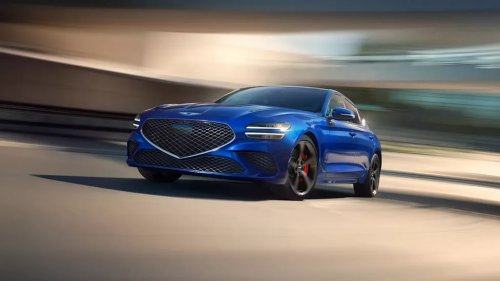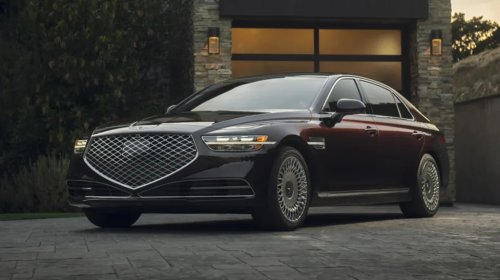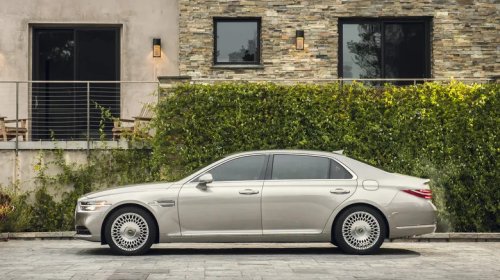
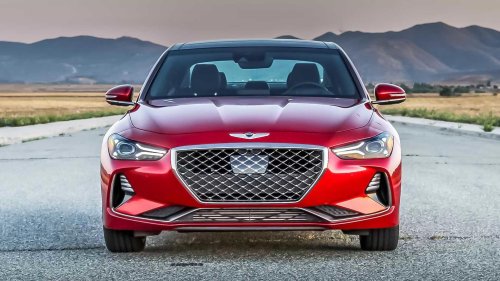
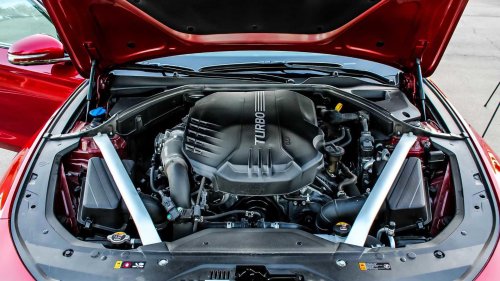




















When Genesis first entered the US luxury market, it faced stiff headwinds. After all, it had to persuade buyers to trust its products in a premium segment where resale confidence, heritage, dealer familiarity, and brand recognition were some of the primary drivers. In that environment, Genesis was ready to offer the expected tempters with good horsepower figures, stitched leather, and a long equipment list, but it also played its trump card in the form of an extended warranty.The company offered a five-year, 60,000-mile new-vehicle limited warranty, plus a 10-year, 100,000-mile powertrain limited warranty for the original owner. And Genesis executives held their breath to see whether that kind of carrot could overcome the market hesitation associated with a new, unknown premium nameplate. Genesis Had To Build Trust Before It Could Trade On Prestige GenesisHyundai had big aspirations when it announced in 2015 that Genesis would be a standalone global luxury brand. This would be a new luxury marque that could compete with established global premium brands, with a six-model rollout featuring cutting-edge design, refined performance, and a hassle-free customer experience.Hyundai and Genesis knew that luxury buyers did not shop purely from a spreadsheet and that established premium brands carried plenty of emotional weight. After all, when someone bought one of those badges, they were telling their neighbors, clients, and fellow staff members that they knew a lot about taste, status, and security. And that’s why the likes of BMW, Mercedes-Benz, Lexus, Audi, and Acura were ahead in that marketplace. They could clearly answer all those buyer questions, while Genesis had to ask buyers to believe in its product before it had a chance to earn its cultural shorthand.Many automakers try to enter the market by offering bargain-basement prices, but that would not be the right approach here and could even create suspicions. Alternatively, the company could have included a lengthy list of high-quality equipment and features as standard, but most luxury buyers already expect generous features in any case.So, Genesis had to find something that could make its leap into the unknown feel less risky without making the car feel like a cut-price substitute, and that’s where the warranty came in. This would not instantly make Genesis appear alongside the oldest luxury brands, and it could not create prestige on its own. But it might give the buyer a practical, confidence-building signal at just the right moment, when such a prospect was in decision-making territory. Genesis Borrowed From Hyundai's Trust Playbook For Its Luxury Audience Genesis Hyundai had used the 10-year, 100,000-mile warranty as a major trust-building asset in the US market for several years. It first appeared in 1999 model years, and stablemate Kia later adopted it for its own offerings. Both companies were able to use the long warranty to overcome mainstream car trust concerns. Now, Genesis wanted to see whether the same corporate logic would work for its different kinds of buyers, and the company was standing behind the mechanical foundation of its vehicles for far longer than the usual luxury brand norm.For Genesis, the ideal outcome would be to keep the conversation going when any prospects were considering its unfamiliar premium badge rather than automatically defaulting to an established rival. The G70 Made The Warranty Feel Like A Real Performance Promise Carbuzz / Valnet Genesis introduced the G70 to the US market in 2019, positioning it directly in the compact luxury sports sedan class. It came with a 3.3-liter twin-turbo V6, rear- or all-wheel drive, an eight-speed automatic transmission, Brembo brakes and a limited-slip differential.In its quickest form it could go from 0–60 mph in around 4.5 seconds with launch control. This was a serious powertrain approach, and it made the 10-year warranty feel especially important. After all, the company was not just applying such a warranty to a predictable, underpowered economy car. It was offering it on a rear-drive-based luxury sports sedan with a powerful twin-turbo V6 on board.The hidden message was that Genesis could not only compete on equipment, selling price, and performance, but also carry a longer commitment around the core and most important mechanical parts.In 2026, Genesis continues to rely on the G70. The 3.3T Sport Prestige carries a 3.3-liter twin-turbo V6 that turns out 365 hp and 376 lb-ft of torque. It comes with an eight-speed automatic transmission, Brembo brakes, adjustable-ratio steering, a variable exhaust valve system, and a limited-slip differential.And this impressive powertrain continues to attract the company’s long-term warranty, which can make a real difference. After all, turbocharging, premium electronics, and performance hardware can raise some long-term questions, and especially as Genesis is still a relatively young luxury brand. The Fine Print Stops It From Being A Complete Ownership Cure Carbuzz / Valnet It’s essential to understand the details of the Genesis warranty to get a clear picture of the proposition. The new vehicle limited warranty runs for five years or 60,000 miles. After that, the original owner powertrain limited warranty kicks in and covers specified engine, transmission, and transaxle components for up to 10 years or 100,000 miles.Even though this is not a full 10-year bumper-to-bumper warranty, it’s still valuable coverage. It covers engine components like cylinder block and head, manifolds, timing gear, oil pump, flywheel, engine mounts and many more. For the transmission and transaxle, it covers the case and internal parts, CV joints, front and rear hub bearings, propeller shafts, and other potential problem areas.But it’s also important to understand the limitations. Once the broader five-year/60,000-mile warranty expires, there isn’t any coverage for potential problem areas like infotainment screens, driver assistance sensors, interior electronics, trim systems, or other luxury car technologies.Transferability is the other major caveat, as an original owner cannot transfer the 10-year, 100,000-mile powertrain warranty to a subsequent buyer. There are limited exceptions, such as certain spouse transfers, but subsequent owners will typically only receive powertrain coverage under the five-year, 60,000-mile plan.That can matter for resale and may be partly reflected in the 44% depreciation rate for the G70 after five years, as reported by iSeeCars. That figure compares to around 45.6% for luxury compact cars overall or 41.5% for all vehicles. The warranty doesn't appear to do much to ease depreciation, and its non-transferability may limit how much it can support used market confidence. Why Luxury Rivals Still Have Little Reason To Copy It Genesis Genesis felt it needed a 10-year warranty solution, far more than most established luxury brands. It knew that BMW, Mercedes-Benz, Lexus, and Acura already had the recognition Genesis was trying to build, leaning on leasing culture, repeat customers, and dealer familiarity in a way a young premium brand could not. But the Genesis approach remains quite selective in the broader marketplace. Mitsubishi offers a 10-year, 100,000-mile powertrain limited warranty standard on its models, but the coverage only applies to the original owner. Later owners get the balance of the five-year, 60,000-mile new vehicle limited warranty instead.Ram advertises a 10-year, 100,000-mile limited powertrain warranty for 2026 trucks and vans, but that’s clearly not in the luxury passenger car segment. Instead, rivals stick to their guns in the luxury segment and see no reason to copy Genesis.For example, Acura has a four-year, 50,000-mile new vehicle limited warranty and a six-year, 70,000-mile powertrain limited warranty, while Audi offers a four-year, 50,000-mile new vehicle limited warranty as well. They may well offer competitive ownership programs, maintenance packages, certified pre-owned coverage, and strong dealer support, but they’ve never felt the need to make 10-year powertrain coverage a centerpiece of their new car pitch.More importantly, established brands understand the risk of elevated warranty programs. They know that extending factory powertrain coverage to 10 years, especially for complicated transmissions, all-wheel-drive systems, and driveline hardware, can be a serious commitment. And if they were to normalize that approach, they would probably find it very hard to step away from it later.The Genesis warranty is strategically powerful today, even though it may not be unique across the broader US marketplace and doesn’t provide bumper-to-bumper coverage for a full decade. And while it may not transfer cleanly to most used buyers, it still attacks one of the most important psychological barriers on the showroom floor, by building trust in the mind of that new car buyer.