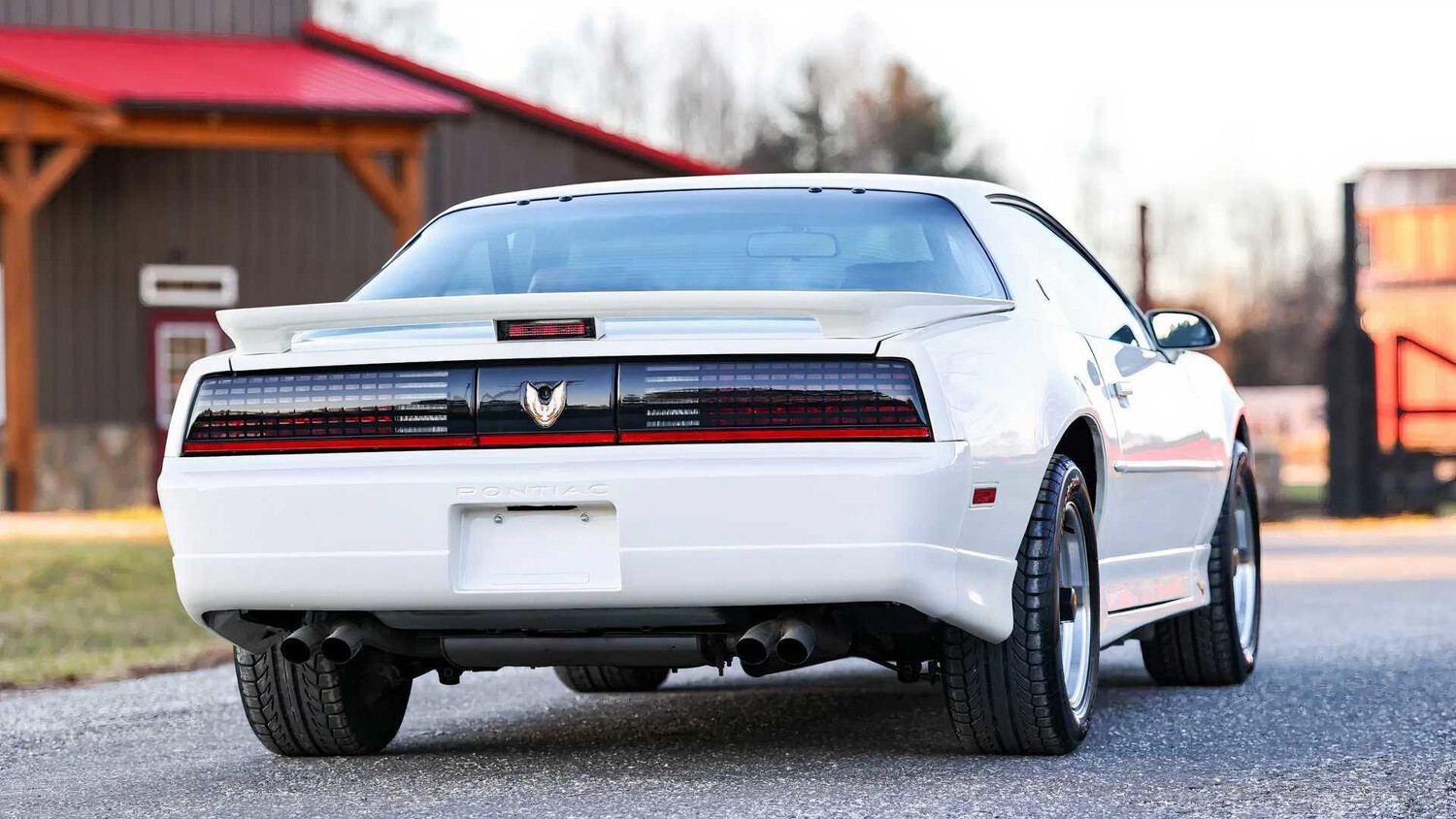
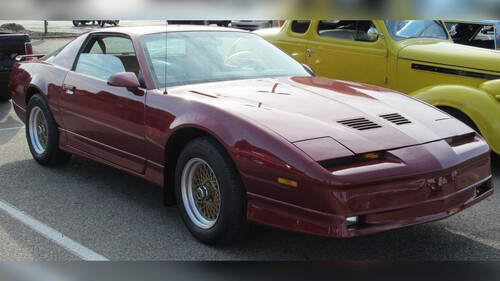
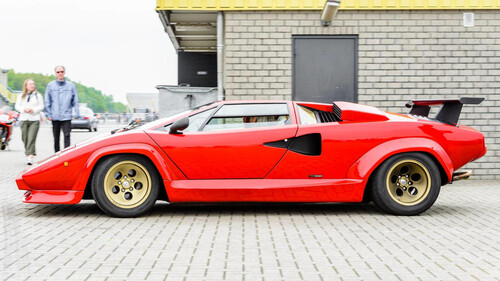
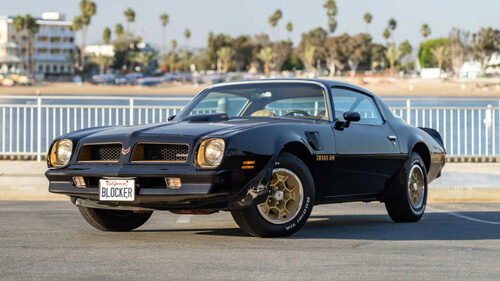
In the '80s, American muscle cars were struggling. What started out in the '60s as a Golden Era for V8-powered homegrown machines had turned into a distant memory, with tumbleweed blowing across the once infamous strips of street racing asphalt. An oil crisis and emissions regulations had killed off muscle cars in the early '70s as quickly as they had arrived (courtesy of the Pontiac GTO) and while the cars that sat in showrooms may have had Mustang or GTO written on them, the days of humongous engines with enough power to launch a space rocket appeared to be over.By the '80s, things hadn't got much better. The Corvette C4 was selling well, and the Mustang GT could muster 225 horsepower, but there was one problem, and it was called the turbocharger. Turbochargers had been around for years, but European and Japanese carmakers were just starting to bolt them onto any four- and six-cylinder engine they could find, with the results being giant-killing cars such as the Audi ur-Quattro. Forced induction engines could produce the same power as the under-detention V8s, often with less weight and better economy. The Japanese carmakers started turbocharging coupes left, right and center, and suddenly a lazy V8 with 200 horsepower seemed a bit outdated. There was only one thing for it – the Americans had to beat them all at their own game. The 1989 Pontiac 20th Anniversary Trans Am Was More Special Than It Needed To Be Bring A Trailer The second-generation Pontiac Firebird had the misfortune to trudge through the entire '70s, a decade that has become synonymous with the death of the OG muscle car. The Firebird looked good and earned plenty of fans in Smokey And The Bandit, but by the early '80s, it was starting to go out of fashion with the chest wig and vinyl jumpsuit. Pontiac needed something a bit more techy-looking for the decade of excess, and in stepped the third-gen Firebird in 1982. The car was more rakish and wedgy, with a nod to the likes of the Lamborghini Countach and Lotus Esprit. The car starred in a new series called Knight Rider, with flashing lights and an early prototype for ChatGPT.Bring a TrailerThe Firebird may have looked a bit like a supercar, but it wasn't exactly a V12 monster. The base motor was a 2.5-liter “Iron Duke,” with a paltry 90 horsepower. There was also a 2.8-liter V6, but this made barely more at 105 horsepower, and even if you specced a 5.0-liter V8 you could only expect to get 165 horsepower under the hood. These were the kind of power figures you'd expect from the windscreen wiper motor in a '60s muscle car. There were WS6 and WS7 packages to make the Trans Am a bit spicier, but in general, these '80s Pontiacs didn't really have much bite. Pontiac Decided To Turbocharge The Trans Am Bring A Trailer The year 1989 would mark the 20th year of the Firebird Trans Am, so Pontiac was compelled to create a limited edition version to mark the occasion. Considering highly tuned muscle cars weren't exactly flying off the shelves in the '80s, Pontiac could have been forgiven for just adding a few anniversary stickers, some badges inside and a nice set of rims to a Trans Am and call it a day. But it didn't. It decided to make the fastest Trans Am the world would ever see – and that includes the models that would be launched for the following two decades too. The 20th Anniversary Trans Am Obliterated Almost Everything In Its Path Bring A Trailer With the Trans Am's birthday on the horizon, Indianapolis Motor Speedway officials approached Pontiac to ask if they would like to celebrate the model with a pace car for the 73rd running of the Indianapolis 500. Pontiac realized that this might be a better way to celebrate the Trans Am's birthday than a cake and a few tequila slammers down the local sports bar, so it happily obliged. For some reason, the company decided to go all in.Rather than just enter a medium-warmed-up version of the Trans Am, which might translate to a few extra sales, the company developed an entirely new high-performance variant. The actual pace car would be a production-specification vehicle that customers could purchase directly from showrooms, creating a legit connection between the Indianapolis 500 and the showrooms rather than just a marketing stunt. The Anniversary Trans Am Packed A Turbo V6 Bring A Trailer The Turbo Trans Am (TTA) arrived for 1989 with a 3.8-liter turbocharged V6 from the Buick Grand National. Getting the engine to fit the narrow Trans Am engine bay was nothing short of a nightmare, but it actually made the car a touch more potent than intended, almost by accident. The changes involved installing cylinder heads from the newer 3800 V6, which created better airflow from the headers, and the turbo V6 engine was rated at 250 horsepower and 345 lb-ft of torque, although it was thought the power output might have been underrated by at least 50 hp. The engine was mated to a four-speed automatic transmission, but this didn't seem to matter – the Trans Am turbo was outrageously fast, whatever gearbox you stuck in it. The sprint to 60 mph was just 4.6 seconds, which seems pretty quick today, but imagine what it was like in the '80s. Here's How The 1989 Pontiac 20th Anniversary Trans Am Stacks Up Against The Competition Via: Mecum Auctions Hitting 60 mph in sub-five seconds was pretty wild for the '80s. The Anniversary Trans Am would also reach 100 mph in 13 seconds and cover the quarter mile in 13.4 seconds, with a top speed of 162 mph. It seemed that the glory days of the muscle car were back; it just needed a six-pot and the help of a turbocharger. A Ferrari Testarossa, with a 12-cylinder engine, would reach 60 mph in 5.2 seconds, and even the mighty F40 would only just beat the Trans Am to 60 mph with a time of 4.2 seconds. Even the WS6 Trans Am of 2002, the last year for this iconic muscle car, would hit 60 mph in five seconds. Quite simply, the Anniversary Trans Am was one of the fastest production cars on the planet. It's a shame that it was so short-lived. The 20th Anniversary Trans Am Only Lasted A Single Year Bring A Trailer It is thought that just 1,550 turbo Trans Ams were built (Hagerty) for 1989, making it a pretty rare car. But that doesn't mean these turbo Trans Ams are silly money in 2025. Hagerty's Valuation Tools put the price of a good condition 1989 Pontiac Firebird 20th Anniversary Trans Am GTA Indy Pace Car at just $29,900. One recently sold on Bringatrailer.com for less than that. With 39,000 miles on the clock, this Anniversary Trans Am fetched just $26,250. Compare that to the $2.5million you'll need for an F40 to outdrag the Trans Am (just) and it seems like even more of a bargain.Source: Hagerty.com