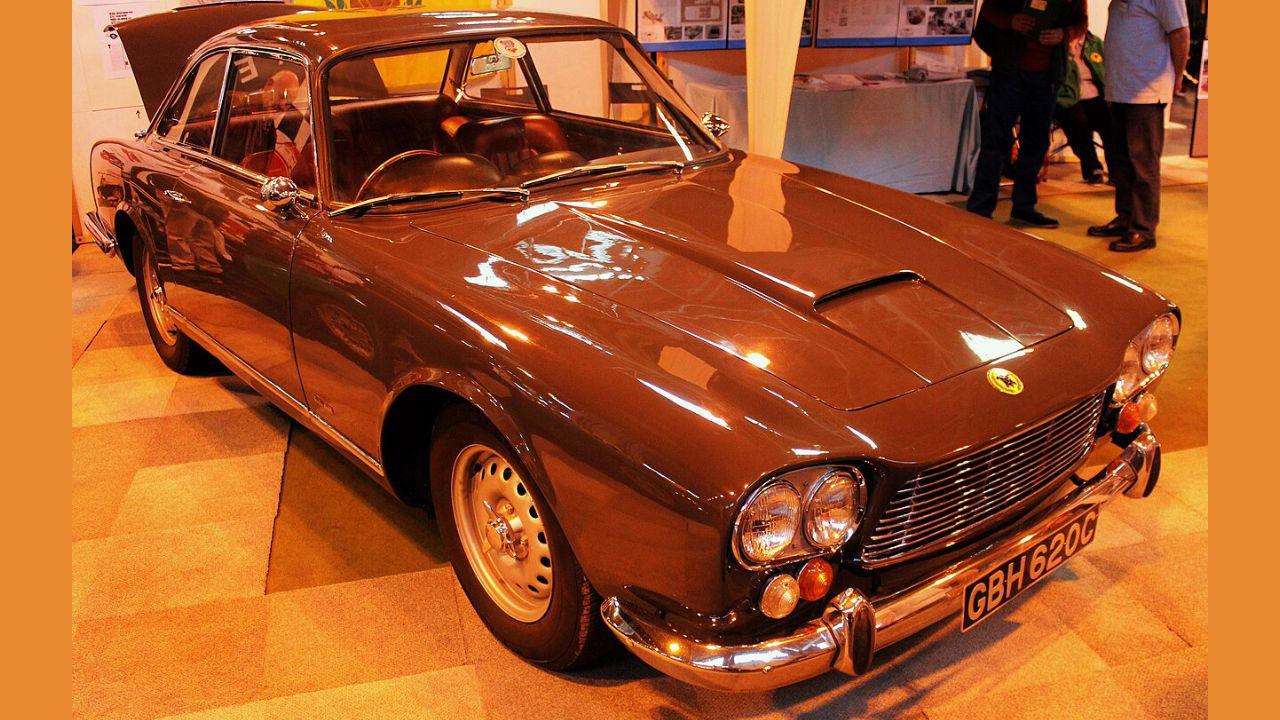



















Almost nobody talks about the 1964 Gordon-Keeble GT and its Corvette-powered secretIn the middle of the 1960s horsepower race, one British four seater quietly combined Italian style with American muscle and then almost vanished from view. The 1964 Gordon-Keeble GT hid a Corvette-powered secret under a clean, understated body, and only the most dedicated enthusiasts still speak its name. Its story is a sharp reminder that some of the most interesting grand tourers were not the ones that sold in big numbers, but the ones that tried to rewrite the rulebook and paid the price. The Gordon-Keeble GT offered the speed of a serious performance car, the comfort of a luxury saloon, and the reliability of a Chevrolet small block, wrapped in a hand finished shell that looked more Turin than Thames Valley. Yet almost nobody talks about it, even though its blend of British engineering and American V-8 power anticipated a formula that would later become a performance-car cliché. The British GT that looked Italian and sounded American From a distance, the 1964 Gordon-Keeble GT could easily be mistaken for a product of Turin coachbuilding rather than a low volume British workshop. A square steel tube chassis was created and sent to Turin, Italy, where a steel body was made, designed by Giorgetto Giugiaro and his colleagues at Bertone, which gave the car a crisp, modern profile that felt closer to contemporary Italian exotics than to the average British saloon. That Italian connection is central to the car’s character, and it is why some modern viewers initially insist that this is an Italian car until they learn where it was actually built, a confusion that recent video coverage of the model plays on with amused disbelief. The styling was only half the story. Under the bonnet sat a Chevrolet 327 cubic inch V-8, the same family of small block that powered the contemporary Corvette and a range of American performance models. On startup, the 327 V-8 delivered a deep, unmistakable idle, and period tests describe a wave of torque that felt quite different from the high revving straight sixes and V-12s that dominated European grand touring at the time. With a four speed T-10 manual gearbox and 300 hp and 360 lb-ft of torque on tap, the Gordon-Keeble was capable of running up to highway speeds with an ease that surprised drivers used to more highly strung machinery, and that output figure of 300 and 360 gave it serious performance for a four seat car. Contemporary enthusiasts who encounter the car today often describe it as American muscle wearing a hand made Italian suit, a phrase that captures the odd but appealing mix of influences. The chassis and assembly were British, the bodywork was shaped in Turin, the engine and gearbox came from across the Atlantic, and the end result was a car that could credibly be parked next to an Aston Martin or Maserati without embarrassment. One modern auction listing goes further and describes the model as American muscle wearing a hand made Italian suit, but with a personality and sense of humor that felt distinctly British, right down to the badge on its nose. That badge is another part of the car’s quiet rebellion against sports car clichés. Instead of a lion, a stallion, or an aggressive bird of prey, the designers chose a tortoise. Recent commentators on the car’s history like to highlight the absurdity of putting a tortoise badge on the front of a 140 m Grand Touring car, yet that self deprecating emblem summed up the founders’ willingness to poke fun at their own creation even as they chased serious performance targets. From prototype to “fastest four seat” reality The Gordon-Keeble story began with a prototype that came together in less than a year, an impressive pace for a small team working without the resources of an established manufacturer. Though the prototype took less than a year to complete, the development production version of the tortoise badged GT required far more effort, as the founders worked to translate an eye catching show car into something that could be built consistently and sold to paying customers. That early prototype work laid the foundation for a car that would later be described as one of the fastest four seat machines of its time. The production Gordon-Keeble was a British car marque, made between 1964 and 1967, and it arrived with serious technical credentials. Only 100 were built, and the specification list reads like a greatest hits compilation of 1960s performance engineering. The chassis used square section tubing for rigidity, the suspension and steering were tuned for high speed stability, and the braking system featured front and rear discs on all four wheels. The combination of a relatively light body, a stiff frame, and that Chevrolet 327 engine gave the car acceleration that compared well with contemporary sports cars, yet it retained seating for four adults and a usable luggage compartment. Fans of the car still like to repeat the claim that it was the fastest four seat car on British roads at the time it entered production. Period accounts and modern enthusiast write ups describe the Gordon-Keeble as the fastest four seat car of its era, a machine that could cruise at high speeds for long distances while keeping its occupants comfortable, something that put it squarely in the grand touring category. One enthusiast group post, which refers to the model as The Rare Gordon Keeble Corvette Powered British GT Car, stresses that only 100 Ever Made left the factory, and that scarcity has turned surviving examples into prized collectibles. Modern video features on the car often open with a simple scene. It is 1964 and a sleek grand tourer rolls onto British roads. Its Italian designed body turns heads while the rumble of its America sourced V-8 hints at a very different character from the average British saloon. That contrast between visual elegance and mechanical aggression is exactly what the founders wanted. They set out to build a car that could cross continents at speed, with the reliability of mass produced American hardware and the style of a bespoke European coupé. Inside, the Gordon-Keeble mixed luxury with a straightforward, driver focused layout. The dashboard carried a full set of instruments, the seats were designed for long distance comfort, and the cabin materials aimed to justify a price tag that placed the car in direct competition with established grand tourers. Even today, owners and reviewers describe the interior as a place that feels more like a gentleman’s express than a stripped out sports car, which fits the car’s positioning as a GT rather than a track focused machine. How a British startup built a Corvette powered GT The company behind the car was a British car producer, active between 1964 and 1967, formed when key figures in the project decided to turn their prototype into a production reality. The 1964 Gordon Keeble is often described as a fascinating piece of automotive history, and that is not only because of its mechanical specification. For a brief period, this British startup tried to stand alongside much larger manufacturers by offering a hand built, high performance GT with a unique blend of influences. From the outset, the founders made a deliberate decision to rely on proven American power rather than develop a bespoke engine. This choice reduced development risk and gave the car a strong performance baseline, but it also meant that the Gordon-Keeble would always carry a hint of Corvette in its character. Enthusiast groups and specialist dealers still refer to the model as a British Corvette, a nickname that reflects both its use of Chevrolet hardware and its role as a transatlantic interpretation of the grand touring concept. In engineering terms, the use of the Chevrolet 327 V-8 and the four speed T-10 gearbox gave the Gordon-Keeble a robust drivetrain that could handle sustained high speed cruising. The engine’s 300 hp and 360 lb-ft of torque allowed the car to accelerate briskly even in higher gears, and owners who drive their cars today often comment on how relaxed the engine feels at motorway speeds. The V-8’s deep torque curve meant that the car did not need to be worked hard to deliver strong performance, a contrast with some European rivals that demanded constant high revs. The chassis and suspension were tuned to match that power. The square tube frame provided a rigid platform, while independent suspension and four wheel disc brakes gave the car handling and stopping power that were advanced for a British four seater of the period. Some modern commentators compare the driving experience to that of a vintage Aston, noting that the Gordon-Keeble combines a similar sense of long legged composure with a more muscular, American style power delivery. Body production in Turin introduced its own challenges. Shipping chassis to Italy for bodywork and then bringing completed shells back to Britain for final assembly added cost and complexity, but it also ensured a level of fit and finish that matched the car’s ambitious pricing. The Italian styling, particularly from Giorgetto Giugiaro and his colleagues, gave the Gordon-Keeble a timeless look that has aged gracefully, which is one reason why surviving examples still attract attention at shows and auctions. Marketing the car as a British luxury model with American power and Italian style required careful positioning. Promotional material and later enthusiast retrospectives emphasize that the Gordon-Keeble a British luxury car was a short lived but iconic mark that left a lasting impact on the automotive industry, precisely because it dared to combine these elements in a single package. That international mix also explains why the car can seem oddly anonymous to casual observers. It does not fit neatly into the usual national stereotypes that define many classic performance cars. Why only 100 were built For all its technical strengths, the Gordon-Keeble story is also a lesson in how difficult it is for a small manufacturer to survive in a market dominated by established brands. Only 100 were built, and the company’s production run lasted only a few years. The reasons for that short life are as interesting as the car itself. Enthusiast discussions and historical write ups describe the Gordon-Keeble as a commercial failure because it was underpriced. One period analysis bluntly states that The Gordon Keeble was a commercial failure because it was underpriced, and that 100 were produced through 1966, suggesting that the company simply did not charge enough to cover its costs. The combination of hand built chassis, Italian bodywork, imported American powertrains, and low volume production created a cost structure that would have challenged even a larger manufacturer. Other retrospective accounts frame the Gordon-Keeble story within a broader pattern of British Deadly Sins in the 1960s, where ambitious but undercapitalized projects struggled to survive. In that context, the Gordon-Keeble’s low production volume and rapid shutdown look less like an isolated failure and more like part of a wider issue in British specialist car manufacturing. According to one detailed historical piece, the company built about 100 cars in about 12 months before financial pressures forced it to close its gates, a pace that suggests strong initial demand but insufficient capital to sustain operations. There were also practical challenges. Sourcing components from multiple countries, coordinating bodywork in Turin with final assembly in Britain, and managing quality control across such a complex supply chain would have taxed even a seasoned manufacturer. For a small startup, those demands translated into delays, cost overruns, and customer frustration. Some buyers reportedly faced long waits for delivery, which in turn undermined confidence in the brand. Despite those problems, the Gordon-Keeble left a strong impression on those who encountered it. Enthusiast communities today still refer to the model as The Rare Gordon Keeble Corvette Powered British GT Car, and they emphasize its status as 1 Of 100 Ever Made. That scarcity, combined with the car’s distinctive specification, has turned it into a cult object. Fewer than 100 of these were made, all powered by the same Chevrolet small block, and each surviving example carries the weight of a marque that never had the chance to mature. Modern commentators sometimes argue that if the company had priced the car higher, secured more stable financing, or simplified its production process, it might have survived longer. Yet part of the car’s appeal lies in the fact that it represents a moment when a small British firm tried to punch far above its weight, using a Corvette engine and Italian styling to challenge the established order. The very factors that made the Gordon-Keeble so distinctive also made it fragile as a business proposition. The tortoise that outran its reputation Today, the Gordon-Keeble occupies an unusual place in automotive culture. It is simultaneously obscure and highly regarded, a car that many enthusiasts have never heard of but that commands deep respect from those who have driven or studied it. Some modern video reviews introduce it as a British Corvette that most car fans probably did not know of, highlighting the gap between its historical significance and its low public profile. Part of that obscurity stems from the car’s short production run and the small number of surviving examples. Another factor is the way automotive history tends to focus on brands that either achieved racing success or maintained continuous production for decades. The Gordon-Keeble did neither. It never had the chance to build a competition pedigree, and its marque disappeared after only a few years. As a result, it rarely appears in mainstream histories of the period, even though its specification and performance would justify a place alongside more famous names. Enthusiast videos and articles over the last few years have begun to change that. One widely shared short clip describes the Gordon Keeble a British luxury car as a short lived but iconic mark that left a lasting impact on the automotive industry, suggesting that its influence extends beyond its tiny production numbers. Another long form video walks viewers around a surviving example, pointing out that it looks like an Italian grand tourer but was built in Britain and powered by a Chevrolet V-8, a combination that still feels slightly subversive. More from Fast Lane Only Unboxing the WWII Jeep in a Crate 15 rare Chevys collectors are quietly buying 10 underrated V8s still worth hunting down Police notice this before you even roll window down