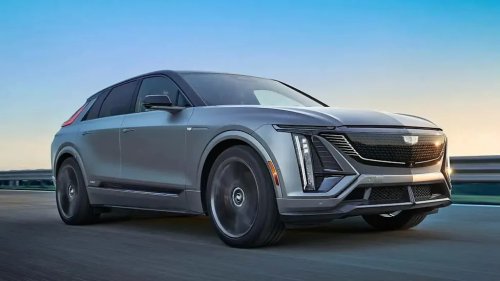
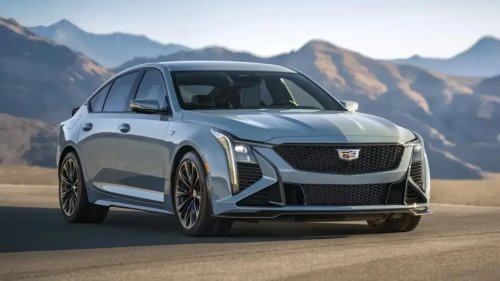
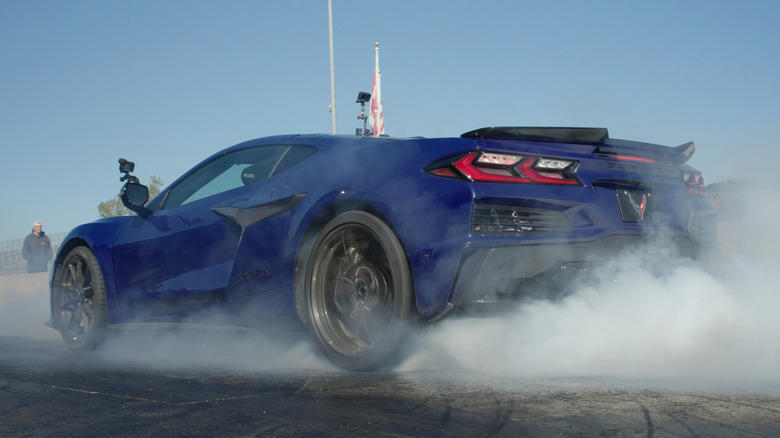
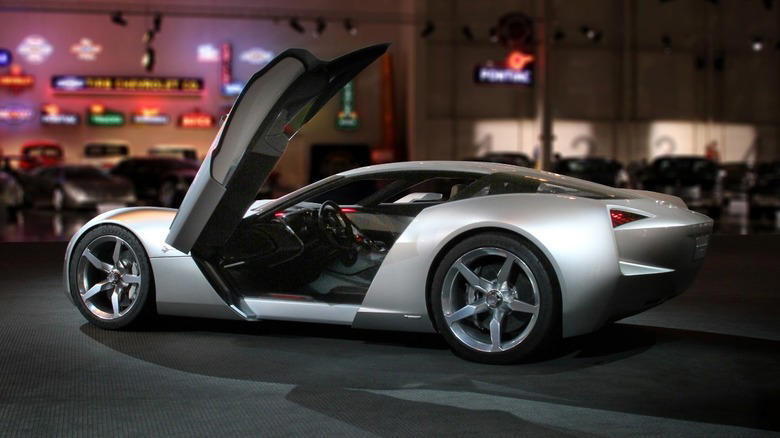
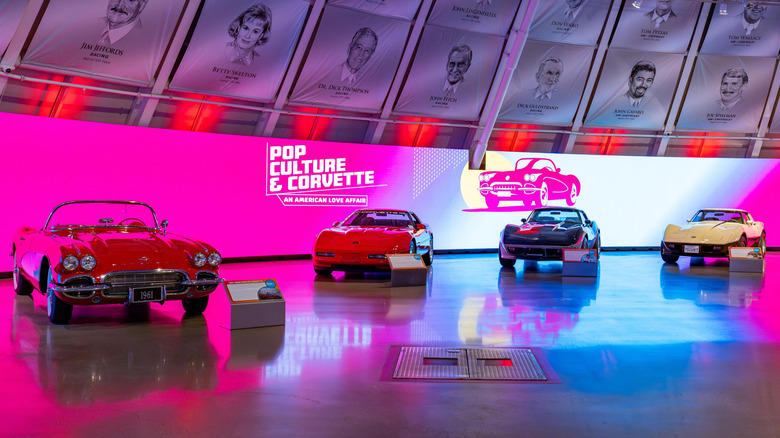
A blue 2026 Chevrolet Corvette ZR1X with smoking tires as it peels out on a quarter-mile drag strip run.We all have brands we prefer. And the most enduring brands seem to tiptoe between being true to what people expect of them and being shapeshifters that evolve to reflect changing times, ideas, and cultural ideals. Sometimes, the lines between brand and product blur, and a product forges its own iconic identity. Like the Chevrolet Corvette. With all due deference to Mopar Muscle and Ford's storied Mustang and GT supercar, the Corvette is America's Sports Car. Rare Chevy Corvettes can fetch millions. Corvette — or simply 'Vette — is a one-word household name, like Beyoncé or Ichiro, and the automotive paparazzi love to speculate on what it will do next. The mid-engine 1986 Corvette Indy concept supposedly previewed the fifth-generation model. The 1990 CERV III Corvette prototype kept that rumor mill humming, until it didn't.The mid-engine 'Vette finally arrived in 2020. Then came the May 2023 issue of Car and Driver, which delivered heightened whispers from GM of an alternate galaxy orbiting a Corvette sun. There was highly anticipated ZR-1 and Zora news, plus renderings of an upcoming 2025 Corvette SUV. Starting at around $60,000, it would have power trains to challenge Porsche's Cayenne and Macan. Also, there would be a four–door coupe. And they were to be EVs. They'd all be part of a new Chevy performance sub-brand called ... Corvette.Didn't happen. And GM's Mark Reuss subtly put the kibosh on the idea in 2025 while chatting with Jay Leno. So: did GM screw up? Should Corvette be its own brand? Tell us in the poll and comments below. Yes! America needs a dedicated sports car brandThe silver 2009 Chevrolet Corvette Stingray concept, featured in the film "Transformers: Revenge of the Fallen" as the character Sideswipe.Let's face it: Corvette is already its own brand. Why not build on it? Corvette is one of the industry's oldest nameplates. It has adapted to the changing world around it, and earned branding gravitas you can't buy.In 1953 the Corvette started life as a lithe two-seat sports car. It's since been everything from a world-record-setting screamer to a movie star to a midlife crisis punchline on wheels. Rock-star astronauts drove Corvettes at the height of the space race. During its third generation, the 1968-1982 C3 Corvette went from having a monstrous 435 horsepower to a mere Malaise-Era-muffled 200 hp, triumphantly outlasting disco and hair metal. The current C8 Corvette is a mid-engined masterpiece, replete with an available hybrid power train. Once, that seemed far-fetched. A Corvette brand could absolutely have been set up to challenge Porsche. Remember when Porsche meant the 911? The 928 was designed to replace it, then saddled up alongside it. Along with the 944, Boxster, Cayenne, Panamera, Macan, and so on. Some of them were considered heresy. Yet here we are.It's easy to imagine the Corvette family tree sprouting similar branches. The 1980 Corvette America was a four-door, conceived and built by California Custom Coach. If we can have the Corvette E-Ray, why not a Corvette SUV to challenge the Cayenne and Lamborghini Urus? While we're at it, a Corvette sedan and wagon to take on the BMW M5 and Mercedes-AMG E 53 sound perfect. Right? Once a Chevy, always a Chevy — and better for itFour Chevrolet Corvettes from different eras, on display in the National Corvette Museum's exhibit Sure. Corvettes of every shape and size. But wait — don't we already have these? They're called Cadillacs. Cadillac V-Series vehicles have featured versions of Corvette engines from the start. In fact, there have been plenty of non-Corvettes with Corvette engines, from Camaros to SUVs. The Corvette doesn't need to be a standalone brand for the rest of the GM stable to benefit from its power — literally or figuratively. Perhaps GM didn't screw up at all. Brands cost money. Corvette production and distribution are already in place, but what about dealerships and marketing? These require huge sums of cash that could otherwise be invested in development. When you consider that this is part of why GM goes through brands like Spinal Tap goes through drummers, maybe Corvettes still exist precisely because they're Chevrolets. Even when Pontiac built excitement, the Corvette stood as the iconic performance halo for General Motors — yet it sits, as ever, firmly parked beneath the umbrella of Chevrolet, GM's historically affordable entry-level brand. Right where it belongs.By offering supercar performance at a relatively attainable price, Corvettes remain true to Chevy's mission when it was founded in 1914. Baseball, hot dogs, apple pie, and Chevrolet. As America's Sports Car, the Corvette is, was, and always should be a Chevy. GM nailed it ... right? Want more like this? Join the Jalopnik newsletter to get the latest auto news sent straight to your inbox, and add us as a preferred search source on Google.



















 +66 others