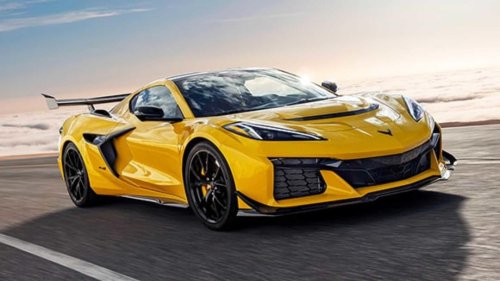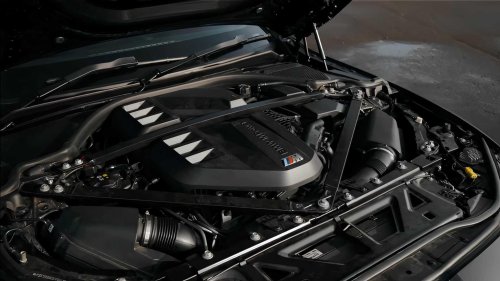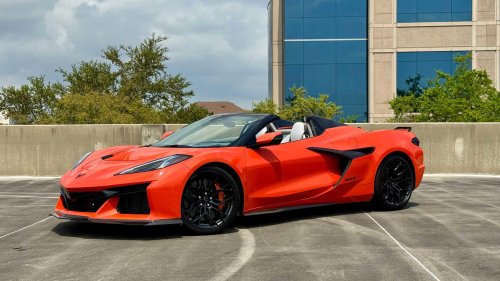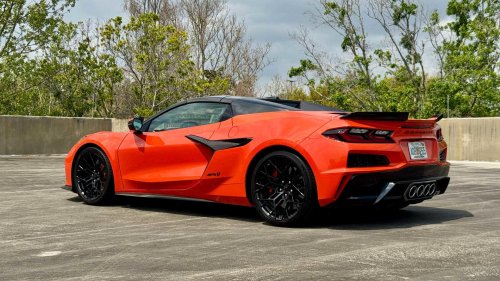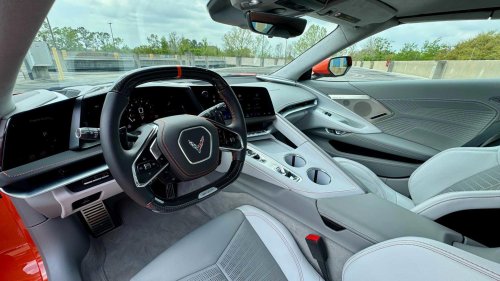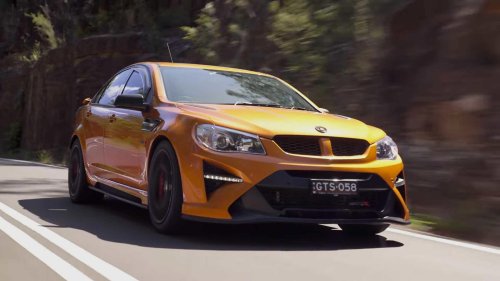




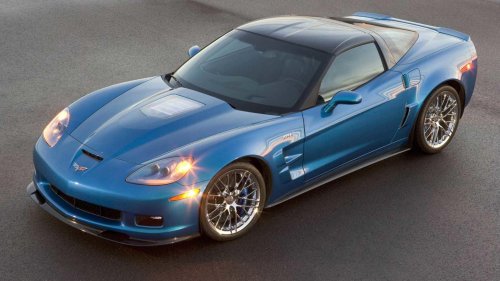



















Australia’s car scene is more than kangaroos and sunburn. Beneath the outback’s dusty horizon, local legends like the Ford Falcon GT and HSV Clubsport once prowled the highways. These machines roared past silent farm fences and carved tire tracks across desert tarmac. Yet, tucked away in suburban showrooms, an even more secretive beast waited in hushed anticipation.Imagine a car so powerful it made Ford’s muscle hero blush, and so rare that even the most seasoned collectors could count them on two hands. This is not a tale of overseas imports or concept fantasies – it’s a story born on Australian soil, wearing a heart from the United States. Under its sculpted bonnet lies an engine with global fame, one that transformed a homegrown coupe into a record-breaking speed demon. The Holden HSV GTSR W1 Was A Corvette ZR1 Sedan via Collecting Cars (YT) The HSV GTSR W1 launched in October 2017 as HSV’s swan song, blending local craftsmanship with Corvette ZR1 power. Under its carbon-fiber hood lay a supercharged 6.2-liter LS9 V8 producing 635 horsepower and more than 600 lb‑ft of torque. HSV built the W1 to showcase its final Gen-F performance iteration, pairing the LS9 with a Tremec six‑speed manual and electronic torque vectoring.HSV limited production to just 300 coupes, making it one of Australia’s rarest modern road cars. Each car wore a numbered plaque and came only in select colors with bespoke interior trim When new, it carried a base price of AUD 169,990 (about $113,000) inclusive of GST and Luxury Car Tax. HSV’s dealers often offered factory options like lightweight batteries and racing harnesses, pushing the final sticker closer to AUD 180,000 ($120,000).via Collecting Cars (YT) Today, the W1 trades far above its launch price. Private ads list examples between AUD 320,000 and AUD 420,000 ($213,000–$280,000) for low‑kilometer cars. For instance, one 2017 GTSR W1 with 520 km asks AUD 335,000 ($220,000). Another sold via Collecting Cars in October 2024 for AUD 340,000 ($224,000).This steep appreciation underscores the W1’s status among collectors and enthusiasts. Its blend of rarity, performance, and Holden heritage keeps demand – and prices – high on the open market. Australia's Most Powerful Production Car via Collecting Cars (YT) HSV built the GTSR W1 around the supercharged 6.2‑liter LS9 V8. The engine makes 635 horsepower at 6,500 rpm and more than 600 lb-ft of torque at 3,900 rpm. A Tremec six‑speed close‑ratio manual gearbox sends power to a limited‑slip differential with HSV’s specific ratio and electronic torque vectoring. A carbon fiber airbox feeds air to the twin four‑lobe rotors of the Generation VI supercharger. The hi‑flow exhaust system uses an X‑pipe and bi‑modal mufflers to balance power and sound.HSV aimed for precision on every corner. The car uses the SupaShock suspension system with coil‑over monotube front struts and multilink control in back. Engineers added direct‑acting stabilizer bars and dual‑bush lateral supports. Electric power steering gives clear feedback. A driver preference dial lets drivers tailor ESC, traction control, launch control, steering effort, torque vectoring, and exhaust mode.Braking comes from 410 mm drilled two‑piece discs in front and 372 mm in rear. Six‑piston forged monoblock AP Racing calipers clamp each disc. HSV uses carbon‑ceramic compound pads for track resilience. The car features electronic stability control with ABS, EBD, EBA, TCS, and a competition mode.via Collecting Cars (YT) HSV packed the cabin with safety gear. Dual‑stage front airbags, side‑impact thorax and pelvis airbags, and side curtain airbags protect occupants. The car uses front seatbelts with load limiters and pyrotechnic pretensioners. It also offers ISOFIX child anchors and three rear seat restraint points, though that’s probably not very important in a land rocket.Inside, HSV placed function first. A flat‑bottom Alcantara‑wrapped steering wheel and gear selector sit in front of a color display with trip, fuel, and vehicle info. The dash shows unique HSV gauges and a model ID plate. Drivers adjust wheel height and reach. The car offers cruise control, head‑up display, and rain‑sensing wipers.HSV chose tough, track‑ready wheels and tires. Forged 20x9‑inch wheels in front and 20x10‑inch in back wear Pirelli P Zero Trofeo R track tires – 265/35 ZR20 front, 295/30 ZR20 rear. A black temporary spare wheel and sealant kit come standard. The setup balances grip and ride.Outside, the W1 wears the GTSR performance body kit. Projector headlamps with black bezels and LED running lamps lead into pitch‑black mirror scalps and beltline. Carbon fiber W1 fender vents cool brakes. The Aeroflow Performance rear spoiler uses a carbon upper wing. Quad Shadow Chrome exhaust tips finish the look with purpose and flair. The World's Rarest HSV Holden The HSV Maloo GTSR W1 ranks as the rarest variant. HSV built only four of these ute models. They sold within hours of announcement. This truck carried the same LS9 heart and performance upgrades like the sedan. It also used a reinforced chassis to handle the supercharged output.Its cargo bed received a special cover that held downforce vanes. This kept rear grip stable at high speed. Underneath, engineers strengthened the rear differential. They upgraded the half shafts for durability. The bed liner came with heat shielding to protect from exhaust heat.Inside, the Maloo shared the GTSR W1’s carbon bucket seats. It featured a unique badge denoting its rarity. HSV offered bespoke paint colors, including a single yellow example. In 2020, this particular unit surfaced for sale in Brisbane. The asking price hit $1.5 million AUD.The SuperUte behaves more like a GT in corners than a work truck. This Maloo model cements HSV’s legacy of wild, locally built specials. It shows how a performance division can transform a simple ute (that’s what Australians call small two-door pickup trucks) into a world-class muscle car. Chevrolet Corvette ZR1: The Original Chevrolet The Corvette ZR1 (C6) debuted in 2007 with the LS9 6.2-liter supercharged V8. At the time, Chevrolet set out to build the fastest Corvette ever. Engineers aimed for 6.0 seconds or less to 60 mph. They exceeded that: the ZR1 hit 60 in 3.4 seconds.GM used a forged aluminum block and heads for strength at high boost. They fitted a Roots-type Eaton supercharger. This spun at high speed to deliver 10 psi of boost. A heat exchanger cooled intake air. The engine produced 638 hp, matching the HSV tune.Aerodynamics formed a crucial part of the package. A carbon fiber hood with exposed weave housed a functional air extractor. The front splitter and rocker extensions managed airflow. A rear wing added 330 pounds of downforce at 190 mph. Corvette’s team tested elements at GM’s wind tunnel in Michigan.Chevrolet On track, the ZR1 shone. It set lap records at the Nürburgring Nordschleife in 2010. Its magnetic ride control tightened body movements. Carbon ceramic brakes offered fade-free stops. Michelin Pilot Sport tires kept grip consistent.The ZR1’s interior mixed luxury with sport. Leather and microsuede trimmed seats held drivers in place. The steering wheel mounted controls for drive modes. An easy-to-read gauge cluster included a performance data recorder.