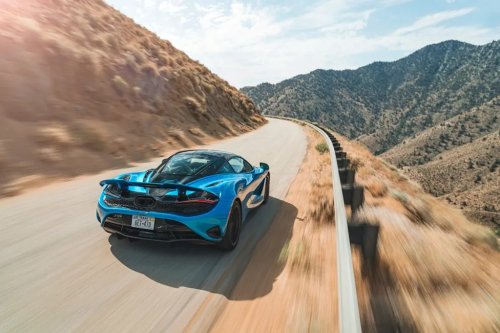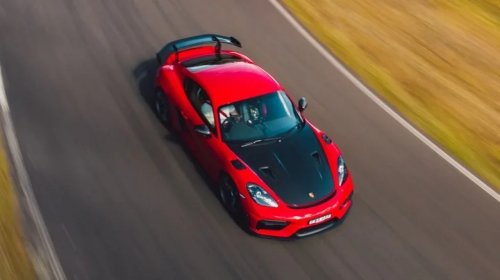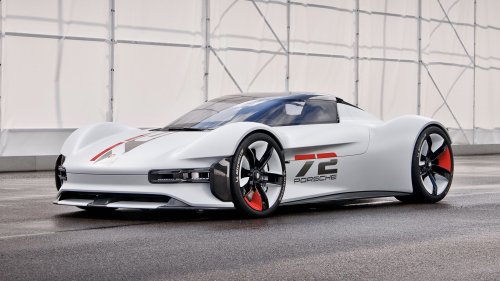

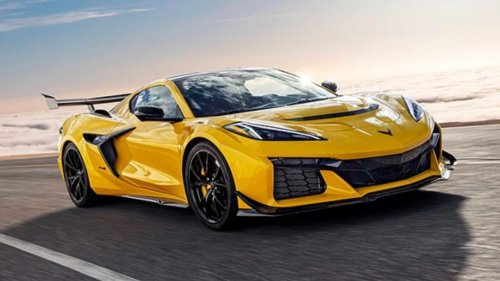
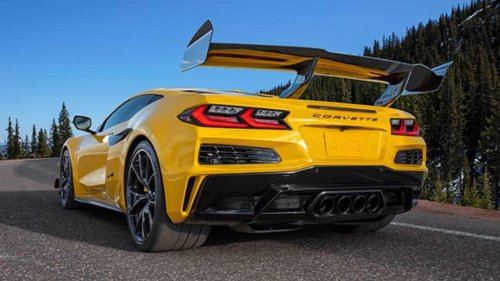

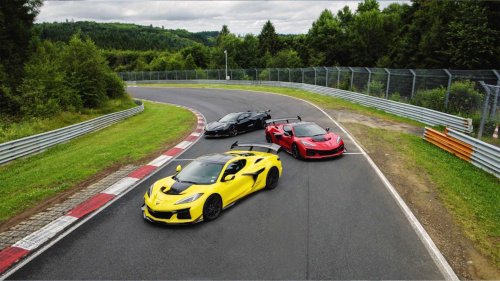

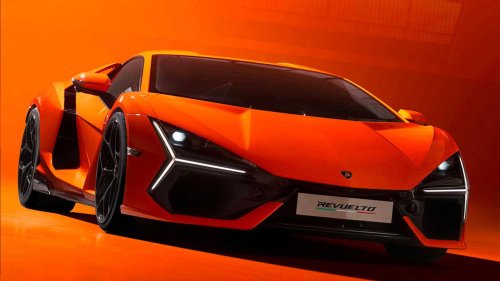
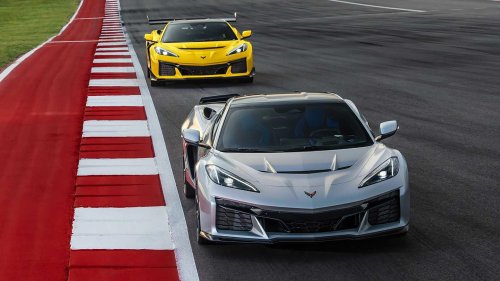
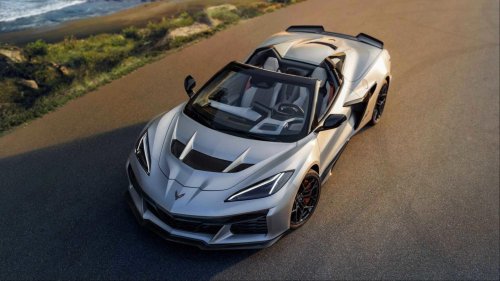




















One of America’s most famous sports cars no longer plays the underdog. The current Corvette walks into the same room as the blue-blood exotics and keeps its chin up. It looks sharper. It feels more focused. It carries the kind of confidence that once came only with a European passport. Then Chevrolet rolled out the ZR1 and turned that confidence into a statement.Enthusiasts have chased one question for years: can a Corvette be a true supercar, not just a fast bargain? The latest generation closed the gap like never before. The ZR1 pushes even closer and doesn’t pretend to be something else. It aims for the top tier on purpose and invites the usual doubters to take a harder look.Supercar status isn’t a decal. A badge alone won’t do it, and neither will shock value. The title needs the full package - presence, poise, and performance that holds up under heat. It needs a car that feels alive at speed and steady when pushed. It needs credibility built on more than clever marketing. That’s the test the ZR1 steps into. Welcome to Supercar Dreams Week! This is our tribute to the wildest, most jaw-dropping supercars ever built—the cars we fantasize about driving and the legends that keep us awake at night. All week long, we’re unlocking the garage of dreams to bring you stories of hypercars, exotics, and automotive icons that blur the line between fantasy and reality. From poster-worthy legends to modern-day unicorns, this is where car dreams come alive. Buckle up—we're about to redline. What Is A Modern Supercar? McLaren A supercar begins with shocking speed. A modern example runs 0–60 in the low-two-second to mid-three-second range, pulls a quarter mile in the 9s or 10s, and carries serious triple-digit authority. Top speed alone doesn’t create a supercar, but it signals headroom: a car that feels stronger the faster it goes. The point is simple: a supercar has performance that leaves most cars – and many motorcycles – behind on any straight.Layout and engine character matter, too. The classic supercar image is mid-engine, where the mass sits near the driver for quick rotation and traction on corner exits. The engine tends to be a statement piece – high-revving, force-fed, or both. Sound and response play a role. The machinery should make the driver feel connected, not insulated, and it must deliver that jolt of drama that stays with you after the drive.Chassis grip defines the rest. A supercar turns “fast” into “repeatable” with a rigid structure, big brakes that don’t fade, and a suspension that controls body motion at track pace. Aerodynamics – splitters, underbody tunnels, and wings – do quiet, relentless work at speed. The result is a car that brakes later, rotates cleanly, and puts power down without wasting it.Via: FerrariTechnology now separates contenders from pretenders. Predictive traction, smart differentials, brake-by-wire, and integrated drive modes flatten learning curves and expand the car’s usable window. The goal isn’t to make the car easy, it’s to make the speed accessible. Good tech widens the band between “nervous” and “neutral,” so drivers can run quick laps without white-knuckle margins.Materials and cooling matter more than ever. Carbon-fiber panels cut mass and add stiffness. Large radiators, charge coolers, and brake ducts keep the car consistent when the laps pile up. A supercar that wilts after three laps fails the test, no matter what the spec sheet says.PorscheThere’s a design element to the badge, but it’s not only about shock value. A supercar should look purposeful. Wide inlets, low hoods, and clean airflow paths are not just styling. They’re function turned into form. The shape must make sense at 150 mph.Last but not least, price and exclusivity traditionally ride along. Supercars used to demand sky-high MSRPs and low build numbers. The market still treats rarity as value, but price alone doesn’t earn the label. Today, the performance bar is higher and more measurable than the exclusivity bar. If the stopwatch and the data say “supercar,” the badge usually follows. Is The ZR1 Really A Supercar? Chevrolet Start with power and response. The ZR1’s LT7 5.5-liter, twin-turbo V8 uses a flat-plane crank and revs to 8,000 rpm. Chevrolet quotes 1,064 horsepower at 7,000 rpm and 828 lb-ft at 6,000. That was the most powerful factory Corvette ever until the ZR1X arrived and, by Chevy’s count, the most powerful production V8 built by an American automaker. Power keeps building as the revs climb, so the car surges harder, longer. This isn’t a quick hit, it’s a sustained shove.The drivetrain backs the numbers. An uprated 8-speed dual-clutch sends torque without a pause. Chevrolet strengthened the input shafts, gears, and clutch control to handle track loads. Dry-sump oiling keeps the engine fed through sustained g-forces. None of that is flashy in a brochure, but it’s the work that lets the car repeat fast laps instead of setting one hero time and going soft.Aero and cooling prove intent. The ZR1’s body channels air through a flow-through hood, over a carbon-fiber front splitter, past big side inlets, and into rear brake ducts. With the available Carbon Fiber Aero/ZTK hardware – high rear wing, dive planes, and underbody strakes – the car makes more downforce than any Corvette before it. Chevrolet cites over 1,200 pounds at top speed, which plants the chassis when speeds climb.ChevroletBrakes and tires match the mission. Standard carbon-ceramic rotors (15.7-inch front, 15.4-inch rear) are the largest ever fitted to a Corvette. Michelin Pilot Sport 4S tires come standard, the ZTK package swaps in Michelin Pilot Sport Cup 2 R rubber for track days. Those choices show priorities: keep temperatures in check, keep pedal feel firm, and keep the car consistent when the session gets long.Numbers answer the “how fast” part. Chevrolet lists 0–60 mph in 2.3 seconds, a 9.6-second quarter mile at 150 mph, and a top speed of 233 mph in the low-drag setup. The company also shares a Nürburgring lap time of 6:50.763, which places the ZR1 in elite company on one of the hardest benches in the world. Those are supercar numbers by any modern definition.ChevroletWeight and balance matter, and the ZR1 minds both. The coupe’s dry weight starts at 3,670 pounds, the convertible adds under 100 pounds. The mid-engine layout puts traction where it helps most, on corner exit, and the chassis carries Magnetic Ride dampers with specific tuning to keep the body calm while the tires do the work. The result: speed you can actually use.Add it up: a mid-engine car with four-figure power, serious aero, massive brakes, and verified pace on a world track. The Corvette ZR1 no longer asks for asterisks. Measured by performance, technology, and consistency, it clears the modern supercar bar – cleanly. Supercar By Performance But Not By Price Via: Chevrolet Price once kept Corvette out of the supercar club – too affordable to count, some said. That logic doesn’t hold up anymore. The 2025 ZR1 starts at $173,300 for the 1LZ coupe, 3LZ and convertible trims step up from there. Meanwhile, the numbers it delivers match or beat cars costing far more.Consider Ferrari’s 296 GTB. It blends a twin-turbo V6 with plug-in hybrid power for a combined 819 horsepower. It’s brilliant, and it’s priced that way: a 2025 296 GTB starts around $346,950. That is double the ZR1’s base even though the Chevy posts the stronger power figure and straight-line stats.Look at McLaren’s 750S. It’s light, razor-sharp, and one of today’s best driver’s cars. The 4.0-liter twin-turbo V8 makes 740 horsepower, and McLaren quotes 10.1 seconds in the quarter mile with a 206-mph top speed. Pricing sits in the mid-$300Ks. The Corvette undercuts it by a huge margin while outrunning it on paper in both power and straight-line pace.PorschePorsche’s 911 Turbo and Turbo S remain daily-drivable missiles. Porsche lists 640 horsepower for the Turbo S, 0–60 in as little as 2.6 seconds, and a 205-mph top track speed. The 2025 Turbo family starts at $206,295 and rises to $272,495 for the Turbo S. The ZR1’s base price lands well below both versions, even as its top speed and quarter-mile time reach a different tier. At the high end, Lamborghini’s Revuelto rewrites the V12 rulebook with a hybrid system and 1,001 horsepower. It’s an epic machine with a six-figure-plus personality to match – and a price to match, starting at about $608,358 before options. It sits in a different financial galaxy than the ZR1.Via: LamborghiniCrunch a simple “dollars per horsepower” view to highlight the gap. Using base prices and headline power, the ZR1 rings in at about $163 per horsepower. A Ferrari 296 GTB sits near $424 per horsepower. A McLaren 750S lands around $450 per horsepower and a 911 Turbo S runs about $426 per horsepower. The Revuelto? Roughly $608 per horsepower. This isn’t a perfect metric, but it shows how far Chevrolet stretches each dollar.So yes – the ZR1 gives you supercar performance without the supercar price tag. That used to sound like a marketing line, but today, the spreadsheets – and the stopwatch – support it. The ZR1X Is Even More Hardcore Chevrolet Then Chevy lit the booster. The next step is the 2026 Corvette ZR1X, which adds an electric front-axle to the ZR1’s twin-turbo LT7. The combo pushes a claimed 1,250 total horsepower with e-all-wheel drive. Chevrolet targets sub-2.0-second 0–60 runs and quarter-mile passes under 9.0 seconds. It’s the most extreme production Corvette yet.The recipe is familiar – keep the rev-happy LT7, but add instant electric torque up front. That e-axle sharpens launches, fills the torque curve, and helps traction on corner exit. The ZR1X also brings Stealth Mode for short, low-speed, electric-only driving. It’s a Corvette that can roll out quietly, then hit like a hammer when the V8 lights. Chassis and aero scale up as well. Chevrolet points to more than 1,200 pounds of downforce with the ZR1X Carbon Fiber Aero package and fits the largest brakes ever used on a Corvette – massive 16.5-inch rotors with multi-piston calipers – to absorb repeated high-speed stops. These are hypercar-grade parts sized for track abuse.ChevroletTrack receipts? Chevy publishes a Nürburgring lap of 6:49.275 for the ZR1X – fractionally quicker than the ZR1 on the same benchmark. That’s not a marketing flourish, it’s a reality check, which made the ZR1X the fastest American car around the legendary track.The differences between ZR1 and ZR1X are straight to the point. ZR1 is rear-drive, combustion-only, and already outrageous. ZR1X adds electric front drive and torque-vectoring, pushing the envelope on launches, corner exits, and high-speed stability. The ZR1X also brings unique carbon-fiber elements, the split-window surround in exposed weave, and an aero stack tuned for even more suction and cooling.ChevroletPrice reflects the extra firepower but still undercuts many European exotics. Chevrolet has announced ZR1X pricing starting at $207,395 for the 1LZ coupe, $217,395 for the 1LZ convertible, with 3LZ trims above that. Chevy also revealed a ZR1X Quail Silver Limited Edition at $241,395. Availability begins late 2025, with the special edition following in 2026.Stack the two Corvettes side by side and the story is clear. The ZR1 is a supercar on performance alone. The ZR1X steps into hypercar territory by most modern yardsticks – power, acceleration, and braking – while keeping a price that, while steep, still undercuts many rivals with less output.