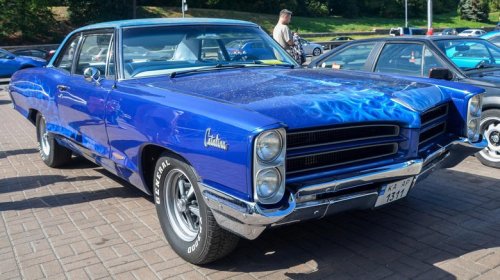
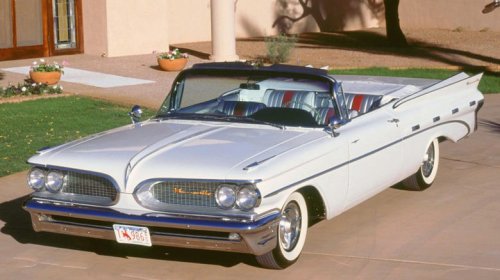
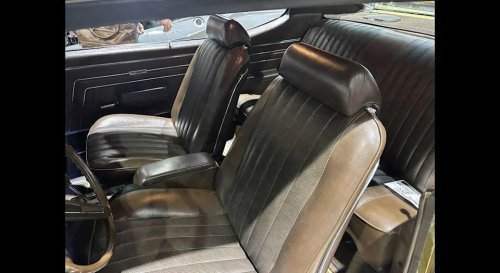
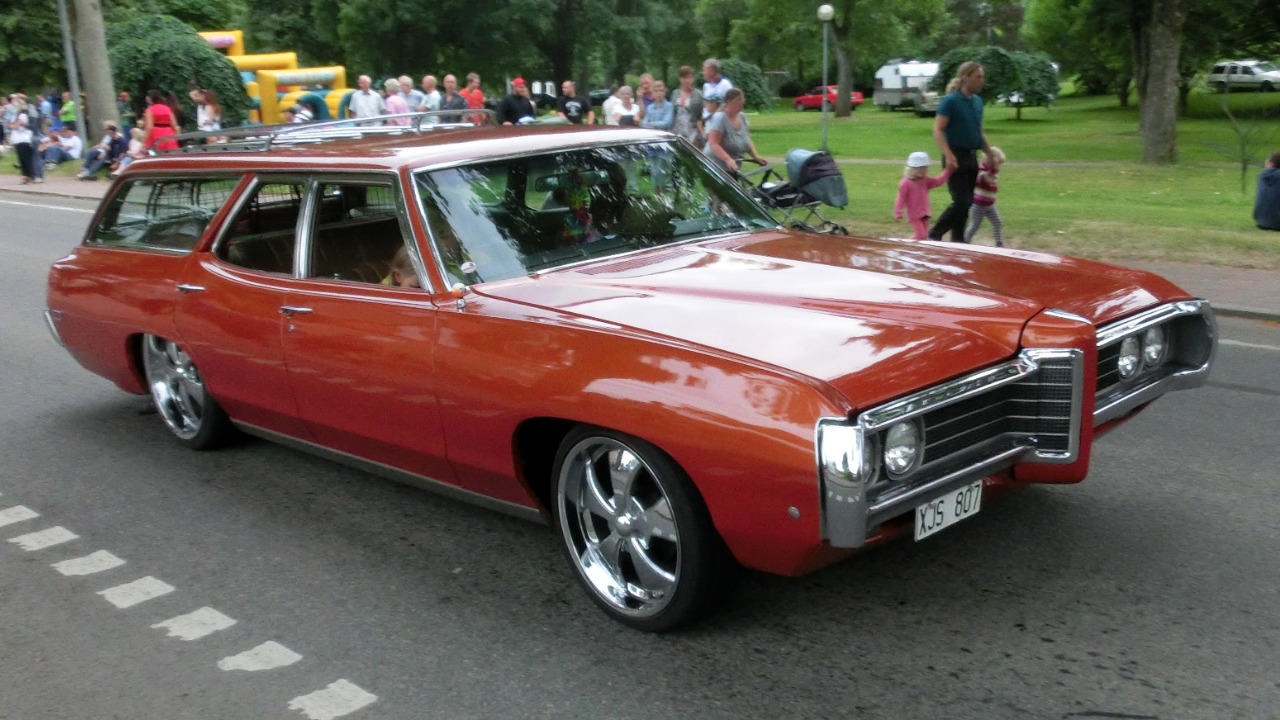
Why the 1969 Pontiac Executive stayed in Bonneville’s shadowThe 1969 Pontiac Executive occupied a curious middle ground, positioned above the workhorse Catalina yet consistently overshadowed by the glamorous Bonneville at the top of Pontiac’s full-size range. It shared much of its hardware with its siblings, but the market treated it as a footnote rather than a star. The reasons lie at the intersection of product strategy, marketing, and the way late-1960s buyers thought about status on four wheels. For that model year, Pontiac’s big-car lineup was carefully tiered, with the Catalina as the value leader, the Executive as a step up, and the Bonneville as the flagship expression of Pontiac luxury. On paper, the Executive promised a smart compromise. In practice, most buyers either saved their money and bought a Catalina or stretched further for a Bonneville, leaving the mid-level car in a narrow and shrinking space. Built from familiar pieces The Executive was no mechanical outlier. Period specifications show that mechanically, executive models were virtually identical to the Catalina, right down to the standard and optional V8 engines. That shared engineering kept development costs low but also made it harder to argue that the Executive was fundamentally a different automobile. Pontiac tried to distinguish the car with trim and dimensions. Contemporary descriptions note that executives featured more, along with more standard amenities and a longer wheelbase than the lower priced Cata sibling. The result was a car that looked and felt slightly more upscale, yet still clearly part of the same family rather than a separate statement. In a showroom, that subtlety mattered. Buyers walking past a Catalina and an Executive could see the price climb faster than the visual drama. With a Bonneville nearby flaunting more obvious luxury cues, the middle car’s modest upgrades struggled to justify their cost in the eyes of status conscious customers. Production numbers tell the story The market’s verdict shows up starkly in 1969 production figures. Contemporary tallies of Pontiac’s big cars record that 25,845 Pontiac Executives Bonnevilles were built, with the Catalina line far ahead of both. Those numbers confirm that the Executive was neither the volume leader nor the aspirational choice, but a relatively small slice of Pontiac’s full size output. Given that the Executive shared engines and much of its structure with the Catalina, some buyers likely concluded that the cheaper car delivered most of the experience. At the same time, the Bonneville’s far higher production suggests that many others were willing to pay for the top badge once they had already moved beyond the entry level price point. The Executive’s limited run in 1969 also fits a broader pattern. Across its short life, annual totals remained modest, and by 1970 the nameplate was already nearing the end of its run. In hindsight, the numbers underline how narrow the car’s intended niche really was. The pull of the flagship To understand why the Executive stayed in the shadows, it helps to look closely at the car that cast them. The Pontiac Bonneville had been developed as the brand’s full size flagship, and by the late 1960s it stood as a symbol of Pontiac’s ambition to mix performance with luxury. Commentary on the line’s history describes the Pontiac Bonneville Sport from the mid 1960s as the height of the division’s luxury offerings, setting expectations for what a top tier Pontiac should be. By 1969, that reputation still attached to the Bonneville badge, which carried a richer interior, more elaborate exterior trim, and a stronger association with prestige than the Executive could claim. Under the hood, the flagship advantage continued. One period description notes that under the Bonneville came standard with a 389 cubic inch V8 rated at 325 horsepower, with larger and more powerful engines available for buyers who wanted even more performance. The Executive could be ordered with strong engines as well, but the flagship carried the clearest performance narrative. In a decade when Pontiac was building its image around speed and style, the Bonneville fit that story more cleanly. The Executive, with its quieter positioning, did not feature as prominently in advertising or enthusiast memory, which further cemented its secondary status. A narrow space between value and luxury Pontiac’s own product ladder made the Executive’s job difficult. The Catalina had long served as the accessible full size car, and contemporary coverage of a 1969 convertible reminds readers that Catalina dominated big car sales within the brand. The same piece that lists the Executive and Bonneville production totals also notes that Catalina was the clear winner among Pontiac’s large offerings. At the same time, Pontiac’s broader strategy in the 1960s leaned heavily on distinctive nameplates. Analysts often point to another, Pontiac Grand from 1963 as a benchmark in the company’s move into sporty personal luxury, with bucket seats and unique styling that clearly separated it from other Pontiacs. Against that backdrop, the Executive’s subtler differences from the Catalina looked out of step with the division’s bolder hits. Even within the Executive’s own specification sheet, the story was one of careful evolution rather than clear separation. Technical summaries emphasize that mechanically, executive, Catalina models shared most of their core components, and the Executive’s longer wheelbase and extra trim were positioned as refinements rather than transformations. That made sense from a manufacturing standpoint, but it left sales staff with a subtle pitch that could be hard to convey in a quick showroom conversation. Later references to the 1969 Pontiac Executive 2 Door Hardtop reinforce that sense of incrementalism. One fact sheet describes the Pontiac Executive, door as being trimmed very much like a Catalina, underscoring how thin the line between the two could appear in practice. For buyers balancing budgets and image, that thin line often tilted either toward the cheaper car or the one with the most prestige. Legacy of a middle child Seen from today’s perspective, the 1969 Executive illustrates the risk of building a middle tier in a lineup where both ends are strong. The Catalina delivered space and power at a compelling price, while the Bonneville projected luxury in a way that resonated with late 1960s tastes. The Executive tried to bridge those worlds, but the bridge proved less compelling than the destinations on either side. Enthusiast attention in later decades has tended to follow the same pattern. Survivors of the period, such as a preserved 1969 Bonneville highlighted by Gateway Classic Cars, draw interest precisely because they embody the top tier of Pontiac’s full size ambition. The rarer Executive remains comparatively obscure, even though its low production and shared hardware can make it a practical and distinctive choice for collectors who appreciate subtlety. In that sense, the Executive’s fate was sealed less by any flaw in the car itself than by the clarity of the badges around it. Pontiac taught its customers that Catalina meant value and Bonneville meant success. The mid level nameplate never acquired the same emotional shorthand, so it remained in the background while its siblings defined what big Pontiacs of the era were supposed to be. More from Fast Lane Only Unboxing the WWII Jeep in a Crate 15 rare Chevys collectors are quietly buying 10 underrated V8s still worth hunting down Police notice this before you even roll window down



















 +59 others