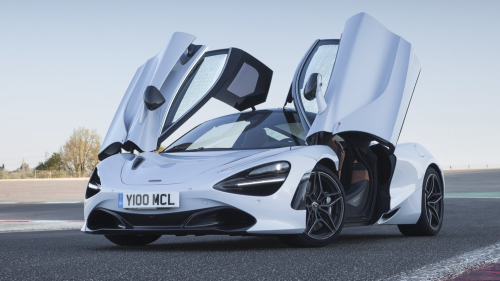
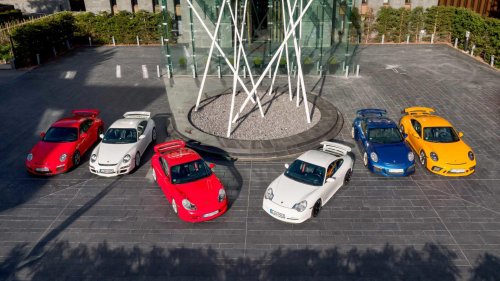
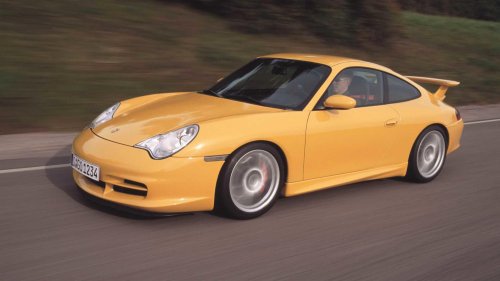
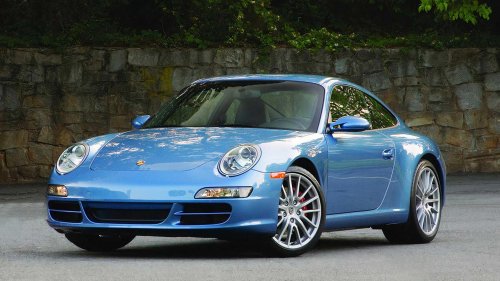
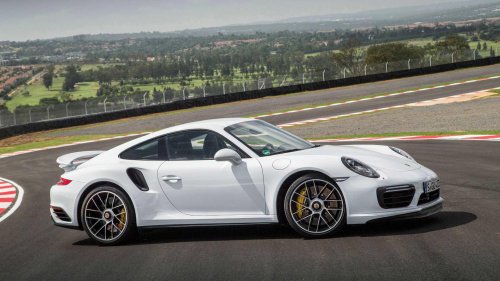
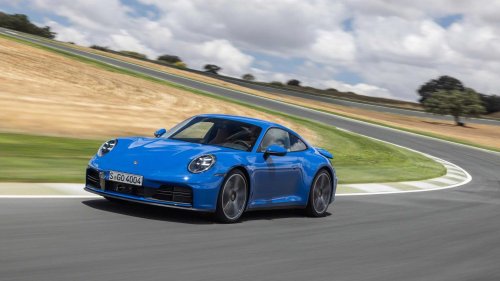
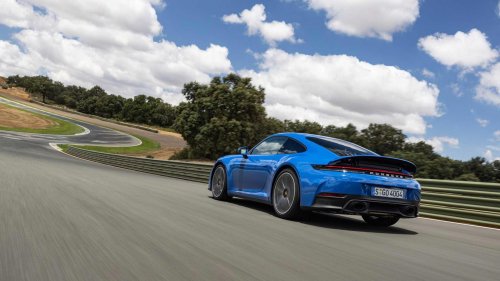
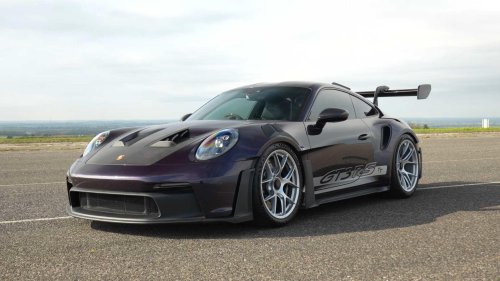
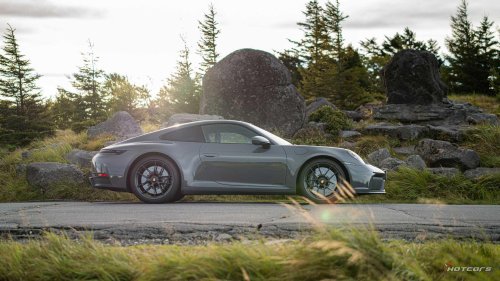



















In the performance car world, there is a broadly accepted bargain. You get the pace, the noise, and the badge, and in return you accept that the car will cost a fortune to maintain, spend more time than you would like with a specialist, and eventually present you with a repair bill that tests your commitment to the ownership experience. Ferrari, Lamborghini, and McLaren all produce machines that justify the sacrifice on their own terms. Nobody disputes the performance. The reliability record, documented across decades of owner data and independent studies, is a different conversation. One car has consistently refused to participate in that bargain. It has won the most demanding 24-hour race in the world, been independently rated the most dependable vehicle in the entire automotive sector three times in four years, and spawned a tuning industry built almost entirely on exploiting the gap between what the factory asks of its engine and what the engine was actually designed to survive. Why Most Performance Cars Age Badly McLaren The 2014 Porsche 991.1 GT3 recall is a useful place to start. Porsche issued it after identifying a metallurgical defect in certain batches of finger followers in the valve train, an issue that caused engine failures in a small proportion of cars and had to be addressed properly. Porsche issued it to 785 cars, and every affected owner received a replacement engine free of charge plus a fully transferable 10-year 120,000-mile warranty extension, regardless of whether their car had yet shown a problem. That response cost Porsche significantly more than the recall itself would have required. It is not the response of a manufacturer embarrassed by a failure. It is the response of a company confident enough in its engineering to stand behind a product unconditionally.For context on what the competition looks like when things go wrong: In 2012, Ferrari recalled over 1,200 units of the 458 Italia for fire risk caused by a heat shield defect near the exhaust, an issue that had already resulted in multiple cars burning to the ground before the recall was issued. McLaren has been documented across multiple model lines for hydraulic system failures, coolant leaks, and electronic failures that strand cars on the road. The Lamborghini Aventador's transmission was criticized in long-term tests for jerky low-speed behavior that persisted across the entire production run. None of this makes those cars bad, and the performance they deliver justifies the trade-off for many owners. It does make them typical of the performance segment. This is the accepted norm. The 911 is the exception, and the reasons are built into the engineering over sixty years, not bolted on at the last minute. Three Generations Of Getting It Right Before Anyone Was Counting Porsche The 992 generation's reliability record did not emerge from nowhere. It was produced by three consecutive generations of engineers who treated durability as a performance requirement rather than a separate brief, and who resolved each generation's weak point before handing the platform to the next team. That process is the story of the modern water-cooled 911, and it runs from 1997 to today. The 996 And The Engine That Came From Le Mans Porsche The 996 generation launched in 1997 as the first water-cooled 911 and immediately divided the community. The M96 engine fitted to standard Carrera variants had an IMS bearing, an intermediate shaft bearing running on a sealed ball race that was not oil-fed and could not be inspected or serviced without engine removal. Single-row bearing variants fitted between 2000 and 2005 failed at a rate of up to 8-10% over the engine's lifetime according to data compiled by LN Engineering, which has tracked the issue for over fifteen years. On a Carrera with 100,000 miles and unknown bearing history, it was a real concern.The GT3, GT2, and Turbo variants fitted to the same 996 bodyshell used a completely different engine. The Mezger flat-six, named after Porsche engineer Hans Mezger, was a direct descendant of the engine that powered the 962 Le Mans car, which in turn traced its lineage to the 917 flat-twelve that gave Porsche its first outright Le Mans win in 1970. The Mezger used a gear-driven intermediate shaft with a plain bearing continuously lubricated by the engine's oil system, eliminating the IMS bearing concern entirely. It used dry-sump lubrication, which removed the risk of oil starvation under hard cornering. The camshafts were driven by gears, not belts or chains. The whole architecture was built to survive sustained high loads at racing revs, and in a road car producing 415 horsepower from a 3.6-liter flat-six, it was operating well within its structural limits. Few road car engines match its durability. The 997 And The Road Car That Raced for 24 Hours Porsche The 997 generation, produced from 2005 to 2013, resolved the standard engine's IMS issue in the 997.2 facelift of 2009 by switching to a direct-drive cam system that eliminated the intermediate shaft bearing entirely. It also gave the world the clearest single demonstration of what the 911 is actually built to withstand. In May 2010, a road-legal 997 GT3 RS was driven from Porsche's Weissach development center to the Nürburgring Nordschleife under its own power on public roads. It was entered in the 24 Hours Nürburgring with its license plates still attached to the bodywork, making it the only car in the 200-car field to compete with road registration plates. Drivers Chris Harris, Roland Asch, Horst von Saurma, and Patrick Simon shared the car across the 24-hour duration, bringing it home 13th overall in a field of 200 cars. After the race, it was driven back to the Porsche Museum in Stuttgart.There are no asterisks on that result, and the car required no special preparation to achieve it. It was a production road car that survived 24 hours of racing at the Nürburgring and drove home afterward. The GT3 RS that year was producing 450 horsepower from the 3.8-liter Mezger, revving to 8,400 rpm, and running on Michelin Pilot Sport Cup tires fitted as standard from the factory. The Nürburgring 24 Hours has a finishing rate of around 60 to 70% in a typical year, meaning roughly a third of the field does not reach the flag. Finishing 13th in a standard road car with number plates on is not a story about preparation. It is a story about the engineering margin Porsche built into the car before it ever left the factory. The GT3 has won the 24-hour race eight times. The 991 And What Porsche Did When It Got Something Wrong Porsche The 991 generation ran from 2011 to 2019 and introduced a new engine architecture derived from the GT3 R race car for the 991.2 update, replacing the 3.8-liter naturally aspirated unit with a 4.0-liter engine sharing its bore, stroke, and core architecture with the racing version. Before that update, the 991.1 GT3 produced the finger follower issue covered above. What that response demonstrated is that Porsche's relationship with its customers on engineering matters is a commitment backed by financial cost, not a customer service exercise. Every 991.1 GT3 owner, regardless of mileage or ownership history, received the extended warranty. The 991.2's 4.0-liter engine has produced no equivalent issue and is regarded by the owner community as one of the most rewarding and reliable naturally aspirated engines in the current performance car market. Meet The Porsche 911 992, The Car That Beat Every Vehicle On The Road PorscheThe 992 generation launched for the 2020 model year as the eighth iteration of the same basic concept: a rear-engine sports car with a flat-six, rear-wheel or all-wheel drive, and a chassis that rewards both track use and daily driving. The architecture is recognizably descended from the car Porsche launched in 1963, with sixty years of engineering refinement inside it. The Carrera S produces 443 horsepower from a 3.0-liter twin-turbo flat-six and covers the zero to 60 mph run in 3.4 seconds. The Turbo S produces 640 horsepower from a 3.8-liter version of the same basic architecture and runs to 60 mph in 2.6 seconds, matching a Ferrari 296 GTB that uses a hybrid drivetrain producing 819 horsepower to achieve a comparable time. Annual maintenance costs for a 992 average around $1,072 per year, a fraction of comparable Ferrari or McLaren ownership costs. What The Data Actually Says Porsche The JD Power Vehicle Dependability Study measures problems reported per 100 vehicles by owners of three-year-old cars across the entire automotive market. In 2019, the Porsche 911 was named the most dependable vehicle in the entire study, beating every car in every class. It repeated that result in 2021 and again in 2022, when it recorded 94 problems per 100 vehicles, the lowest figure any model had produced in the study's history. That is not a sports car reliability ranking. It is a result that places the 911 above family saloons, executive SUVs, and economy cars across 177 specific problem categories, three times in four years.That result is the measurable endpoint of the process described in the three generations above. The Le Mans-derived Mezger engine established that Porsche builds performance engines to endurance racing tolerances. The 997 GT3 RS drove that point home on a racetrack. The 991.1 finger follower recall demonstrated that Porsche stands behind its products when the engineering falls short. The 992's JD Power record is what happens when that culture compounds across sixty years of continuous development. Long-term testing confirms it. What The Tuning World Proved Without Meaning To Via OG Gassed YouTube Channel The most involuntary tribute to the 911's engineering comes from the people who spend their working lives trying to extract more from it than the factory chose to. The 992 Turbo S leaves the factory producing 640 horsepower from its 3.8-liter twin-turbo flat-six. Specialist tuners including Techart and various independents routinely push that figure to 800 horsepower and beyond on completely standard engine internals, requiring only software changes, larger turbos, and supporting hardware, with no short-block rebuild, no forged pistons, and no new connecting rods. The engine Porsche fitted as standard handles that output because it was engineered with headroom the production tune does not use.The GT3 RS presents an even more remarkable case for the over-engineering argument. The naturally aspirated 4.0-liter engine in the 992 GT3 RS produces 518 horsepower at 9,000 rpm. ESMotor UK has developed a twin-turbocharged version of the same engine on completely standard internals producing 870 horsepower, while retaining the engine's 9,000 rpm redline under boost, which is nearly 200 horsepower more than the factory GT2 RS from the same generation using a different purpose-built turbocharged engine. The standard GT3 RS block was not designed to accept 870 horsepower. It was built so well that it can survive it regardless. The ceiling has never been found. What A Porsche 911 992 Is Worth Claire-Kaoru Sakai, Ayesh Seneviratne / HotCarsMarket data for the 992 generation reflects a car that holds its value with unusual consistency for a performance vehicle. The 992 Carrera S averages $128,738 at auction, with the lowest recorded sale at $68,500 for a high-mileage or modified example and the highest at $210,000 for a near-new low-mileage car. The 992 Turbo S averages $248,964, which for a car that launched at around $204,000 represents strong retention for a modern performance vehicle with no collector scarcity. The 911's resale performance consistently outpaces comparable cars from Ferrari, Lamborghini, and McLaren at equivalent ages and mileages, a market outcome that reflects sixty years of trust built one engine at a time.Sources: JD Power, Classic.com, Evo Magazine, Porsche, McLaren.