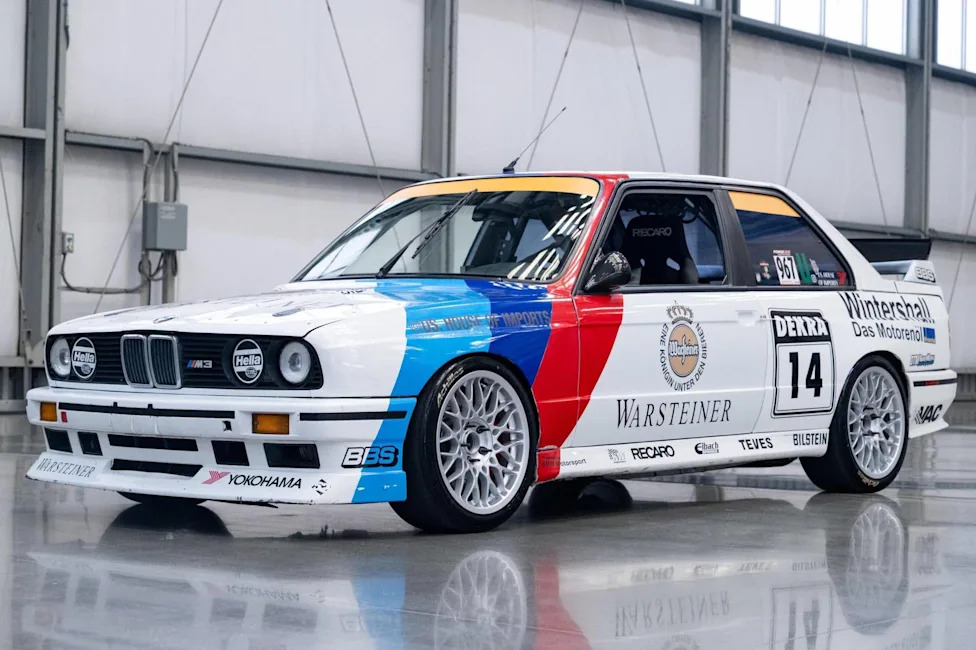
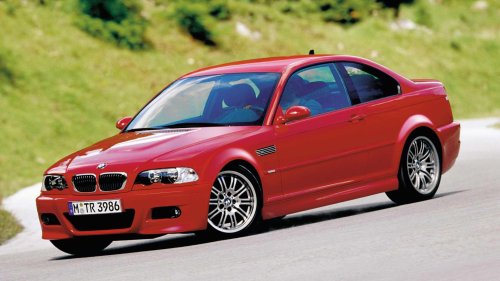
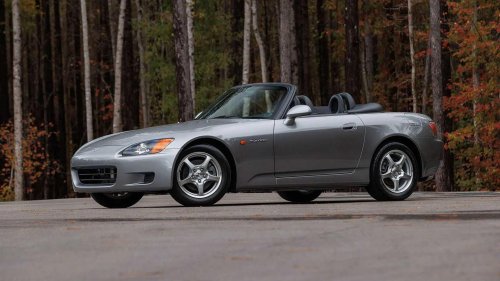
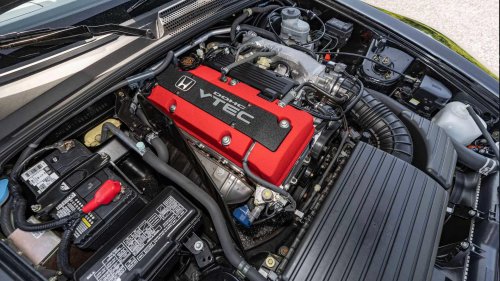
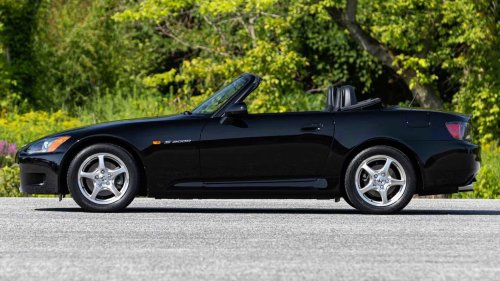
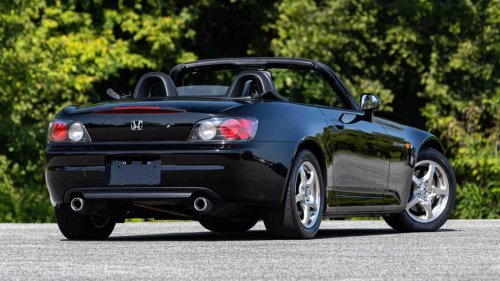
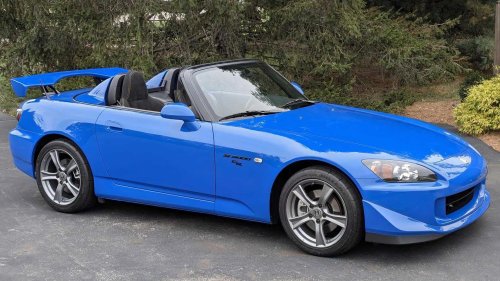
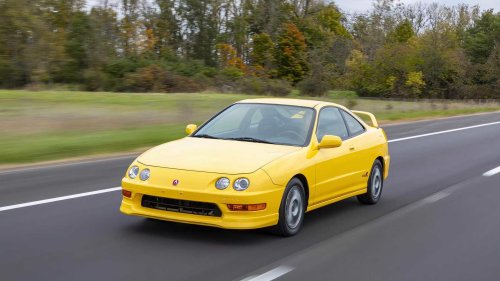
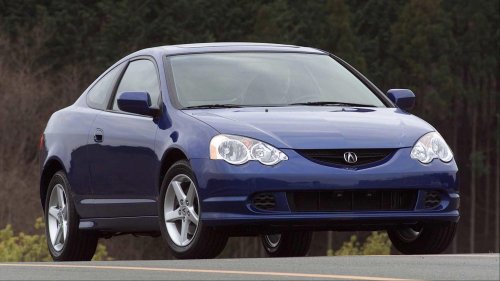
For decades, the ultimate driving machine slogan has been synonymous with one brand and that's BMW. While that slogan was self-proclaimed by the brand, it's not just cheap talk. In the sports car world, if you want a car that is well engineered and has great handling, then very few sports cars can handle like a BMW, apart from a Porsche or a supercar. This is why the brand has a cult following, but all that engineering and driving finesse comes at a cost sometimes, and that's reliability.A few BMWs have generally been known to be a bit unreliable, especially when they're getting old. But some buyers are willing to trade a little less reliability for the dynamic experience of driving a BMW. But in the early 2000s, Honda made a sports car that had the characteristics that made BMWs legendary but also had excellent reliability. It has been over two decades since the release of this car, and it is still a top choice among car enthusiasts. The European Sports Car Benchmark vs. Japanese Reliability BMW When we look back at the early 2000s, the BMW E46 M3 and the Z4 Roadster were among the best sports cars of the time. BMW seemed to have perfected the sports car recipe with enough power, a capable chassis, and handling that made it feel like you were one with the car. This was the reason people loved BMW, as they all seemed to carry the driving dynamics that made the original E30 a legend in the first place. But reliability was a serious issue in this era.The S54 engine in the E46 M3 is a masterpiece, but it’s a masterpiece that had rod-bearing issues that could grenade your engine and weak subframe that could snap and total your car, or even worse. The Z4 was a stylish roadster that copied the formula that made people love the Mazda Miata but in a faster and more capable car. But this also had electrical issues and coolant system failures. But if you had bought a Honda S2000 at the same time as these cars were new, it offered the same driving experience of the BMWs but could be serviced by anyone who knew their way around a Civic. The Honda S2000 Has BMW Dynamics With A Civic’s Conscience Broad Arrow AuctionsThe Honda S2000 was built to be the ideal sports car and followed the same ethos as the 60s Honda sports cars like the S500, S600, and S800 roadsters. These cars were built to be lightweight and fun and that's exactly what the S2000 was. Honda didn't bother with luxury features as these added weight to the car, instead they focused on weight distribution. This car had a 50/50 weight distribution and the rigidity of a coupe. This was made possible by having the engine mid-mounted to make sure there was no weight over the nose and a rigid chassis on par with coupes.It was also a very light car at 2,800 lbs, which meant it wanted to turn easily, and the chassis would respond to every input. These decisions made the S2000 one of the best handling sports cars of all time, and that still stands true today. But when you weren't driving it hard, it was civilized and drove like a regular Honda, though you were always reminded you were in a sports car because it had no roof. But the real magic was under the hood of the S2000 and this was the highlight of this vehicle.The S2000’s power-to-weight ratio didn't just rival the BMW Z3 or Z4; it started knocking on the door of exotics. While it was a lightweight car, the real magic was under the hood. While a BMW owner might nervously check their temp gauge, an S2000 owner could bounce off the rev limiter all day long at a track event, drive home, and do it again the next weekend with nothing more than an oil change. The 9,000 RPM Symphony on a Budget Via: Mecum AuctionsThe heart of the S2000 legend is the F20C inline-four engine. It is a naturally aspirated 9,000 RPM four banger that made more power than most six-cylinder cars. It also held the record for highest horsepower per liter for a naturally aspirated engine for over a decade before Ferrari took the crown. Yes, they had to make a supercar to beat this record. At its redline, it is one of the best sounding four-cylinder engines on the planet. Despite all these feats, it was a very reliable car and there was a reason for this.Below 6,000 RPM, it felt like an economy car, and you could drive it anywhere. This was because it had two camshaft profiles, and the regular one was used during normal driving, which made the engine less stressed and produced less power. But once VTEC kicks in above 6,000 RPM, the car transforms and begins the harmonic sound all the way to 9,000 RPM.Honda updated the entire vehicle and engine for the 2004 model year due to a few complaints from customers, and it was never about reliability. The main thing was that people wanted to access the full power without always hitting 9,000. So Honda enlarged the engine to 2.2 liters and lowered the redline to 8,200 RPM. This gave the car a bit more torque, especially in the mid-range but still a high enough RPM to hear the engine sing. The second change was better chassis tuning to make the car more balanced and forgiving than the original. The Honda S2000 Is Just As Good As Any BMW Mecum The S2000 is not as good as modern-day turbocharged BMWs, which are overachievers when it comes to performance. But it was a standout car of its era when compared to direct competitors like the BMW Z3, Z4 and pretty close to the Porsche Cayman. These felt like luxury cars beside the Honda, but you had to bring in the M3 to rival the handling and agility of the S2000. It was a pure driving experience with almost no electronics to interrupt you. Just get in your car, find a twisty road and have the most fun and engaging open-top experience.Performance Comparison: Honda vs. BMW (2001-2004) This Is Why The Honda S2000 Is So Reliable MEcum Honda builds reliable daily drivers first before making sure they can perform as sports cars, but the secret to the S2000’s longevity lies in Honda’s mastery of VTEC. By having two different cam profiles, one for fuel-efficient street driving and one for high-performance driving, Honda created an engine that wasn't stressed during normal use. BMW had a similar and more advanced system known as VANOS, but that was also one of the reasons they were unreliable—it was a complex system when things broke.Just like BMW, most European engines of the time that used complex, high-pressure hydraulic systems for variable timing, Honda’s VTEC is a simple mechanical locking pin. It either works, or it works, and this system Honda used made the car easy to maintain, and they've been using it since the '90s. Combine that with forged pistons and a fiber-reinforced metal (FRM) cylinder liner, and you have an engine built to withstand high-RPM use for 200,000 miles and beyond. The Honda S2000 Is Already Achieving Collector Status Bring A TrailerIf you’re looking for a "cheap" S2000, that ship sailed about five years ago. Back then, you could find a good driving car for $15,000, but those are $22,000-$25,000 cars now. Clean, low-mileage examples are now regularly fetching $40,000 to $60,000 at auction. Special cars like the S2000 CR cost well over six figures in most cases. These prices are due to the fact that the market has realized that we will likely never see another 9,000 RPM, naturally aspirated, manual-only roadster again. The Honda Lineup Has More To Offer Hagerty If you wanted another high-revving Honda then the Acura Integra Type R and RSX Type-S were great alternatives that proved you didn't need Rear-Wheel Drive to have a BMW-level experience. These cars utilized a front-strut (or double-wishbone in the Integra's case) setup that was tuned so aggressively they could often outcorner RWD rivals. For context, Porsche just started using double wishbone in the latest 992 GT3 to further improve its handling. The Hondas offered the same "telepathic" steering feel that BMW owners bragged about, but in a package that was more approachable even as a first fun car. More Practical Than The S2000 Acura The beauty of the RSX Type-S and the Integra was the fact that they were hatchbacks. You could take your high-revving K-series or B-series engine to the track on Saturday and then go to IKEA. But each car still had their own character, the Integra Type Rwas a raw, almost visceral race car, while the Acura RSX Type-Swas a more refined, daily-driver-friendly version. If the Honda S2000 is becoming out of reach, these are the next best things if you just want an affordable, fun sports car that is crazy reliable.Sources: Honda, BMW, JD Power, Classic.com.
















![BMW, BMW's new iX4 leaks days ahead of its debut [Images]](https://cdn.topcarnews.net/thumb/id/aHR0cHM6Ly9pMC53cC5jb20vZWxlY3Ry-ZWsuY28vd3AtY29udGVudC91cGxvYWRz-L3NpdGVzLzMvMjAyNi8wNy9CTVctaVg0-LUdULVNVVi0yLmpwZWc_dz0xNTAwJmFt-cDtxdWFsaXR5PTgyJmFtcDtzdHJpcD1h-bGwmYW1wO3NzbD0x/44847916d4631457013dfd46d3f7570e.jpeg?t=20261006&post_id=68433)
![BMW, BMW's new iX4 leaks days ahead of its debut [Images]](https://cdn.topcarnews.net/thumb/id/aHR0cHM6Ly9lbGVjdHJlay5jby93cC1j-b250ZW50L3VwbG9hZHMvc2l0ZXMvMy8y-MDI2LzA5L0JNVy1pWDMtZGlzY291bnRz-LTEuanBlZw/c8460dcaa0db22fb19e72a4850b8290a.jpeg?t=20261006&post_id=68433)
![BMW, BMW's new iX4 leaks days ahead of its debut [Images]](https://cdn.topcarnews.net/thumb/id/aHR0cHM6Ly9lbGVjdHJlay5jby93cC1j-b250ZW50L3VwbG9hZHMvc2l0ZXMvMy8y-MDI2LzA5L0JNVy1uZXctaVgzLWludGVy-aW9yLmpwZWc/a56ce0577f87e18bc04a56d2fb9519d2.jpeg?t=20261006&post_id=68433)