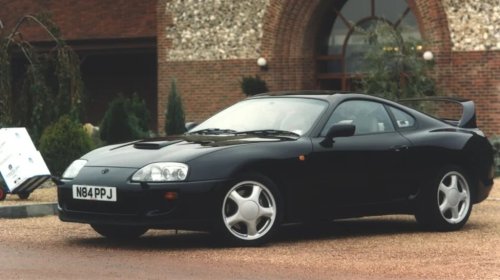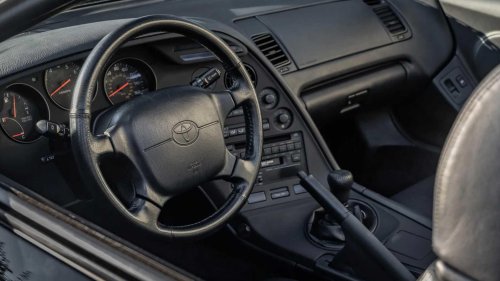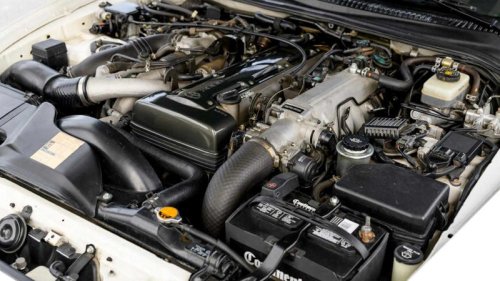
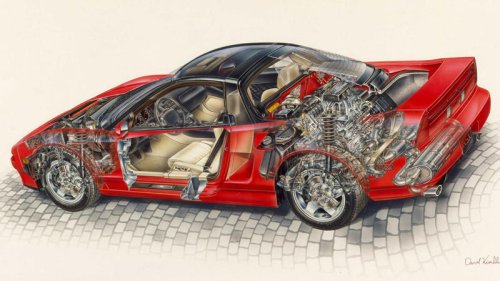
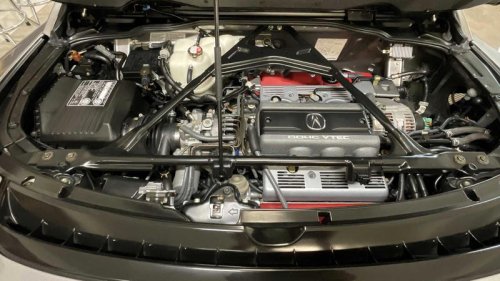
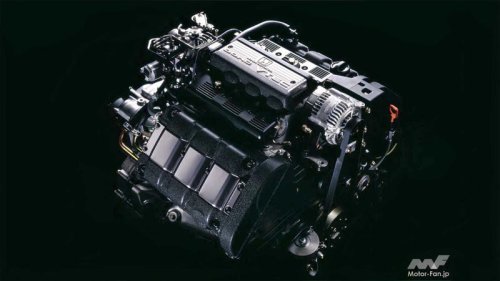



















When it comes to Japanese sports car engines, the Toyota 2JZ-GTE has long been seen as the performance engine benchmark. Praised for its reliability, its tuning potential and strength, the inline-six-cylinder has the ability to handle enormous power with ease. While the 2JZ built its reputation and was popularized by the Mk4 Toyota Supra, another 1990s icon often goes unnoticed.Developed for the revolutionary Honda NSX, the Honda C32B embodied a completely different philosophy than Toyota’s engine. Focusing on precision engineering, lightweight design and durability, the C32B proved that reliability didn’t need turbochargers or massive tuning potential to make its mark. Only manual NSX models from 1997 to 2005 were fitted with the C32B, and it was never used in high-volume production models, making it a rare engine to find. Why The Toyota 2JZ Became The Benchmark Engine Bring a Trailer If you ask any JDM enthusiast to name one Japanese engine, the answer will likely be Toyota’s mighty 2JZ-GTE. Widely regarded as one of Japan’s greatest performance engines of the 1990s, the 2JZ’s reputation has particularly benefitted from the popularity of the Toyota Supra Mk4 that it powered. This 3.0-liter twin-turbocharged inline-six produced 276 horsepower in Japanese-spec models due to the “gentlemen’s agreement” upheld between Japanese manufacturers, while export models produced up to 320 horsepower.What set the 2JZ apart was its overengineered construction. Its extremely durable, bulletproof cast-iron block, and its forged steel crankshaft allowed it to handle far more than the base 276 horsepower. Tuners can easily extract over 600 horsepower on factory components and over 1,000 horsepower with proper upgrades. As a result, the 2JZ-GTE has become a car culture icon, celebrated for its strength, durability and its smooth power delivery. The Honda C32B And Its Role In The NSX Honda The Honda C32B was engineered to exclusively fit the NSX’s lightweight, mid-engine layout. The engine was a 3.2-liter naturally aspirated V6 that produced around 290 horsepower at 7,100 rpm and 224 lb-ft of torque at 5,300 rpm, providing the NSX with exceptional balance and a sharp throttle response. The C32B’s compact design and use of lightweight materials complemented the NSX’s chassis philosophy, contributing to the car’s near-perfect weight distribution that defined its brilliant handling.In motorsports, a modified version of the C32B powered the NSX in Super GT races throughout the 2000s, where displacement was increased to 3.5-liter, and power output to around 500 horsepower. Outside of the NSX, the engine saw extremely limited application, most notably in the rare Vemac RD320R race car. The Velmac used a race-tuned version of the C32B engine, with a displacement increased to 3.4-liter. It competed in the Japanese Super GT GT300 class in 2002, before switching to more powerful engines the following year. What Made The C32B Exceptionally Reliable Bring a Trailer The C32B was an update to the first NSX engine, the C30A. Introduced for the 1997 NSX model, the C32B was only fitted to the manual NSX, while automatic models kept the original engine. Displacement was increased from 3.0 to 3.2 liters by using larger pistons while keeping the stroke unchanged.To handle the bigger pistons without adding weight, Honda used an advanced Fiber Reinforced Metal (FRM) cylinder lining, which combined aluminum with carbon fiber for enhanced rigidity and weight saving. This allowed for thinner, lighter cylinder walls while still maintaining proper cooling. The C32B also featured slightly larger intake valves, improving airflow and overall engine efficiency. All these upgrades combined helped increase the power output by 20 horsepower and 14 lb-ft of torque. While the increase in displacement did not drastically alter the power output, it helped improve mid-range performance and reduce strain at similar power levels, enhancing overall drivability. Real-World Reliability In The NSX And Why It Remained Underrated Motor-Fan.jp When it comes to real-world reliability, the C32B has consistently proven its long-term durability in the Honda NSX, with many high-mileage examples still retaining strong performance with minimal issues when properly maintained. Despite its supercar status, the Honda NSX never chased outright power figures. Instead, the C32B was engineered to deliver smooth, usable performance that placed less strain on internal components over time. This approach not only enhanced reliability but also made the NSX a uniquely dependable supercar for everyday use. Compared to rivals such as the Ferrari 348, the NSX offered similar mid-engine layout, but quickly earned a reputation for superior reliability and usability over its European counterpart.With a total production of around 18,000 units, only manual NSX models from 1997 received the C32B engine, making the engine significantly rarer. As a result, the Honda engine remained somewhat under the radar and the car’s relatively low production numbers when compared to the 2JZ-GTE, meant the C32B never became a staple of mainstream tuning culture. Appreciated by owners and enthusiasts, the C32B was not an engine that was pushed to extremes, which further reinforced its reputation as a durable, well-engineered, legendary engine of the 1990s.