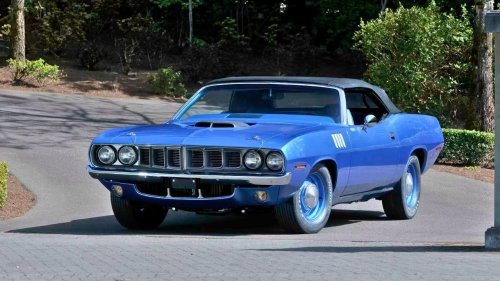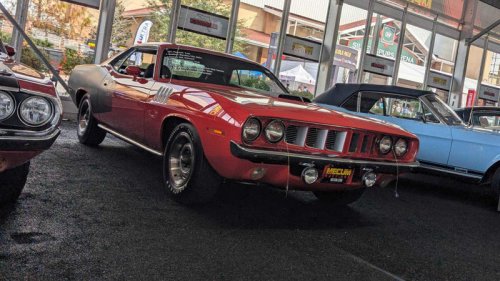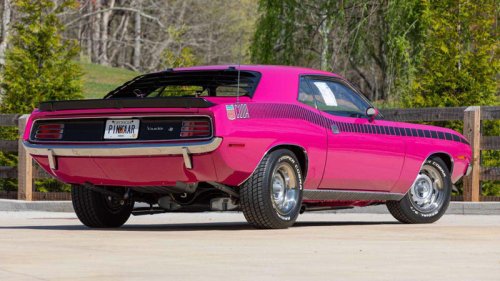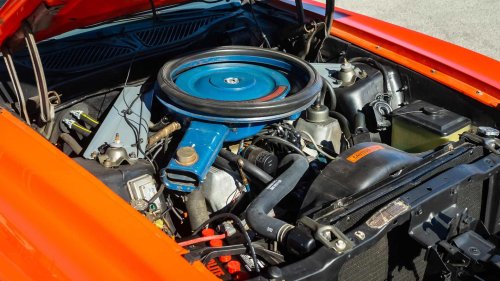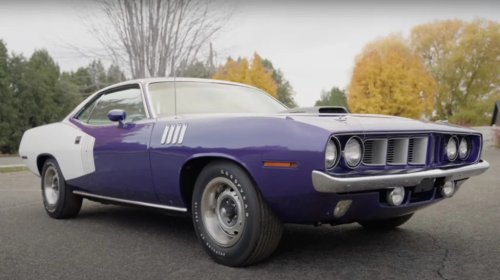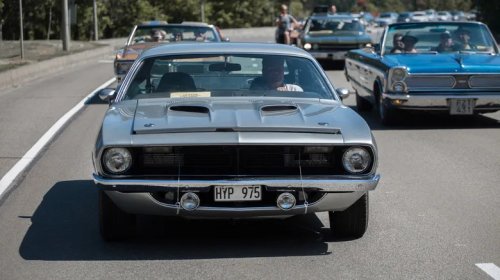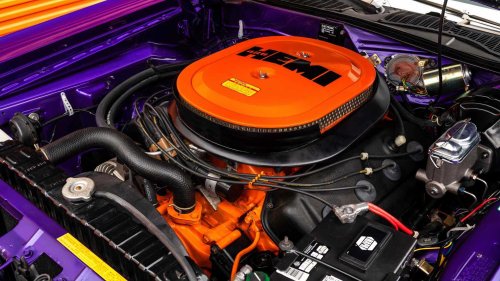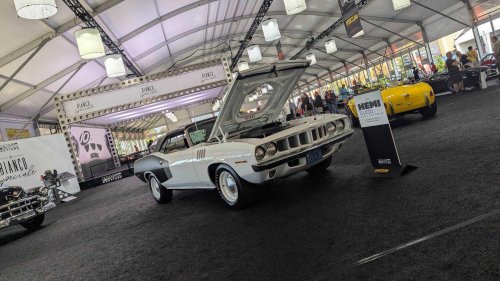
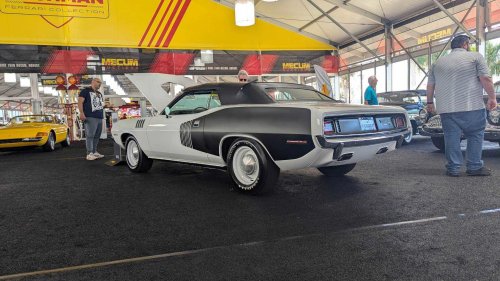
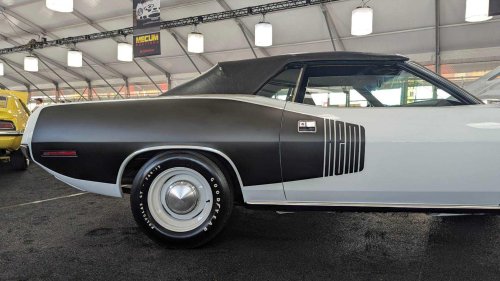
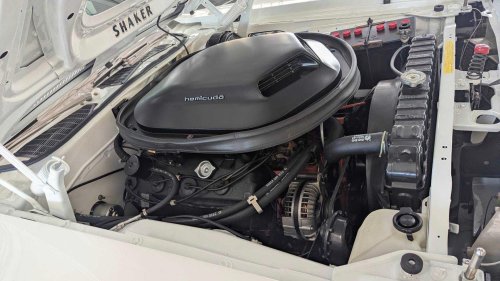
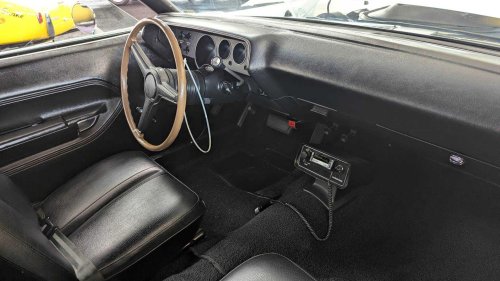
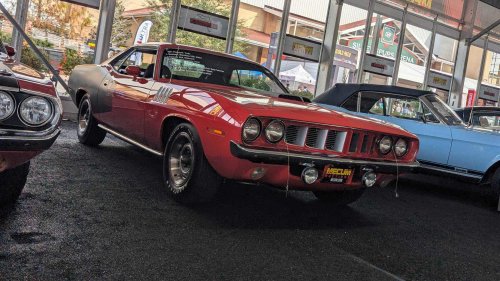



















The 1971 Plymouth ‘Cuda has always been a very special car to me. Growing up as a Mopar nut, I always favored Plymouth’s E-body over Dodge’s. Don’t get me wrong, the Challenger is an insanely cool car, but the ‘Cuda was seemingly lesser-known and more obscure, yet equally as capable. The ‘71 model year is especially interesting. It’s radical cheese-grater grille and quad headlight front end give it a toothy, menacing look, fitting for a monster with the name “Barracuda.” People hated this car in its day, calling it “too radical” and “ugly.” I was drawn to it like a moth to a flame.Despite what these cars sell for today, they were anything but a commercial success in 1971. Sales were down tremendously that year, and Of them, an extremely limited number of Hemi ‘Cuda convertibles were built, which have since grown to be the crown jewel of the Mopar muscle car world. I had the chance to get close and personal with the rarest of them all, and it was a bittersweet moment to say the least. The Elusive Hemi ‘Cuda Convertible Hank O'Hop/HotCarsPlymouth’s 1971 Hemi ‘Cuda may be a coveted gem of the collector car world now, but that wasn’t the case when these cars debuted. They were openly bashed by car critics around the country for having radical appearances that were thought to be ugly. Mind you, this is the same era that had the Dodge Demon renamed to Dart Sport because the “Satanic” themes were too much to handle.Looks aren’t all that killed the ‘Cuda’s sales, though. They were expensive, blighted by high insurance premiums, and were born at the dawn of the oil crisis of the 1970s. While the ‘70 model year did ok in sales, Plymouth sold less than half as many Barracudas in 1971. In total, around 17,000 units were built in 1971, of which only around 6,000 were the performance ‘Cuda variant.Hank O'Hop/HotCars1971 marked the end of the line for two infamous ‘Cuda options. First was the convertible body style, which was scrapped for the Plymouth E-body, and its twin sister, the Dodge Challenger for the ‘72 model year. This was also the final year of production forthe legendary 426 Hemi engine. Naturally, models that featured both would be scarce.How scarce were they? Plymouth built just over 100 ‘Cudas with a 426 Hemi under the hood. Of them, 12 were convertibles. This extreme rarity is what makes these cars worth millions at auction, officially ranking them among the most valuable muscle cars in the collector market today. The one I got to see wasn’t just any of the 12; it was the very first one ever built. The White Elephant Hank O'Hop/HotCarsLike any other Mopar rat, I’ve encountered plenty of rare Hemi cars at shows and events. Still, this car felt special as I walked up to it. It sat next to an MKII GT40 lightweight, the Ferrari Bianco Speciale, and other massively important cars, but they didn’t matter. Those other cars seemed to fade off into the ether as I approached the white fish.Looking back, it seems like a moment when the stars aligned for me, because not only was this the first Hemi ‘Cuda convertible I’d ever seen in person, but it was the first of its kind. Dubbed “The White Elephant” as it rolled down the assembly line, this model marked the beginning of the end for the legendary muscle car.The nickname was inspired by its iconic GW3 Sno-White paint job with a body-colored grille to match. Behind the 426 Hemi under the hood is a rugged 3-speed automatic transmission. Of the dozen built that year, only five had this powertrain combination. That Hemi peered through the hood with the Shaker hood package, which was a staple of the ‘Cuda models. While I’m not one for convertibles, I couldn’t help but fall in love with everything about this car, even for a moment. All The Right Equipment Hank O'Hop/HotCarsA big part of what makes this car the best it could possibly be goes deeper than the rarity. The gearhead in me loves the fact that it has power steering and power brakes, with front discs. These little details make a huge difference in how this car behaves on the street. While it does have a Hemi under the hood, it could be a very nice driver because of these options. Yes. They were options back then.Of course, the Hemi is the main attraction here from a mechanical standpoint. These engines never fail to impress me. While they aren’t as good of a street engine as the 440, they’re a technological marvel. I know. Every Mopar nut is head over heels for Hemis, and it’s kind of a trope these days. However, the reality is that the 426 Hemi is the greatest racing engine ever to leave Detroit. It accomplished a ton of incredible feats in its time and is still the choice engine platform for top fuel racing.That said, I’ve always loved the stock look of a 426 Hemi with the black wrinkle valve covers. To me, it’s easily the best-looking engine of all time with performance to match. Chrysler officially rated these to produce 425 horsepower and 490 lb-ft of torque,with plenty more to be had with the right tune and hardware.Speaking of hardware, the 3-speed automatic transmission also deserves its share of respect. I know muscle car nuts would rather see a four-speed in this to lock down those brutal vibes, but that wasn’t the intended nature of this car. It’s a cruiser with a strong engine. The automatic fits right at home. Not to mention, these old TorqueFlites are stupid-tough and have piloted many drag cars to victory. Refurbished, But Still Insanely Valuable Hank O'Hop/HotCarsMy infatuation with this car starts to veer off the beaten path when we start considering the fact that it’s been restored. My duality as a car enthusiast here has me conflicted over a few things, but I really couldn’t care less what this means for the overall value of the car in any case.I encountered this car at Mecum right before it hit the auction block. It sold for a whopping $3.3 million, which is impressive. However, it’s short of the overall record, which was $3.5 million. It might have gotten more if it were in its original, unrestored condition.That’s not to say this isn’t an ace restoration. The car looked as good as it would have from the factory. The people behind it kept it as original as possible, too, retaining all the factory equipment, like the R26 AM radio with a microphone and cassette recorder. They did, however, add a Billboard stripe. While an iconic feature found on ‘71 ‘Cudas, that’s not how the car left the factory.Based on the pictures of the shape the car was in when they found it, I probably never would have touched it. As much as I love a quality restoration like this, this is a unique piece of history that I would have left as it was. Not out of laziness, but because there’s something about a raw, weathered, authentic gem that just steals my heart. Then again, I’m not a collector who’s solely interested in making as much money as possible on a car. Some Dreams Die Hank O'Hop/HotCars There comes a time in every car enthusiast's life when you just have to accept that you can’t own all of your dream cars. That’s a fact I was reminded of as I stood in front of this historic ‘71 ‘Cuda. As I admired it, I couldn't help but think that its place among these collector cars means that the chances of me ever owning a car like this are nonexistent. That's a pretty tough pill to swallow when you think about how muscle cars were intended for the common person when they were introduced, especially a Plymouth. It becomes even more frustrating when you remember that nobody wanted this particular car when it was new. At the same time, you have to remind yourself that if these cars never picked up in value, they'd all have been left to rot, forgotten by time, like so many were before appreciate for them grew.As we walked out of the building, we passed by another ‘71 Cuda. It wasn’t a Hemi car, nor was it a priceless gem. It was a red, 340-powered bruiser with a shaker hood. It shook me out of my spell, reminding me that’s the car I’d rather have. Better yet was the ‘70 AAR clone I encountered in another tent.I can appreciate a rare car with all the best equipment, and it’s something I enjoy getting to explore and talk about. It’s not the car I want to own, though. I want something I can drive the wheels off in and enjoy guilt-free. That’s exactly why I find ratty street cars more appealing than museum-grade showpieces. Still, it was an honor to have had the chance to spend at least a moment of my life next to one of the most iconic pieces of Mopar history.