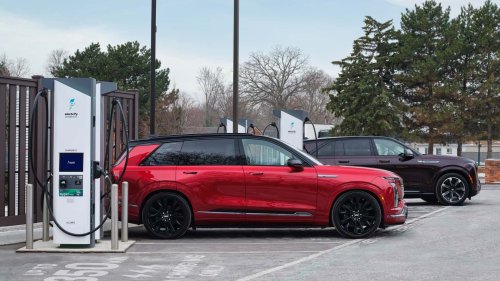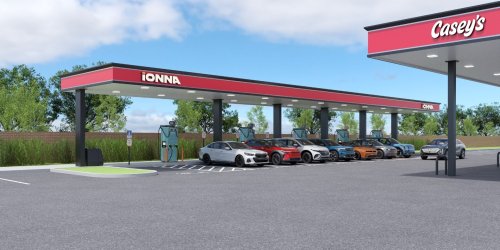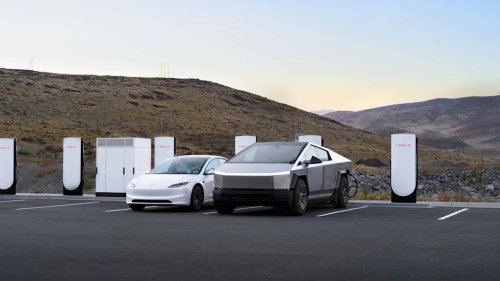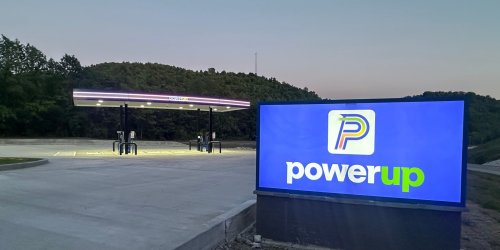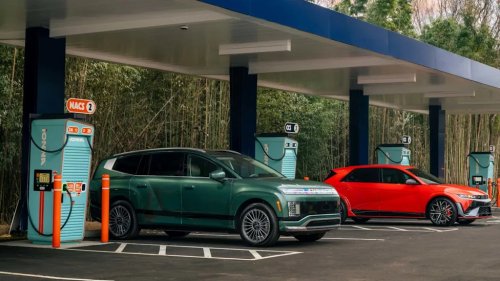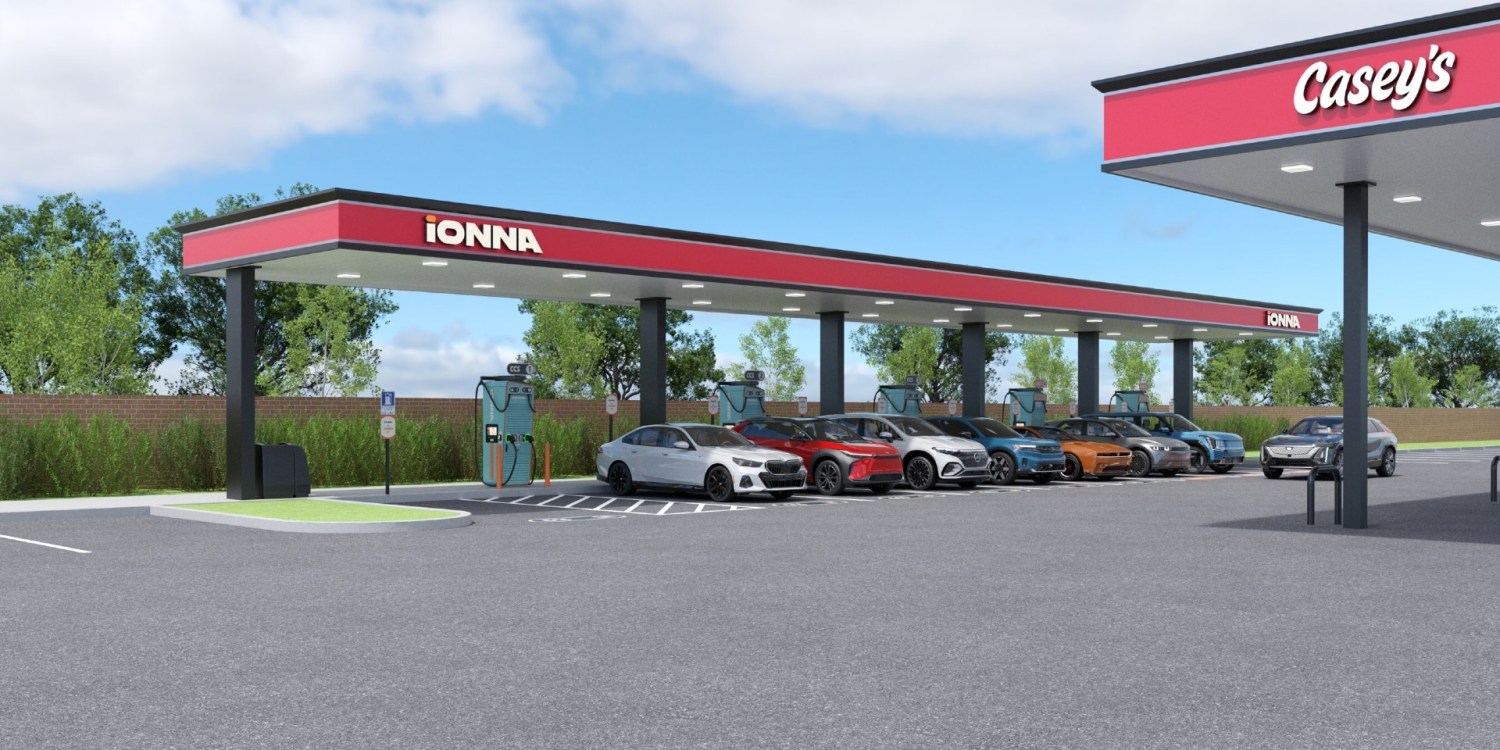
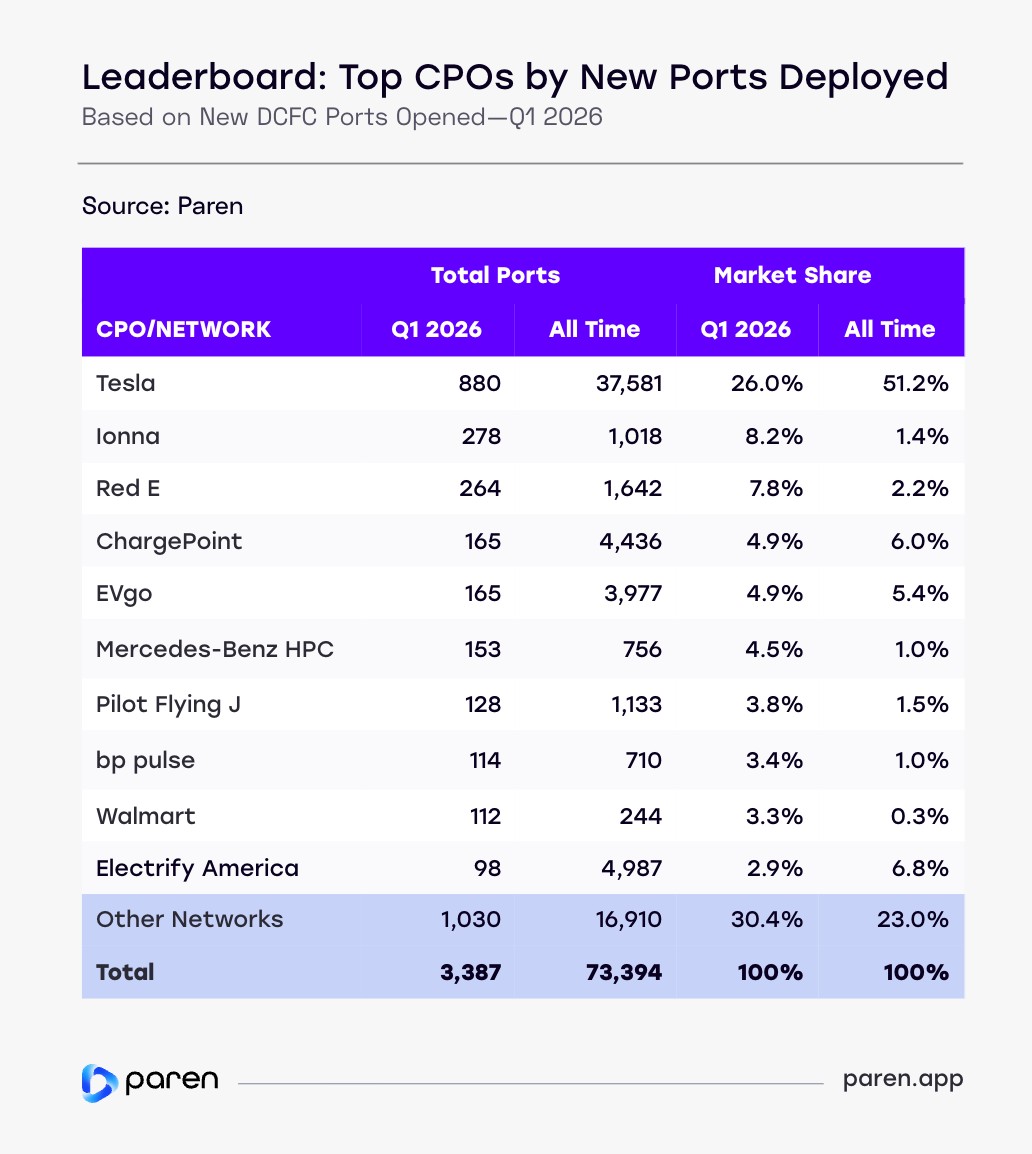




















Image: IONNA US EV fast-charging networks are heading into 2026 looking… steady, with reliability up, pricing stable, and utilization holding in a tight range even as more chargers come online. EV charging data platform Paren just released its Q1 2026 State of the Industry Report: US EV Fast Charging, and bottom line, the fast-charging market is holding its footing as it grows.In Q1 2026, key metrics like reliability, utilization, and pricing all stayed remarkably steady even as thousands of new chargers were added – a sign the industry is scaling in a more controlled, sustainable way. Reliability is getting better One of the biggest improvements is uptime. Most states are now seeing charger reliability in the 90–95% range, up from roughly 85–92% a year ago. That’s not flashy, but it matters. Better reliability reflects newer equipment, upgrades to existing stations, and operators getting better at running networks day to day. Advertisement - scroll for more content Utilization is steady – even with more chargers At the same time, utilization isn’t spiking or collapsing. It’s staying right where it’s been. Average utilization sat at 15.6% in Q1 2026, just below a 16.5% peak in Q4 2025. The slight dip looks seasonal, with February weather and some planned maintenance also playing a role. Zoom in, though, and the spread is huge. Some low-density regions are seeing just 2–3% utilization, while top urban markets are above 35%. That gap hasn’t really changed year over year. Still, the key takeaway is balance: About 3,300 new fast-charging ports were added in Q1, and utilization barely moved. That suggests new supply is being absorbed without tipping into overbuild. Tesla’s dominance is slipping – a bit Tesla is still the largest single player in DC fast charging, but its share of new ports dropped to 26% in Q1 2026. That’s down from more than 40% at points in 2025. Growth is now spreading across more companies. In fact, smaller and mid-sized networks accounted for 30.4% of new deployments – the largest share of any group. Newer players are also showing up fast. Ionna accounted for 8.2% of new ports, while Red E came in at 7.8%. And here’s a big shift: Six of the top 10 charging providers in Q1 2026 weren’t even in the top 10 a year ago. Bigger sites, faster chargers The industry is also changing how it builds. Instead of adding more locations, operators are packing more chargers into each site. In Q1 2025, 721 stations delivered 3,331 ports. In Q1 2026, just 617 stations delivered 3,387 ports. That’s a clear move toward higher-capacity sites. Power levels are rising, too. Chargers rated at 250 kW or higher made up 55% of new installations, while sub-150 kW units dropped to just 21%. Across all new ports, 67% are now 250 kW or more. At this point, high-power charging isn’t the premium tier anymore – it’s the baseline. And that’s shifting the competition. With most networks offering similar top speeds, the real differentiators are uptime, load management, and how consistently chargers deliver those speeds. Tesla still builds bigger – but the gap is closing There’s also a noticeable shift in how networks size their stations. Tesla’s average ports per site fell from 15.0 in Q2 2025 to 12.2 in Q1 2026, while non-Tesla networks increased from 3.7 to 4.6 ports per site. That two-way movement is narrowing the gap. Tesla still has a big lead, though, with roughly 2.7 times more ports per station on average. Its strategy continues to focus on fewer, larger sites designed for high throughput. Stable prices – even as gas swings Pricing is another area where things aren’t changing much. Average fast-charging prices held around $0.53 per kWh in Q1 2026. Even as networks expand and costs rise, prices are staying tightly clustered. That stands in contrast to gas prices, which were far more volatile in the first quarter, thanks to the US/Israel war in Iran and the resulting fallout. Most networks still rely on simple pricing. Fixed per-kWh rates account for 77.1% of pricing models, while time-of-use pricing makes up 24.1%, mainly in high-demand markets. Per-minute pricing is rare, at just 2.7%. Local differences still matter Even with all this top-line stability, the experience on the ground can look very different depending on where you are. Utilization can range from just a few percent in underbuilt regions to 25–30% in leading metro areas. And reliability often comes down more to how well a specific operator runs a site than where that site is located. The big picture Put it all together, and the US EV fast-charging market looks like it’s entering a more mature phase. Growth is continuing, but it’s more distributed. High-power charging is becoming standard. And instead of chasing expansion at all costs, operators are focusing more on performance, consistency, and economics. In other words, the buildout isn’t slowing; it’s getting smarter. Read more: An astounding number of DC fast chargers came online in 2025 If you’re looking to replace your old HVAC equipment, it’s always a good idea to get quotes from a few installers. To make sure you’re finding a trusted, reliable HVAC installer near you that offers competitive pricing on heat pumps, check out EnergySage. EnergySage is a free service that makes it easy for you to get a heat pump. They have pre-vetted heat pump installers competing for your business, ensuring you get high quality solutions. Plus, it’s free to use! Your personalized heat pump quotes are easy to compare online and you’ll get access to unbiased Energy Advisors to help you every step of the way. Get started here. – *ad Stay up to date with the latest content by subscribing to Electrek on Google News. You’re reading Electrek— experts who break news about Tesla, electric vehicles, and green energy, day after day. Be sure to check out our homepage for all the latest news, and follow Electrek on Twitter, Facebook, and LinkedIn to stay in the loop. Don’t know where to start? Check out our YouTube channel for the latest reviews.