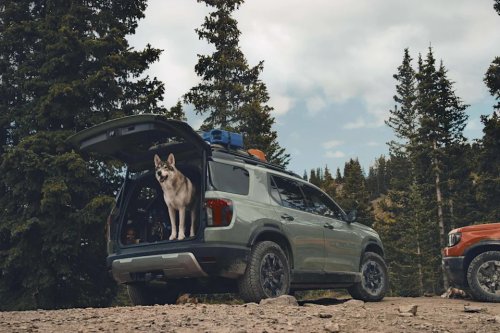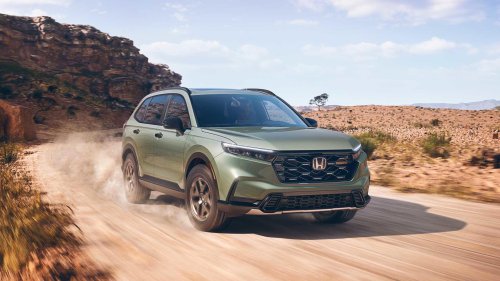
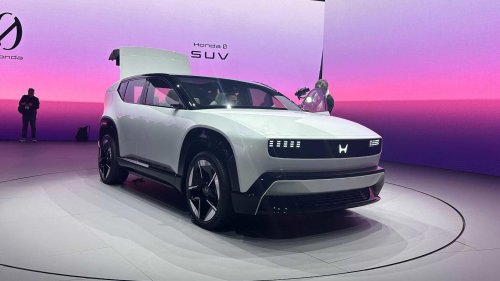
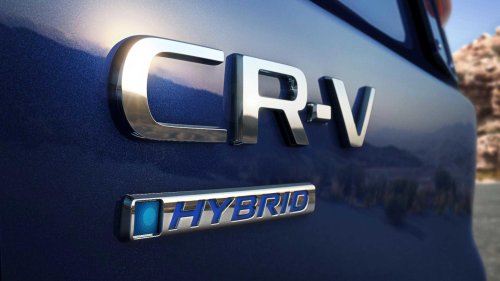
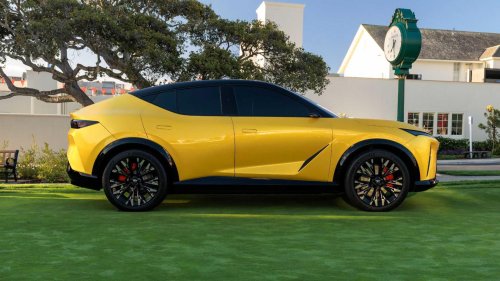
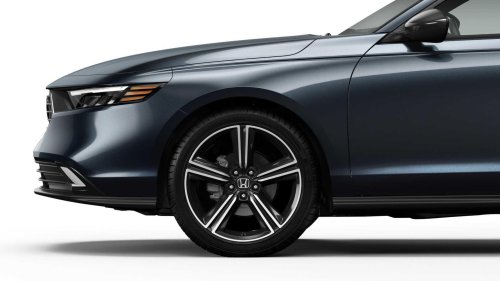



















Looking back at this moment from the future, you might not blame Honda for getting into bed with Afeela. After all, it was engaged in a joint venture that you could see as an attempt to break through a ceiling, to help make Honda one of the major players in a new automotive era. Certainly, Honda’s project to co-develop a tech-heavy electric sedan with Sony could have shown that Honda was ready for a world where software, screens, sensors, and subscription-based mobility were the order of the day.But in late March 2026, the Sony Honda Mobility partnership said it was discontinuing work on both the Afeela 1 and a second model. Honda had completely reassessed its electrification strategy and, in doing so, removed key technologies and assets that the joint venture needed.Historians might assess that Honda was simply not ready for what it was getting into. It may have simply drifted too far away from what today’s buyers still recognize and reward and should have focused on vehicles like the CR-V Hybrid instead. Afeela's Collapse Shows Honda Lost Sight Of What It Does Best HondaHonda was refreshingly blunt when it announced the end of the Afeela venture, citing changing conditions in the US, China, tariff pressures, a slower EV market, and competitive challenges against software-led rivals. It had also canceled three planned North American EVs and needed to rethink how it allocated resources, but in one fell swoop, Afeela was left without a viable path to market.Perhaps the cancellation was a good thing as Afeela was, in any case, a bold proposition with its luxury tech pitch. Prices would start at $89,900 for the Origin and $102,900 for the Signature, with roughly 300 miles of EPA estimated range cited for the Origin. The vehicles' sensor suite was likely to contain around 45 devices, with various cameras, radar, ultrasonic sensors, and LiDAR. And in other words, the project was expected to be truly state-of-the-art, and something that would have been far more at home in Silicon Valley than in Honda's traditional stomping ground.We need to remember that Honda became famous over the years because it made good-quality cars that people could afford, and it became famous for the likes of the Accord, CR-V, RSX, and Integra. If you stand those vehicles up against this almost six-figure software-defined sedan, there's a clear disparity. So perhaps Honda was a bit too anxious to develop a new premium tech identity without first completely joining the dots. Maybe it needed to tailor its core strengths for the EV era first, before going for something which was unquestionably bold at the outset. Honda's Recent EV Moves Have Looked More Reactive Than Coherent CarBuzz/Valnet Honda had also planned three new EV models for the North American market, with the Honda 0 SUV, Honda 0 Saloon, and new Acura RSX. Even though the company was well advanced with those three, it decided to pull the plug in early March 2026, which was, by any definition, a very late and costly reversal. More importantly, it had been working on these three vehicles as part of a fresh-start EV future while it had also been working on Afeela in its Sony partnership, to create some kind of software-first flagship. The fact that Honda backed out of all these developments at roughly the same time suggests some kind of seismic decision-making process internally.All of this means that Honda seems to be oscillating between its identities, creating confusion not only for buyers but also for investors, which questions the company’s entire thinking process. It has effectively bounced between a focus on hybrids, the launch of an ambitious EV trio and a premium software experiment before dialing back to hybrids only again. And the company has admitted that it allocated too many resources to EV development and began to flounder against some of those newer software-defined products from China. The Real Story Is Still Hybrids, Not Halo Tech Sedans Honda While this entire process doesn't look too elegant from the outside, it still doesn't take away from Honda's real strengths. The Japanese company has never built its US business base by driving through expensive moonshots, and today, it still has some very capable electrified mainstream vehicles that ordinary people can actually buy. In fact, those electrified vehicles make up a third of total sales. The CR-V has been the bestselling hybrid, with hybrid versions making up more than half of the CR-V model mix. Accord hybrid models accounted for more than half of Accord sales in 2025 as well, with Civic hybrid sales also a meaningful share of that car's volume.The truth is that Honda's vehicles offer very efficient and usable forms of transportation, which explains the company's solid consumer base. As just one example, the CR-V hybrid turns out 204 hp and offers all-wheel drive as an option, returning EPA ratings of up to 40 MPG in the city.Honda also has more than 25 years of hybrid-electric sales in America, so you wonder whether it actually needed Afeela to become technologically relevant. It already had a proven scalable path into electrification, which makes the partnership feel a little off-key in hindsight. With this venture, Honda seemed to be asking buyers to believe that its future could be tied to a Sony-laced luxury EV experience. And at the same time, all of its commercial success to date had come from CR-Vs, Accords, and Civics that could still bring electrification into the market without much opposition. The Cancellation Exposes Honda's Uneasy Relationship With Enthusiast Identity Acura In addition to its solid mainstream base, Honda also has a good reputation in enthusiast circles. It has long produced clever, lightweight, high-revving, and exciting vehicles for that segment base, which created a disconnect with those Afeela aspirations. Many enthusiast buyers instinctively think of an RSX, Integra, manual Civic Si, or an Accord as the way to turn their form of transportation into something fun. And that may be partly why this recent cancellation is so symbolic.After all, Acura had chosen the RSX – one of the big enthusiast darlings – for a future-facing electric vehicle and as part of a software-defined transition into the future. Some believe that this decision may have been trying to cash in on some of the emotional equity attached to vehicles like the RSX, and to use that valuable equity for both technology and messaging.In the all-new high-tech RSX, buyers may have had plenty of advanced hardware and entertainment integration to look forward to, along with a premium price. But would true enthusiasts have been quite so upbeat about this version of their lovable RSX? It's hard to believe that the newcomer would have enhanced Honda's character, and it might have created a deep split between what its loyal audience wanted and what the company itself says it wanted to deliver.Of course, no company can survive on nostalgia alone. But perhaps a better approach would have been to ground any new technology in a clearly new product with purpose. The better all-round solution might have been an all-new Acura performance product with authentic engineering as well as some digital supremacy. What This Could Mean For CR-V And Accord Buyers Honda Honda will likely reassess its resource allocation in the aftermath of this cancellation to strengthen its hybrid models and look forward to the next generation for better profitability. It will probably fall back on mainstream products like the CR-V and Accord that it knows can work well, as it gradually moves forward into the new era that way.The Afeela project was always likely to be very expensive, niche, and strategically fragile, whereas a better CR-V hybrid or a stronger Accord lineup could have more impact on the actual market. And Acura will also pivot toward more hybrid vehicles, such as the next-generation RDX, showing that even at the premium end, the goal will likely be electrified mainstream luxury rather than an all-new software identity.Certainly, the Afeela collapse may present some short-term embarrassment for Honda, but in the longer-term it may represent a clarifying moment. It will probably help the company move more decisively through the next decade, slowly but surely translating its own values into modern products.In the meantime, you can't really blame Honda for aiming high, even if it seemed that it wasn't actually sure what it was aiming for. And many will be happy that the company slowed down a little and decided to survive any industry reset by tweaking the models that it knows can actually work. It's just a shame that Honda appears to have learned that all-important lesson the really hard way, to the tune of around $16 billion.