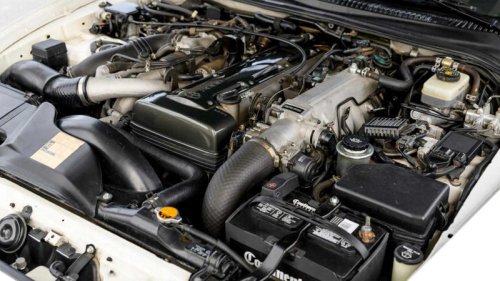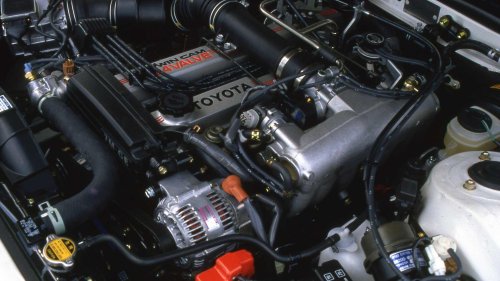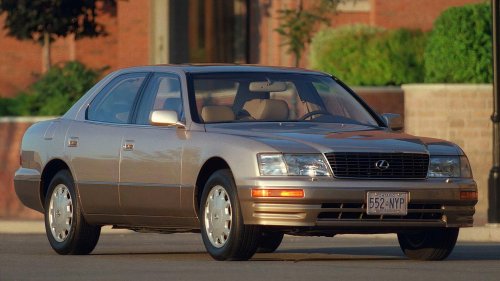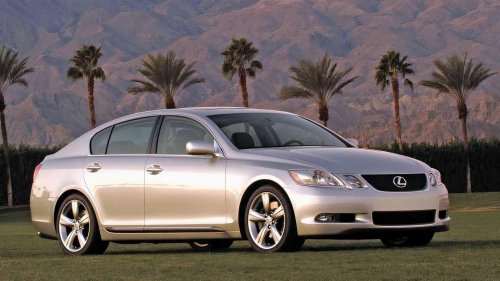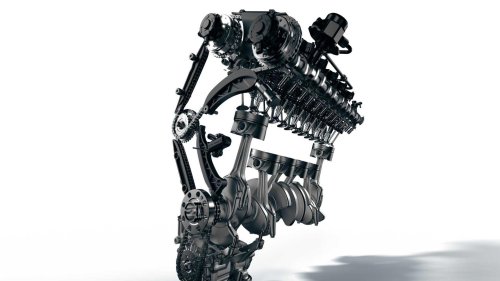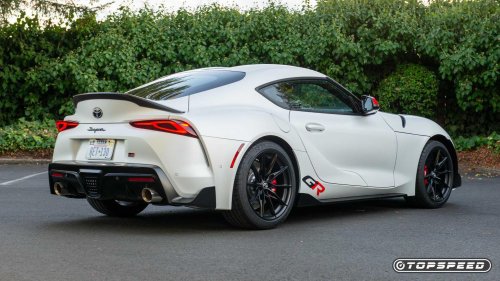
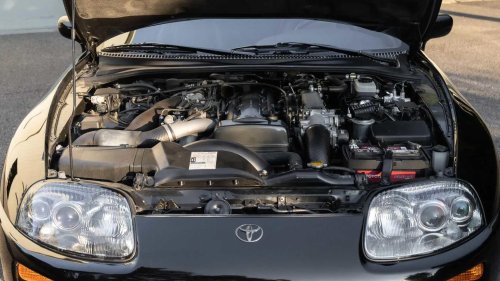
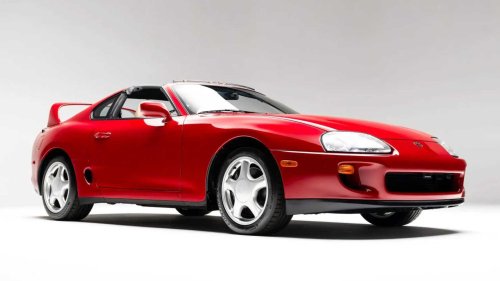
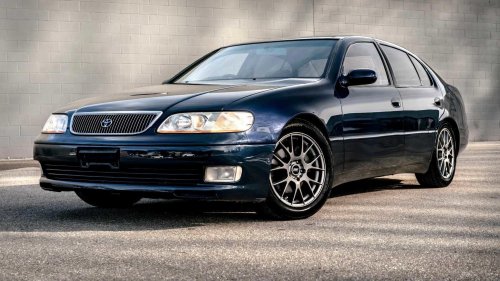



















The early 1990s were the golden age of Japanese performance engines. Every major manufacturer was locked in a quiet arms race to produce the most advanced turbocharged engines they could sell while honoring the infamous gentlemen's agreement.Nissan, Mazda, and Mitsubishi were all working with platforms that leaned on forced induction and advanced engineering. One manufacturer arrived late to the party with an engine that was heavier, less sophisticated on paper, and built with an almost comical level of overengineering. Three decades later, that Toyota engine is still the first choice for anyone chasing serious power, while most of its rivals have faded into the distance. The Japanese Performance Engine Golden Age Did Not Last Long Bring a Trailer Japan's early 1990s performance engine scene was dictated by a voluntary agreement between the country's major automakers to advertise no more than 276 horsepower, regardless of what the engine actually produced. The limit was a response to government pressure and a desire to avoid an outright horsepower war. It meant that the real engineering competition happened beneath the advertised figures. Nissan's RB26DETT powered the R32, R33, and R34 Skyline GT-R and became the dominant force in Group A touring car racing. Mazda's twin-turbo 13B-REW went into the FD-generation RX-7 and delivered rotary performance that nothing else could match. Honda's naturally aspirated VTEC engines took a different route entirely, chasing high-revving output rather than boost.By the early 2000s, most of these engines were approaching the end of their production runs. The RB26DETT disappeared when R34 GT-R production ended in 2002. The 13B-REW went out of production when the FD RX-7 was discontinued in the same year. The gentlemen's agreement had been abandoned, Japanese performance cars were becoming harder to justify against rising yen and stricter emissions rules, and the twin-turbo straight-six layout was falling out of fashion. Only, there was another that kept going anyway, and it became the default choice for tuners worldwide. The Engineering Philosophy That Looked Wasteful at the Time Bring a Trailer One Japanese manufacturer's approach to performance engines in the early 1990s did not look like the rest of the industry. While Nissan was pushing for ever-more sophisticated electronics and Mazda was chasing power density through rotary engineering, this company was making decisions that journalists and analysts genuinely struggled to justify. The flagship turbocharged inline-six it developed for its top performance applications used a cast iron block at a time when aluminum was becoming standard for high-performance engines. Internal components were forged where rivals used cast parts. Every dimension and material choice seemed to assume the engine would eventually be asked to produce significantly more power than the factory ratings suggested.From a pure cost-engineering perspective, this looked wasteful. The cast iron block added weight that hurt the car's handling balance. The forged internals cost more than necessary for an engine producing the same factory output as lighter rivals. Competitors built engines that hit the same advertised figures with less material and less cost. What none of them realized at the time was that the manufacturer was not building an engine to hit 276 horsepower. It was building an engine that could survive whatever the aftermarket would later ask of it, a decision that would define the next three decades of tuning culture. The Toyota 2JZ-GTE Outlasted Every Direct Rival in Production Bring a TrailerThe Toyota 2JZ-GTE entered production in 1991, first appearing in the JZS147 Toyota Aristo sedan two years before it arrived in the car that made it famous. The A80 Toyota Supra Turbo launched for 1993 and carried the same 3.0-liter twin-turbocharged inline-six with sequential turbochargers, a square 86mm bore and stroke, and an overengineered cast iron block that would become the engine's defining feature. Japanese-market cars were rated at 276 horsepower to comply with the gentlemen's agreement, while export cars sent to the United States and Europe received larger injectors and different turbochargers to produce 320 horsepower. The twin-turbo straight-six architecture placed it in direct competition with Nissan's RB26DETT, which had launched two years earlier.Production continued in Japan until 2005, when Toyota finally retired the 2JZ-GTE from its home-market lineup. The Nissan RB26DETT ended production in 2002 with the final R34 Skyline GT-R. The Mazda 13B-REW stopped when the FD RX-7 was discontinued in the same year. Of the direct Japanese twin-turbo performance engines that defined the early 1990s era, the 2JZ-GTE was the last one in production by a three-year margin. The naturally aspirated 2JZ-GE continued even longer in the Lexus IS300, the Toyota Crown, and the Mark II. The Cast Iron Block That Made 1,000 Horsepower Normal Bring a Trailer The reason the 2JZ-GTE has outlived its contemporaries in the tuner and motorsport scenes comes down to the engineering decisions Toyota made when it designed the engine. The cylinder block was cast iron and Toyota's engineers deliberately overbuilt it to withstand loads well beyond anything the factory turbochargers would produce. The crankshaft was forged. The connecting rods were forged. The bore and stroke were both 86mm, giving the engine a perfectly square geometry that allowed it to rev freely and build cylinder pressure evenly.The practical result is that a stock 2JZ-GTE can handle 700 horsepower without opening the bottom end, and 1,000 horsepower with nothing more than upgraded fuel system components and a larger single turbocharger in place of the factory sequential setup. Drag racers have reliably pushed modified 2JZ-GTE engines past 2,000 horsepower with internal upgrades. No other Japanese production engine of the era comes close to this kind of tuning headroom, which is why the 2JZ-GTE became the default answer when anyone asked how to build a reliable high-output Japanese engine. The aftermarket support that followed has made it the most influential JDM mill of the last three decades. How the 2JZ Found a Second Life Outside Toyota ThatDudeinBlue/YouTube The 2JZ-GTE's second career began when tuners and drifters started swapping the engine into chassis Toyota never intended it to occupy. Formula Drift grids have been dominated by 2JZ-powered cars for years, with the engine finding homes in BMW E46 and E92 bodies, Nissan S-chassis cars, and even purpose-built drift missiles with no production-car heritage at all. The engine's combination of durability, tuning headroom, and straightforward control electronics has made it the default choice for any professional drift team that needs a reliable 1,000-plus horsepower package.Time attack builders, drag racers, and even offshore powerboat teams have followed the same logic. The 2JZ-GTE's reputation as the closest thing the automotive world has to an indestructible production engine has outlasted the cars Toyota originally put it in, and the second-hand market for clean donor engines has followed the trajectory of the A80 Supra itself. The RB26DETT remains a collector's engine with a devoted following, but very few are swapping one into a BMW to build a drift car in 2026. The 4G63T from the Mitsubishi Lancer Evolution stayed in production until 2007 and has its own aftermarket scene, but its cultural reach never matched the 2JZ's. The Toyota engine is the one that kept going. What a 2JZ-GTE Costs Today Bring a Trailer The market for used 2JZ-GTE engines has been pulled steadily upward by the ongoing appreciation of the A80 Supra Turbo, which is now a legitimate collector car. A good Japanese-imported VVT-i 2JZ-GTE with a complete accessory package typically sells for between $5,800 and $7,500 from established US JDM engine importers, with exceptional low-mileage examples pushing higher. Earlier non-VVT-i engines have become harder to source and often carry a premium despite being less desirable for modern street builds. The naturally aspirated 2JZ-GE remains widely available for $1,500 to $2,000, and many builders now prefer to start with a GE block and add forced induction rather than pay the turbo engine premium.The donor car market tells a more dramatic story. The best A80 Toyota Supra Turbo examples are valued at roughly $285,000 in 2026, with good drivers sitting around $100,000 to $150,000 depending on mileage, color, and transmission. The Toyota Aristo sedan that originally carried the engine remains one of the cheapest ways to get a factory 2JZ-GTE chassis, though Japanese imports now command several times what they once did as enthusiasts have caught onto the overlooked Aristo connection. The Aristo Connection Most People Forget Bring a Trailer The 2JZ-GTE's first home was the Toyota Aristo V, a luxury sedan that launched in Japan in 1991 as the home-market equivalent of what Americans would later know as the Lexus GS300. The Aristo 3.0V carried the twin-turbocharged 2JZ-GTE and all the supporting hardware two full years before the A80 Supra Turbo reached showrooms. When Toyota updated the engine with VVT-i in 1997, the Aristo got the revision at the same time as the Supra, making the later-generation Aristos mechanically identical to the Supra Turbo from the crankshaft up.The Aristo has become one of the quiet backdoors into 2JZ-GTE ownership. A JDM Aristo V can still be imported from Japan for a fraction of what a clean A80 Supra Turbo would cost, and the engine, transmission, and driveline are the same hardware that collectors are paying six figures for in Supra form. The catch is that the Aristo is a four-door executive sedan rather than a pop-culture icon, which means resale values have never climbed the same way. For enthusiasts who want the engine rather than the image, the Aristo remains the smartest route to genuine 2JZ-GTE ownership, and the Lexus GS300 sold in the United States shares most of the same hardware with the naturally aspirated 2JZ-GE installed from the factory, giving American buyers a cheap route into the family.Sources: Hagerty, JDM engine importer listings, Bring a Trailer.