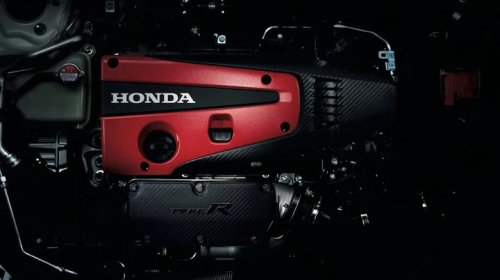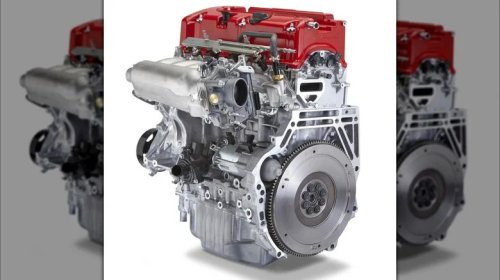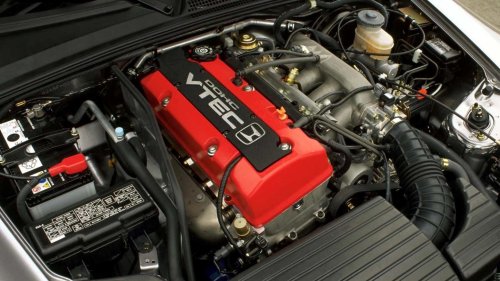
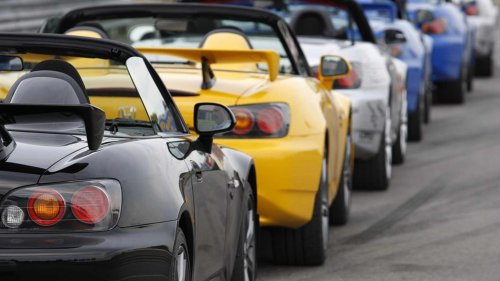
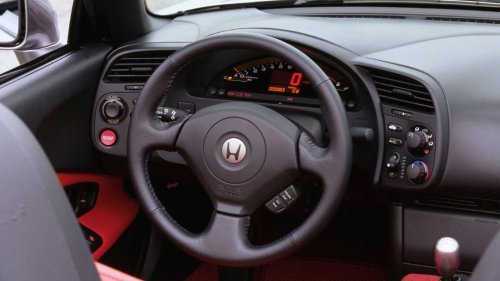
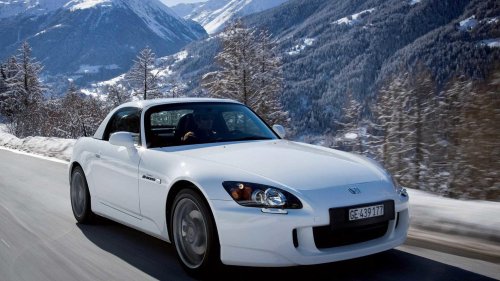
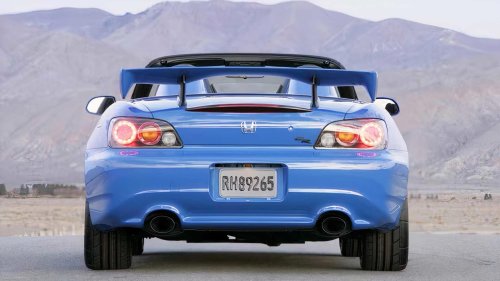
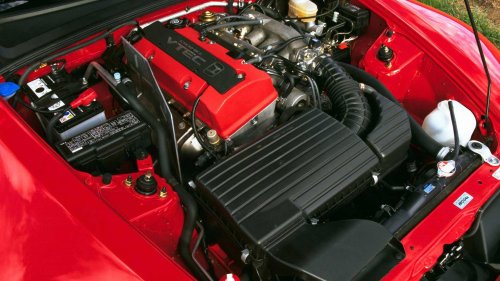
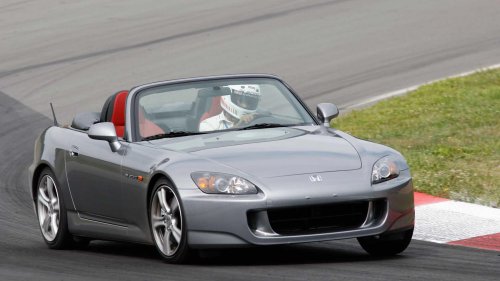
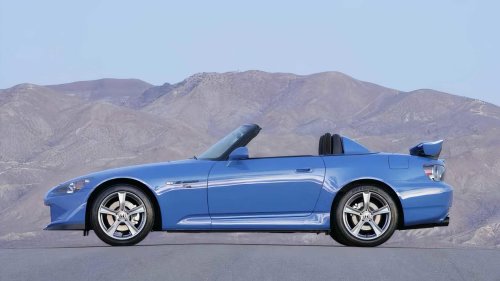
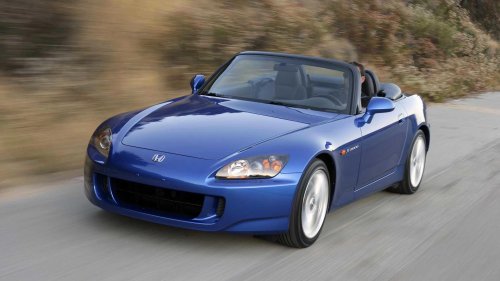
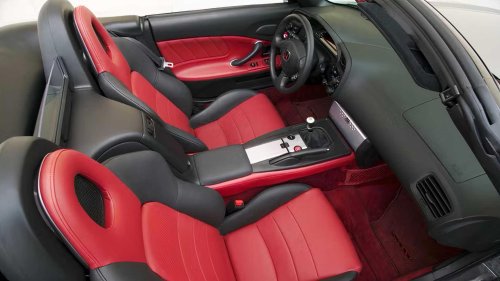
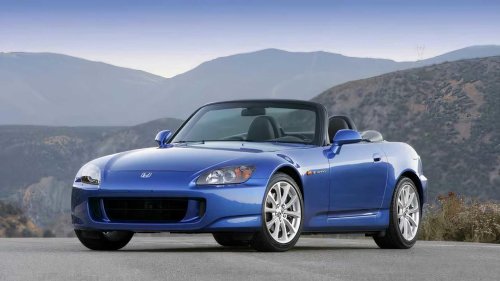
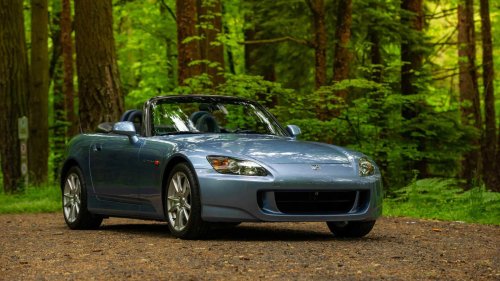
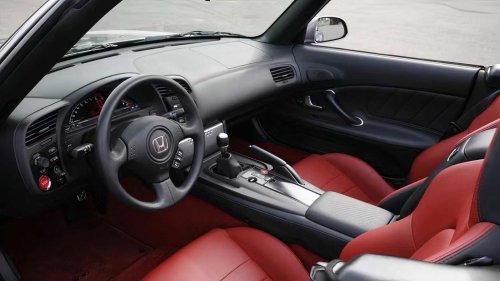



















I’m a Honda fan—and before I switched to Mazda, a Civic was my first car. Unfortunately, after Honda’s engineering peak in the 90s and 2000s, things became tamer within Honda’s engineering team. You see, in the ‘90s, Honda was on a mission to prove something: to be known as an engineering-first company that could create cars born out of motorsports.VTEC, for instance (which stood for Variable Valve Timing and Lift Electronic Control), was Honda’s answer to Japan’s introduction of taxes based on engine displacement, so it was a solution to eke out more power out of smaller engines. That has led to the engine of today’s topic—a four-cylinder that revved up to 9,000 RPM, delivering thrilling performance. This was a four-cylinder that many Honda fans consider the holy grail of VTEC engines. It had character, performance, and durability. Let's explore this engine to see how it made Honda such a desirable brand for enthusiasts in the 2000s. The Challenges Honda Overcame Honda Developing a high-revving four-cylinder engine isn't an easy feat, let alone an engine that is meant to be fitted to a car that should last for years without the need for an overhaul. How did Honda manage to create an engine that's both reliable and thrilling to drive? This is what we're going to explain here. High Strength, Easy Breather Honda High-revving engines tend to be stressed, since you only have to imagine the speed at which the crankshaft spins and the pistons fire. Honda's engineers took every measure to reduce engine friction and make the engine breathe easier. One of those measures includes the use of an aluminum block with fiber-reinforced cylinder liners. This allowed for thinner cylinder walls for less weight, whilst still retaining strength and improving heat dissipation.Honda Next, the pistons are also made out of forged aluminum, while the crankshaft is from forged steel for both strength and lightness. For the valvetrain, they are operated by high-strength valve springs specific to the engine's application. This is where VTEC is equipped, and it comes with roller coaxial arms for reduced friction. Finally, for the easy breathability part, the intake and exhaust are as straight as possible. Durable And Long-Lasting Honda But perhaps the biggest achievement this engineering marvel fulfilled was its reliability and durability goals. Yes, this is a motorsports-derived engine, but whereas engines in Formula 1 are only designed to last for certain laps or a certain Formula 1 season, the F20C, for example, lasted just as long as any other Honda engine. Just take a look at the massive durability compromises of the Mercedes-AMG One and its true Formula 1-derived engine, resulting in the engine needing a complete rebuild every 31,000 miles.CarBuzz The F20C's durability wouldn't just be anecdotal. In fact, it is bulletproof reliable, capable of lasting well over 200,000 miles with proper maintenance. The key things you'd only need to look out for are oil consumption, the timing chain tensioner, and the valve retainers. RepairPal even reports that annual running costs for the S2000 are at $404 on average, which is low for a high-mileage car like this sporty Honda. Say Hello To The F20C Honda The engine of today's topic, Honda's F20C, is a 2.0-liter four-cylinder whose main premise was its capability to rev up to 9,000 RPM. This engine was fitted to the S2000, and it's the primary reason why this roadster is loved so much, even to this day. High-Speed Revs Honda To understand what made this engine thrilling, we have to take a look at how VTEC works. The first Honda with VTEC in the United States was the 1991 Acura NSX, which then appeared in the 1992 Acura Integra, and then in the 1993 Honda Prelude. VTEC is a technology that adjusts the cam timing profile, essentially changing how the engine breathes depending on the performance demands. At low RPMs, the valves are operated by smaller cam lobes designed for lower lift and shorter duration, which is mainly for efficiency.CarBuzz Once hitting higher RPMs, in the case of the F20C, at 6,000 RPM, the valves are now in their more aggressive higher-lift lobes, and this allows the valves to open longer to allow more air and fuel into the combustion chamber for better performance. The switcheroo happens when the engine control unit (ECU) sends a signal to the solenoid, and this is what you experience as that "VTEC kick-in yo" moment. The sound becomes raspier, and there's a slight boost in acceleration that happens during the camshaft profile change. The Highest Specific Output Non-Turbo Four-Cylinder Honda As a result, not only does the F20C have the best soundtrack out of any four-cylinder engine, but it also has the highest specific output of any non-turbo four-cylinder engine in existence. Specific output is measured by how much horsepower an engine produces per liter of displacement. With 247 horsepower out of just a 2.0-liter displacement, its specific output is an impressive 123.5 horsepower per liter. Do note, however, that the 247-horsepower figure is for the Japanese market S2000, because North America and Europe's power output is at 240 horsepower.CarBuzz Still, it was enough for the S2000 to hold the highest specific output title until 2010, when the Ferrari 458 Italia debuted. Its 4.5-liter naturally-aspirated V-8 has a specific output of 126 horsepower per liter, which today is still the highest for any naturally-aspirated engine. Worth noting is the M139I 2.0-liter electrically turbocharged four-cylinder in the C 63 S E Performance, whose 469 horsepower from 2.0 liters of displacement gives it a specific output of 234 horsepower per liter, but for engines without any forced induction methods, the 4.5-liter V-8 from Ferrari and the F20C from Honda stand tall and supreme. Buying An S2000 In 2026 CarBuzz At this point, you may be interested in owning the Honda S2000, and if you're one of those people, you'll be happy to know that the S2000 is going to be a reliable and easy-to-own machine. Your challenge? The S2000 isn't cheap, and it can cost more than a brand-new Mazda MX-5 Miata. Ultra-Desirable In 2026 Bring A TrailerKelley Blue Book determines that a 2009 Honda S2000, the final model year of the iconic roadster, has an average resale of $24,597, but that's based on forecasting and research. Some models in pristine condition, even with a decent mileage of around 30,000 miles, would even retail on the used market for more than $30,000, just like this listing on Kelley Blue Book. If you are the first owner of an S2000, you'll be happy to know that your vehicle has barely depreciated—perhaps even risen in value, but if you're the buyer, you'll unfortunately have to contend with the S2000's high prices. A New MX-5 Miata Or A Used S2000? CarBuzz This then leaves us with the conundrum of whether you should splurge on a brand-new MX-5 Miata for $30,430, or a used S2000, considering that the two vehicles are priced so closely to each other. If you still want something that comes with a warranty and the pleasure of fetching a newly-manufactured car, then the MX-5 Miata is the way to go. For some, the prestigious entry point to owning an S2000 is well worth it, because let's be honest, even next to the MX-5 Miata, the S2000 is a bolder engineering move. There's almost no replacement for that high-revving F20C or F22C1, which is due to the increase to a 2.2-liter displacement for additional power in the later years of the S2000.