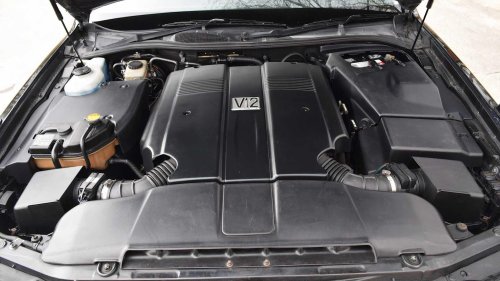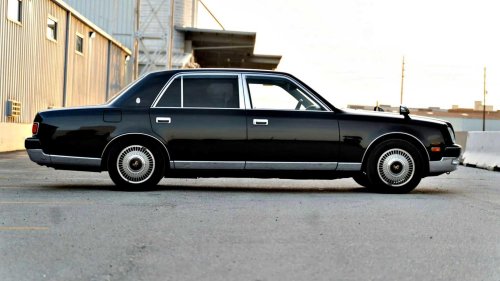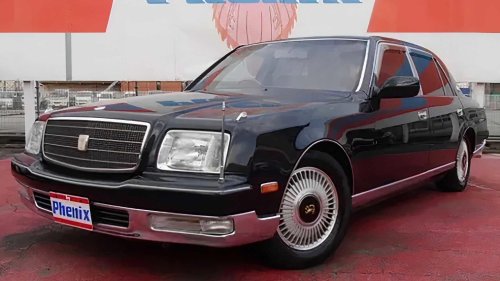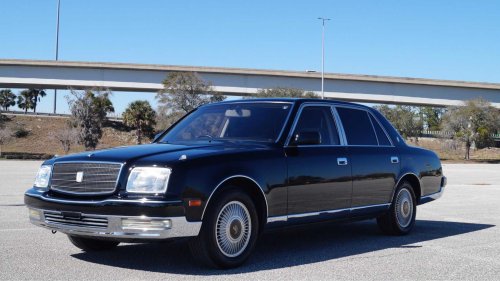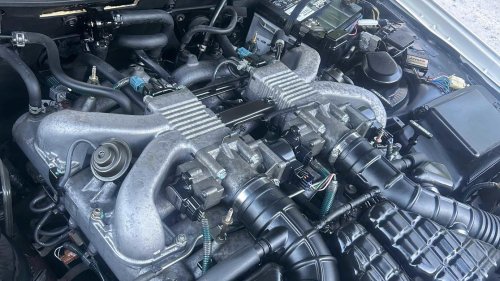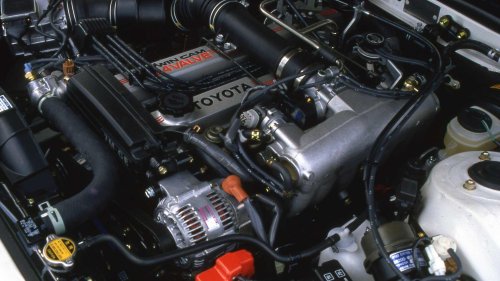
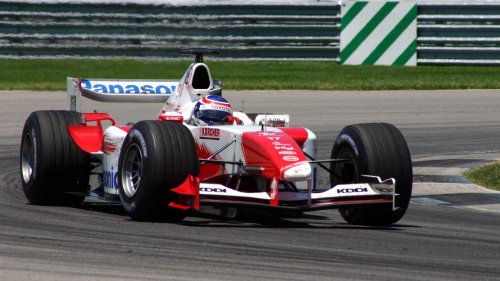
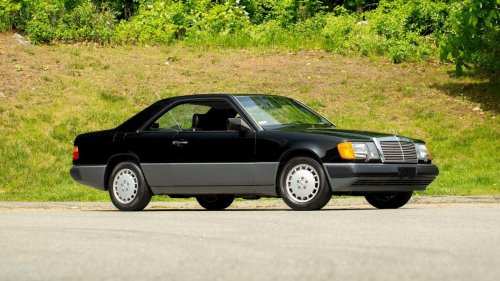
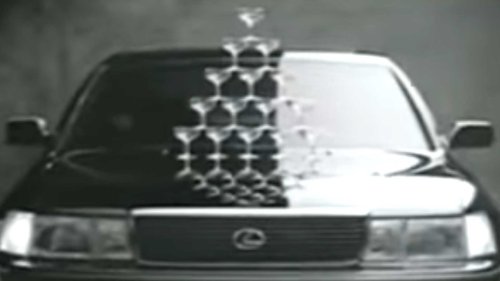
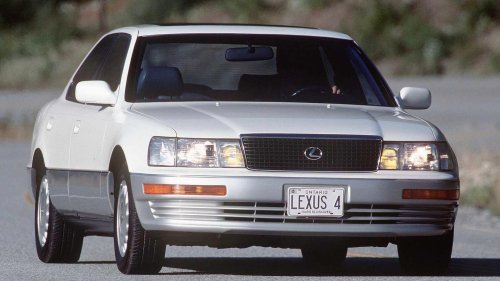
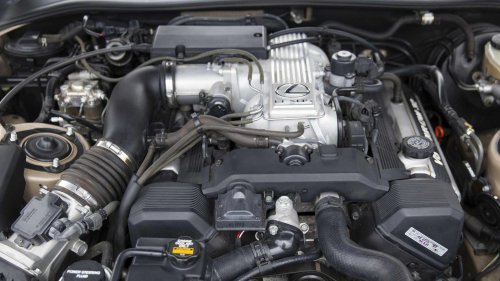
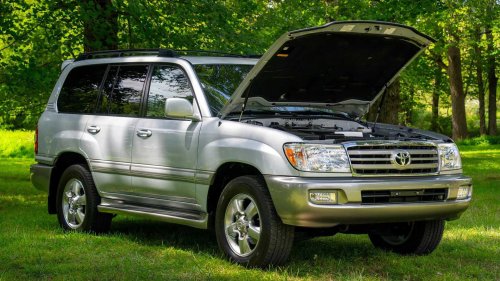
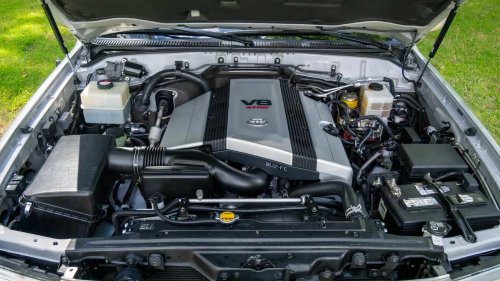
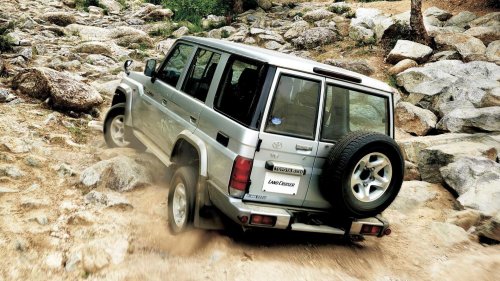
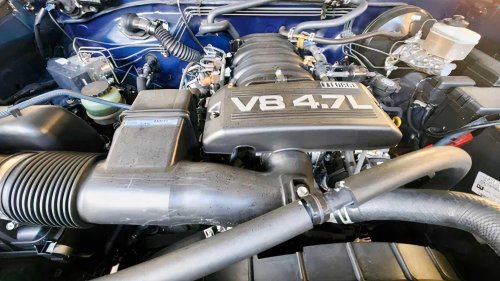
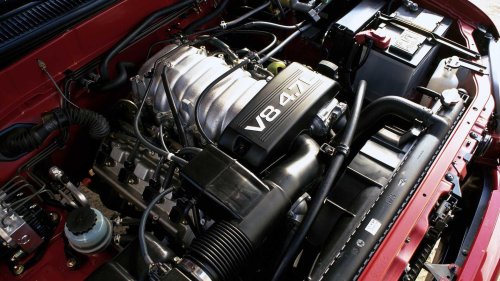
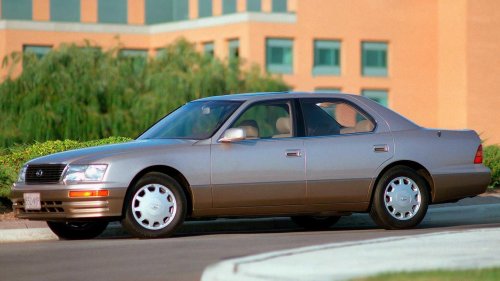



















If you want to hear a story about ambition paying off, you have to hear about Toyota in the 1980s. At the time, the Japanese automaker set out to do something no one else had attempted: challenge the dominance of Germany in the U.S. import market. It wasn't happy conceding second place or third place. Toyota had decided it would have the top spot by any means necessary.To achieve this goal, it would have to beat Germany in three major categories: power, refinement, and reliability. BMW and Mercedes-Benz had dominated the luxury import market for so long it seemed unreasonable to attempt to challenge them. However, Toyota was not taking no for an answer. Its solution was one of the largest engineering efforts ever conducted in automotive history. The result didn't just dethrone the Germans, it made the entire automotive industry wonder if they even stood a chance. The Pivotal Project ToyotaIn 1983, Toyota's chairman, Eiji Toyoda, issued a mandate that would change the course of automotive history. His request was simple: create the best engine ever built. When Engineering Excellence Meets A Blank Check ToyotaThe resulting program was called Project F1 with the F standing for Flagship, not Formula. Toyoda gave Ichiro Suzuki, Toyota's Chief Engineer, complete freedom to design what he thought was best. The budget? There was no budget—this was a true blank check program. They only had to accomplish one goal: outclass every luxury engine ever built in every conceivable category. This was a simple goal, but achieving it would require a monumental effort and out-of-the-box thinking, completed in record time.Suzuki's team decided to start fresh with the only reference being a V-8 engine utilized in CART and IndyCar open-wheel racing. This fact was not even known until nearly two decades later, when it was publicly confirmed by Toyota. About 900 engine iterations and 1.67 million test miles later, a single production unit was deemed worthy. A twin-turbocharged variant of this finished engine earned certification from the U.S. Federal Aviation Administration for aircraft use just to prove how robust this platform really was. A Real Racing Pedigree Via Wiki Media Rick DikemanOnce the engine was complete, it was nothing short of an engineering masterclass. The final product was a 32-valve quad-cam V-8 with six-bolt cross-bolted main bearing caps like a race engine. Most V-8 engines at the time used four-bolt main caps, but this engine used six because the engineers followed a fundamental philosophy of overengineering everything. Was this necessary for a road car application? Not at all. Did Toyota do it anyway? Absolutely.An oversquare (bore larger than stroke) ratio allowed for larger valves and increased airflow without added displacement. An all-aluminum construction from the block to the head ensured the unit was as lightweight as possible without compromising durability. To ensure longevity, the redline was conservative. Toyota built an engine with such a high performance ceiling that day-to-day driving felt effortless. Crumbling The German Status Quo Bring A TrailerWhen the public finally got a reveal of this new engine, it was an immediate shock to the entire industry. The offerings of the German giants that had dominated the luxury segment suddenly felt lackluster, overpriced, and uninspiring in comparison. The Perfect Ad That Changed The Narrative LexusThe car that offered this new engine was priced specifically to undercut the German competition while also outperforming them in just about every metric. Initially, most people didn't believe the hype. Yet, if you had the chance to get behind the wheel and feel it for yourself, most people end up at a loss for words. If luxury cars were about refinement, this car was about as refined as it gets. Toyota's marketing team tried their best to encapsulate this feeling, and one well-thought-out advertisement was all it took to send the message home.In the ad, a pyramid of 15 champagne glasses is directly balanced on top of the engine bay of the car on a rolling dyno. After starting the engine, not a single glass moved. Then, suddenly, the car is accelerated all the way to 140 mph and beyond. In a clear feat of engineering magic, the glasses remain perfect, still, and intact in their pyramid formation. At that moment, the public understood that German luxury cars were smooth, but not this smooth. This was a whole new level of refinement that no automaker in the industry had ever previously achieved. Proving You Can Have It All LexusThe smoothness demonstrated by this engine made it a global sensation overnight. However, it was after years of service that this power unit truly started to show the real depth of its quality. With nothing more than routine fluid changes, owners were reporting odometer readings that were unheard of in German luxury vehicles. Documented cases of 500,000 miles and more with original internals became commonplace.Mr.choppers, CC BY-SA 3.0 | Wikimedia CommonsIn the tuning world, this engine was modified to make 500 horsepower on stock internals without much effort. In some extreme twin-turbo configurations, this engine proved to be capable of over 1,200 hp on the original block. Over time, the automotive community empirically learned what Toyota's engineers had known all along: this was a racing engine disguised as a production V-8. This engine was the 1UZ-FE V-8, the legendary founding member of Toyota's UZ family. The Iron Sibling Nobody Talks About Bring A TrailerThe 1UZ-FE made the UZ engine family famous. What followed this first engine would further add to its depth and give it a whole other layer of quality. Going Backwards To Make Progress Bring A TrailerIn 1998, Toyota introduced a second UZ variant, dubbed the 2UZ-FE. Unlike the all-aluminum 1UZ-FE, the 2UZ-FE used a cast-iron block like Toyota models of the 1960s. You might assume that this downgrade was a cost-cutting measure. However, the 2UZ-FE was created for truck and SUV applications like the Toyota Tundra and Toyota Land Cruiser. These vehicles spent most of their time towing loads, dragging along heavy AWD systems, and handling roads well off the beaten path.These conditions would destroy most conventional powertrains within a couple of years. Toyota decided that the iron block would provide the rigidity and heat resistance that aluminum would not under the heavy-duty stress expected of these more extreme vehicles. The 2UZ-FE also utilized an undersquare design as opposed to the 1UZ-FE's oversquare design, which increased low-end torque in exchange for reduced high-rpm power. The 2UZ-FE, despite sharing the same foundation as its predecessor, was crafted with a completely different ideological approach. A Reputation Earned By Trial By Fire ToyotaThe 1UZ-FE proved its quality through effortless highway cruising, perfectly designed for the needs of a modern flagship luxury sedan. The 2UZ-FE proved its worth out on cold, snowy nights and in hot and humid marshes. Conditions that would break most engines were another day's work for the 2UZ-FE. Within a decade, documented records of 300,000+ mile examples were becoming old news. You could do your best to kill this engine in any way possible, and somehow, someway, it would keep chugging along.Bring A TrailerJust to prove that point further, Toyota Racing Development (TRD) even began offering a factory supercharger kit for early 2000s Tundra and Sequoia models. The 2UZ-FE's iron block made it perfect for forced induction, and the 240 hp output of this V-8 engine could be bumped to 400 hp with relatively little effort. With its non-interference design, even an unexpected catastrophic timing chain failure would not kill the 2UZ-FE alone. Toyota's pure focus was that this engine's reliability would be just as stellar as its predecessor, if not more impressive. Why The UZ Is Still Relevant Today Although the UZ family ended production in 2013 after 24 years of service, its legacy lives on in the current generation UR engine series. The UZ family proved to be a case study in how to succeed with a solid engineering foundation when applied to separate use cases. 2JZ Swap? Nah, UZ Swap. ToyotaEver heard of the 3.0-liter twin-turbo 2JZ-GTE inline-six? As amazing as this legendary engine is, the scarce availability of this powerplant has driven prices out of the reach of many enthusiasts. Desperate times mean desperate measures, and the allure of the 1UZ-FE as a candidate for an engine swap is steadily increasing. The 1UZ-FE offers a strong bottom-end, is tunable, and has a smooth V-8 character that is hard not to love. All that for a fraction of the cost of a 2JZ-GTE—a value that the swap community is slowly realizing. The 2UZ-FE is still considered one of the most desirable and reliable engine platforms in the overlanding and off-road communities. As far as aftermarket support, the UZ family remains strong and shows no sign of letting up. Two Engines, One Vision LexusThe UZ family is a pure representation of Toyota's engineering prowess at its absolute peak. The 1UZ-FE and the 2UZ-FE both share a name and their core principle: overbuilding everything. Most automakers never even consider pursuing radical ideas with this foundation due to bureaucratic or financial constraints. The UZ family is what happens when none of these limitations exist, and the focus is making the best possible product, no matter what. This success wasn't a coincidence. When the UZ family was at its peak, Lexus's primary slogan was "The Relentless Pursuit of Perfection." This engine platform embodied that message in the purest form possible and produced two legends with entirely separate functions, all from the same blueprint.Sources: Toyota, Lexus, Mercedes-Benz, BMW