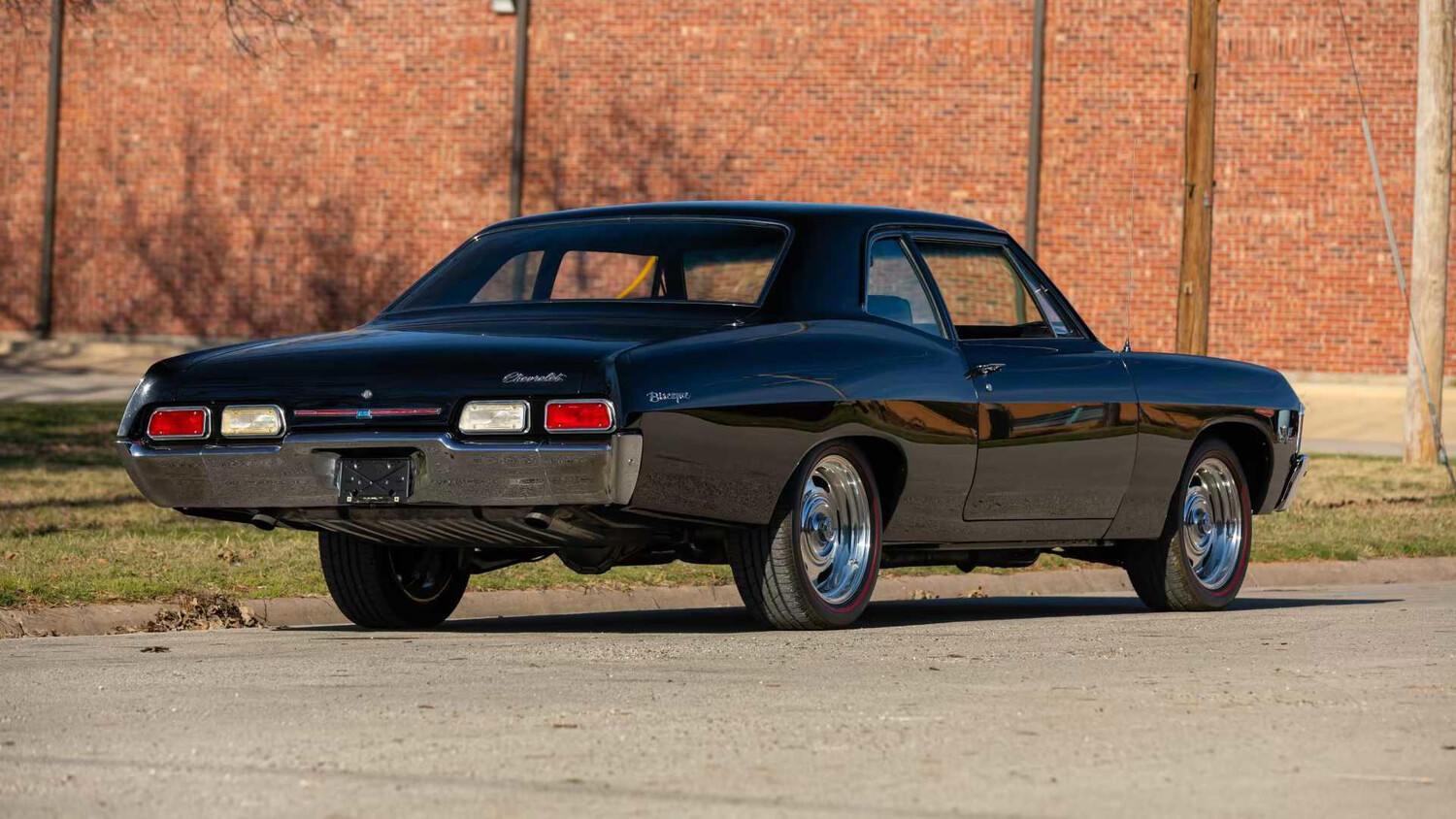
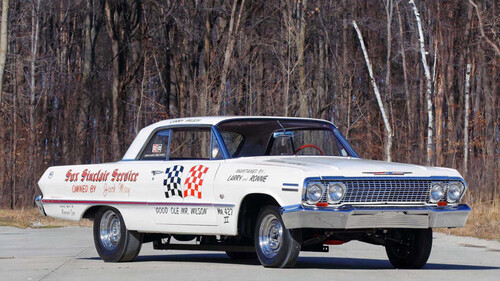
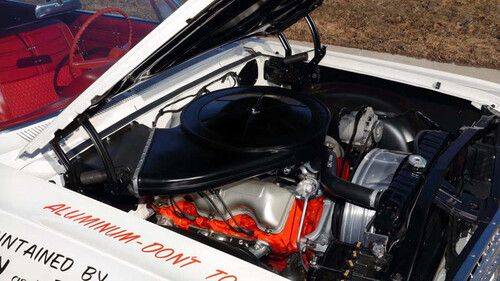
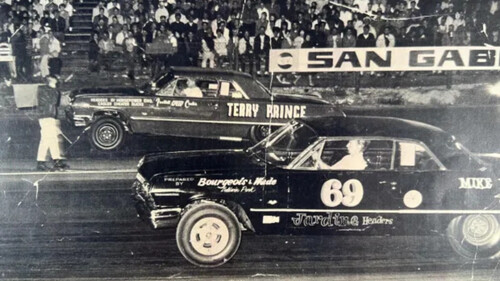
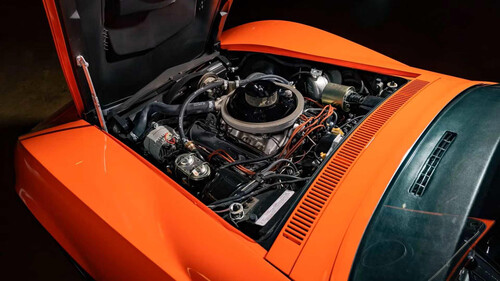
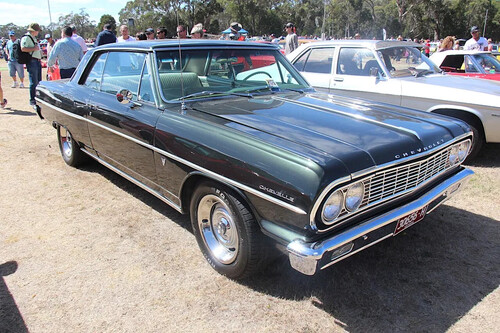
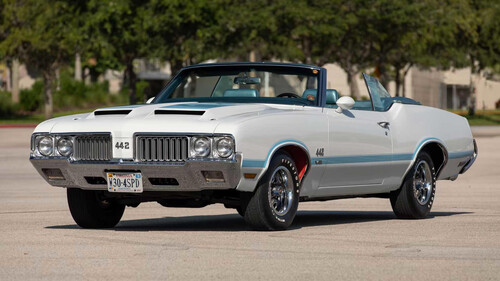
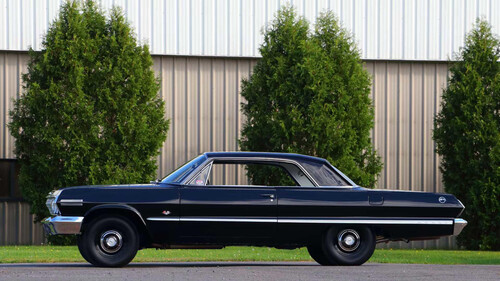
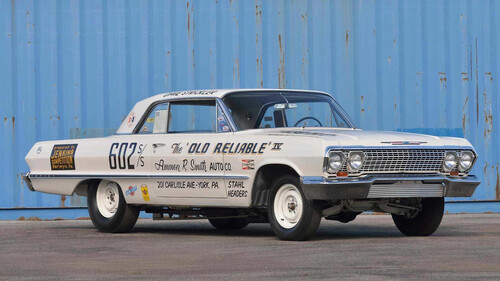
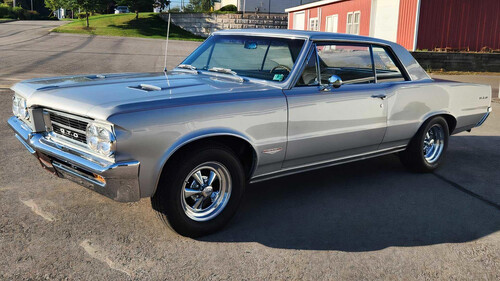
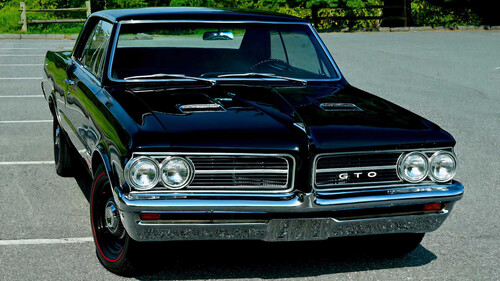
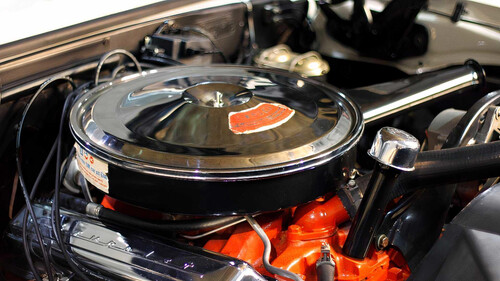
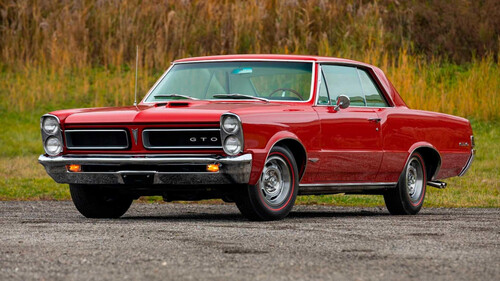
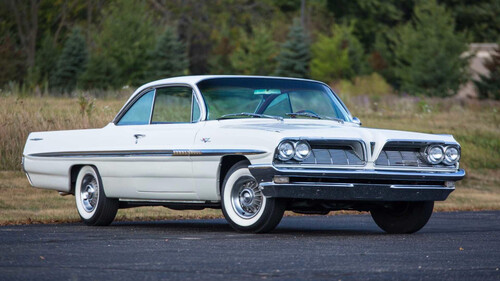
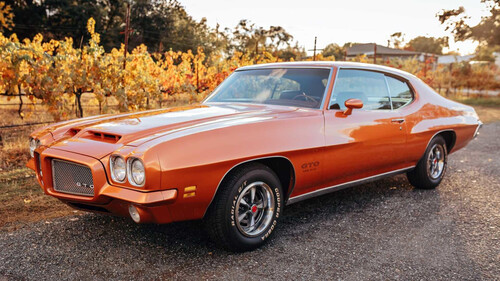
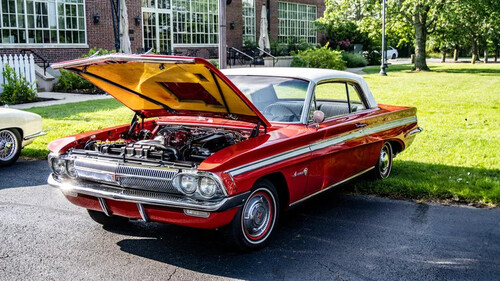
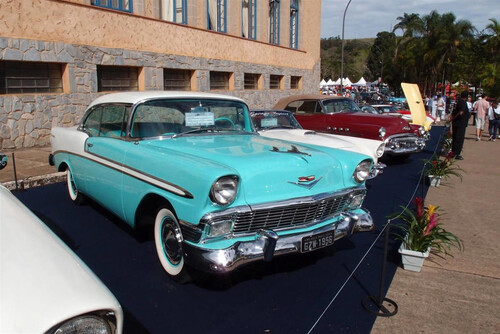
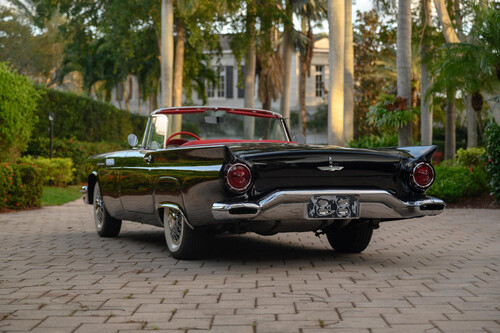
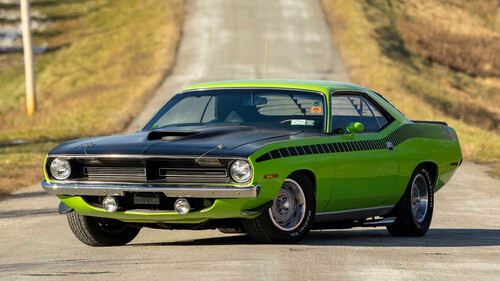
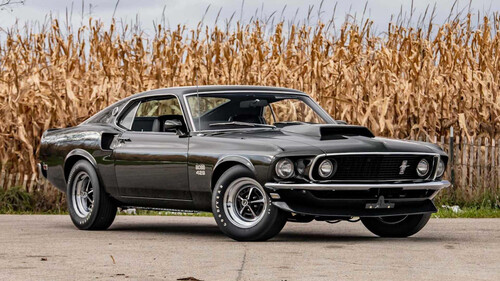
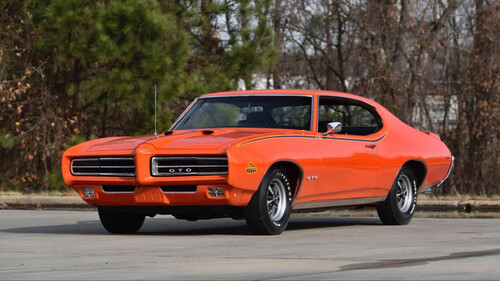
Let's face it, we all love sleeper cars. There's probably no better feeling a gearhead can experience than humiliating somebody in a race while driving a clean, ordinary-looking car no one would consider a threat. Lovers of sleeper cars were definitely in luck back in the 1960s, as the big Detroit brands offered several of them. One of those full-sized family cars has become highly prized by collectors, even though it's from a relatively boring and common model. That's thanks to it having an engine that gained an important role for itself in racing. Several Full-Size Family Cars From The '60s Secretly Had Big-Block Power MecumTake a look at any full-sized family car from the 1960s, and it's likely that you won't think too much about what's under the hood. If you do, you're probably thinking that it's powered by an inline-6 or a small-block V8. But, quite a few of these cars have some serious horsepower hidden under their unassuming bodywork. What Made The 409 Feel Racebred The point of the 409 was more than just cruising highways. In 1962, the top version gained a second four-barrel carb, revised cylinder heads, and a hotter camshaft, pushing the package into competition territory and pairing it with hardware like a four-speed and Positraction that drag racers wanted. A parts list you’d expect from the strip, not the school run.Ford, Chevrolet, and Pontiac all decided to make their full-sized offerings available with legitimately powerful big-block engines. While the Pontiac GTO ended up becoming a model in its own right, it was originally a performance-oriented version of the relatively normal Pontiac LeMans. Ford also offered the Galaxie with various big-block options, and the Chevrolet Impala also often got the option of having a big-block monster under the hood. But, it's another offering from Chevrolet that did something that was truly special in the sleeper sedan stakes... The Chevy Biscayne 409 Is A Legendary Sleeper With A Racy Engine Bring a TrailerOut of those full-sized, family cars with big-block engines, one of the coolest and most desirable has to be the Chevrolet Biscayne 409. That desirability has to do with its sleeper appeal and the engine that it came with. The Biscayne 409 got the 409 cubic inch (6.7 liter) version of Chevrolet's legendary W-Series engine. This was a bigger development of a 348 cubic inch (5.7-liter) small-block engine that first appeared back in 1958. This larger version had serious power for its time – single-carb versions had 380 hp, while twin-carb versions had up to 425 hp.The 409’s reputation wasn’t just bench racing, either. Chevrolet rated the top 409’s horsepower peak at a sky-high 6,000 rpm, and period testers said the 6,200-rpm redline was conservative. In bone-stock form on factory tires, a 409 full-size could run about 14.9 seconds at 98 mph in the quarter-mile, while a few smart hop-up parts turned the same basic combo into a 12-second menace.That put it on par with the most capable muscle cars of the 1960s, like the Mustang Boss 429, Pontiac GTO Judges, and even Hemi-equipped Mopars. That becomes more impressive when you consider that the Biscayne was one of Chevrolet's most 'boring' models.Mecum While the W Series engine was initially developed for passenger cars, it did end up being used in motorsports. It became an important part of any kind of program in NASCAR or drag racing that involved Chevy's cars. That makes the Biscayne 409 all the more special, as it can legitimately claim racing heritage through its engine. The W Series Developed Into The Mystery Mark II via Bring A TrailerWith the W Series becoming a staple in NASCAR and drag racing, it was almost inevitable that Chevy's engineers would want to try and make it even more powerful. The result of that was the Mystery Mark II, a 427 cubic inch (7-liter) engine that's at the heart of the Chevrolet Impala Z11. While its basic design was based on the W Series, it was modified to make it more suitable for NASCAR. This included increasing the stroke to 3.65" (92.7 mm), giving it that proper 7-liter big-block size. This gave it an output of 430 hp and 575 lb-ft of torque, as rated by the factory. Many believe that the 430 hp rating is actually under-rated – it's been estimated that it could have produced as much as 600 hp in race trim. The Biscayne 409 Is Becoming Very Valuable Because it's such a desirable big-block car from the '60s, the Chevy Biscayne 409 has now started becoming extremely valuable. Part of the Biscayne 409’s appeal today is that the hottest versions were never common. Even in 1962, just 15,019 full-size Chevys left the factory with any 409 at all. Credible estimates put production of the 425-horsepower L80 dual-quad 409 at just under 4,400 units for 1963, and there’s no solid breakdown showing how many of those engines ended up specifically in Impalas, Bel Airs, or Biscaynes.It hasn't reached the kind of prices the rarest and most valuable muscle cars get yet. But, it's pretty close. There are examples of Biscayne 409s out there that have sold for $64,000 and $96,000. That's much more than the average used value for a Biscayne of this era, which revolves around $28,936 according to Classic.com. With the trend of third-generation Biscayne values seemingly on the rise, it's not a stretch to suggest that the massive premiums that the 409s carry will only go up as well. It might not be long before we see the first six-figure sale of a 409! Why Did These Family Cars Offer Racing Engines MecumAfter learning about how some otherwise ordinary family cars had some pretty ridiculous race-bred engines as options, you might be asking why that is. Well, there are a couple of reasons why. One of those reasons is because of a process you'll likely be familiar with. The other reason is much more interesting and has a lot to do with one of Detroit's biggest automakers having a change of heart about their high-performance exploits. They Were Homologation Specials MecumOne reason why these cars were given engine options that were positively massive was because they were homologation specials. Back in those days, cars that competed in NASCAR had to be very similar to the standard cars you could buy in a dealership. If you wanted to modify a car to make it more competitive on the track, you also had to make at least a limited number of road-going versions with the same modifications. The Ford Galaxie 500 R-Code is just one example of a car that was offered to the general public specifically to make it legal for competition use. It had the legendary 427 FE engine, and everything that wasn't essential to making it go as fast as possible was stripped out. They Were Built To Bypass A General Motors Management Directive MecumThe other, much more interesting reason as to why these big-block full-sized cars exist is because of a General Motors management directive that changed how GM interacted with motorsports. GM's management were afraid that the "horsepower wars" that had been going on between the big manufacturers at that time could get out of hand. They were also scared of potentially being punished by antitrust legislation, due to how big GM had become by this point.As a result of both those fears, GM withdrew from factory-sponsored motorsports programs entirely. But, it could still use a loophole in the management's orders to covertly support independent teams who wanted to use GM-built cars. The best way that it could do this was to create these big-block, full-sized cars, making them legal to run in NASCAR and officially-sanctioned drag racing while still technically not being directly involved.Sources: Bring A Trailer, Chevrolet, Classic.com, Ford, Pontiac