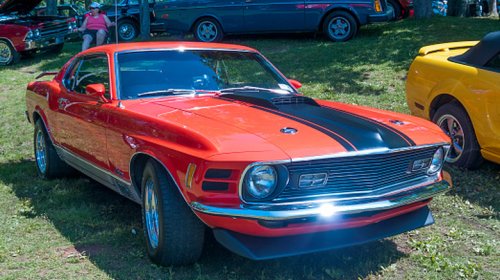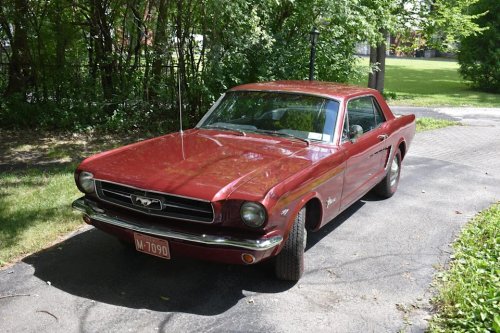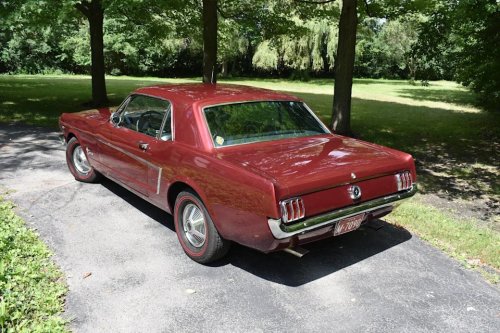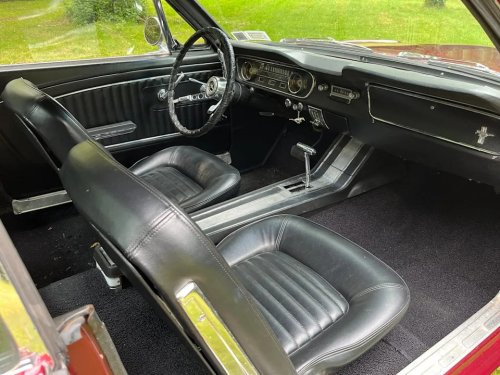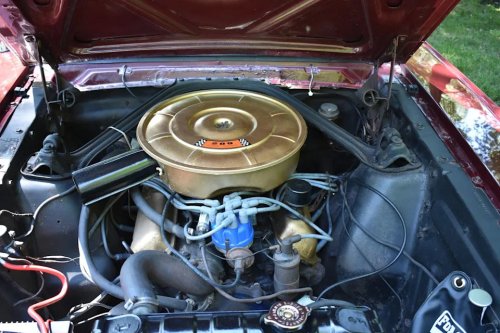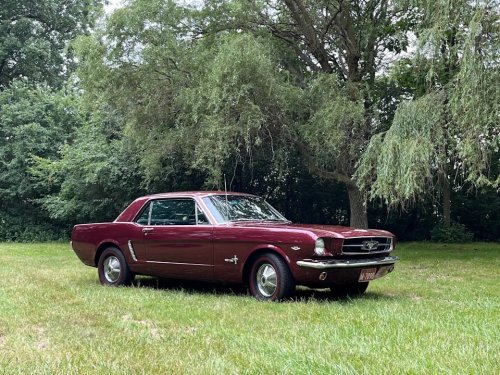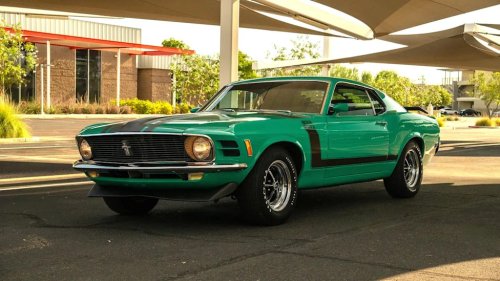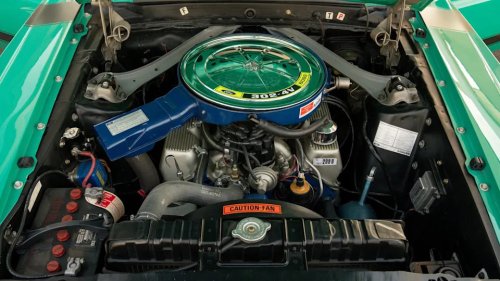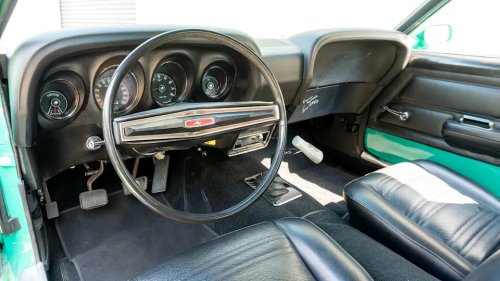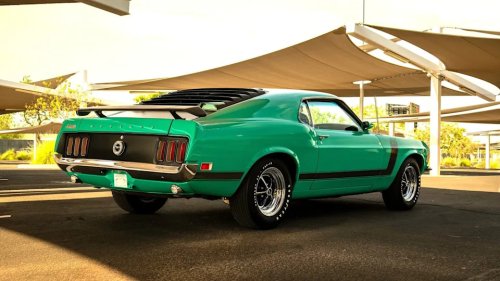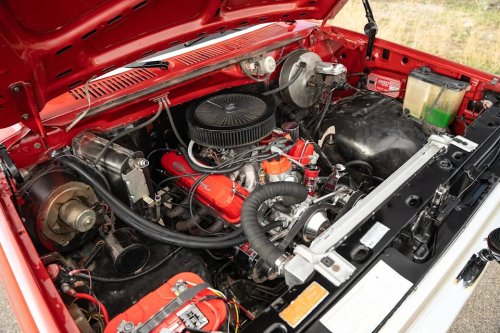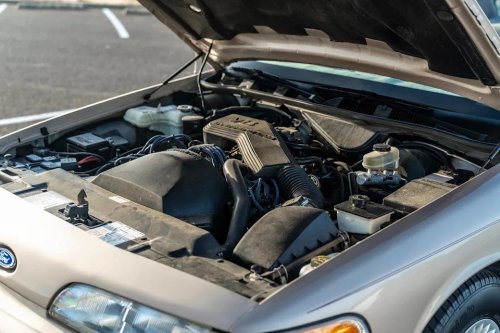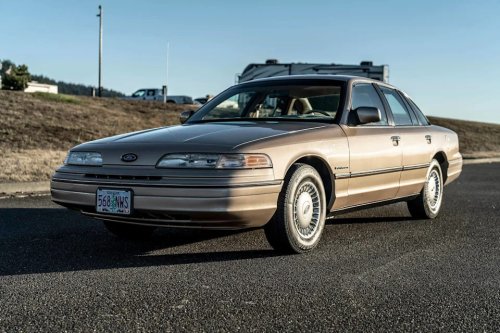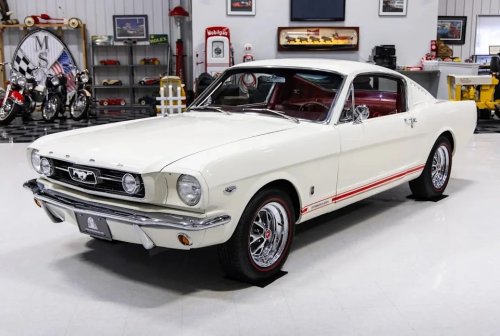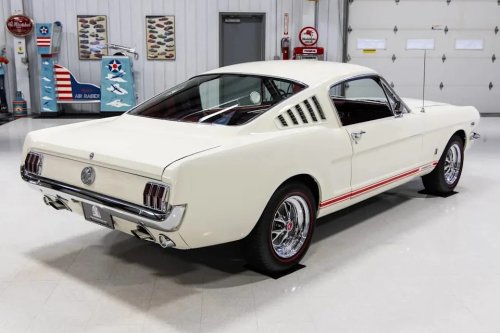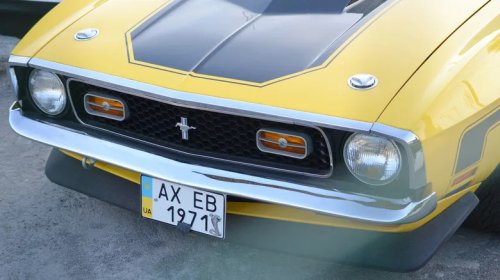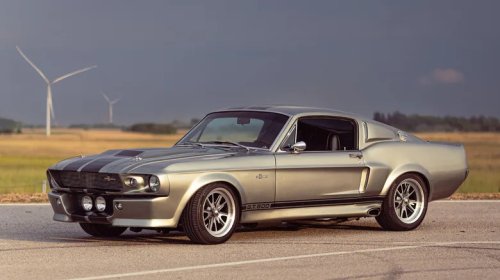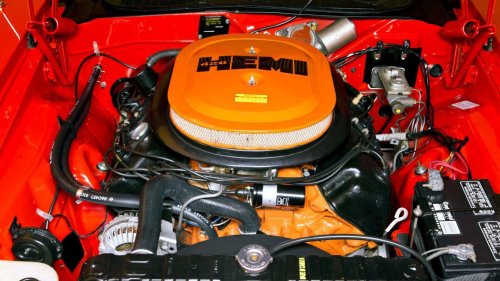
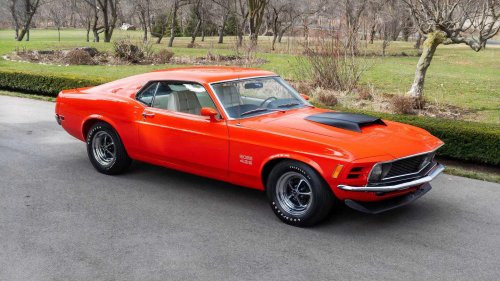
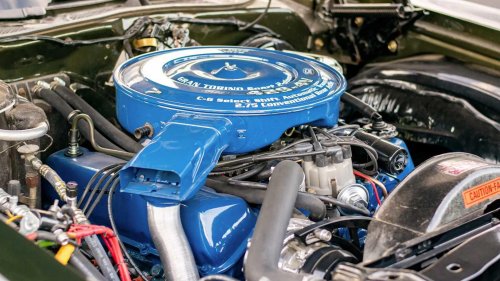
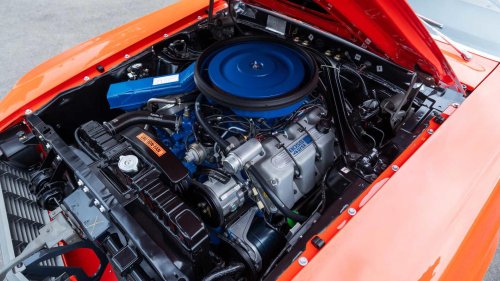


















Of course, muscle cars are some of the coolest types of vehicles powered by classic, big-block V8 engines. But why are muscle cars getting all the credit? Hefty engines deliver power to various historic vehicles such as heavy-duty trucks, industrial equipment, RVs, luxury sedans, and police cruisers.There's one particular Ford engine that probably has a heavy lower back because it was responsible for powering nearly the entire vehicle lineup for decades. Sure, it delivered potent power and torque in the Ford Mustang. But it helped other iconic cars and trucks reach their full potential, and even dominated NASCAR.It features a design that is easy to tune and plenty of interchangeable parts to fit diverse projects and builds. This classic engine is still popular today with tons of aftermarket parts availability. Best of all, it’s still in high demand as a crate engine even though production ended nearly 30 years ago. Ford Needed More Torque Chrysler 426 HEMIBy the late 1960s, Ford’s FE engine family and Mercury-Edsel-Lincoln (MEL) engines were becoming pretty outdated. It needed a new engine to replace aging options that couldn’t provide enough torque. An engine with more torque was needed to power larger 'land yacht' cruisers or full-size family sedans.Plus, Ford needed to beat the infamous Chrysler 426 in NASCAR and provide its muscle cars with a little more zest to keep up with rivals. It needed more towing and hauling power, as well. In order to better compete, Ford needed to develop a lighter engine. Plus, the FE and MEL engines were struggling to meet rising emissions standards and faced high production costs.Ford determined that it would be cheaper to build something new to replace its aging V8 options. While designing this new engine, Ford decided to create a versatile option that was easy to modify. This way, it could be used for multiple applications, from powering muscle cars to heavy-duty equipment. The Ford 385-Series Big-Block Delivered Improvements Back in 1968, the Ford 385-series big-block V8 was born to replace the 289-cubic-inch V8 and to provide significant advancements. It was the base block for the 427 and 428 engines used in NASCAR, the Mustang, and police cruisers. The 428 FE Series delivers up to 420 horsepower and 462 pound-feet of torque, depending on application.The 385-series gave life to the 429 (7.0-liter), 460 (7.1-liter), and 370-cubic-inch (6.1-liter) engine family. While the 429 delivers up to 385 horsepower and up to 480 pound-feet of torque, the 460 churns out 365 horsepower and 485 pound-feet of torque. Also, the 370-cubic-inch (6.1-liter) engine delivers 180 horsepower and 300 pound-feet of torque.This big block engine has groundbreaking “poly-angle” canted-valve cylinder heads that tilt the valves into two planes to significantly improve airflow. This also improved combustion efficiency. Also, it was designed with a massive 4.36-inch bore and 3.85 stroke to provide larger vehicles with a smooth and effortless acceleration. It has a tall deck, 10.300-inch deck height, a raised CAM tunnel for clearing larger strokes, with a massive 4.900-inch bore spacing to provide a stable foundation. The Ford 385-Series Big-Block V8 460 Engine Was Everywhere MecumThe 385-series big-block V8 engine family was found to be potent and durable for various uses. The 460-cubic-inch V8 engine in particular took off, exploding in popularity. In 1973, the 460 was paired with heavy-duty Ford trucks such as the F-250 and F-350. It was also popular in E-Series vans thanks to its immense towing power. It’s also known for its popularity among RV and motorhome builders in the 1970s and 1980s.The 429 was more popular among muscle cars, especially the Ford Mustang Boss 429. This model was built specifically to dominate NASCAR, but it had to be installed in at least 500 street cars to qualify. This engine also powered the Ford Torino, Mercury Cougar, Mercury Cyclone, and Ford Thunderbird.Both the 429 and 460 were popular in school buses and luxury cruisers like Lincoln models as well. Then the smaller 380-cubic-inch engine powered trucks and school buses from 1977 to 1991. It was primarily built for commercial fleets to prioritize its durable torque over high performance speed. Unfortunately, Ford 385-Series Big-Block V8 429 Was Short Lived Bring a TrailerThe 429 was only in production from 1968 until 1973, while the 460 V8 was in production from 1968 until 1998. The 429-cubic-inch variant arrived at the wrong time, as it struggled against increasing emission standards in 1970. To be compliant, Ford had to drop its compression ratio, detune it, and add restrictive equipment. This choked its performance and efficiency.Plus, high insurance costs targeted high-powered V8 muscle car engines. This caused sales to slow down. Plus, the oil crisis and rising fuel costs caused buyers to go for lighter, more efficient vehicles instead. Ford needed to shift away from high-displacement units to focus on more efficient options.Then NASCAR implemented a displacement rule in 1974 that banned big-block V8 engines. This eliminated Ford’s need for a specialized racing engine. But the 460 engine was based on the same architecture and delivered more torque at lower RPMs. It became the more practical option for powering large, luxury cars and trucks. Collectors Still Hunt For The 385-Series Big-Block 429 V8 Engine MecumEnthusiasts still buy the Ford 385-Series big block 429 V8 engine because of its historic racing accomplishments. It powered the Boss 429 on the track and was dropped in a limited number of 1969 and 1970 Ford Mustang models. Plus, it has a reputation for dominating the drag strip in the Torino, Cobra Jet, and Super Cobra Jet cars.The 429 V8 is also popular due to the brute low-end torque that makes it extremely enjoyable for driving classic Lincoln models. Plus, this engine is easy to modify thanks to its spacious block design. You can easily increase the displacement and bore size with stoker kits for high-powered resto-mods.Pricing for the 385-Series big-block 429 cubic-inch V8 ranges between $1,500 and over $30,000 depending on its condition. Restored and racing prepared units command a higher premium over engines that can be rebuilt. Verified Boss 429 engines with documented NASCAR use fetch the highest prices.Source: Automotive History Preservation Society, Hagerty