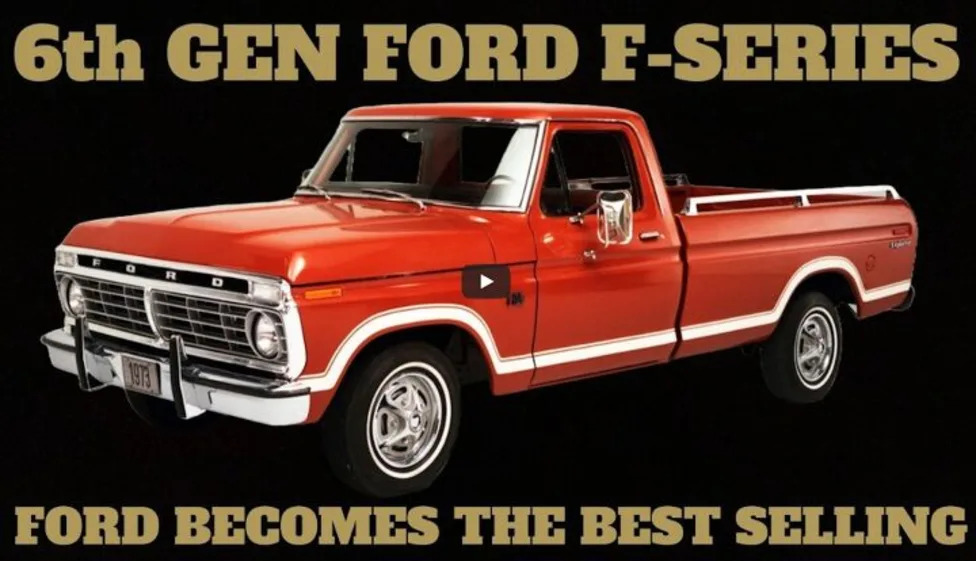
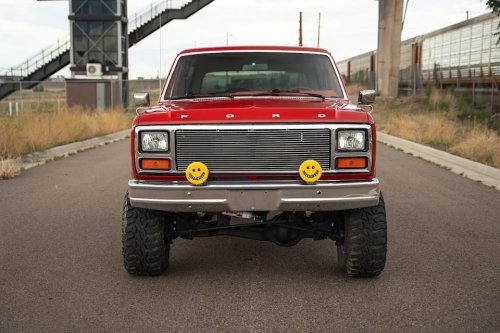
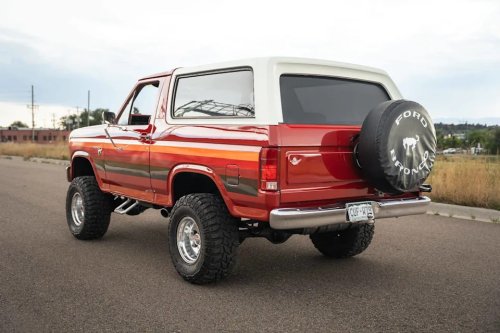
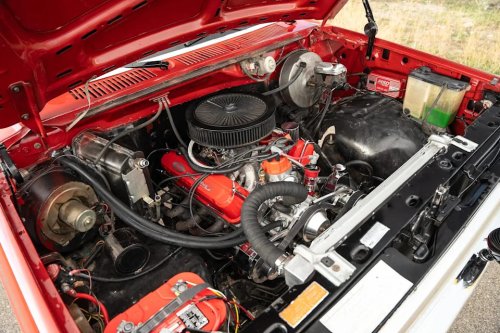
During 6th generation. Ford Wanted to deliver a truck that could comfortably serve as a not only a work vehicle but as an everyday driver.For years the Ford pickup had been used by professional tradesman, farmers, and those seeking something they could take off road for hunting and fishing or camping. In the '50s Ford sold rough 100,000 trucks per year in the '60s that number jumped to 300,000 and early '70s those numbers were well over half a million trucks per year. Still there were those at Ford that felt IF the full-size truck were made to be more comfortable, if Ford added more options, and upscale models they could do better and that was the mission for the 6th generation Ford truck. AdvertisementAdvertisementThe TTAC Creators Series tells stories and amplifies creators from all corners of the car world, including culture, dealerships, collections, modified builds and more.An AI-generated transcript summary edited by a staffer is below.[Image: Tony's Fords and Mustangs/YouTube]Become a TTAC insider. Get the latest news, features, TTAC takes, and everything else that gets to the truth about cars first by subscribing to our newsletter.Summary: Sixth-Generation Ford F-Series (1973–1979)The transcript examines the sixth-generation Ford F-Series, introduced for the 1973 model year, and argues that Ford's strategy of making pickups more comfortable, versatile and car-like helped transform the truck from primarily a work tool into an everyday vehicle. Ford had already seen truck sales climb from roughly 100,000 annually in the 1950s to nearly 500,000 by the early 1970s, but company planners believed the market could grow further. AdvertisementAdvertisementThe 1973 redesign retained much of the previous generation's styling but introduced new body panels, a larger cab, increased track width and longer wheelbases. The distinctive concave side body line earned the trucks the nickname "Dent Side." Interior improvements included more room, curved side windows, relocated fuel tanks, additional storage, a redesigned dashboard and improved heating/defrosting. Ford also offered numerous comfort and convenience options, helping move the pickup toward passenger-car levels of equipment. The powertrain lineup included several inline-six and V8 engines, ranging from the 240-cubic-inch six to the powerful 460-cubic-inch V8, with manual and automatic transmissions available. Twin I-Beam front suspension remained a major Ford selling point, while front disc brakes became standard on two-wheel-drive models. Trim levels expanded from the basic Custom through Ranger to the upscale Ranger XLT, with options such as air conditioning, AM/FM stereo, carpeting, upgraded upholstery, towing equipment and camper packages. Evolution During the Generation1973: The new generation debuted and sold an impressive 724,027 trucks.1974: Ford introduced the SuperCab, adding 22 inches to the wheelbase and providing substantially more interior space, including seating for up to six.1975: The major development was the introduction of the F-150, positioned between the F-100 and F-250. Its higher GVWR also allowed it to avoid certain emissions requirements at the time.1976: Ford added grille changes, made disc brakes standard on 4x4 models and offered a limited Bicentennial Edition.1977: The Flareside bed returned, new 351M and 400M V8s replaced the 360 and 390, rust protection was improved and the F-150 became the only half-ton Ford available with four-wheel drive. Sales reached 723,925, making Ford America's best-selling truck brand.1978: A major front-end redesign brought a large aluminum grille surround, rectangular headlights on higher trims, improved cab sealing, additional luxury options and four-wheel drive for the SuperCab. The new Ranger Lariat became the top trim.1979: Rectangular headlights became standard and catalytic converters were added to F-150s as emissions regulations tightened. AdvertisementAdvertisementThe Bigger StoryThe most important point is that Ford's strategy worked. Sales climbed dramatically during the generation, eventually approaching one million F-Series trucks annually. The transcript credits the combination of greater comfort, more options, higher trim levels and increased practicality for expanding the pickup's appeal beyond traditional commercial and recreational users. The transformation wasn't without controversy. A 1973 MotorTrend review criticized the growing size, expense and car-like character of full-size pickups, arguing that trucks were becoming less useful as tools. The transcript acknowledges that criticism but concludes that Ford recognized where the market was heading: Buyers were willing to pay more for trucks that offered the comfort and amenities of cars while retaining truck capability.Bottom line: The sixth-generation F-Series was a pivotal moment in the history of the American pickup. Ford took a vehicle traditionally viewed as a work implement and deliberately turned it into a more comfortable, customizable and lifestyle-oriented vehicle. The resulting sales growth - culminating in nearly a million trucks a year - helped establish the formula that would make the F-Series America's dominant pickup line for decades.