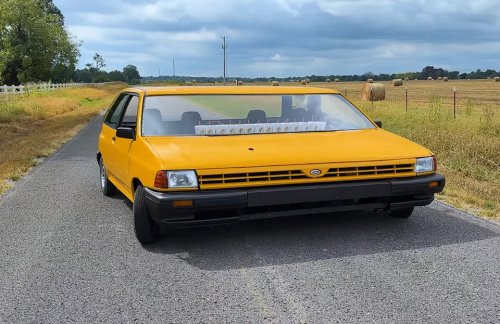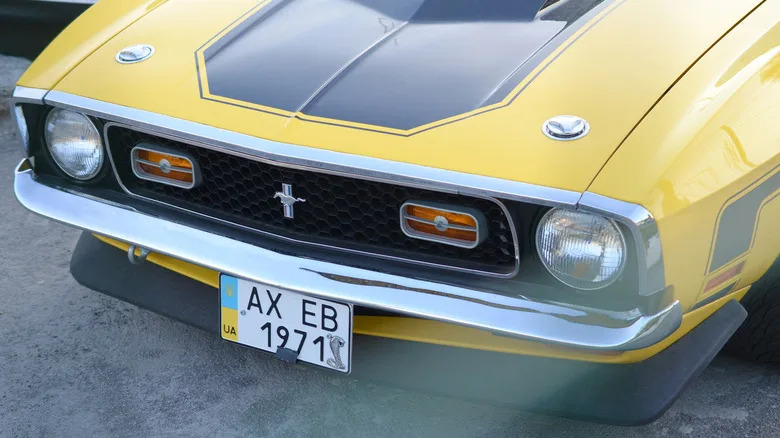
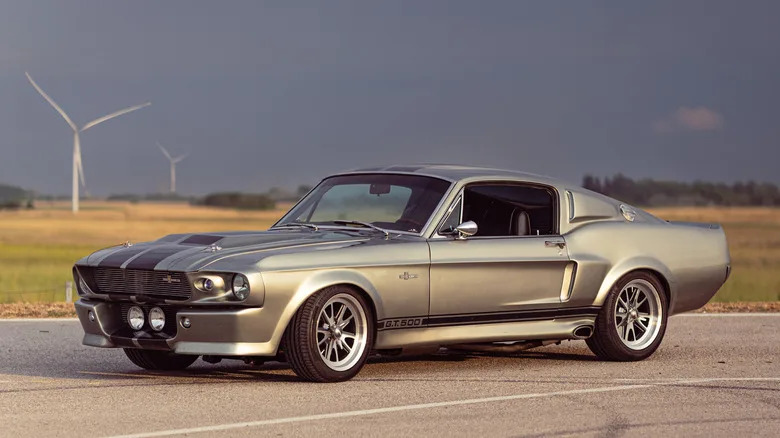
















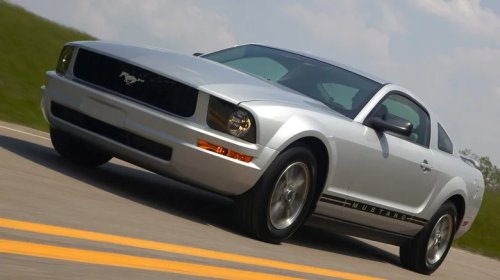
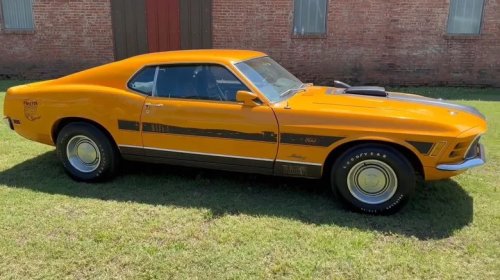
Mehaniq/Shutterstock Add Jalopnik on Google: Google Discover We enthusiasts love movie cars: the '68 Ford Mustang Fastback in "Bullitt," the D2-generation Audi S8 in "Ronin" (one of your favorite Audis), the customized Shelby Mustang in the "Gone in 60 Seconds" remake, and many more. There's often lore attached to these cars, too. For example, the Dark Highland Green pony car that appeared in "Bullitt" sold for $3.74 million at auction back in 2020. The hero Mustang in 1974's original "Gone in 60 Seconds" — the original Eleanor — has some neat history behind it as well. Between its bright yellow paint, black accents, and iconic Sportsroof shape, one might quickly assume that it was none other than a Mach 1, much like the Mach 1 in "Diamonds Are Forever" (albeit not red). But was the original Eleanor from "Gone in 60 Seconds" a Ford Mustang Mach 1? Short answer: no. But the reasoning why, as well as the duties of the two 'Stangs used in production is still fascinating — namely, how the stunt car was prepared and how both were made to resemble Mach 1s. Two cars, one Eleanor When the bright yellow Ford Mustang in "Gone in 60 Seconds" tore out of the International Tower parking lot in Long Beach, California, history was made. Moviegoers got a very long and action-packed car chase with awesome camera work and stunts. It lasts a whole 40 minutes, with as many as 93 police and civilian cars destroyed before it ends. The Shelby in the remake seemingly has more enthusiast canon, but nobody would call the early '70s yellow Eleanor uncool. Well, maybe Chevy folks would. Interestingly, a lot of work went into making it screen-ready. Or, rather, them: two 1971 examples were used, one as the hero car and the other as the stunt car — the former was for most exterior shots, whereas the latter was the one that got beat to hell crashing into and jumping over other cars. They also sported 1973 grilles to look more up-to-date when the film was released in '74. Additionally, they weren't painted a factory Ford yellow color, but instead wore what the film's writer, director, producer, mechanic, stunt driver, and lead star, H.B. Halicki, dubbed "School Bus Yellow" paint. Finally, he blacked out certain portions of their bodywork to resemble Mach 1s, including the hood, but they weren't fitted with the signature Mach 1 hood scoops. To prepare the stunt car for service, the transmission was chained down, a roll bar was thrown in, a harness mounted, and a camera was rigged in the back (for certain shots). It also had dead bolts for door locks, kill switches, armoring underneath, and a first aid kit for good measure. All said and done, it took 250 hours to prep the stunt car. One cool legacy Djordje Kostic/Shutterstock To dive deeper into the original film's lore, when we say H.B. Halicki did so much himself, he truly did. He definitely bore the brunt of the stunt work, too; in one particular scene, he clips a Cadillac (unplanned) and spins into a light pole at around 100 mph. Production was paused while he recuperated from substantial injuries, including a compressed spine. The production painted and lightly fixed up the beaten 'Stang post-smack and used it for promotional purposes. We figured history would've gone down differently, but the only surviving car is the stunt steed, which Halicki's wife Denice still owns. She also owns the copyrights and trademarks tied to the film, though a 2025 appeals court ruling found Eleanor isn't a protectable character. As for the hero, it was crushed at some point post-production — pour one out for a piece of timeless film history. The original "Gone in 60 Seconds" film car may not have been a real Mach 1, but the amount of canon it earned made it one of the greatest movie cars ever nonetheless.