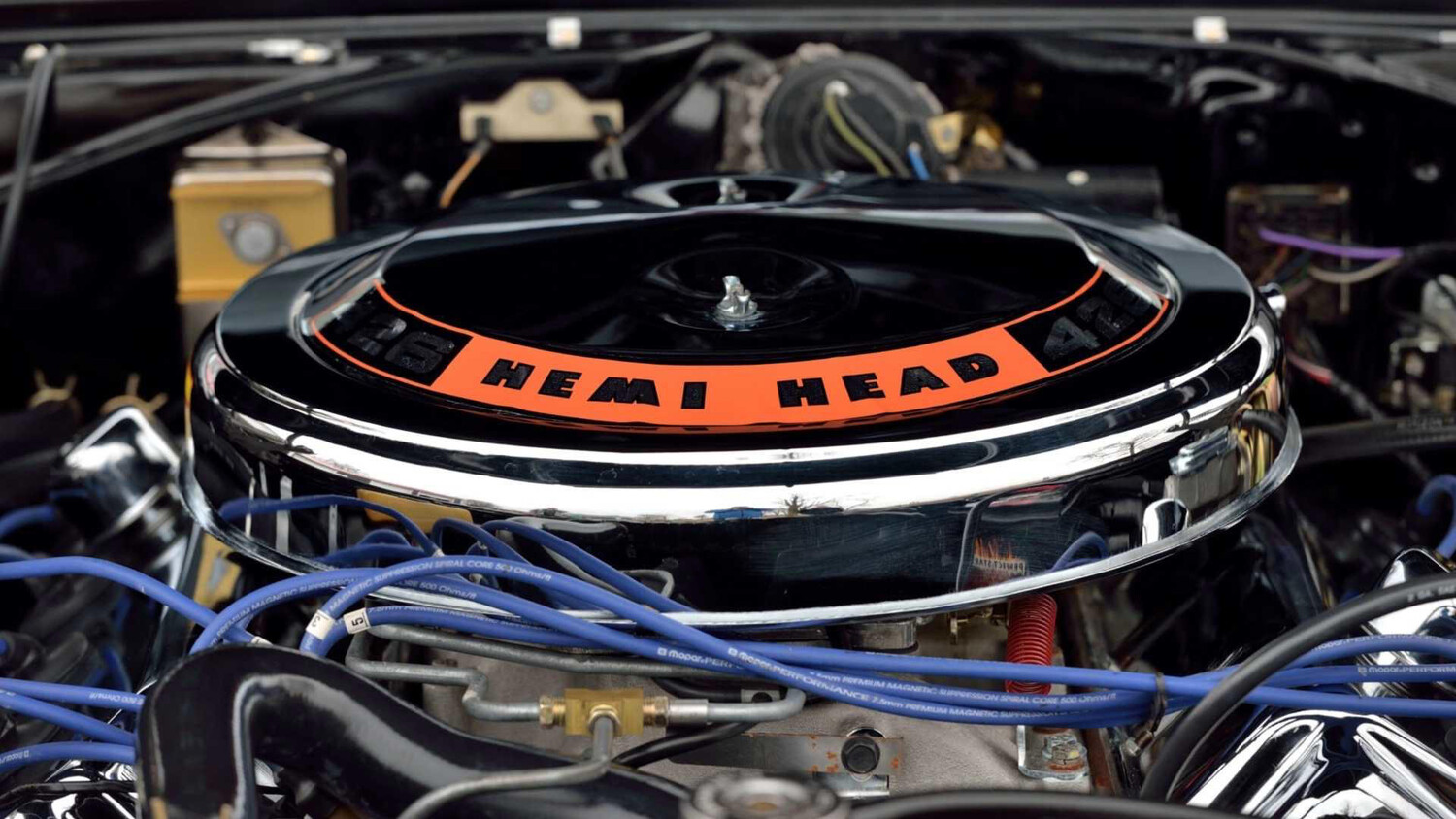
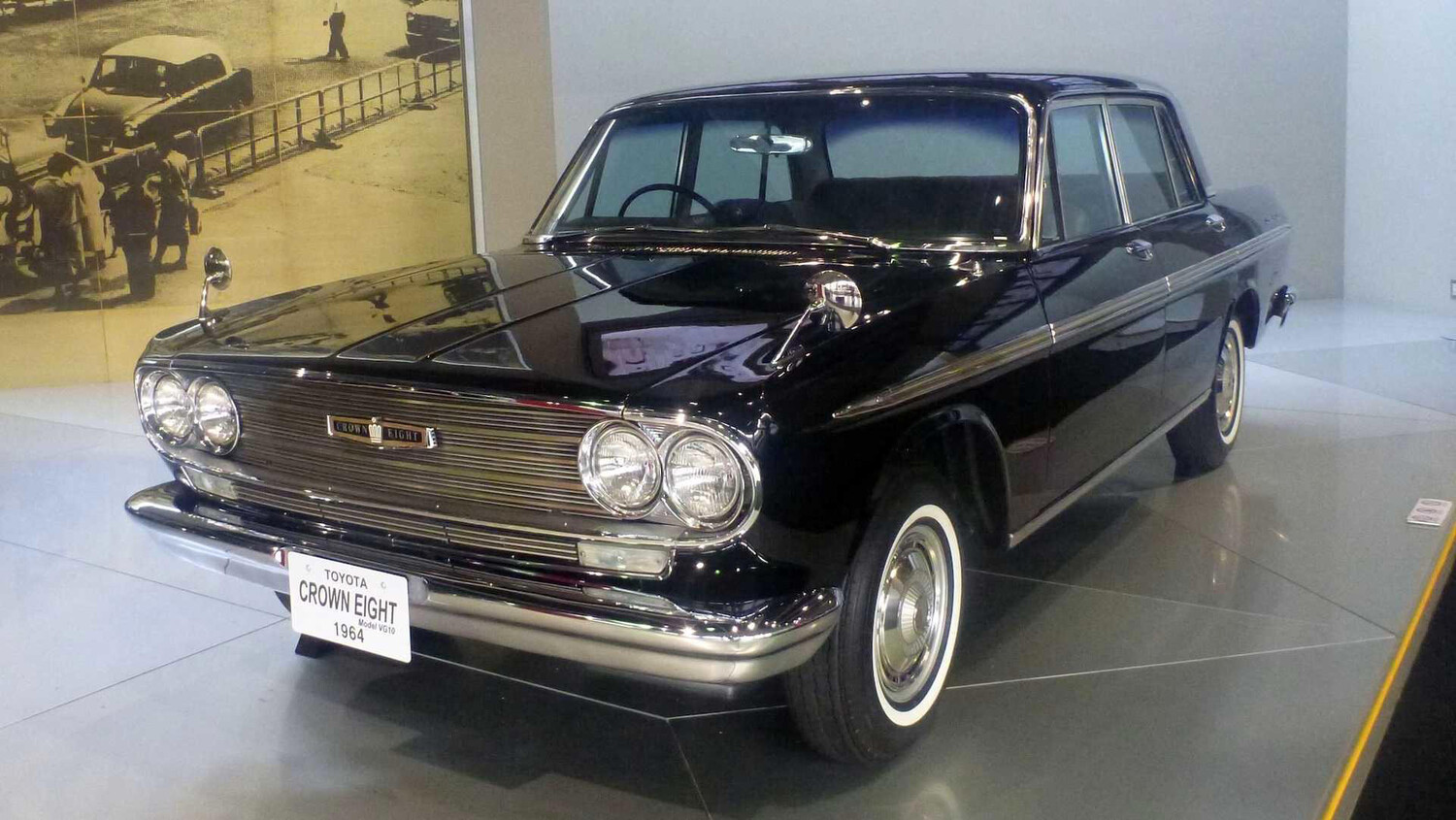
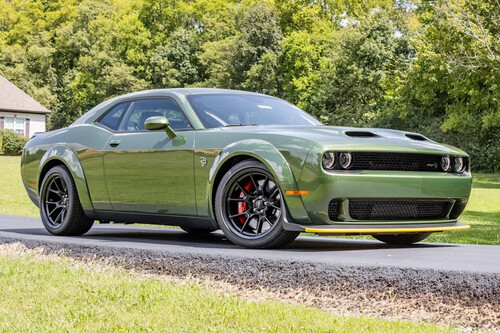
The Hemi V8 engine is a Detroit icon. While the “HEMI” badge may be trademarked by Dodge, the underlying technology isn’t patented by anyone. If you think Hemi V8 engines are just for Dodge cars and Ram trucks, think again. They’ve appeared in vehicles from England, Japan, and elsewhere. Some variations even predate the modern Dodge version of the engine.One Japanese muscle sedan came with a Hemi from the factory, decades ago. And it wasn’t even the weirdest thing about this luxury car. But this all begs the question: What is a Hemi? What’s In A Hemi? MecumDodge’s “Hemi” engine gets its catchy name from the shape of its semi-hemispherical combustion chambers. A piston travels up an engine cylinder, compressing the fuel-air mixture into the cylinder head, where a spark plug eventually ignites it. Different engines use different cylinder head shapes. For over a century, engine builders have experimented with domed, fully hemispherical and “semi-hemispherical” combustion heads.Why bother building a domed cylinder head? One benefit is increased compression as the fuel-air mixture is forced into a smaller space. A second benefit is opening up room for larger intake and exhaust valves. Bigger valves allow an engine to more efficiently pump the fuel-air mixture into the cylinder and the exhaust back out.In 1907, Fiat debuted a Grand Prix race car with hemispherical cylinder heads. Soon Peugeot (1912) and Alfa Romeo (1914) followed suit. Other notable Hemi-shaped engine heads appeared in 1960s Aston Martin V8s, the 1949 Jaguar XJ, Porsche 911s built between 1963 and 1999, and every one of Lamborghini’s V12s.No, the Hemi isn’t just a Dodge thing. But Chrysler was always an engineering-first company, so it isn’t surprising that Chrysler’s 1950s “Firepower” V8 used domed cylinder heads. Engineer Tom Hoover resurrected the domed cylinder head for the legendary but rare 426 cubic-inch Hemi V8 (his second NASCAR-dominating engine). Dodge debuted its “third generation” Hemi V8 in 2003 and is still building this engine today. National Pride Created A Unique Line Of Luxury Cars Via: Toyota UKImagine you’re a businessman in 1960s Japan: You have a little extra jingle in your pocket and want to buy a luxury car. Do you import something from Detroit? Heavens no! You want to show off your patriotism with a domestic car. Just a nice one. Meet the Toyota Crown.Toyota launched its “Lexus” luxury brand in the U.S. market in late 1989. But the Toyota Crown and Century were so popular back home, that it didn’t even bother with Lexus in the JDM market until 2005.The “Century” was an ultra-luxurious car intended for chauffeur-driven buyers and introduced in 1967. The Toyota Crown, introduced in 1955, was a more driver-centered luxury car. Thus, it got some of Toyota’s coolest cutting-edge technology.The 1955 Crown went all-out, hitting the market with an advanced double-wishbone independent front suspension. In 1959, it became the first Japanese passenger car to offer a diesel engine. 1963 saw the “Toyoglide,” one of the first fully automatic transmissions in a Japanese car. For the sportier driver, the “S” grade debuted in 1965 with a tachometer and disc brakes. In 1968, the Super Saloon package brought factory-installed air conditioning to the market. 1979 enjoyed early fuel injection. 1983 wowed drivers with digital gauge clusters. 1987 was far ahead of its time with electronically controlled air suspension. 1991 debuted a GPS navigation system. In amongst these other advances, Toyota even experimented with its own Hemi V8.Fun fact: Toyota tried to offer the Crown to the U.S. market in 1958, but when it lost to other luxury cars Toyota pulled it. We wouldn’t get it back until the 2023 model year. But in the decades since it has been a sort of invisible halo car. It inspired the name of the Camry (a play on Kanmuri, which is Japanese for crown), the Corolla (Latin for “little crown”), and the Corona (another Latin word with roots in crown). The 1964 Toyota Crown “Eight” A Japanese Muscle Sedan Hiding A Hemi V8 Wikimedia CommonsToyota rolled out the second generation of its Crown sedan in 1962, but the car was very much a work in progress. For 1964, it launched an even more luxurious version: the “Crown Eight.” This car was longer and wider than the base Crown. It also featured a very special engine.In the 1960s, Toyota built compact cars for the JDM market, but many Japanese corporations in need of something larger imported big American cars. Toyota had had enough. It had subcontractor “Kanto Auto Works” develop and build something to go toe-to-toe with Detroit.Kanto knew it would need a very special engine for the special car. It turned to the legendary Yamaha engine builders for help. The result was a 2.6-liter V8, complete with an overhead valve, hemispherical chamber head. Though Kanto could only build 1,000 per year, it has the distinction of being Japan’s first mass-produced passenger-car V8.The naturally aspirated and carbureted engine made 113 horsepower at 5,000 rpm and 145 lb-ft of torque at 3,000 rpm. It had a bore of 78 mm (3.07 inches) and stroke of 68 mm (2.68 inches), for a compression ratio of 9.0:1. The Crown Eight was available with a 3-speed manual or 2-speed “Toyoglide” A20 automatic. A Futuristic Sedan Fit For An Emperor Wikimedia CommonsWhy did Toyota hustle out such a huge mid-generation improvement for its second-gen Crown? It may have been taking a shot at becoming the official sedan of the Japanese Imperial Household Agency. It debuted the new Crown Eight at the Tokyo Motor Show and then introduced it for sale nine days before Emperor Showa’s birthday and the beginning of Golden Week in Japan. The automaker also decked the car out in luxury features fit for a royal.Not only was the Crown Eight Japan’s first V8 sedan, but it was also one of its first American-sized cars. It had huge front and rear bench seats, large enough for six adults. Both seats were upholstered in silk brocade and could be electronically adjusted in six directions. In fact, the front seat could fold flat and slide against the rear, forming a massive couch. But that’s not all.The Crown Eight had automatic headlamps, climate control, electric cruise control, and electric windows. Like many 1960s cars it had vent windows, but Toyota didn’t expect you to spin them open like a peasant. No, the Toyota Crown had electronic-actuated vent windows. Instead of conventional door handles, the Crown Eight had electromagnetic door latches that passengers released by pushing a button—much like modern EVs.Despite this historic engine, bells, and whistles, the Imperial House chose the Nissan Prince Royal for its fleet. Toyota canceled the upmarket "Crown Eight" badge in 1967, but it lived on as the 1967 Toyota Century. Many of the Crown Eight’s features found their way into the V8-powered Century. Long Live The Toyota Crown In 1989, Toyota launched its Lexus brand in the U.S. The idea was that some U.S. buyers might want a luxury car, complete with Toyota reliability, but wouldn’t want to be seen with a mere Toyota badge. Lexus has been hugely successful, but increasingly high-end Toyotas have also proven popular. U.S. buyers have proven they’re willing to pay high prices for Toyotas such as the Land Cruiser and Supra. So in 2023, Toyota decided to relaunch the Crown in North America.The new Toyota Crown features an I4, though at 2.4-liters it is bigger than the old Crown Hemi V8. Paired with a hybrid system, it makes about 340 horsepower. That’s a big upgrade from 1964. But the modern Crown may owe its continued existence to a little-known Japanese muscle sedan with a Hemi V8.