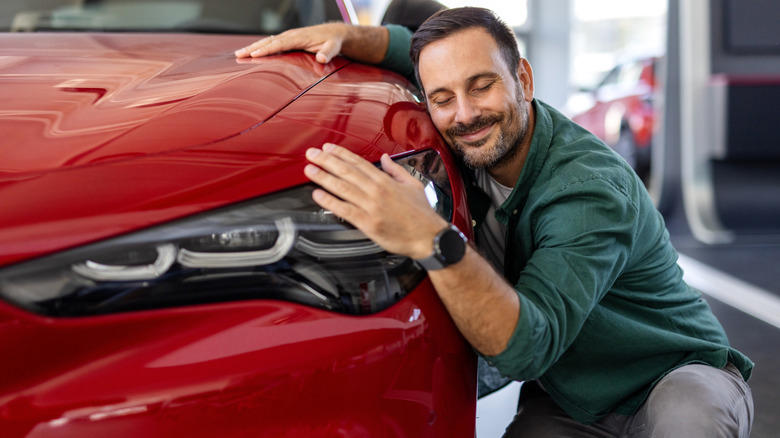



















A rear quarter-end view of an Aston Martin Vantage under night city lights. - Shoaib Mastoi/ShutterstockBuying a used car is always a gamble. Sometimes you win, getting essentially the same car as when it was new, just cheaper. Sometimes you lose and inherit someone else's neglect wrapped in a freshly valeted exterior. A lot of buyers breathe a sigh of relief when they see "one owner" in the listing. If one person owned it since it was new, there's ideally a consistent maintenance history, no mystery gaps, and no shady handoffs. Neat and tidy.Except that's an assumption, not a guarantee — the 14 previous owners of this $49,500 Nissan GT-R would probably agree. One owner can mean a meticulous enthusiast who changed the oil every 5,000 miles and kept every receipt. It can also mean one person who drove it into the ground and never saw the inside of a dealership service bay. Plenty of things carry just as much weight as the owner count, if not more. How many miles are on it? Is the service history complete, consistent, and documented? Was it ever in a serious accident? Is the interior beat up or suspiciously clean? Was it owned by someone who actually cared, or treated it like a household appliance? These are the questions worth asking. "One owner" is a starting point, not a selling point, and here's why.AdvertisementAdvertisementRead more: When (And Why) Did Cars Switch From Leaded To Unleaded Fuel?Paper trails that make a storyA classic car parked inside a garage. - PBabic/ShutterstockSure, the number of owners matters, but what those owners actually did with the car is more telling. Take that 14-owner GT-R from earlier. On paper, it looks like a disaster. However, in practice, if even half of those owners were GT-R enthusiasts who changed the oil religiously and treated every warning light like a personal insult, the service history and vehicle quality are likely to reflect it.Ed Kim, president and chief analyst at AutoPacific, told Capital One: "Service records show that the vehicle has not been neglected and has gotten the maintenance it needs to help ensure its long-term reliability."Now flip it. A one-owner GT-R, same year, lower miles. Except that the driver never serviced it, drove it like it was stolen, ignored a coolant leak for two years, and eventually decided it was cheaper to sell than fix. When it gets listed as "one owner from new," buyers tend to line up thinking it's perfect.AdvertisementAdvertisementThe point isn't that more owners are better. Owner count tells you nothing without the paper trail to back it up. If a car has had multiple owners but every service interval is stamped and accounted for, that's naturally better than having to hunt down a vehicle's service records when the seller does not have them.Reading between the milesA young man hugging a red Alfa Romeo SUV. - Photoroyalty/ShutterstockA one-owner car is a story the owner tells you. The car tells its own, and it might not be as captivating. Interior condition is typically an honest signal. For example, a suspiciously pristine interior on a high-mile car should make you curious about refurbished or replaced parts. Equally, thrashed upholstery on a supposedly low-mileage car should raise questions over mismatched expectations. Then there's the question nobody asks directly, but should: Was this a car person's car? Someone who bought a Porsche because they live a Porsche life likely drives it differently, maintains it meticulously, and thinks about it more intentionally than someone who bought it to have something fast and forgot about it. According to SEMA research, auto enthusiasts are more likely than average consumers to actively work on, maintain, and modify their vehicles. Car people are more prone to keep service records, know what was done, and when. They might even have opinions about the service shop. Appliance owners may shrug and say "it was serviced regularly" without being able to name specific locations. There's also the garage queen — the one-owner car that was "never driven," parked up, and supposedly preserved. If that person does not know how to properly store a car, that can lead to deterioration. AdvertisementAdvertisementThe one-owner myth is more fragile than it appears. One owner can mean one person who loved the car, but it can also mean someone who treated it like a rental before trying to make it someone else's problem. Want more like this? Join the Jalopnik newsletter to get the latest auto news sent straight to your inbox, and add us as a preferred search source on Google.Read the original article on Jalopnik.