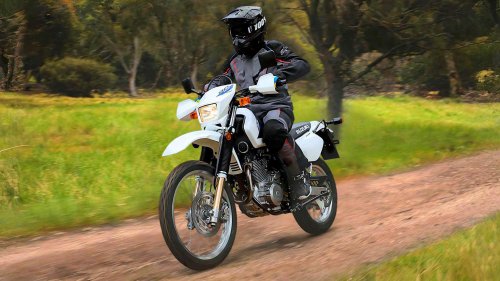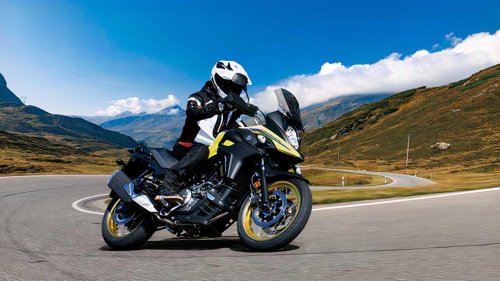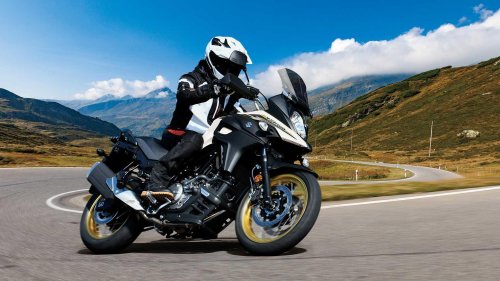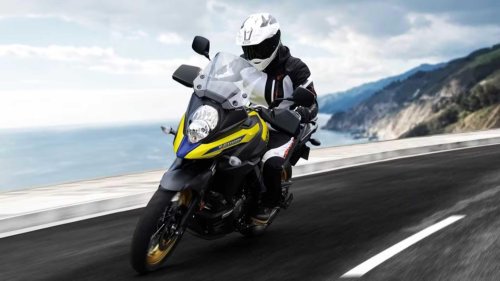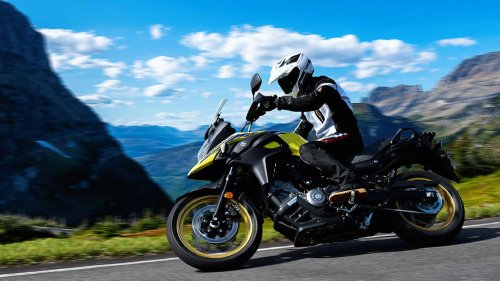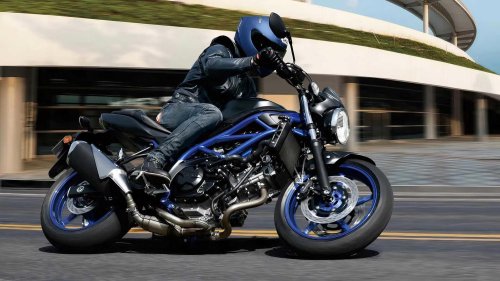
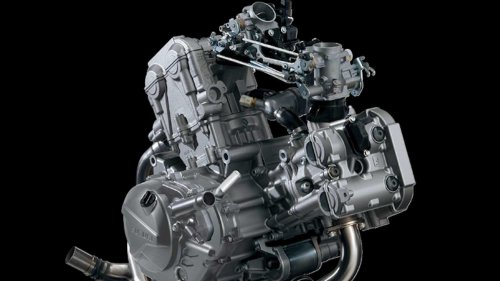
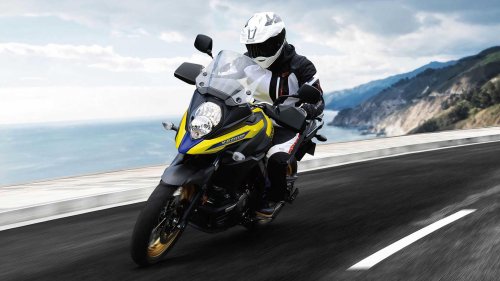
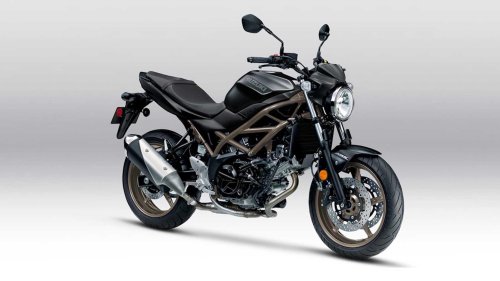
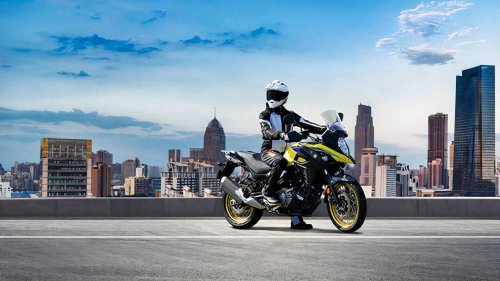
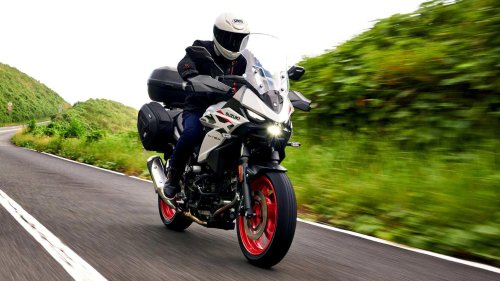



















Manufacturers do a pretty good job of fooling us into thinking they develop a new engine for virtually every new bike that comes out. This couldn’t be further from the truth, though. Manufacturers – most especially Japanese manufacturers – have long since put a policy in place that any engine they develop should go into as many different motorcycles as possible in an effort to maximize profitability.Taking this one step further is not only putting the powertrain into many different motorcycles, but also extending the lifespan of the engine. This might seem like a negative way of looking at it, but that is only if you are looking at it from a “glass half empty” perspective. If you see it as a “glass half full”, you will see that this maximization of profitability also translates into good value for the customer. A Clear Policy Over At Suzuki SuzukiSuzuki in particular has taken to the concept of extending the lifespan of their engines. Out of all the Japanese brands, Suzuki has traditionally offered the most bang for the buck. Several models, both past and present, all made it their business to undercut direct competition. Naturally, to achieve this, there are always going to be certain cost-cutting measures put in place.For a time, it seemed as though one of these measures was to completely dissolve the powertrain research and development team. Until the recently developed 800cc parallel-twin, Suzuki had not built a new engine in over two decades. The lineup consisted of what looked like a “greatest hits” compilation. In some respects, it still does, but with the addition of the 800cc middleweights and a brand new DR-Z, there are at least a few genuinely all-new options available to us. The Suzuki 645cc V-Twin Is The Japanese Engine That Refuses To Die Power: 72 Horsepower Suzuki The line of thinking that newer is always better is a total fallacy. In reality, it is far more nuanced than that, as proven by Suzuki’s venerable V-twin. Once the 800cc parallel-twin was announced some years back, the immediate line of thinking was that it would replace all the bikes making use of the old V-twin. It just has not worked out quite like that.The two powertrains have now co-existed for three years, and while the nature of the lineup will evolve over time, the V-twin is still here, and by all accounts will be sticking around for some time to come. We will soon bid adieu to the dependable V-Strom 650, but the SV650 has made it into the 2026 model year, and there is another budget-friendly model in the pipeline.Suzuki As such, the twin has already been certified as Euro5+ compliant, which is a big achievement for a powertrain developed way back in the 90s. It is pretty easy to see why Suzuki has been willing to persevere with the engine, as it has proven to be incredibly reliable over the course of its long production life. While other in-vogue 270-degree parallel-twins – including Suzuki’s very own 800 – do their very best to mimic a V-twin, nothing beats the original. To the outside observer, it could also be seen as a vote of no confidence in that 800 platform, but other brands have already proven that there is room for more than one middleweight in a modern motorcycle lineup. A Versatile Middleweight Twin Suzuki The free-revving nature of this oversquare (81 x 62.6 mm) twin makes any bike equipped with it a joy to ride. While its torque comes in slightly later than the average parallel-twin, it builds revs so much quicker that you end up getting into the meat of the torque quicker than you would expect. With a perfectly linear torque curve, as long as you are anywhere between 3,000 and 8,000 RPM, you will find ample power. This sweet spot is more or less ideal for practical, real-world riding, regardless of whether you are canyon chasing on an SV650 or touring on a V-Strom. Laughing In The Face Of Conventional Wisdom Suzuki Global Conventional wisdom would suggest that an aging powertrain like this would be too expensive to produce. Any older engines designed at a time when emissions restrictions had not yet impacted the motorcycle world are pretty expensive to make more efficient, and once you slap on catalytic converters, performance usually falls off a cliff.That just didn’t happen here. Over the years, Suzuki made gradual tweaks as the years went by, and in its current guise, it is still as powerful as most of the more modern alternatives. The tooling has paid for itself several times over, and what changes have been made have obviously been deemed worth it. This Suzuki V-Twin Isn’t Going Anywhere Suzuki While the V-Strom 650 appears to have finally been phased out, the SV650 will still be around for some time to come. But, while the venerable naked bike still has a lot to offer, it is the middleweight touring bike that Suzuki announced earlier this year that interests us the most. The SV-7GX (not the most catchy name) will be based on the sporty steel trellis SV650 chassis as opposed to the old V-Strom platform. It will not be a like-for-like replacement, but rather a much-needed addition to the Suzuki lineup.Ever since the V-Strom was essentially converted into an ADV, Suzuki has not had a dedicated middleweight touring bike on offer. While the V-Strom plugged both holes, it was neither a proper touring bike nor a genuine adventure bike. It was just a bit of both. The new V-Strom 800DE is a proper ADV, and the SV-7GX promises to be a genuine threat to the current crop of middleweight touring bikes… depending on the price.