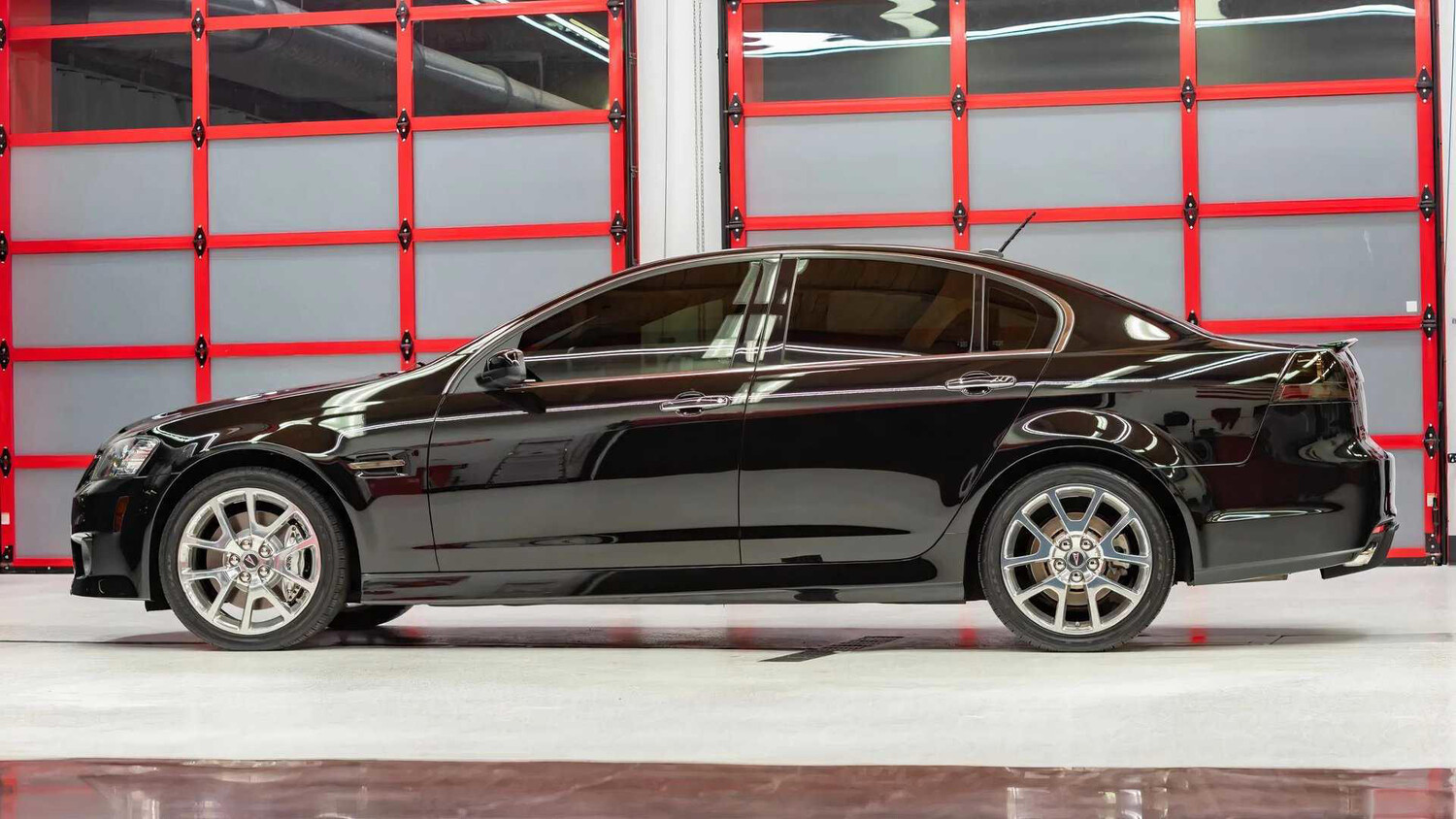
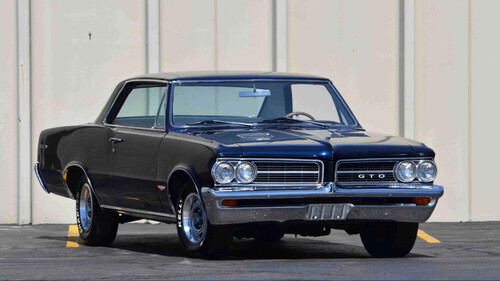
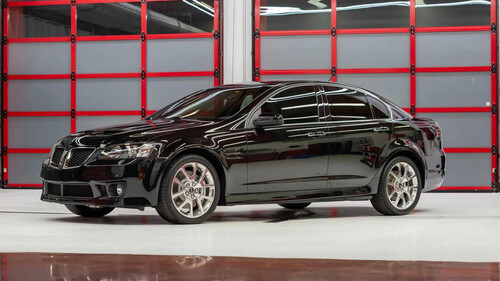
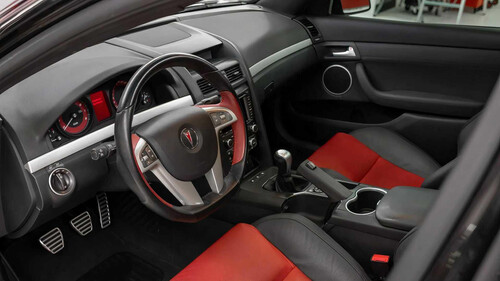
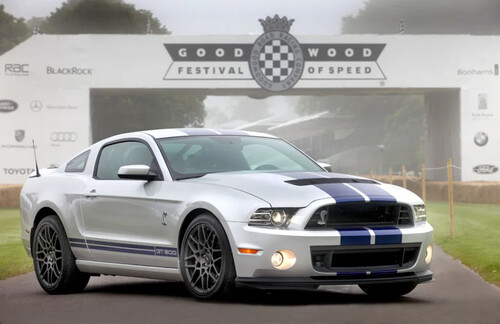
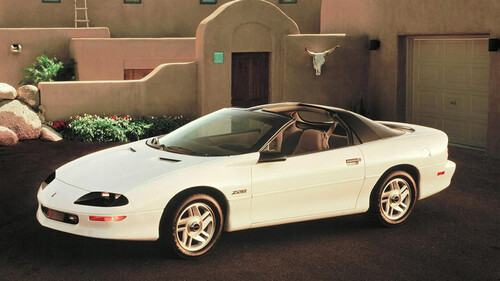
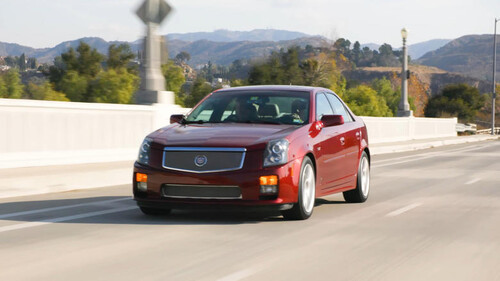
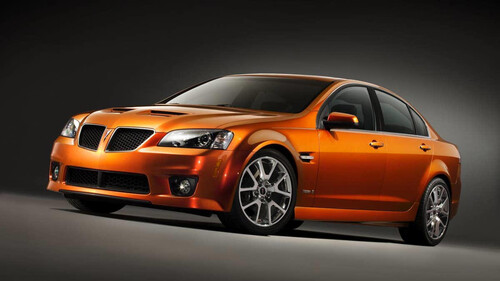
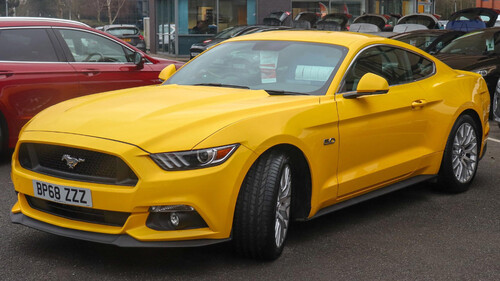
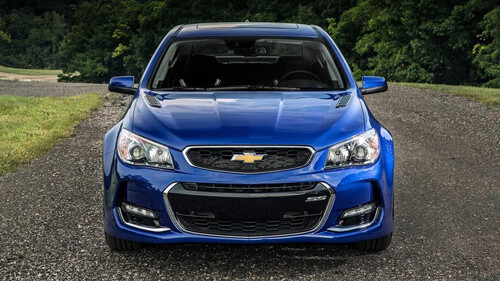
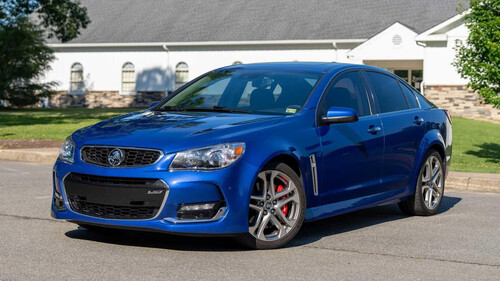
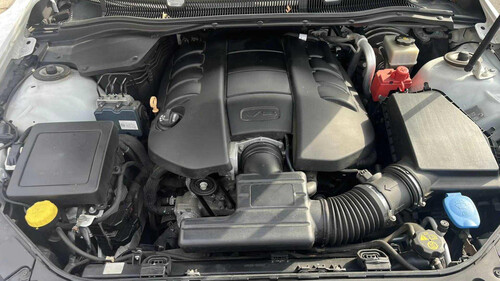
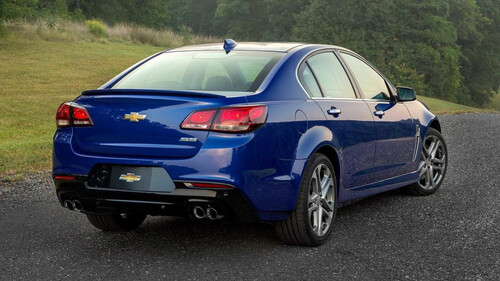
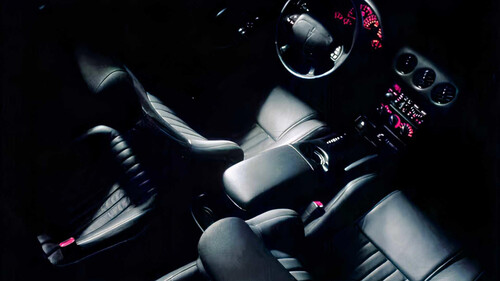
By 2008, Pontiac was running out of time and most people knew it. GM's performance division had spent the better part of a decade producing rebadged economy cars and front-wheel-drive crossovers that had nothing to do with the brand's heritage. The Solstice was a bright spot. Everything else felt like a holding pattern for a brand the corporation had already mentally wound down. The idea that Pontiac might produce one of the best performance sedans of the decade, one that could take a Ford Mustang GT apart from a standing start, seemed implausible. It happened anyway.The car arrived quietly, sold poorly, and disappeared within a year along with the brand that built it. What it left behind was a rear-wheel-drive four-door with a Corvette engine, a six-speed manual option, and a 0-60 time that made most two-door muscle cars look slow. The Mustang wasn't even close. When Pontiac Was Supposed to Be Finished Bring A Trailer The story of Pontiac's final years is largely one of missed opportunities. The brand that had invented the muscle car era with the 1964 GTO had spent the 1990s and early 2000s producing the Aztek and front-wheel-drive Grand Prix. Neither of which suggested that GM still had faith in the division's performance DNA. When GM executives traveled to Australia in the mid-2000s and drove the Holden Commodore, something shifted.The Commodore was a rear-wheel-drive sedan with proper V8 power, track-tuned suspension, and handling credentials that embarrassed most of what America was selling at the time. GM's then-vice chairman Bob Lutz saw it and immediately pushed to import it for the US market under the Pontiac badge.The result was the Pontiac G8, which arrived in 2008 as the brand's first rear-wheel-drive sedan in more than 20 years. It came initially in base V6 and GT V8 forms. Both of which were serious performance machines by any measure. But it was the range-topping variant, added for 2009, that turned the G8 from a competent sports sedan into something that genuinely redefined what the badge was capable of. Most buyers never found out about it before Pontiac closed its doors for good. The Four-Door Pontiac That Left the Mustang Behind Bring A TrailerThe 2009 Pontiac G8 GXP is the answer. It carried the same 6.2-liter LS3 V8 found in the base C6 Corvette, producing 415 horsepower and 415 lb-ft of torque, sent to the rear wheels through either a six-speed automatic or an optional Tremec TR-6060 six-speed manual. Brembo brakes, 19-inch summer tires, and a fully adjustable four-wheel independent suspension completed a package that reviewers at the time described as delivering the kind of performance buyers expected from cars costing far more.It did 0-60 mph in 4.5 seconds and cleared the quarter-mile in 13.0 seconds at 109 mph. The 2008 Ford Mustang GT, producing 300 horsepower, ran to 60 in 5.3 seconds. That is a gap of 0.8 of a second in favor of a four-door family sedan with Australian blood and a Pontiac badge.Used examples today are one of the most undervalued performance car purchases on the market. Analysis shows private-party values ranging from $12,000 in rough condition to around $25,000 for clean, low-mileage examples. Premium GXPs have attracted serious collector attention with a recorded sale of $61,614 for a pristine GXP in December 2025, reflecting growing recognition of how few were built and how significant the car is in Pontiac's history. The Corvette Engine in a Sedan Bring A TrailerThe GXP was powered by GM's 6.2-liter LS3 V8, sourced directly from the Chevrolet Corvette, with the same aluminum block, high-flow cylinder heads, and high-flow intake manifold. What the GXP added over the standard G8 GT's already capable 361-horsepower V8 was a step-change in output and a six-speed manual that the GT never received.The platform underneath was the Holden Commodore VE, which was developed and validated on tracks including the Nürburgring. The G8 GXP's suspension was specifically retuned over the standard G8 GT, with revised spring rates, a stiffer anti-roll bar setup, and recalibrated steering to suit the additional power. It returned 0.90g on the skidpad, which put it in legitimate sports car territory. The car also ran on regular fuel, something no comparable European performance sedan of the era could claim. G8 GXP vs Mustang GT vs C6 Corvette: Performance Numbers Bring A TrailerThe G8 GXP's 4.5-second run to sixty puts it in a different class to the Mustang GT entirely. That 0.8-second gap is substantial and translates to a car length or more of separation by the end of a standing-start drag. The Mustang GT of 2008 was not a slow car, but it was running a 4.6-liter two-valve V8 producing 300 horsepower when the GXP was making 415 from a 6.2-liter engine with better breathing, a higher compression ratio, and a chassis tuned to use every bit of that power at the rear wheels.The GXP trailed the Corvette by just 0.4 of a second to 60mph, from a car that weighed more and had four seats. On the quarter-mile, reviewers recorded mid-12 second runs from the GXP in ideal conditions, which overlapped with what well-driven C6 Corvettes were running at the same time. For the $39,995 asking price when new, nothing from Detroit or anywhere else delivered this much performance per dollar. Why the Pontiac G8 GXP Disappeared and Why That Matters Now Bring A Trailer The G8 GXP arrived in dealerships in late 2008, at the precise moment the US economy was in freefall. GM filed for bankruptcy protection in June 2009, and the decision to wind down Pontiac came shortly after. The GXP had a production window of roughly one model year. Total G8 GXP production is estimated at around 1,829 units, a figure that makes it one of the rarest performance sedans GM has ever built. Of those, approximately one in ten came with the Tremec six-speed, which pushes manual examples toward genuine collector status.The Chevrolet SS that followed for 2014 used the same Holden platform updated to the VF generation and carried the same LS3 engine with similar figures. It outsold the G8 modestly over four years and is now its own collectible proposition. But the SS arrived after Pontiac was gone, and it never carried the same story.There is something irreplaceable about the GXP as Pontiac's final statement. It was an Australian-built, Corvette-engined, rear-wheel-drive sedan with a proper manual gearbox. It was developed and validated on the Nürburgring, sold at a price that undercut the Mustang Shelby GT500, and largely ignored by a market that was too preoccupied with a financial crisis to notice what GM had quietly built.Sources: Classic.com, Kelley Blue Book, SlashGear, MotorTrend, Ford, General Motors, GM Pontiac Archive.