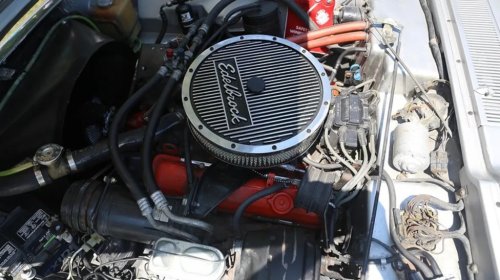
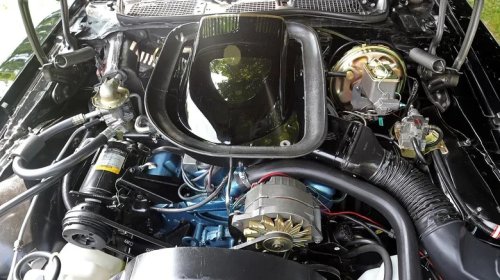
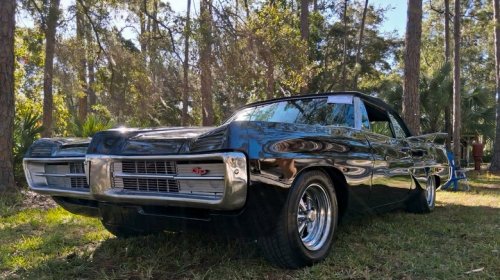
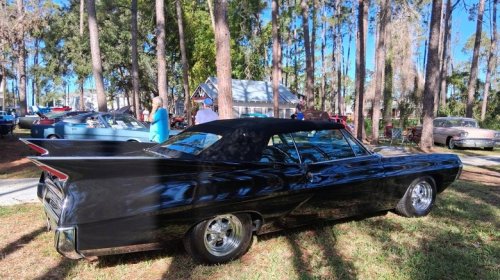
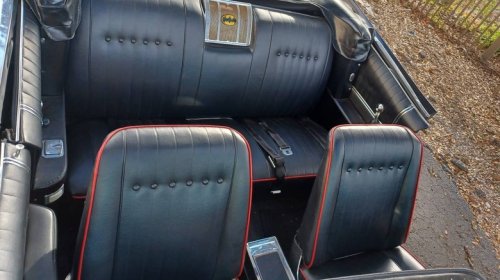
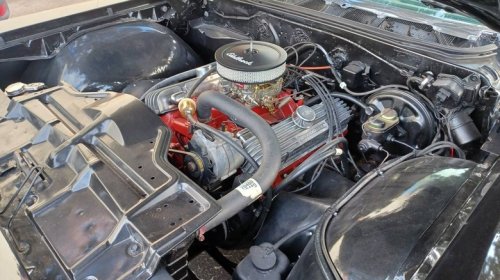
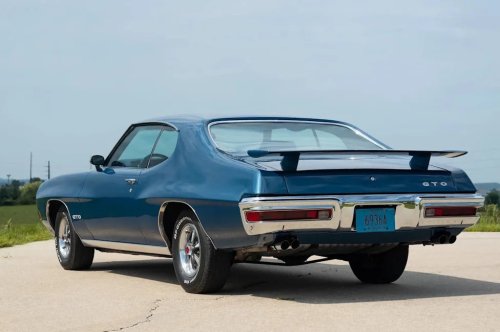
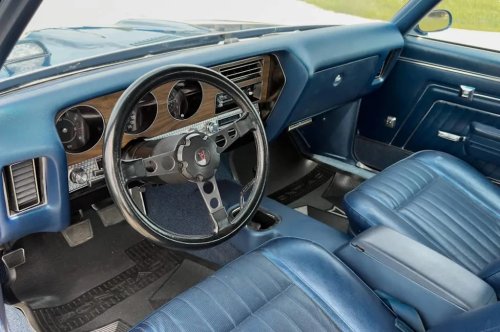
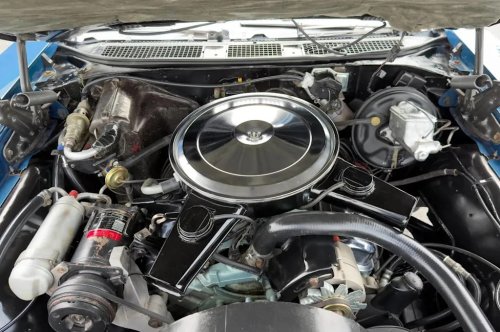
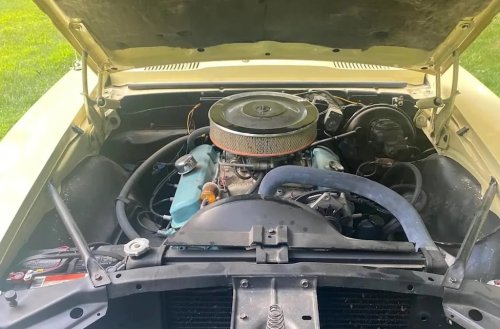
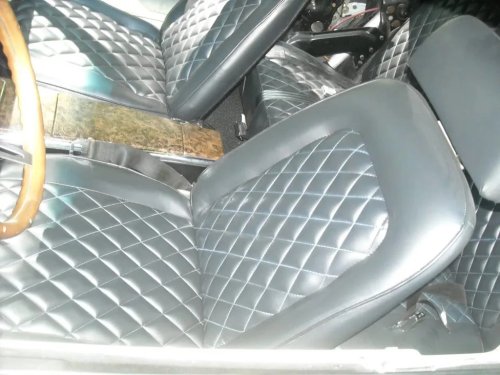
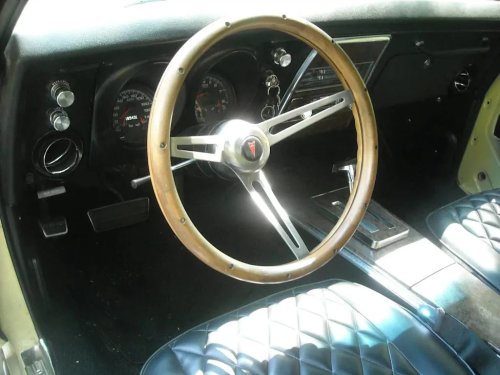
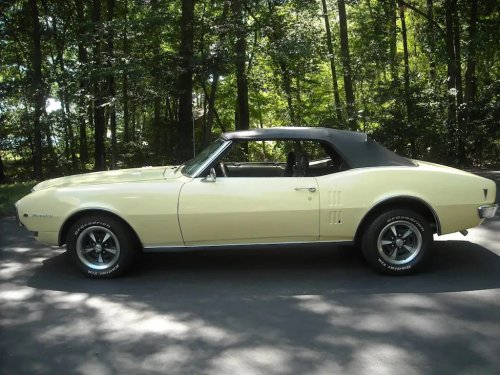
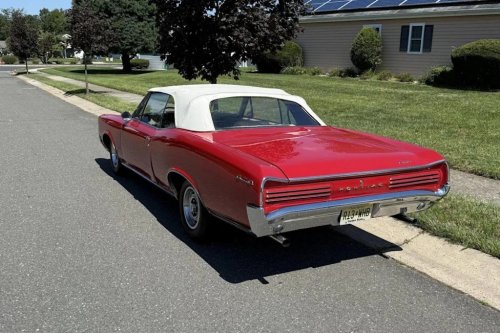
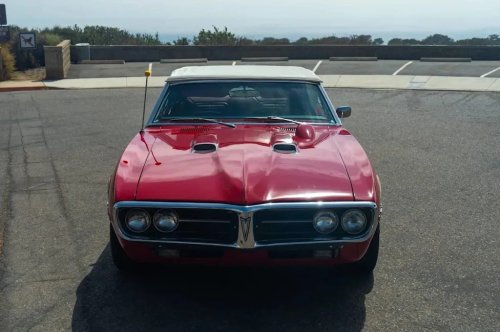
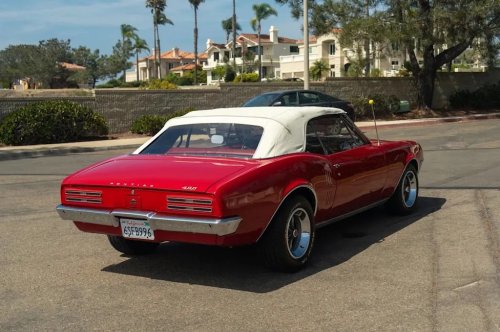
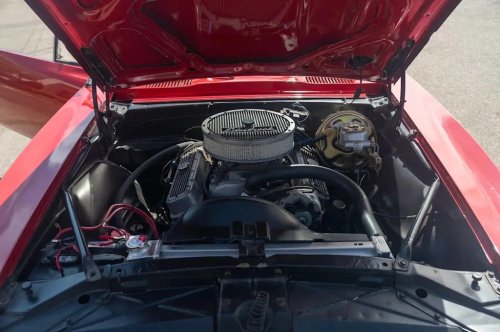
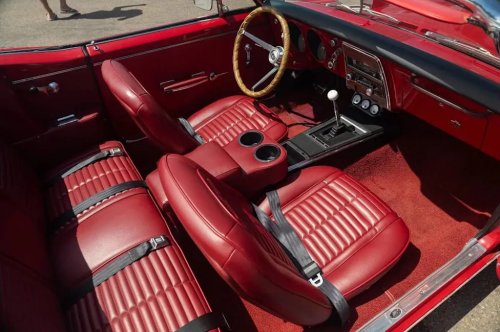
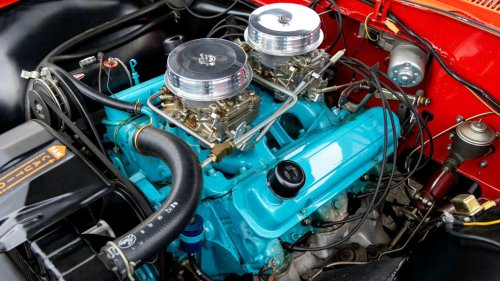
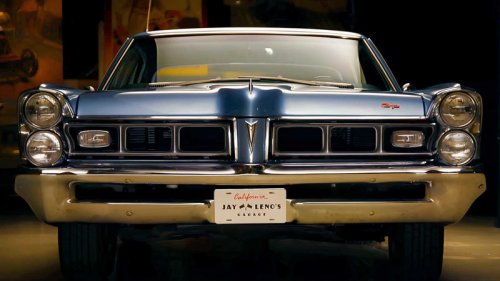
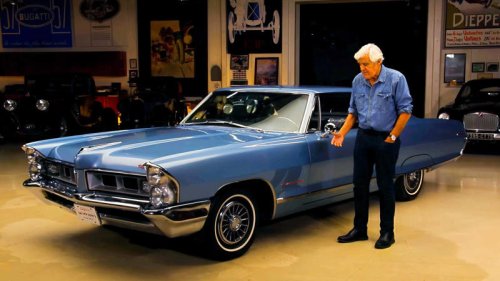
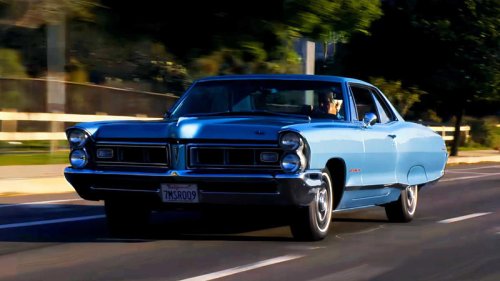
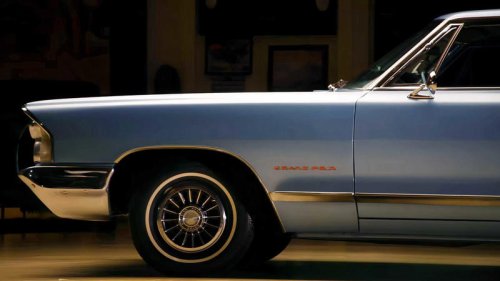
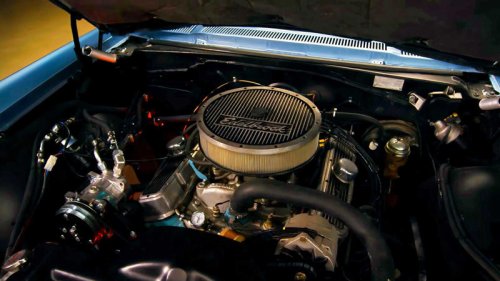
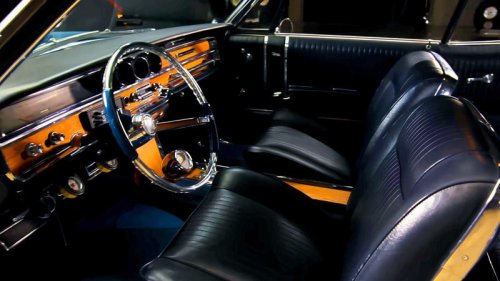
The 1965 Pontiac Grand Prix plays an interesting role in Pontiac history. It wasn’t exactly a muscle car, but it also wasn’t another full-size cruiser either. Sitting below the Bonneville and Catalina in Pontiac’s lineup, the Grand Prix offered something slightly different. It was still a big American coupe with plenty of space, but it was aimed at buyers who wanted muscle car power without sacrificing comfort.In many ways, the Grand Prix was a sports car for someone who had already grown out of the raw, youthful appeal of smaller muscle cars. Although not a Cadillac, it still had the size, the style, and the road presence of a full-size Pontiac, but underneath it still carried the kind of V8 the brand was quickly becoming known for. When Pontiac Became One Of America’s Performance Brands Jay Leno Garage By the early 1960s Pontiac had started to change its image, and for years, the brand had been seen as a practical entry-level brand. But Pontiac engineers began pushing the brand toward performance, widening the track, installing larger engines, and giving the cars a much more aggressive style.The strategy worked almost immediately, and Pontiac’s lineup suddenly had a new presence on the road, so buyers responded. Their new performance image grew stronger as the decade progressed, helping Pontiac become one of the most exciting divisions within General Motors during that period. Cars like the Grand Prix benefited from that shift, and even though it was a larger and more mature coupe than the brand’s other performance icons, it still carried the same DNA that made Pontiac one of the fastest muscle car brands in the 1960s. How Jay Leno Discovered This Particular Grand Prix Jay Leno GarageJay Leno’s connection to this 1965 Grand Prix began in a fairly unexpected way. In a time long before Facebook Marketplace deals, he was restoring a 1968 Pontiac Firebird and had decided to upgrade the wheels from the original 14 inch setup to 15 inch wheels. When he mentioned the change during a restoration update, he received a call from a man named James Taylor.Taylor was a retired Navy attack pilot who happened to own a 1965 Pontiac and wondered if the original wheels might fit his car. Leno offered to send them to him, not as a sale but simply as a gesture of appreciation for someone who had served in the military. It turns out the wheels ended up not fitting, but the two men stayed in touch. Over time, the conversations turned into a genuine friendship centered around their shared interest in classic Pontiacs. The Remarkable History Behind The Car Jay Leno Garage Years later, Taylor called again, but this time the conversation was different. Like many classic cars, as we all know, the terms “budget” and “project cars” rarely go hand in hand. His Grand Prix had slowly grown into something larger than he expected. Between heavily rusted components, aging mechanical parts, and the cost of restoration, the project had started to feel overwhelming. But eventually he made a surprising offer: If Leno wanted the car, he could have it.The reason the Grand Prix meant so much to Taylor had nothing to do with its value. When he was younger, he owned a Pontiac Grand Prix and had a frightening experience involving his young son. After the child accidentally swallowed a bottle of aspirin, Taylor and his wife rushed him to the hospital as fast as possible. The Grand Prix covered the distance at speeds of 120 miles per hour, running lights and pushing the big Pontiac as hard as it would go. When they arrived, the doctor told them that if they had arrived just a few minutes later, the outcome might have been very different. For Taylor, this Pontiac Grand Prix was a part of a moment that may have saved his son’s life. Restoring The Grand Prix Without Changing Its Character Jay Leno GarageWhen the car arrived in Leno’s garage, the goal was never to perform a complete rotisserie-style restoration. Instead, the idea was to clean it up, bring it back to life, and keep as much of its original character intact as possible. The car was repainted in its original color and kept largely stock in appearance. The unusual Pontiac lug pattern made it difficult to fit 15-inch wheels, so the original 14-inch setup remained. Under the hood, the original 389 was replaced with a later Pontiac 400 V8, giving the car a bit more horsepower while still staying true to the brand’s traditional powertrain.Jay Leno Garage A few modern touches made the car easier to live with as well. Vintage Air air conditioning was retrofitted, providing stronger cooling while using less engine power than the original system. A modern radiator and other small upgrades improved reliability without drastically changing the car’s overall originality. Why Classic Pontiacs From This Era Are Still Easy To Restore Jay Leno GarageOne of the things Leno appreciates most about cars like the 1965 Grand Prix is how approachable they are as restoration projects. Unlike extremely rare collector cars, where parts can be nearly impossible to find, classic Pontiacs from this era still have strong aftermarket support.Interior components, carpets, headliners, and trim pieces are widely available, making it possible to return the car to factory appearance without spending a fortune. Mechanical parts are also relatively inexpensive compared to exotic or ultra-rare vehicles. That accessibility is part of what makes these cars so enjoyable. They are large, comfortable, full of character, and they can still be reliable without completely draining your wallet.The market for the 1965 Pontiac Grand Prix remains relatively accessible compared with many other 1960s coupes. Current market values for a 1965 Grand Prix currently sits around $27,589, with the broader 1965-1968 Grand Prix generation averaging about $31,700 depending on condition and originality. Recent auction results show typical sales ranging from the low $20,000 range for driver quality cars to well over $100,000 for showroom restored examples.But for Leno, the real reward will come later down the road. Now that the restoration work is finished, the plan is to bring James Taylor out to the garage and hand him the keys so he can take the Pontiac for a drive once again. After all these years, the car that meant so much to him will finally be back on the road with its original owner behind the wheel again.Sources: Jay Leno Garage, Classic.com


















 +21 others