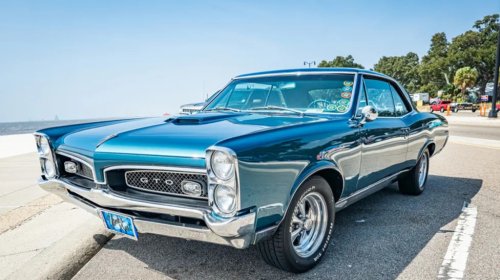
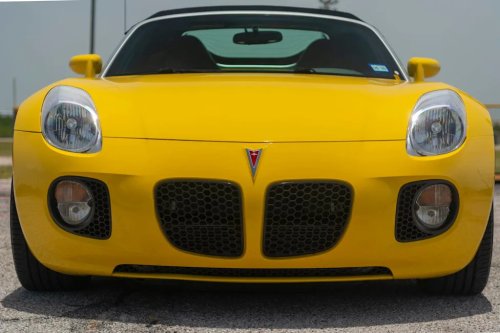
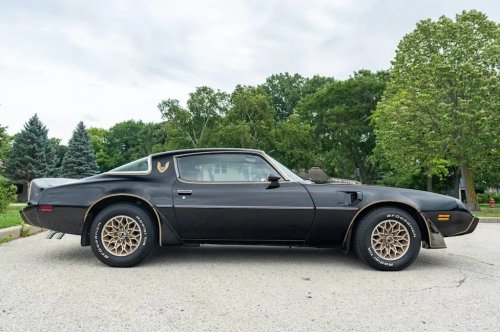
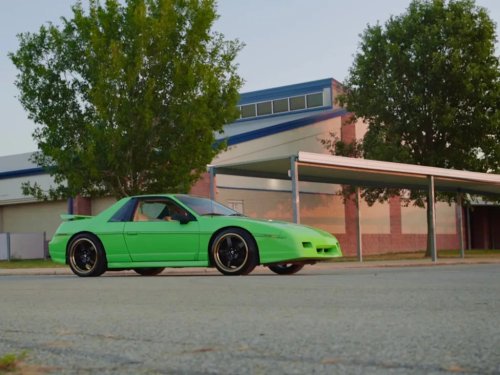
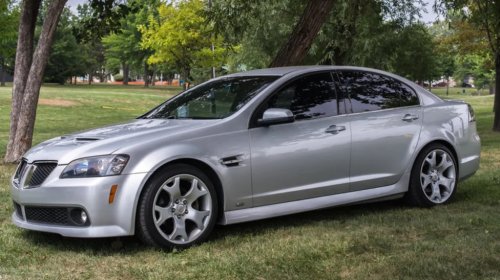
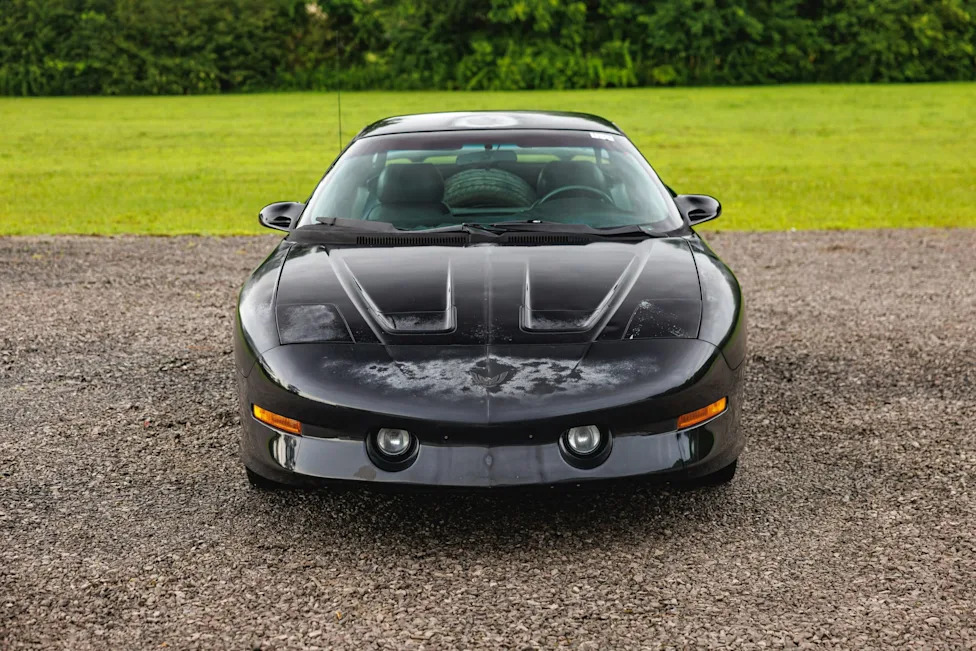
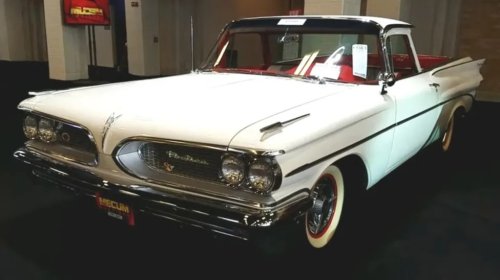
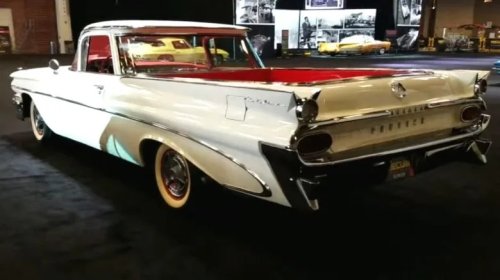
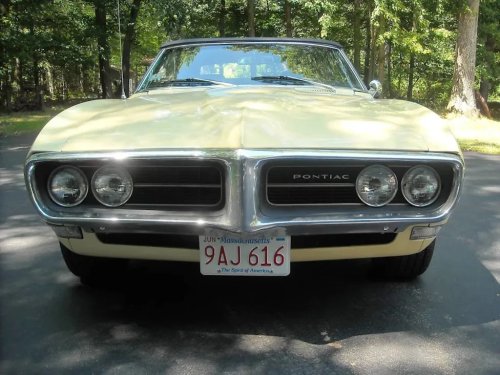
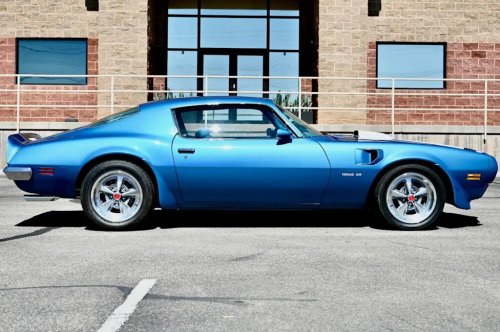
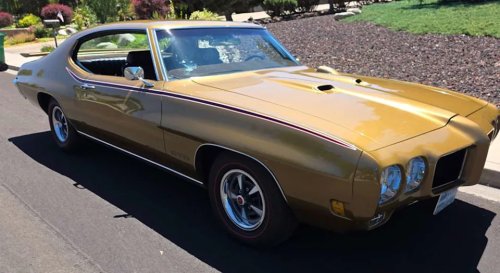
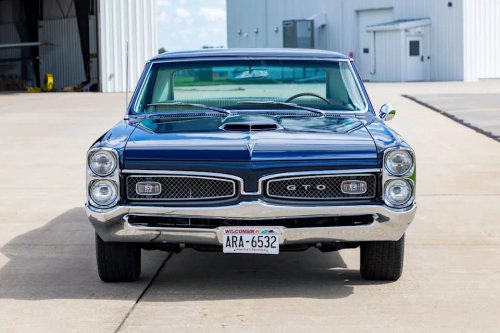
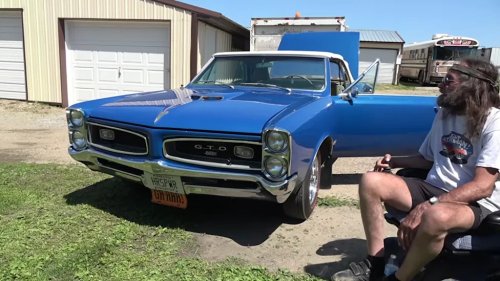
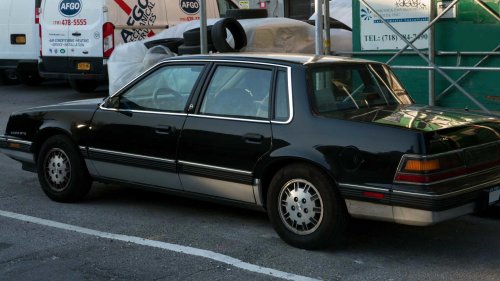
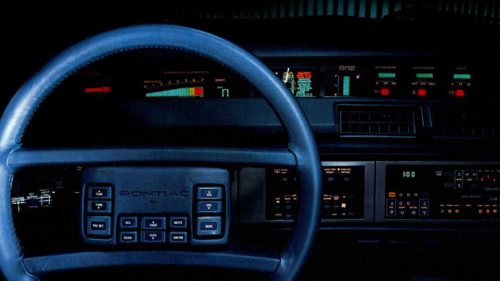
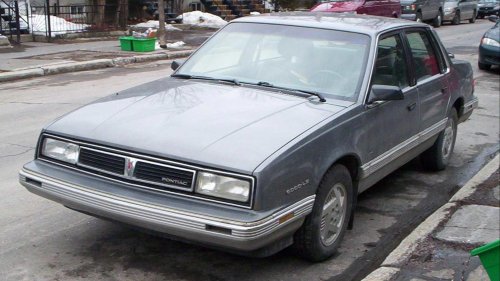
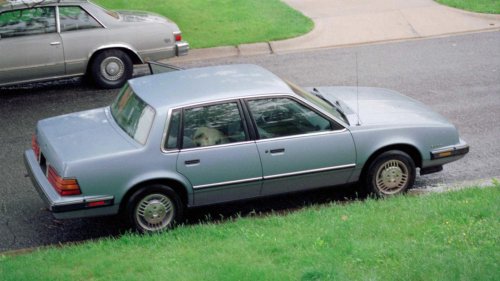
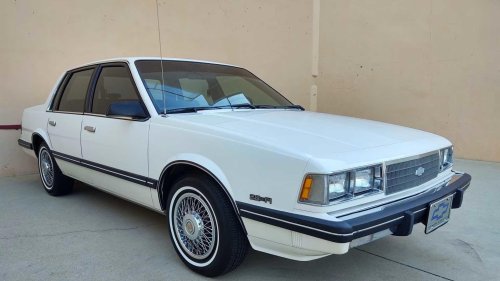
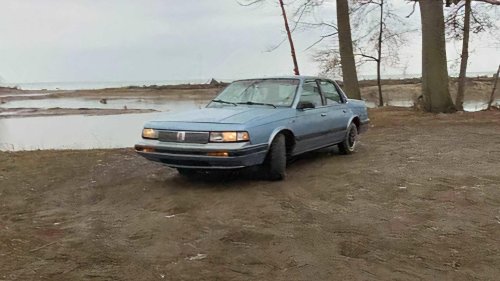
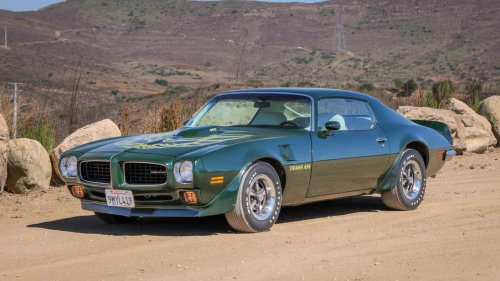
Pontiac is a brand most commonly associated with all-American muscle cars from the mid-century period. Its most famous products from the period offered big V8 engines, aggressive looks, and heaps of power. On the surface, it is as far removed from the world of European performance sedans as one can get. And yet, in the late 1980s, while the brand was catching a second wave of success with models like the third-generation Firebird and the Fiero, it also released another much less famous car that tried to square up to the big German brands.We’re talking about the 6000 STE, a performance-oriented version of the otherwise fairly nondescript Pontiac 6000 sedan. Although it was on the market for only nine years, the 6000 STE remains a fascinating chapter in Pontiac’s history. Let’s take a closer look at its features and the wider history that surrounds it. Pontiac Tries To Fight The German Giants: The 6000 STE Mr.choppers/Wikimedia CommonsIn the mid-1980s, Pontiac was experiencing a renaissance. Although the brand did not quite return to the heights of its 1960s muscle-car era, it still regained a place of pride in the GM family. One of the models released during this period of Pontiac’s history is an interesting variant of the 6000, the 6000 STE (Special Touring Edition). The 6000 arrived in 1982, and the sporty STE joined the lineup for 1983. Despite being a lot more expensive than the standard 6000, it was a fairly successful model, making up around 10% of total 6000 sales.On the powertrain front, the 6000 STE did not start as an especially exciting model. It was initially equipped with a high-output version of the 2.8-liter V6 also available on the standard model, which produced 135 hp rather than the usual 112 hp. The STE offered some standard features that were optional on other trim levels, such as powered windows and front captain’s chairs.Pontiac For the 1988 model, Pontiac introduced an optional all-wheel-drive system to the 6000 STE, which made the model far more interesting. The engine was also upgraded to a 3.1-liter V6, which produced 140 hp. The following year, the AWD system went from optional to standard. The offering meant that customers who purchased a 6000 STE equipped with this feature got a V6-powered sedan with AWD, not a common combination at the time.Audi, the brand responsible for bringing AWD technology to the masses through its Quattro system, offered five-cylinder engines rather than six-cylinder ones at the time, with models such as the legendary Quattro coupe, as well as the 4000 and 5000 sedans. A couple of years later, in 1990, the German brand introduced a model which combined a V6 engine with the Quattro system for the C4-generation Audi 100. By this point, however, the 6000 STE had already been discontinued. Meanwhile, BMW offered the 325ix as part of the 3 Series’ E30 generation, which combined AWD with an inline-six engine. Subaru had the XT6 coupe, which offered a flat-six engine and AWD from 1987 onwards.In 1990, the STE trim was removed from the 6000’s lineup. The STE nameplate continued to be used elsewhere for a further three years, on a trim level of the four-door Grand Prix (which completely replaced the 6000 from 1992 onwards). The all-wheel-drive system remained available on the 6000 for 1991, the model’s last year, but was added to the SE trim level instead. The 6000 STE's Origins: The Pontiac 6000 Bull-Doser/Wikimedia Commons The STE was the range-topping trim of the Pontiac 6000, a mid-size car available as a coupe, sedan, or wagon. The 6000 took the spot in Pontiac’s lineup that had previously been occupied by the LeMans, which was discontinued after 1981.The 6000 was a successful model from the start and, within three years of its debut, became the best-selling model in the Pontiac family. However, its production run would only last until 1991, after which the four-door version of the Grand Prix was introduced as its replacement.Chris Jantsch/Wikimedia Commons Despite being on the market for less than ten years, the model underwent several changes over the course of its lifespan. The station wagon version, dubbed the 6000 Safari, was introduced to the lineup in 1984. The following year, the 6000 underwent a facelift, which involved several updates on both the cosmetic and mechanical front. The front fascia was updated with the addition of a body-colored element, while the 2.8-liter V6 engine in the STE version received multi-port fuel injection rather than a carburetor. This engine later made its way into lower trim levels as well.The following few years saw a few more changes to the model, in line with changing trends in the automotive world: the coupe body style was dropped in 1988, while automatic front seatbelts arrived in 1990. In 1988, the Canadian market also got a limited-run Olympic edition to celebrate the Calgary Winter Olympics. The Pontiac 6000's A-Platform Siblings: GM's Era Of Uniformity Mecum Auctions The Pontiac 6000 shared General Motors’ “A” platform with three other models from the same era, scattered across GM’s roster of brands: the Buick Century, the Oldsmobile Cutlass Ciera, and the Chevrolet Celebrity. The four models, however, were widely criticized for being too similar. In August 1983, an issue of Fortune magazine was published with a cover image that portrayed the four cars next to each other, with the caption “GM Lookalikes."The lack of variety in the GM lineup was seen as a sign of laziness on the part of the brand, which was perceived as resting on its laurels and not doing enough to keep customers’ attention. The Fortune cover and broader criticism of excessive uniformity eventually led to a change in direction in GM’s design. Let’s take a look at the other three models from this era of GM’s history. Buick Century The Century was one of Buick’s oldest nameplates, having been around since the 1930s. The model’s generation that used the A platform was the fifth, released in 1982. It was available as a sedan, coupe, or wagon, with power coming from a range of inline-four and V6 engines. The model remained on the market for one further generation, eventually being killed off in 2005. Oldsmobile Cutlass Ciera Facebook MarketplaceThe Oldsmobile Cutlass Ciera was a member of the Cutlass family produced between 1982 and 1996. It occupied the spot in the lineup between the smaller Cutlass Calais and the more luxurious Cutlass Supreme. Although the only body styles officially available were sedan, coupe, and wagon, some convertible variants were made through aftermarket conversions. Chevrolet Celebrity The Chevrolet Celebrity was a mid-size car built for a single generation between 1982 and 1990. A successor to the Malibu (which would later return in 1997), it marked the transition from rear-wheel-drive to front-wheel-drive for Chevrolet’s range of mid-size models. Pontiac: A Dead Brand With A Rich History Bring A Trailer The brand behind the 6000 STE is no longer active today, but it represented a major part of America’s car industry for decades. Pontiac had a long history dating back to the early days of motoring, and its trajectory as a company mirrored that of the wider American automotive landscape.Pontiac started as part of GM’s “companion makes” pairing system; it was originally Oakland’s sub-brand, but rapidly surpassed its parent in popularity. Oakland was eventually shut down in 1931, as GM focused its efforts on Pontiac.The brand truly came into its own in the post-war period, when economic prosperity shifted the market towards performance models. The muscle car was emerging, and Pontiac was at the heart of the action. At the start of the 1960s, the GTO was released, becoming a key model of the muscle car’s golden age.However, as the 1970s brought higher fuel prices and more emissions regulations, the muscle car era began to wind down. Pontiac spent a few years struggling, without a clear brand identity, before making a comeback with the legendary third-gen Firebird, released in 1982. This marked the start of a wave of success that continued with another popular model, the Fiero, released two years later in 1984.Bringatrailer Pontiac would remain a successful brand until the turn of the millennium, when the company’s fortunes began to change. The brand was quickly becoming redundant within the GM family, without a clear offering that appealed to consumers. Sales continued to fall and, eventually, GM made the decision to kill Pontiac in 2009, along with other brands such as Saturn and Saab.An attempt by a Michigan-based dealer to revive Pontiac by acquiring its branding and logos was unsuccessful after GM’s refusal. The brand’s history officially came to an end in January 2010, when its last car, a G6 sedan, rolled off the production line.Sources: General Motors



















 +74 others