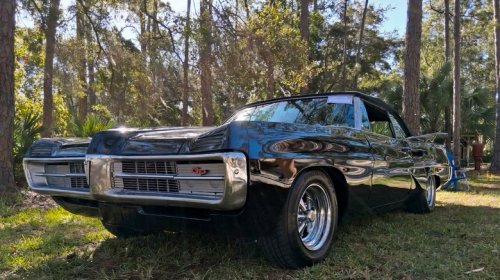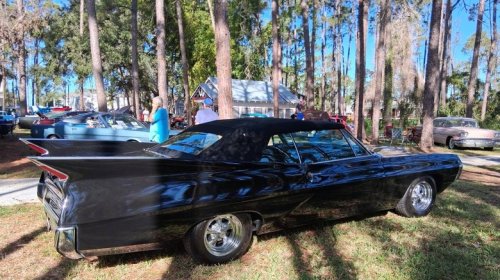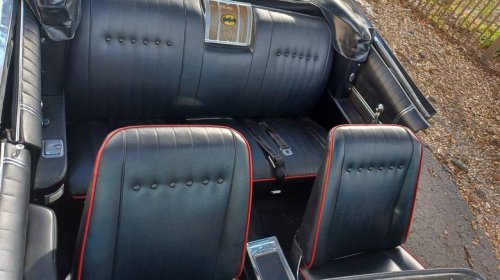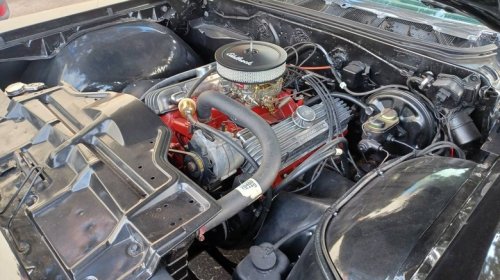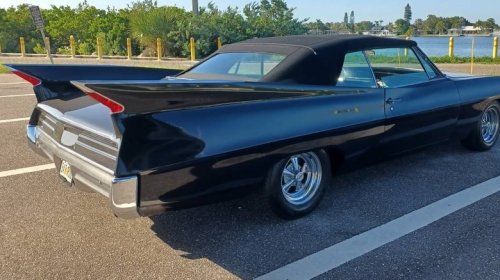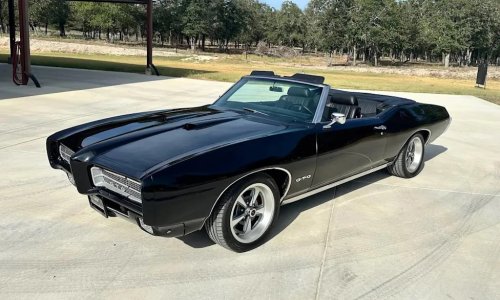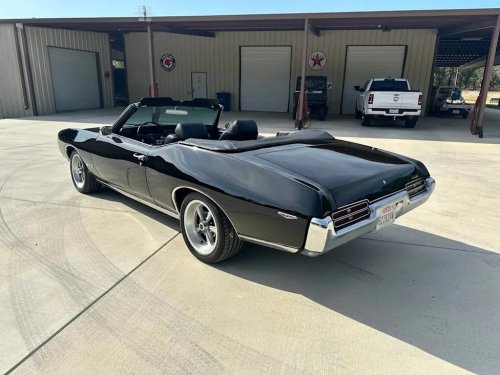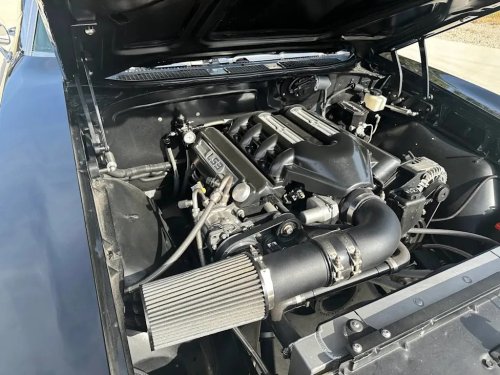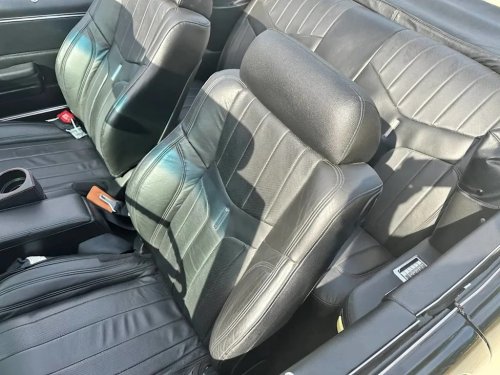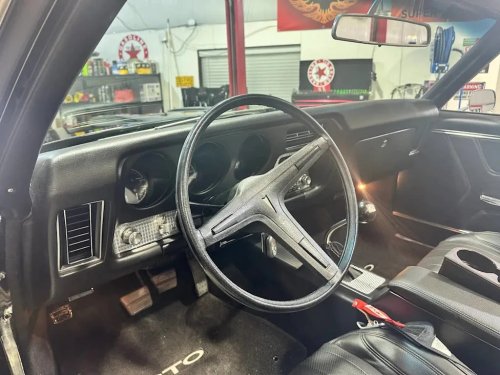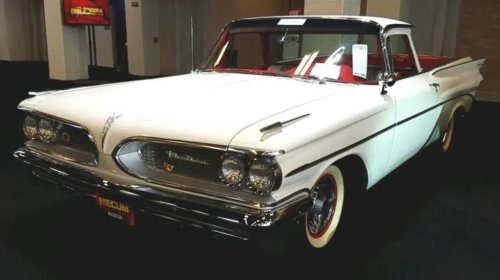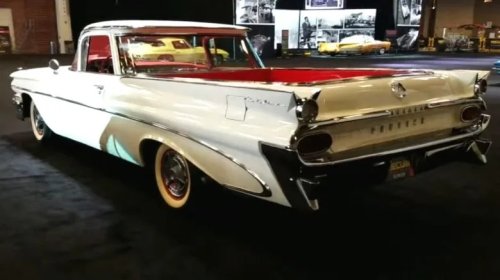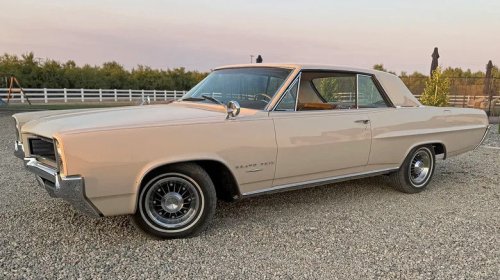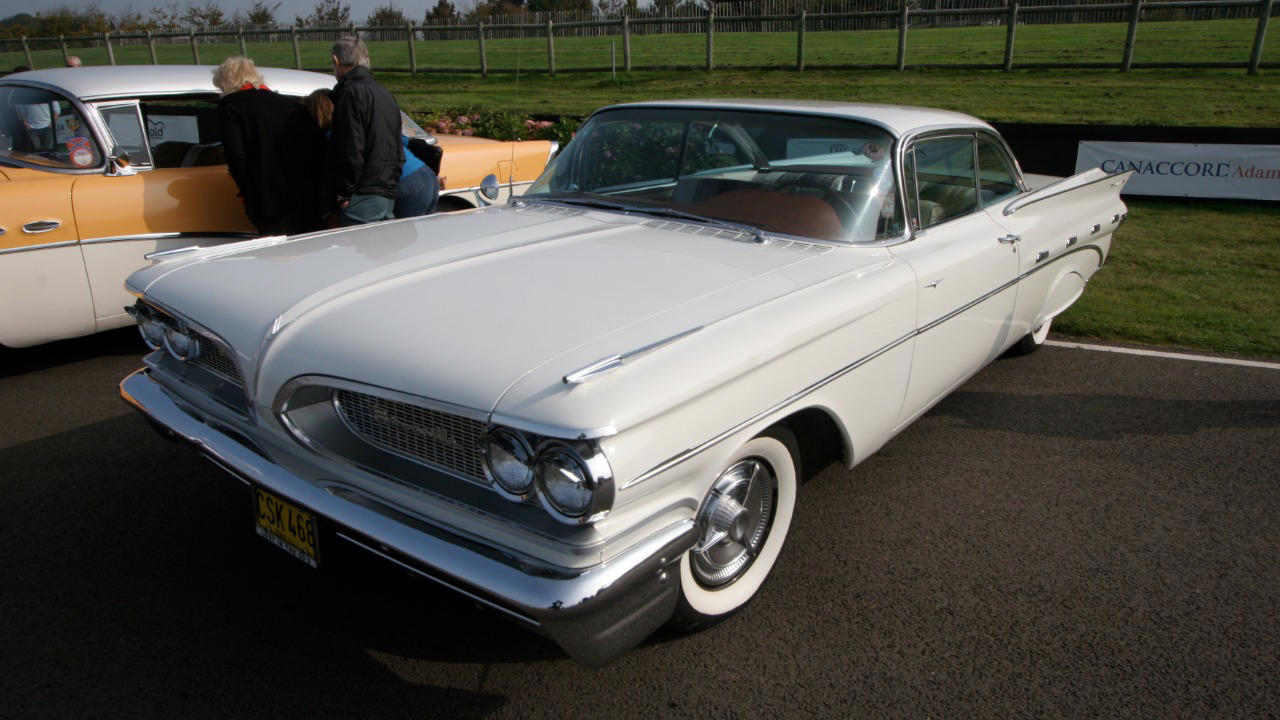



















The 1959 Pontiac Bonneville offered style but size and weight came with tradeoffsThe 1959 Pontiac Bonneville promised glamour, power, and the kind of presence that turned a suburban driveway into a stage. It delivered with dramatic styling and a wide-track stance, but its sheer size and weight brought clear compromises in agility, efficiency, and everyday usability. For buyers then and collectors now, the car stands as a case study in how far American automakers were willing to go in pursuit of style and comfort, even when physics pushed back. Viewed from today, the Bonneville captures the high watermark of late‑fifties excess: long, low, and loaded with chrome, yet engineered around a heavy frame and a big V8 that made it more highway cruiser than back‑road dancer. The tradeoffs that came with that formula are written directly into its dimensions, its fuel consumption, and even its braking and cooling systems. Big numbers, big presence The 1959 Pontiac Bonneville did not whisper its ambitions. Contemporary specifications list a Price starting at $3,255 and climbing to $3,530, a figure that placed it near the top of Pontiac’s range and firmly in aspirational territory for middle‑class buyers. Curb Weight was recorded at 4,086 lbs, backed by an engine Displacement of 6,375 cc and rated Power of 260 HP, or 191.36 KW, all wrapped in a body with a Length of 220.7 in that stretched across the driveway like a piece of rolling architecture, according to period data compiled on Pontiac Bonneville Specifications. Pontiac had already laid some groundwork for this flagship with earlier Bonnevilles. An earlier Body style in convertible form used a 347 cu in (5.7 L) V8, measured 213.7 in in overall Length and 75.2 in in Width, and tipped the scales at 3,860 lb, figures preserved in historical Body and Length. By 1959, Pontiac had stretched and widened the formula, and the Bonneville wore that growth with pride. Longer, lower, wider: the styling statement The design brief for the 1959 Bonneville leaned hard into the era’s obsession with motion and space. Contemporary descriptions emphasize that the car was longer, lower, and wider than its predecessors, with sleek straight lines, crisp body creases, twin‑fin rear fenders, and a new arrowhead motif that visually pushed the car forward. The look aligned with Pontiac’s emerging “Wide Track” identity, which used a broader stance to distinguish the brand on the street, a theme detailed in period coverage of the longer, lower, wider. That visual drama extended across the lineup. The Bonneville Safari wagon carried a low, long, and wide profile with a distinctive front and rear that gave it an almost yacht‑like appearance, a point repeated in later video retrospectives of The Bonneville Safari. Convertible and hardtop models echoed the same theme with expansive glass, thin pillars, and sheetmetal that seemed to stretch beyond practical limits. Factory brochures leaned into the dimensions. Under a heading of DIMENSIONS, Pontiac listed Over‑all length for Catalina, Star Chief and Bonneville (except Safaris) at 220.7 inches, and invited shoppers to Ask their dealer for detailed price information on any model, as seen in the original DIMENSIONS brochure. The message was clear: size itself was a selling point. Wide Track and the handling promise Pontiac did not simply make the Bonneville bigger; it also pushed the wheels outward. The “Wide Track” concept moved the wheels farther from the kingpins and spindles, which widened the stance and promised more stable cornering. Period analysis notes that the front and rear track each spanned well over five feet, with the wider track providing for a better handling car by reducing body roll and improving grip, as summarized in later commentary on the wider track design. Owners and catalog writers echoed that pitch. One enthusiast‑oriented guide explains that the car’s handling was “equally remarkable,” arguing that its wide track design allowed for better stability around corners and over uneven surfaces, a claim repeated in a 1959 Pontiac Bonneville aimed at restorers. Social media tributes to the model make a similar point in more nostalgic language. One summary notes that Its wide track and long wheelbase contributed to a smooth and stable ride, while the powerful V8 engine ensured it had plenty of power for highway cruising, even if the steering response never felt as tight as smaller cars of the era, an assessment captured in a short profile. In practice, the geometry did help the car feel planted at speed. Yet the underlying platform remained a full‑frame, body‑on‑frame construction with significant mass. The wide stance could not completely overcome the inertia of 4,086 lbs of steel, glass, and chrome, especially when the road turned tight or the driver asked for quick changes in direction. Powertrain muscle and the weight penalty Under the hood, Pontiac’s “deep‑chested” V8 gave the Bonneville a confident stride. Factory literature described Pontiac’s new engine as a full‑sized V‑8 that delivered strong performance on regular octane fuel, with an Exclusive design that placed key components for better cooling and durability, as preserved in original Pontiac engine literature. In Bonneville trim, that engine could be ordered with multiple carburetors and higher compression, turning the car into a serious straight‑line performer. Performance testing from the period treated the big Pontiacs as legitimate high‑speed machines. A detailed road test of the 57 and 58 Pontiacs, which shared much of the basic engine architecture, described how Pontiac engineers had already started tuning the chassis and brakes to cope with rising speeds. The report noted that Front drum diameter had been cut down slightly, with Total lining area at 191 square inches before later revisions, and that a 1/2 inch wide groove down the center of the front wheel shoes was added to improve air circulation, a change that reduced the effective area to 170 square inches in pursuit of cooler stops, as documented in the Pontiacs road test. Even with those efforts, mass remained the enemy. The Bonneville’s 260 HP rating had to work against more than two tons of car, passengers, and luggage. Straight‑line acceleration was respectable for the time, but the car’s real strength lay in sustained highway cruising, where weight smoothed out pavement imperfections and the V8 loafed along at modest revs. Fuel economy and long‑distance reality The combination of a big body and a big engine carried an obvious cost at the pump. Contemporary accounts of similar Pontiacs show how that played out in real‑world driving. Automotive writer Tom McCahill famously made a coast‑to‑coast dash in a Catalina equipped with this powertrain and averaged 21.7 MPG over roughly 2,442.7 miles of driving, a figure that appears in later summaries of Automotive writer Tom and his Catalina run. That 21.7 MPG result was impressive for a carefully managed highway trip, but everyday use in city traffic or short hops would have produced much lower numbers. Later owners of Pontiac Bonneville models have turned to technical advice on fuel efficiency problems, where mechanics suggest checking the fuel pressure regulator and vacuum lines when consumption spikes, as seen in a fuel efficiency Q&A. Those modern troubleshooting tips underscore how sensitive large, powerful cars can be to small mechanical issues, especially when they already start from a relatively thirsty baseline. For buyers in 1959, fuel was cheap enough that the Bonneville’s appetite rarely disqualified it. The tradeoff was more about range and convenience: a heavy right foot could drain the tank quickly, and long‑distance travelers needed to plan fuel stops more carefully than drivers of smaller compacts that arrived a few years later. Cooling, braking, and the physics of mass Keeping a large V8 within safe temperature limits in a heavy car posed its own challenges. Modern Pontiac specialists still remind owners that Overheating is a concern, but unless the temperature exceeds 220 degrees Fahrenheit it might not qualify as a true overheating issue, advice captured in a video on Overheating and Fahrenheit. That threshold hints at how much thermal load these engines routinely carried, especially when asked to haul a big body up long grades or through summer traffic. When things do go wrong, the usual culprits are familiar. A technical guide on Pontiac Bonneville overheating causes lists coolant leaks from the water pump, radiator, or hoses, along with failed radiator fans or thermostats, as the most common reasons a Pontiac Bonneville runs too hot. Those issues are not unique to the 1959 model, but the combination of weight and displacement gives them more room to escalate if ignored. Braking performance faced similar constraints. The drum brakes of the era were sized and vented as carefully as engineers could manage, as the 191 square inch lining figure and later 170 square inch effective area in the Pontiac road test illustrate. Yet repeated hard stops in a 4,086 lb car inevitably generated heat and fade. That reality shaped how drivers used the Bonneville: smooth, anticipatory braking, long following distances, and a preference for flowing highways over tight urban grids. Interior comfort and the cost of space Inside, the Bonneville translated its exterior dimensions into genuine room. Wide bench seats, generous legroom, and a broad cabin made it feel like a rolling living room. The long wheelbase and wide track combined to isolate passengers from broken pavement, a quality that later enthusiasts celebrate when they describe Its wide track and long wheelbase as key to the car’s smooth and stable ride in period‑style social media posts. That comfort came with tradeoffs. The sheer bulk made tight parking lots and narrow city streets more demanding. The long hood and extended rear overhang challenged drivers’ spatial awareness. In an era before backup cameras or even widespread power steering, piloting a 220.7 inch car into a cramped downtown space required patience and a fair amount of arm strength. Collector perspective: style first, physics second Today, collectors tend to value the 1959 Bonneville less for its objective performance metrics and more for its design, presence, and historical significance. The Bonneville model with the high‑spec 389 V8, which enthusiasts still showcase in videos that highlight The Bonneville with its wider tail lamps and four pieces of side trim, represents the high‑water mark of Pontiac’s late‑fifties ambition, as seen in a walk‑around of The Bonneville 389. Restorers and drivers accept the tradeoffs that come with that package. They know that a big, heavy car will never feel as nimble as a compact, that fuel stops will be more frequent, and that careful attention to cooling and braking systems is non‑negotiable. Enthusiast catalogs and guides, such as the Discovered Pontiac Bonneville stack and social feeds like Discovered Pontiac Bonneville, reflect that reality by focusing on authenticity, correct specifications, and proper maintenance rather than chasing modern performance benchmarks. Even the broader media ecosystem around the car hints at its enduring pull. Automotive brands promote Wide Track nostalgia through merchandise and archival content, as seen in the Discovered Pontiac Bonneville collections and related Discovered Pontiac Bonneville gear reviews. Wikipedia’s ongoing documentation of the model, supported by readers who visit Discovered Pontiac Bonneville and even language‑specific pages like Discovered Pontiac Bonneville, ensures that the technical story behind the style remains accessible. More from Fast Lane Only Unboxing the WWII Jeep in a Crate 15 rare Chevys collectors are quietly buying 10 underrated V8s still worth hunting down Police notice this before you even roll window down