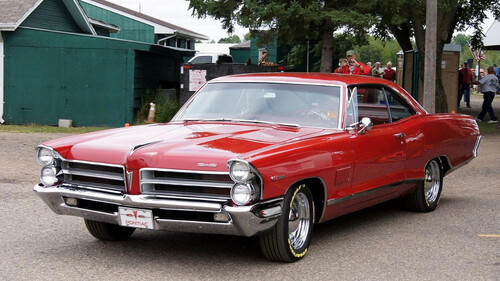
Pontiac used the Catalina in ways most people don’t realizePontiac treated the Catalina nameplate as far more than a basic full-size sedan. Across two decades, the badge became a test bed for experimental drag racers, family-hauling wagons, police interceptors and even a pickup-style concept that tried to copy the El Camino formula. The result is a car that quietly shaped Pontiac history in ways most enthusiasts never connect back to the humble entry-level model. Look past the everyday four-door hardtops and a string of Catalinas emerges that pushed engineering, marketing and even corporate politics inside General Motors. From the radical 421 Super Duty projects to nine-passenger wagons and rare highway patrol specials, the Catalina often carried Pontiac ideas that were too bold or too niche for the better known GTO and Firebird lines. The workhorse that secretly carried Pontiac’s performance image In Pontiac’s peak years, the Catalina sat at the bottom of the full-size lineup on price, yet it was also the brand’s most popular nameplate. Positioned as Pontiac’s entry-level full-size model, the Catalina gained a reputation for offering spacious interiors and powerful V8 engines, and it became the base for several performance oriented versions that wore the same Pontiac Catalina badge. That dual identity, budget family car and hidden performance platform, gave Pontiac room to experiment. When the company wanted to test high output engines or aggressive suspension setups in a full-size shell, it often did so under the Catalina umbrella. The public mostly saw a stylish big car, while insiders understood that Catalina chassis and body shells were quietly doing heavy lifting for Pontiac’s racing and image-building efforts. Even in standard form, Catalinas carried design touches and mechanical hardware that signaled more ambition than a typical base model. Period walkaround reviews of cars like the 1966 Pontiac highlight the quirky detailing and powerful drivetrains that turned what could have been a plain sedan into a distinctive full-size machine, a character that comes through clearly in enthusiast breakdowns of that 1966 Pontiac and its features. From 2+2 to 421 Super Duty: Catalina as a stealth muscle car The clearest example of Pontiac using the Catalina for performance work came with the 2+2 and the 421 Super Duty projects. Pontiac created the Catalina 2+2 as a sporty package that added bucket seats, special trim and serious engine options to the full-size platform. Buyers responded strongly, and Pontiac was so pleased that 7,998 customers chose the 2+2 option that it reprised the package for the fully redesigned 1965 Catalina, complete with upgraded brakes that integrated the brake drum into a unique front hub design, as described in period coverage of the 2+2 Catalina. Beyond the showroom, Pontiac engineers went even further with the 421 Super Duty Catalinas. These cars were built to dominate drag strips at a time when Detroit manufacturers were still officially tied to a racing ban in organized competition. The most extreme of them received extensive weight reduction and chassis modifications that made them barely streetable but devastatingly quick on the quarter mile. The so called Swiss Cheese Catalinas show how far Pontiac was willing to go. There were only 14 Swiss Cheese 1963 Pontiac Catalina 421 Super Duty cars produced. They had aluminum panels on the hood and trunk, and the factory drilled large holes in the frame rails to remove weight, which left the cars with a distinctive perforated appearance that led to the Swiss Cheese nickname. Those 421 Super Duty Catalinas went on to win their class, beating out stiff competition, and their rarity and purpose-built nature are highlighted in auction coverage. One key figure behind these cars was a Pontiac mechanic and fabricator who pushed the frame modifications to extremes. Accounts describe how one mechanic drilled extensive holes through the frame of a 4,000-pound luxury cruiser to turn it into a drag racing weapon, and how Pontiac followed this approach for factory drag cars. These Swiss Cheese cars did more than win races. They broke internal expectations about what a full-size Pontiac could be, and they pushed General Motors corporate rules around racing support. Later commentary on Pontiac’s most dangerous cars, which notes that this 421 powered Catalina is a machine that 99% of GM fans have never heard of and that while the GTO was grabbing all the headlines the 421 Super Duty Catalina quietly broke GM norms, underlines how the Catalina nameplate became a stealth vessel for high risk engineering. That perspective is captured in modern retrospectives on the most dangerous Pontiac projects. Family duty: nine-seat wagons and everyday Catalinas At the other end of the spectrum, Pontiac used the Catalina badge for some of its most practical vehicles. The Catalina Safari wagons carried families, luggage and trailers, and they did it with engineering attention that went beyond simple badge sharing. The 1964 model is a prime example. The 64 Catalina Safari Was Built To Carry Nine People Properly, and Pontiac engineered the Catalina Safari from the ground up specifically to handle that load, with reinforced suspension and packaging that let all three rows function as real seating rather than occasional jump seats. Period analysis of the Catalina Safari makes clear that this was a serious nine passenger design. These wagons show how Pontiac leaned on the Catalina chassis for both performance and utility. Buyers who wanted a family hauler with some style could choose a Catalina Safari and still get the same basic V8 powertrain and road manners that made the sedans and hardtops popular. That flexibility turned the Catalina into a one nameplate solution for very different customers, from suburban parents to weekend racers towing their own drag cars. Enthusiast walkarounds of mid sixties Catalinas often highlight the mix of comfort and capability. Reviews of a 1966 example, for instance, point out the generous interior, smooth ride and strong engine options that made the car feel like a luxury cruiser even in relatively modest trim, an impression that comes through in the quirks and features breakdown of that year’s Pontiac. Law enforcement and the Pontiac Catalina Freeway Enforcer Pontiac also turned the Catalina into a tool of the state. The 1971 Pontiac Catalina Freeway Enforcer was a high performance police package built for highway patrol work. It combined the full-size Catalina body with a heavy duty suspension, upgraded brakes and a powerful engine tuned for sustained high speed use on wide open interstates. Surviving examples are rare, and modern enthusiasts treat them as rolling history. One video feature describes the 1971 Pontiac Catalina Freeway Enforcer as one rare, high class Highway Patroller and notes that a clip showcasing the car drew 5.4K views and 46 reactions from fans of vintage police vehicles. That same coverage highlights how the Pontiac Catalina Freeway served as a genuine Highway Patroller rather than a simple appearance package. Other enthusiasts have gone further and taken a ride in one of the rarest police cars ever made, documenting a drive in a 1971 Pontiac Catalina Freeway Enforcer and emphasizing how different it feels from civilian Catalinas. That trip, shared by Chase Classic Motors, shows a car that blends big car comfort with the urgency and durability expected from a highway patrol interceptor. The existence of a dedicated Freeway Enforcer package shows how far Pontiac was willing to stretch the Catalina name. The same badge that appeared on nine passenger wagons and entry sedans also sat on the doors of state police cars that spent their days running down speeders. That breadth is unusual even in Detroit’s badge engineering history. El Catalina and other experiments at the edges Perhaps the most surprising use of the Catalina foundation came with Pontiac’s attempt to build its own version of the Chevrolet El Camino. The Pontiac El Catalina concept took the basic idea of a coupe utility and applied Pontiac styling and trim. Enthusiast commentary describes it as Pontiac’s attempt at an El Camino, calling it a pontiac version of the El Camino and one of the most beautiful machines, and linking it visually to the 1959 Chevy that had its El Camino in the same era. That assessment appears in a video that revisits the Pontiac El Catalina and compares it directly with the Chevy El Camino. The El Catalina never became a full production model, but its existence shows how Pontiac management saw the Catalina platform as flexible enough to support radical body styles. Instead of creating a completely new nameplate, they were willing to stretch the Catalina identity into pickup territory, banking on the familiarity and reputation of the badge to sell a very different kind of vehicle. Additional footage of the El Catalina shared in another clip from Aug reinforces that view, presenting the car as a near perfect blend of utility and style that could have given Pontiac a direct rival to Chevrolet’s coupe utility. That second video of the El Catalina underscores how enthusiasts still see it as a missed opportunity. Pontiac also used the Catalina name in marketing and storytelling that extended beyond the showroom. Retrospective pieces discovered through links that trace back to coverage of Swiss Cheese Catalinas describe how Catalinas of various types, from sedans to drag cars, helped define Pontiac’s image in the early 1960s. Those write ups, which were discovered through references to Swiss Cheese Catalinas and similar material, point out that the Catalina name carried weight with buyers who wanted both value and performance. Further commentary, again discovered through citation trails that start with the Swiss Cheese Catalinas and lead to additional analysis of Pontiac’s racing efforts, notes that the Catalina’s role in motorsport and law enforcement helped burnish Pontiac’s reputation as a performance brand even before the GTO era fully took hold. That perspective appears in material linked through Swiss Cheese Catalinas coverage. Why the Catalina’s hidden roles still matter Looked at together, these stories reveal how the Catalina functioned as Pontiac’s quiet problem solver. Need a family wagon that could legitimately carry nine people for long trips without complaint? The 64 Catalina Safari Was Built To Carry Nine People Properly, and Pontiac engineered the Catalina Safari so thoroughly that it still stands out in modern assessments of classic wagons. Need a drag racer that could embarrass rivals while technically staying within corporate rules? The 421 Super Duty Swiss Cheese Catalinas delivered class wins and headlines even if 99% of GM fans have never heard of them. When law enforcement needed a high speed interceptor, Pontiac did not create an all new model. It built the 1971 Pontiac Catalina Freeway Enforcer and turned a familiar full-size car into a Highway Patroller. When designers wanted to test the waters for a coupe utility to rival the Chevy El Camino, they again reached for the Catalina name and created the El Catalina concept that enthusiasts still praise as one of the most beautiful machines of its type. More from Fast Lane Only Unboxing the WWII Jeep in a Crate 15 rare Chevys collectors are quietly buying 10 underrated V8s still worth hunting down Police notice this before you even roll window down