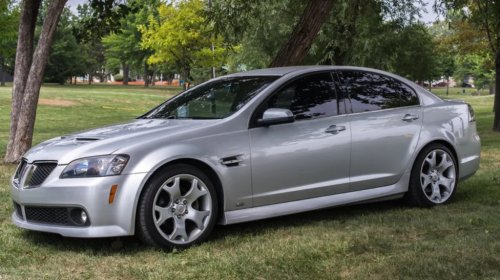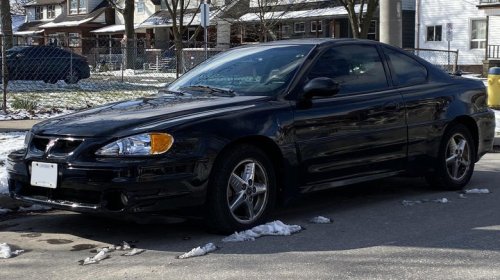
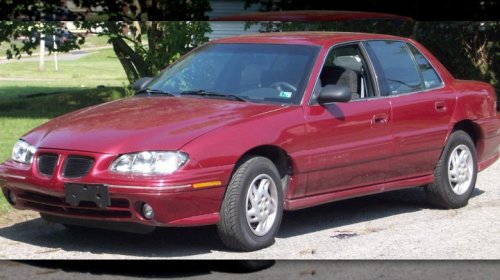
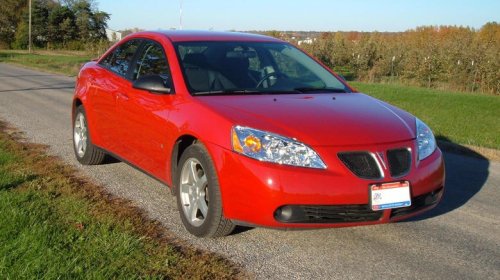
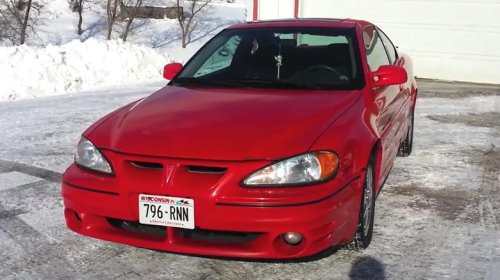
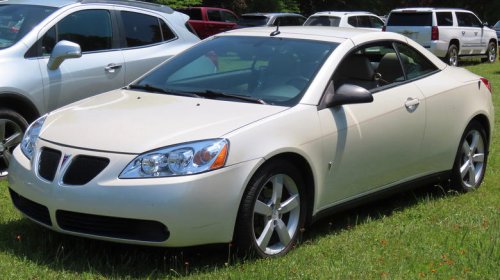
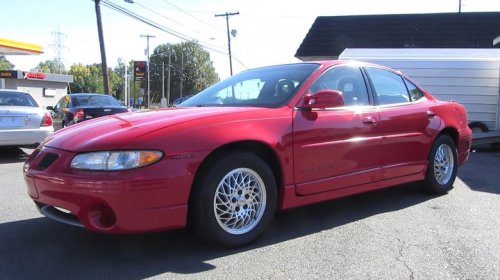



















2001 Pontiac Grand AmAmong the more than 500 complaints lodged with the NHTSA about the 2001 Pontiac Grand Am, the most common theme is the car's electronics. More than 200 complaints have been made regarding its overall electrical systems, and a further 100 complaints allege issues with the car's lighting systems.One common complaint concerns the car suddenly shutting off while on the road, with a number of those complaints noting that the car's ignition seemed to be the cause of the issue. A 2014 recall was issued regarding a defect with the ignition, but given the number of reports that have been made after that date, it seems that there are a significant number of surviving cars on the road that have not had the necessary recall work carried out.Another frequent area of complaint is that the car's turn signals can stop working temporarily, without any prior warning. Again, a recall regarding a defect in the turn signal assembly was issued in 2003, but it seems that the issue has persisted among a number of affected cars.1996 Pontiac Grand AmLike several other troublesome Pontiac models here, the 1996 Grand Am has a significant number of complaints about its airbags. Many of those complaints tell the same story — owners were driving on the road or pulling out of a parking lot when the driver's airbag exploded without any warning. Some of these reports allege that the driver suffered injuries because of the explosion. An investigation into oversensitive airbag deployments was initiated by the NHTSA in 1998 as a result of owner reports, but it was later closed, as the agency could not find enough evidence to suggest a widespread issue or defect.A total of six recalls have been issued for the car, with one recall in 2002 concerning a potentially faulty ignition switch. The recall was a wide-ranging one, with over 1.5 million GM vehicles affected at the time, but issues with the Grand Am's ignition continued to be reported for years after that initial announcement. It's safe to assume that most surviving examples of the '96 Grand Am will not be sold with paperwork verifying whether all of the relevant recall work was carried out, and so buyers looking for the most hassle-free used car might want to steer clear of the model year.2007 Pontiac G6Multiple model years of the Pontiac G6 feature on the NHTSA's worst offenders list for owners' complaints, with the 2007 model year sporting one of the highest tallies of any Pontiac to date. It has recorded over 1,200 complaints as of this writing, with multiple issues highlighted by owners. The most common complaint is the failure of the car's power steering, with many owners reporting that the system would intermittently stop working, although it would often re-engage after a short period. A 2015 recall was issued for the issue, but evidently not all affected cars have had the recall work completed.Other reported issues include persistent warning lights for systems including the airbags and traction control, sometimes accompanied by the temporary malfunction of those systems. A recall was issued in 2014 to fix the car's brake lights, which were prone to randomly illuminate thanks to a faulty connection with the body control module, but no further recalls or investigations have been announced regarding the car's electrics.2000 Pontiac Grand AmMuch like the 2001 model year, the 2000 Pontiac Grand Am's biggest weak point is its electrical systems and lighting. The NHTSA has recorded over 700 complaints about the car to date, with a significant number highlighting ignition issues as a point of concern. The 2000 Grand Am was included in a 2014 recall aimed at fixing ignition defects, but some owners report that the full remedial work was not carried out by a dealer or that they were unaware that a recall was needed. As a result, there's a not-insignificant chance that a surviving used example may still suffer from the same fault.Alongside the ignition recall, the car has been subject to a further seven recalls, many of which correlate with owner complaints. Reports of faults with the hazard lights and turn signals are numerous, even though a recall in 2003 was designed to address such issues. Another area of complaint was the car's brakes, with owners reporting premature brake wear even after multiple replacements. To date, no investigation or recall regarding the problem has been instigated.2008 Pontiac G6Owners of the 2008 Pontiac G6 have lodged more than 1,000 complaints with the NHTSA as of this writing, making it one of the worst offending Pontiac models for owner satisfaction. A number of issues have been reported, but the most frequent complaints concern the car's power steering. It's the same issue that affects other G6 model years including the 2006 and 2007 models, with owners reporting that the power steering will stop functioning correctly, sometimes permanently and sometimes only for a short period.A number of reports also allege that the steering issue resulted in the car veering to the left or right while on the road. The car's airbags and its electrical systems are also cited as frequent failure points, with all of these issues being potentially very costly for owners to fix. Given the low resale value of the car, it's unlikely that any significant issue will be cost effective to put right, and many owner reports state that once the faults appeared, their cars were not repaired.1998 Pontiac Grand PrixPower steering is a long-standing failure point among Pontiac models, as the 1998 Grand Prix also ranks steering issues among its most common areas of complaint. Fewer owners of the 1998 model have complained about power steering failure than the 1997 model, but there are still an elevated number of complaints compared to other Pontiac models. Other reported issues involve malfunctioning lights, electrical systems, and a small number of owners reporting brake issues.Like many of the most troublesome Pontiac models, the 1998 Grand Prix has been subject to a large number of recalls, with eight in total. Recall figures and higher levels of owner complaints often go hand in hand, as the more recalls a car has, the more chance there will be that one or more previous owners did not get the required remedial work completed. Reasons for this vary — some reports note that the owners were not told of recalls, while others allege that dealerships were unwilling or unable to carry out the work. Given that most surviving Grand Prix models will be sold with minimal — if any — service paperwork, that makes verifying that any given car has had its defective parts properly replaced an extremely difficult task.