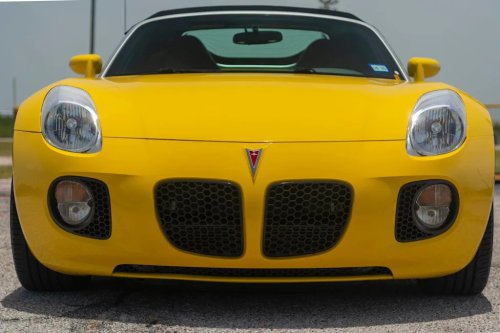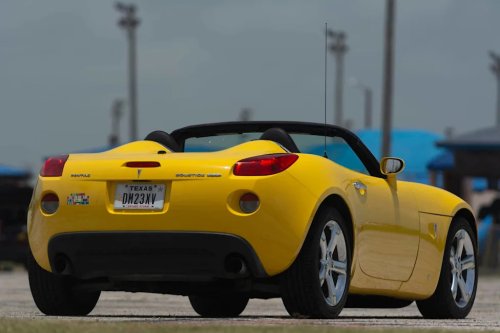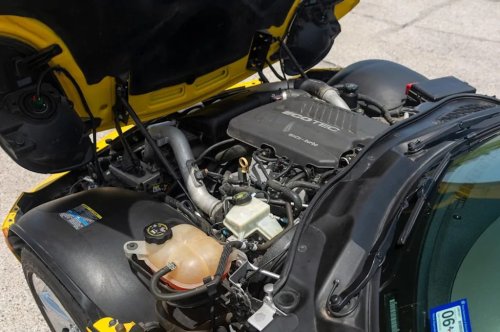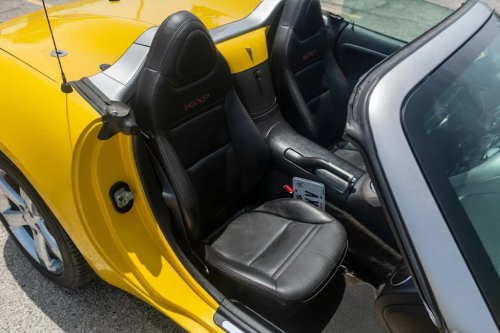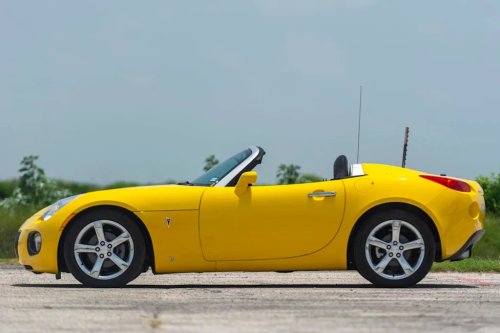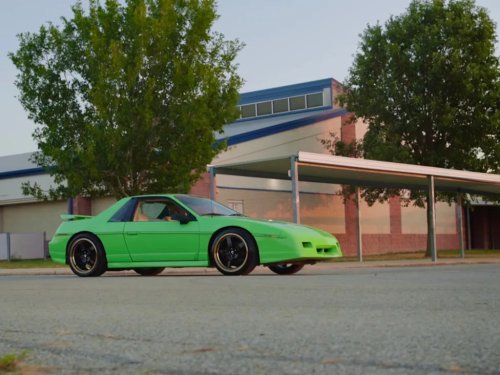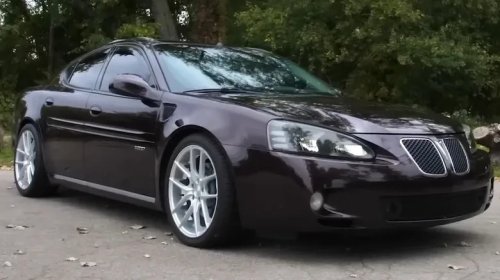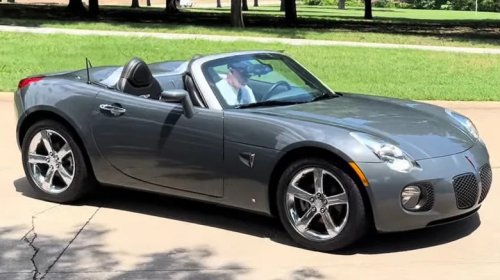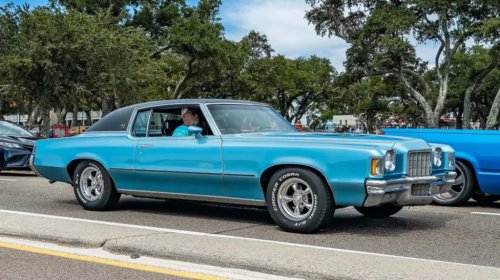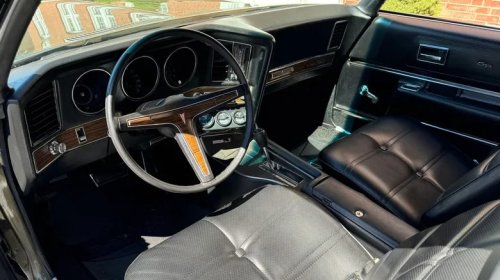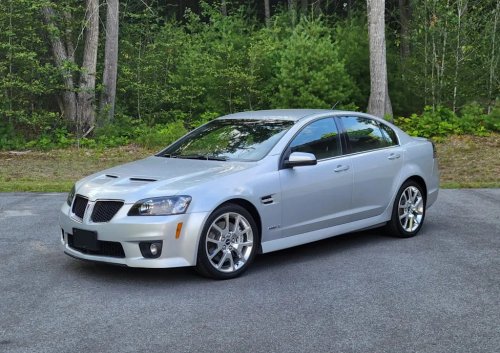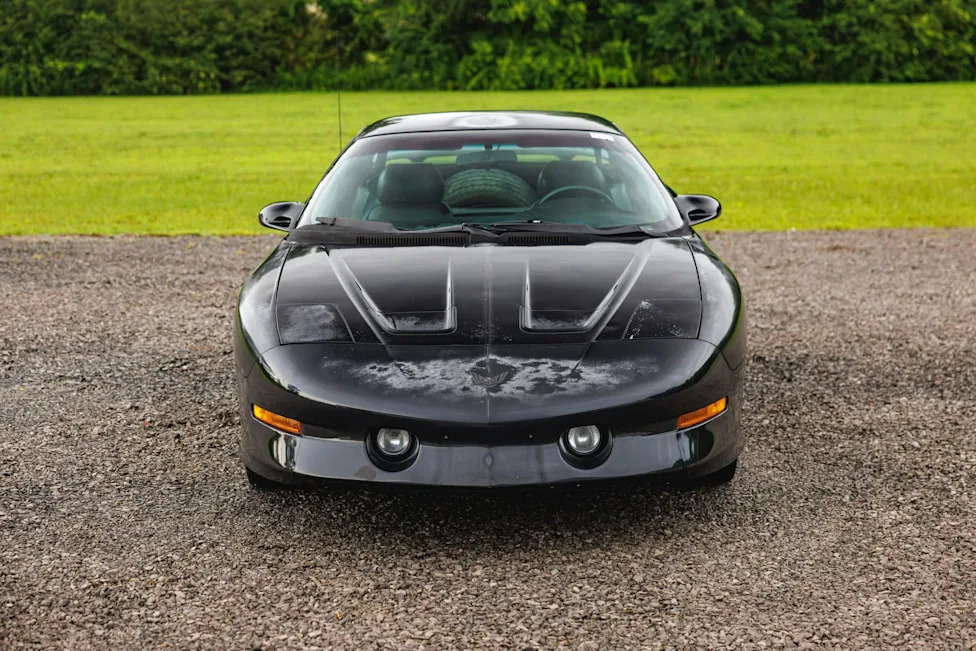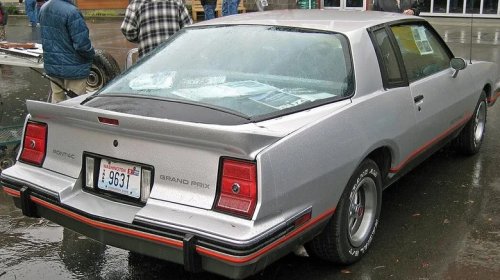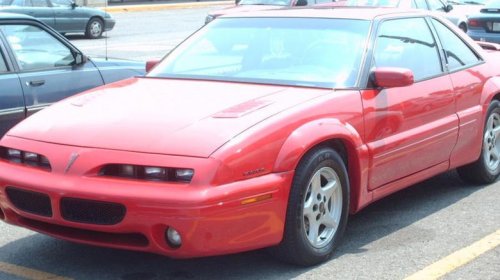
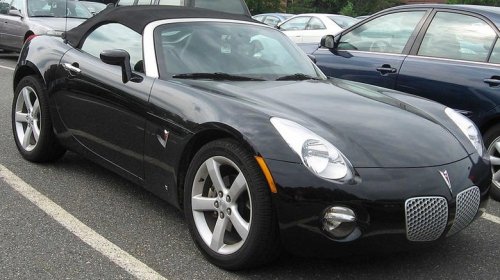
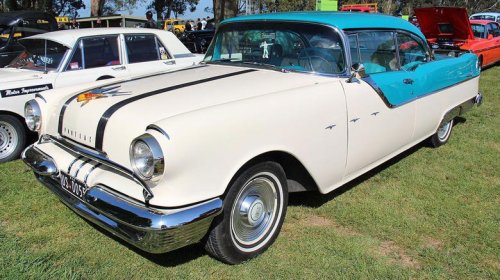
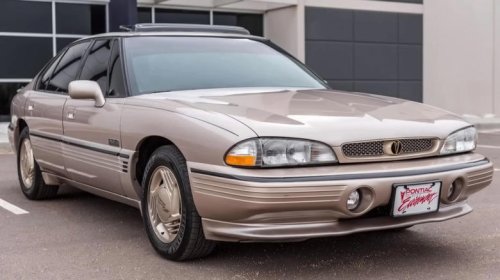



















1996 Pontiac Grand Prix GTPThe sixth-generation Grand Prix turned the engine of its predecessor 90 degrees and came with driveshafts running to the front wheels rather than the rear for the first time since 1962. The new front-wheel-drive W-Body marked a major shift to a more modern and economical car with European styling and engineering influences. Built from 1987 to 1996, it was also the first Grand Prix without an optional V8 but with optional rear doors. It was not much of a looker. But after a few years on the market, Pontiac spiced things up with an appearance package bearing the letters GTP. This package gives the coupe a fuller and thicker bumper with fog lights, extra body cladding running around the car with beefy wheel arches, a rear spoiler, and a pair of louvered vents on the hood. Paired with honeycomb wheels and the dual slits for the headlights, it's an aggressive and sporty package geared for younger buyers.Under the hood is a Twin Dual Cam 3.4-liter V6 making 210 horsepower. While that may sound weak, it is better than average for the era. Pontiac interiors of this era are not known for being of the highest quality but they are at least appealing and comfortable. Later models received more powerful engines but lost the clean and sporty style of their predecessors. The Grand Prix GTP isn't the fastest car on the street, but it's an attractive specimen from the 1990s that remains an overlooked collectible.2009 Pontiac Solstice GXPBefore things went south for GM and Pontiac had to die, the company created the Kappa platform on which to build fun and sporty rear-drive coupes. It was used for vehicles from Saturn, Opel-Vauxhall, Daewoo, and, of course, Pontiac. The Pontiac model was called the Solstice and it may be another unsung hero from the now-defunct brand.The design of the Solstice looks as though it derived inspiration from the original 1953 Corvette. It was the only roadster built by GM since the days of the C1 Corvette, and its curvy exterior presents a car that looks like it's ready for driving with no destination, where fun is the only purpose — just what roadsters are for. Solstices began selling in 2006 and lasted until the brand's demise, with even a handful of 2010 models built before production lines stopped. Initially, only a roadster was offered but Pontiac added a coupe variant for the 2009 model year. Given the untimely demise of the brand, the coupes are extraordinarily rare.Powered by either a 2.4-liter 4-cylinder or a turbocharged 2.0-liter, performance is spirited, especially with the 260-horsepower output of the turbo model. Handling is tight and responsive, making the cars a pleasure to drive, although, it is said the interiors are laden with a bit too much cheap plastic. Regardless, the Solstice is a cool-looking car whether it has a roof or not, and it remains an affordable and fun option for driving today.1955 Pontiac Star ChiefCars of the '50s had a distinctive style that made them instantly recognizable. '57 Chevys, Thunderbirds, and Corvettes are usually the cars of this era that receive the most attention today, but the 1955 Pontiac Star Chief deserves another look.The Chieftain was Pontiac's bread and butter for the years after WWII and the 1950s. Furthermore, OHV V8 engines quickly became the norm during the period, and Pontiac introduced its Strato Streak V8 in 1955. This was the only engine offered in the Chieftain and buyers who wanted it in its top trim level opted for the Star Chief, which was also the only way to get a convertible. With the Power Pack four-barrel 287-cubic-inch V8, the Star Chief had 200 horsepower, but it is the styling where it shines.While the Star Chief shares dimensions with the Chevy Bel Air, it is its own car. With its huge chrome bumper, two-tone paint split by a railing of chrome, hood stripes, jet plane hood ornament, and generously shapely curves all over, the Star Chief is stunning. The two-tone colors extend to the interior where they are also split on the dashboard and vinyl seats while the classic gauges are adorned and accented by an abundance of chrome. When you look at one, you know you want to put the top down, get in, and cruise.1995 Pontiac Bonneville SSEiPontiac's Bonneville nameplate first found a home on a car with the 1957 model year. Pontiac kept the model in its lineup until 2005, and much of the time, a Bonneville was nothing but family transportation with a bit more fanciness than a Chevrolet. The shapes changed over the years while the basics remained the same, although in the '90s, Pontiac thought Bonneville buyers needed something extra.For 1992, Pontiac redesigned the Bonneville, adding more curves than the previous model and generally updating its looks to a more modern style. It was a much improved design but still nothing much to get excited about. However, a range-topping Bonneville SSEi was added to the lineup, providing several exterior styling cues of a more sporty nature accompanied by a supercharged 3800 V6 engine. The SSEi came with a front and rear spoiler with ground effects all the way around and featured a custom mesh grille and unique alloy wheels. Furthermore, Pontiac threw all it had at the interior, including plush and heavily bolstered bucket seats and a wide array of buttons controlling as many power and digital options as it could muster. While it may be overkill today, back then it was all luxury.While the SSEi was never a competitor to an M5, it was an excellent take on an American sports sedan. With up to 240 horsepower, performance was more than adequate, and it looked cool back then just as it does today.