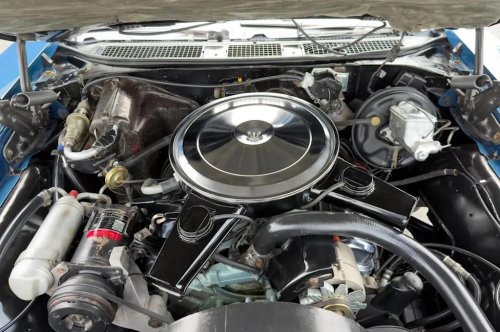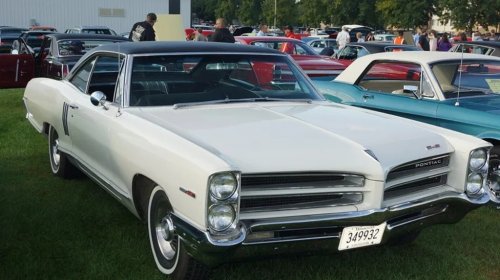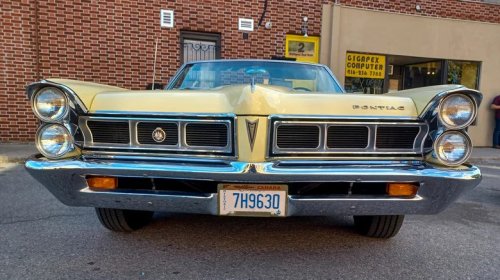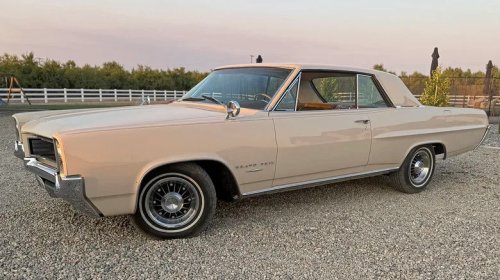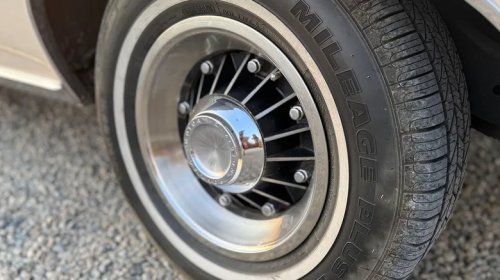
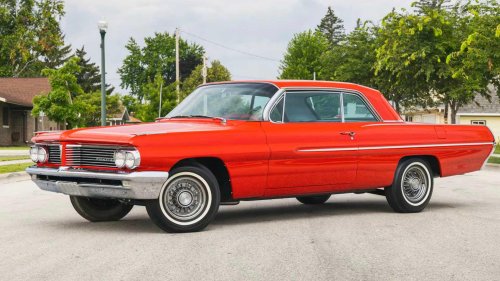
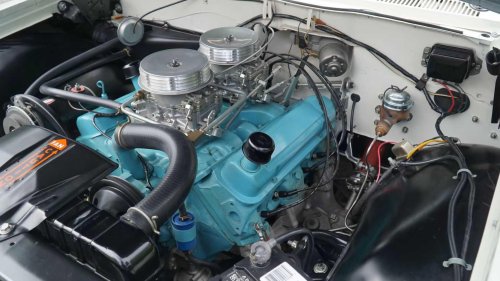
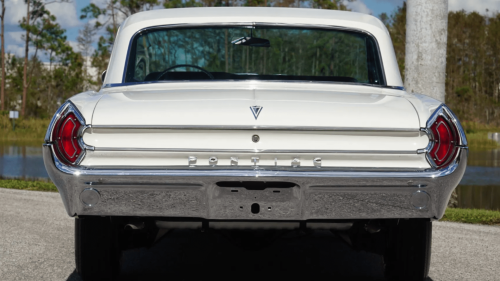
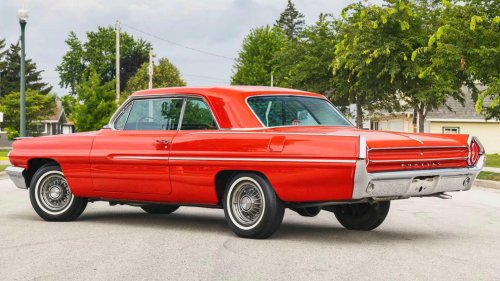





















In the early 1960s, a full-size American sedan was supposed to carry the family to church and back without drama. It was comfortable, reasonably economical, and invisible at the traffic light. Pontiac understood this perfectly. It also understood that drag strips and NASCAR ovals were selling cars, and that a manufacturer willing to bend the rules could win both races at once. What emerged from that tension was one of the most audacious things any American automaker ever put on a dealership floor.The car looked exactly like what it was supposed to be: a full-size Pontiac family sedan, sitting on the same platform as everything else in the range, wearing the same conservative body as the salesman's company car. Nothing about the exterior suggested what was sitting under the hood. That was precisely the point. Pontiac had spent years quietly building a performance operation that its own parent company officially disapproved of, and it had learned to hide its work in plain sight. Pontiac's Two-Faced Model Range Bring A Trailer By 1961, Pontiac was officially bound by the 1957 AMA gentleman's agreement, which asked manufacturers to withdraw from factory-supported racing. General Motors, concerned about federal antitrust scrutiny, had made compliance corporate policy. Pontiac's engineers, led by figures including Bunkie Knudsen and later John DeLorean, took this as a suggestion rather than an instruction.While GM was maintaining its public position on racing, Pontiac was quietly developing a race-specification upgrade for its 389-cubic-inch V8 as early as 1959. Sold as an over-the-counter item, the upgraded engine helped Pontiac win seven NASCAR races in 1960 and enabled Jim Wangers to take the NHRA National Championship. In 1961, Pontiac revised the package and its cars won 30 of 52 NASCAR Grand National races.The strategy was ingenious and deniable. Pontiac was not officially sponsoring teams. It was simply building engines and parts with factory part numbers, selling them through dealers, and watching what happened on Sunday. What happened on Sunday was winning. The division that publicly sold sedans to families was privately developing the most competitive drag and oval hardware in the country. The next step was to take that hardware and hide it in a family car, and sell the whole package to anyone who knew to ask. The Pontiac Catalina 421 Super Duty and What It Could Do Mecum AuctionsThe 1962 Pontiac Catalina 421 Super Duty is that car. What arrived at the 1961 NHRA US Nationals, driven by Hayden Proffitt, ran the quarter-mile in 12.55 seconds at 110.29 mph, making it the only 12-second car in Stock Eliminator at that event. Nothing else on the property was close. The Chevrolet Impala SS 409, which was the car most people considered Pontiac's primary rival in this class, ran 14.9 seconds in period testing. The Catalina was running two full seconds ahead of the best Chevy could offer at a comparable price point. That is not a close contest.The 1963 Swiss Cheese Catalina pushed the times further. Howard Maselles, driving a Packer Pontiac-sponsored example, set the NHRA C/Stock class record at 12.27 seconds at 114.64 mph, a record that stood for several years. These were full-size family sedans. They had four doors, proper interiors, and were ordered through Pontiac dealerships. The numbers were not from purpose-built race cars. They were from a car that, externally, looked like something your father might commute in. The 421 Super Duty Engine Mecum AuctionsThe 421 was not a standard production engine dropped into a performance application. It was a purpose-developed race unit that Pontiac was obligated to offer in production form for homologation. The block used a four-bolt main bearing arrangement with a 4.09-inch bore. The bottom end received forged steel connecting rods, a forged steel crankshaft, and forged aluminum pistons running 11.0:1 compression. A high-volume oil pump and an enlarged-capacity oil pan completed the bottom-end specification.The cylinder heads featured large ports, bigger valves, and 1.65:1 ratio rocker arms. The camshaft was the McKellar Number 10 specification, running over 300 degrees of duration. Twin Carter AFB 500 cfm four-barrel carburetors sat on an aluminum intake manifold. Pontiac's official rating was 405 hp and 425 lb-ft of torque.Period testing found 465 hp and 505 lb-ft at the flywheel. An internal GM memo from September 1962 cited figures of 468 hp and 500 lb-ft for the 1963 specification with a single four-barrel setup, verified by Smokey Yunick. The understating of output was deliberate, intended to keep the cars competitive within NHRA class structures while not advertising the true capability to competitors.Optional aluminum exhaust manifolds were available and reduced weight further, though Pontiac noted they were intended only for strip use. Under sustained heat, the aluminum headers would melt. Historical documentation confirms the factory even supplied drag tires through the dealer network in 1963, offering a complete competition package from a single dealership visit for just under $4,000. How Pontiac Kept It Off The Books Bring A Trailer The AMA ban of 1957 was technically still in effect throughout the Super Duty program's life. General Motors had made compliance a corporate requirement. Pontiac's solution was elegant in its simplicity: all Super Duty components carried factory part numbers, were factory-installed, and appeared on the production equipment list. The cars were built on the regular assembly line alongside standard Catalinas. After the body was completed, Pontiac Engineering pulled selected units aside and fitted the Super Duty engines before shipping.The division was not officially sponsoring race teams. It was simply building and selling cars with factory part numbers that, once in private hands, happened to be devastatingly fast. The distinction was thin, but it was the distinction that mattered. By 1962, the Super Duty 421Super Duty 421 program was dominating both NHRA drag racing and NASCAR. Pontiac won 30 of 52 NASCAR races in 1961 with Super Duty-powered hardware. Ford watched, and Henry Ford II withdrew from the AMA agreement in June 1962 to accelerate his own performance program. Chrysler followed immediately. The pressure on GM mounted.GM chairman Frederick Donner issued a memo in January 1963 demanding all divisions immediately cease racing involvement and abide by the AMA ban. Engineers close to the program later confirmed they were told anyone caught violating the policy would be terminated without question. The Super Duty program ended immediately. Only 14 Swiss Cheese Catalinas had been built before the order came down, and they were given rather than sold to selected racing teams. What Pontiac's engineers did next, denied their racing outlet, was to take everything they had learned and compress it into a street-legal intermediate. The GTO appeared in 1964. The Pontiac Catalina 421 Super Duty and What It's Worth Today PontiacMarket data suggests the 1962 Super Duty is finding serious traction with collectors. Values have risen across all condition tiers, with the Fair category seeing the largest percentage gains in recent cycles. A white 1962 example with provenance from a museum collection and 21 post-restoration miles sold for $174,000.The Swiss Cheese cars are in a different category entirely. Only 14 were built. The most historically significant example, the Packer Pontiac car driven by Howard Maselles to the NHRA class record, has previously been offered at auction with a high bid of $475,000 that did not meet reserve. These are not bought and sold like production muscle cars. They change hands rarely, between serious collectors, at serious prices.For buyers with more accessible budgets, a good-condition 1962 Super Duty at $64,000 represents substantial value relative to what it is. This is a car that ran times its contemporaries could not touch, from a year that symbolizes the peak production of the Super Duty package. Market data suggests a price range of $173,250 to $355,141 across recent comparable sales for higher-specification examples, which illustrates how sharply provenance and configuration affect value. Trim and Options Breakdown Via: Mecum Auctions The Super Duty package transformed a standard Catalina in ways that were mostly invisible from the outside. The base car had all sound-deadening material, body sealers, and insulation stripped out. The heater and radio were deleted. Steel components across the front of the car, including the hood, fenders, inner fenders, radiator support, and bumpers with all related bracing, were replaced with factory-stamped aluminum equivalents. This front-end aluminum package removed approximately 200 pounds from the standard Catalina's weight. The only visible external clues were the Pontiac eight-lug aluminum wheels, which were standard equipment, and subtle badging.Every Super Duty came with either a three-speed or four-speed Borg-Warner T10 heavy-duty transmission. Air conditioning was not available. The rear axle used a 4.30:1 ratio gearing optimized for the quarter-mile rather than highway cruising. For 1963, Pontiac went further with the Swiss Cheese frame: the boxed rails were cut to a U-section, and approximately 130 holes were drilled through the remaining material. The front sway bar was deleted. The aluminum exhaust manifolds, weighing 27 pounds compared to 72 pounds for cast iron, were optional.Contemporary records note that the front shocks were specified with zero rebound control, and the rear shocks with no compression control, a combination designed to maximize squat off the line and minimize body movement at speed. From a showroom floor, to a drag strip, these cars were entirely ready. Nothing needed to be done by the buyer.Sources: Hagerty, Classic.com, NHRA, Mecum, Bring a Trailer, PontiacV8.com.