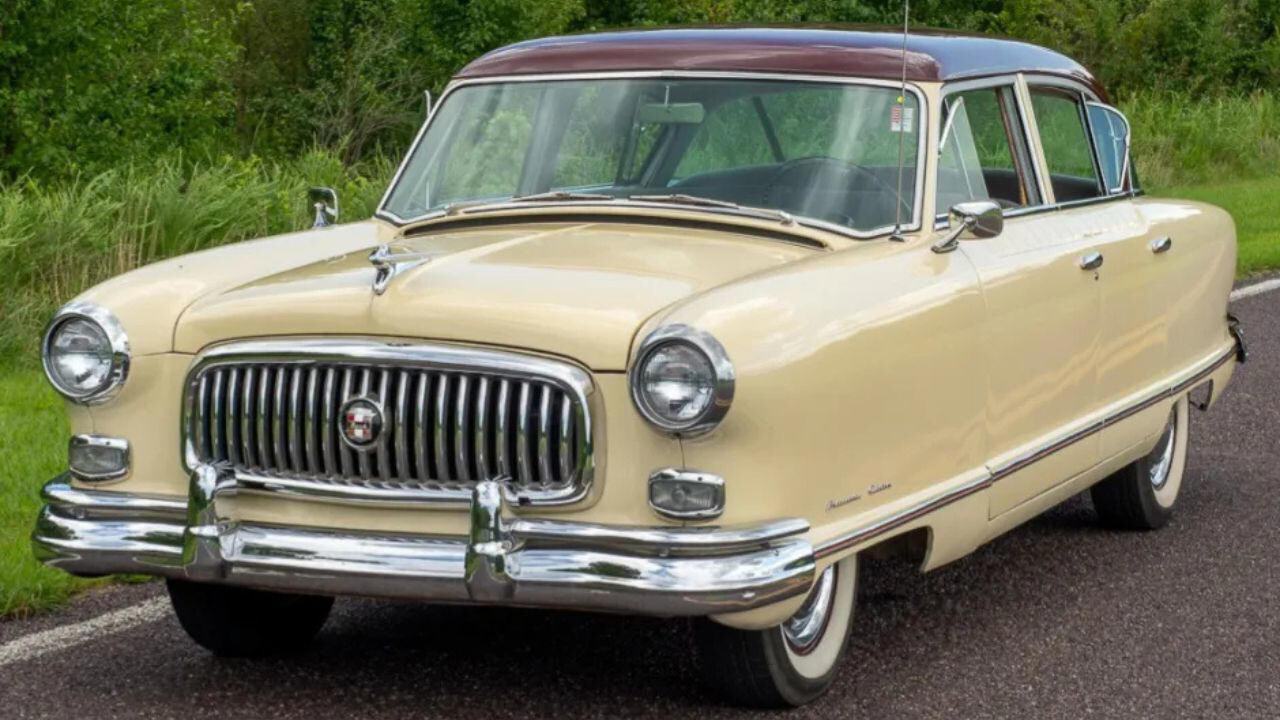
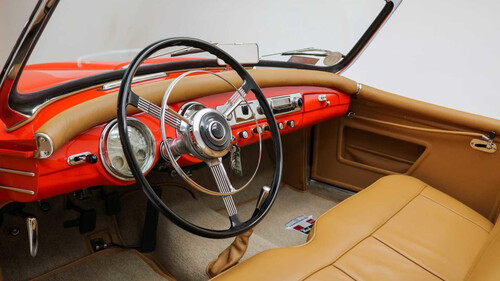
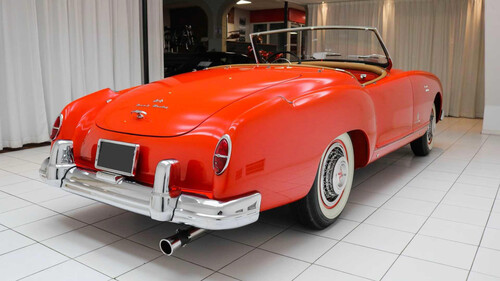
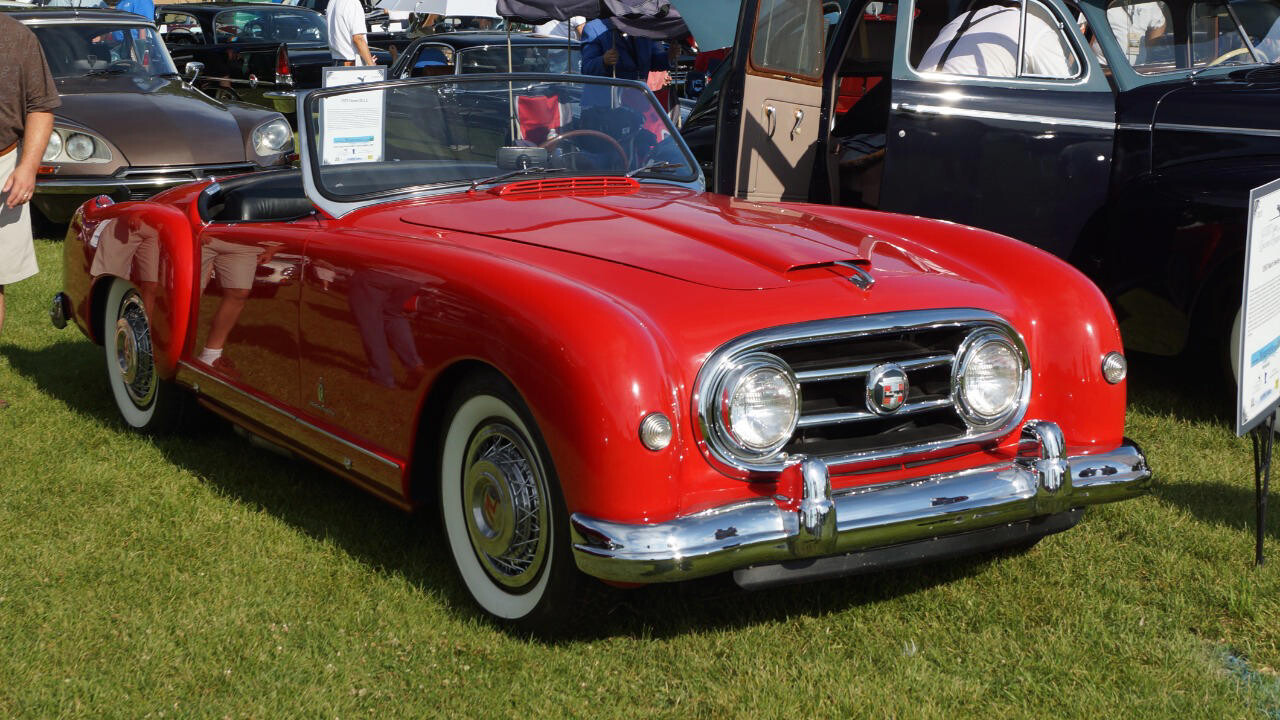
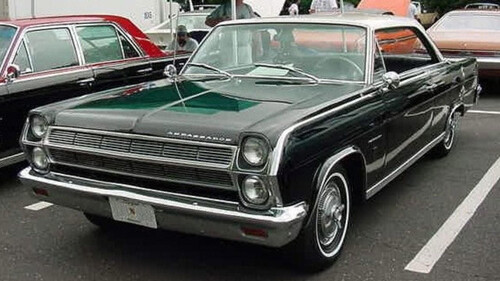
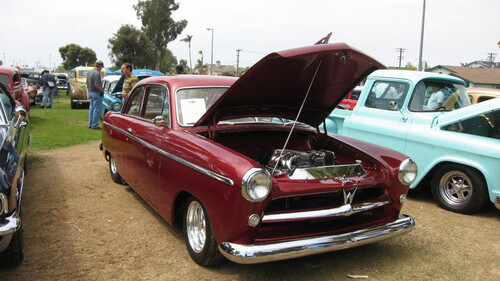
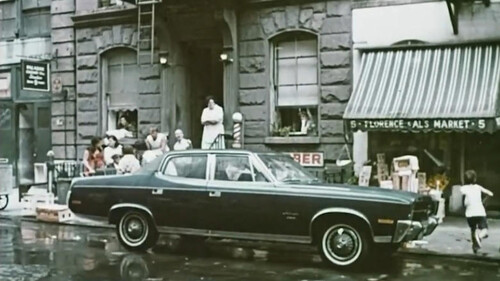
Nash’s 1952 Ambassador leaned into comfort like it had nothing to proveThe 1952 Nash Ambassador arrived at a moment when Detroit was obsessed with fins, chrome, and quarter-mile bragging rights, yet it moved in a quieter direction. Instead of selling speed, Nash wrapped its flagship in soft seats, clever packaging, and the promise that a long highway run could feel like a night in a private rail car. The Ambassador leaned into comfort with such confidence that it barely seemed to care whether the rest of the industry followed. The Golden Airflyte moment By 1952, Nash Motors had spent years refining its Airflyte idea, a family of cars shaped for aerodynamics and quiet travel rather than flash. The full-size Nash Airflytes were completely re-designed for 1952 and promoted as the Golden Airflytes, a name chosen in honour of Nash Mot marking its 50th anniversary. At the top of that Golden Airflyte range sat the Ambassador, the car meant to show what the company could do when it pulled out every comfort trick it had learned. Period material made the point in bold type. In the official brochure for the 1952 range, Nash described how Built into every Nash Golden Airflyte were comfort and travel conveniences not found in ordinary cars, and it went so far as to promise that at night the owner had a private sleeping car on wheels. That claim, preserved in the original Nash Golden Airflyte catalog, was not advertising poetry. It was a literal description of what the Ambassador could do. From radical idea to refined flagship The 1952 Ambassador did not appear out of nowhere. Two years earlier, Nash had already tried to leap ahead of its rivals with a bold redesign. Commentators looking back at that earlier Nash Ambassador have called it a car that did not just capture its time but almost escaped it, arguing that the 1950 Nash Ambassador was ahead of its era in both styling and engineering. That judgment is echoed in a retrospective that revisits how the Nash Ambassador of 1950 mixed aerodynamic thinking with a focus on comfort that most competitors had not yet embraced. The core of that approach was the Airflyte body. Nash had already introduced a unified heater, defroster, and ventilation unit in the late 1930s, then integrated it into the postwar Airflyte shell. Accounts of the 1949 to 1951 models describe how Nash created an interior that was cavernous and comfortable, with no protruding hardware and attention paid to keeping wind noise to a minimum. A period analysis of the Nash design notes that this unified system and smoothed interior surfaces were central to the car’s identity. By the time the Golden Airflytes appeared, Nash was refining rather than reinventing. The 1952 Ambassador kept the basic Airflyte silhouette but cleaned up the detailing and leaned harder into the comfort story. That evolution framed the 1952 car not as a wild experiment but as the mature version of an idea Nash had been chasing for more than a decade. Italian lines, American living room Comfort in the 1952 Ambassador started with the way the car looked. Nash did not want its flagship to resemble a rolling sofa, so it turned to European talent. The company had been working with Pinin Farina, the Italian design house that was already reshaping postwar sports cars. One museum that now displays a restored 1952 example notes that the Ambassador was the Flagship model and that Hiring Italian stylist Pinin Farina gave the cars a unique look that still reads as distinct 1950s Americana. That description appears in the listing for a Flagship Nash Ambassador Special at the Volo Museum. The result was a car that looked smoother and more cohesive than many of its contemporaries. The fenders flowed into the body, the roofline arched gently, and the greenhouse sat like a bubble on a streamlined hull. A period catalog for the Nash Ambassador Custom emphasizes its sleek lines and aerodynamic silhouette, noting that the 1952 Nash Ambassador Custom cut a distinctive figure on American roads and became an icon of automotive elegance. That language, preserved in a Nash Ambassador Custom guide, captures how the shape supported the comfort mission by promising low wind noise and relaxed cruising. Inside, the styling was almost domestic. Instead of chrome-heavy dashboards and thin bench seats, Nash favored broad cushions, integrated armrests, and clean, padded panels. Surviving brochures and enthusiast walk-throughs of the Golden Airflytes highlight the way the interior felt more like a compact lounge than a typical car cabin. In a period video overview of the 1952 Golden Airflyte range, the presenter lingers on the upholstery and the tidy dashboard layout, treating the car less as a performance machine and more as a thoughtfully furnished space. That perspective comes through in a modern review of the Nash Golden Airflyte brochure, which showcases how the company sold comfort as a primary virtue. The twin-bed party trick The feature that made the 1952 Ambassador famous among enthusiasts was its sleeping arrangement. Nash had experimented with fully reclining seats earlier in the Airflyte program, and by the early 1950s the company had turned that idea into a complete system. Contemporary descriptions of a 1951 Nash Ambassador survivor spell out what the setup could do. Its long list of innovative features included fully reclining seats that turned the interior into a full-size bed capable of sleeping two adults, and some owners even configured the cushions as twin beds. That capability is detailed in a profile of a preserved 1951 car that still carries its original engine and interior, where the writer notes how Its long list of comfort features made the car a favorite among young men who owned Ambassadors. The 1952 Ambassador kept and refined that party trick. The front seats could fold flat to meet the rear cushions, creating either a single large sleeping surface or two separate beds. Nash’s own catalog language about the Golden Airflyte range, preserved in the Nash Range 1952 USA brochure, explicitly described the car as a private sleeping car at night, a phrase more commonly associated with trains than with automobiles. That comparison was deliberate. Nash wanted buyers to think of long-distance travel not as a test of endurance but as something that could include real rest. In practice, that meant the Ambassador could function as a mobile motel room for road-tripping families or traveling salespeople. Period owners who used the twin-bed layout often recall the novelty of pulling off the highway, folding the seats, and stretching out without leaving the car. The 1952 version built on that heritage, pairing the reclining seats with the quiet Airflyte body and the unified heater and ventilation system to create a controlled, comfortable environment even on cold or rainy nights. Comfort as engineering, not just upholstery Comfort in the 1952 Nash Ambassador was not limited to soft cushions and clever seat hinges. The engineering underneath the styling supported the same goal. Nash had already invested in wind tunnel testing for its Airflyte bodies, which reduced wind noise and improved fuel efficiency. The smoother shape also meant less buffeting at highway speeds, which in turn made long drives less tiring for occupants. The company’s unified heater, defroster, and ventilation unit, first introduced years earlier, reached a mature form in the early 1950s. Accounts of the 1949 to 1951 models describe how this system could quickly clear the windshield and maintain even cabin temperatures, and those benefits carried into the 1952 Golden Airflytes. By integrating the system into the body design, Nash avoided the kind of clumsy add-on vents and under-dash boxes that were common in rival cars, which helped preserve interior space and reduce visual clutter. Ride quality also played a role. While the sources here do not detail specific spring rates or shock absorber choices, the overall emphasis on quiet, smooth travel implies that Nash tuned the suspension for comfort rather than sharp handling. The Ambassador’s long wheelbase and relatively narrow track, combined with the enclosed front fenders, gave it a gliding character on the road that suited its positioning as a highway cruiser. A different kind of full-size American sedan Within the American market of the early 1950s, the Nash Ambassador occupied an unusual niche. It was a full-size sedan Produced by Nash Motors, with proportions that matched the big cars from the larger Detroit brands, yet it carried a very different set of priorities. A modern enthusiast description of a 1952 Nash Ambassador Custom 2-door sedan notes that it showcased an elegant design combined with advanced engineering features that set it apart from other full-sized offerings of its day. That summary appears in a community post that celebrates how the car, Produced by Nash Motors, still turns heads at shows in New York. Where rivals leaned into V8 power and chrome-laden grilles, Nash presented a more restrained face. The Ambassador’s integrated fenders and modest ornamentation made it look almost European from some angles, which aligned with the involvement of Pinin Farina in the styling. That difference helped the car stand out in period advertising and continues to draw attention among collectors who value its unconventional profile. Inside, the focus on space and flexibility meant that the Ambassador could serve multiple roles. It was a family sedan during the week, a business traveler’s mobile office on long trips, and a makeshift camper when needed. The twin-bed layout, the unified climate system, and the relatively quiet cabin all worked together to support that versatility. How the Ambassador is remembered now Today, the 1952 Nash Ambassador is often discussed less as a performance benchmark and more as a cultural artifact that captured a particular idea of comfortable travel. Enthusiast videos and social media posts that feature surviving cars tend to emphasize the interior tricks and the distinctive styling. In one recent clip, a host stands with Mark beside a 1952 Nash Ambassador and marvels at how unique the car looks and feels compared with its contemporaries. That exchange, preserved in a short Dec Instagram reel, shows how the Ambassador still invites explanation. Museums that display restored examples treat them as conversation pieces. The Volo Museum, which lists a ground-up restored 1952 Ambassador Special, highlights both its status as a Flagship model and the role of Pinin Farina in shaping its lines. The institution promotes the car through multiple channels, including the Nash Ambassador content on its social media accounts and related posts on its Volo Museum pages, framing the Ambassador as a key part of its Unique 1950s Americana attractions that are also advertised on Volo Museum tourism sites. Collectors who seek out these cars often do so precisely because they are different. The Ambassador’s combination of Italian-influenced styling, American full-size proportions, and unusual interior flexibility makes it a standout at shows dominated by more familiar nameplates. It is not uncommon to see spectators drawn to the car once someone demonstrates how the seats fold into beds, a party trick that still feels surprising decades after Nash engineers first made it possible. More from Fast Lane Only Unboxing the WWII Jeep in a Crate 15 rare Chevys collectors are quietly buying 10 underrated V8s still worth hunting down Police notice this before you even roll window down