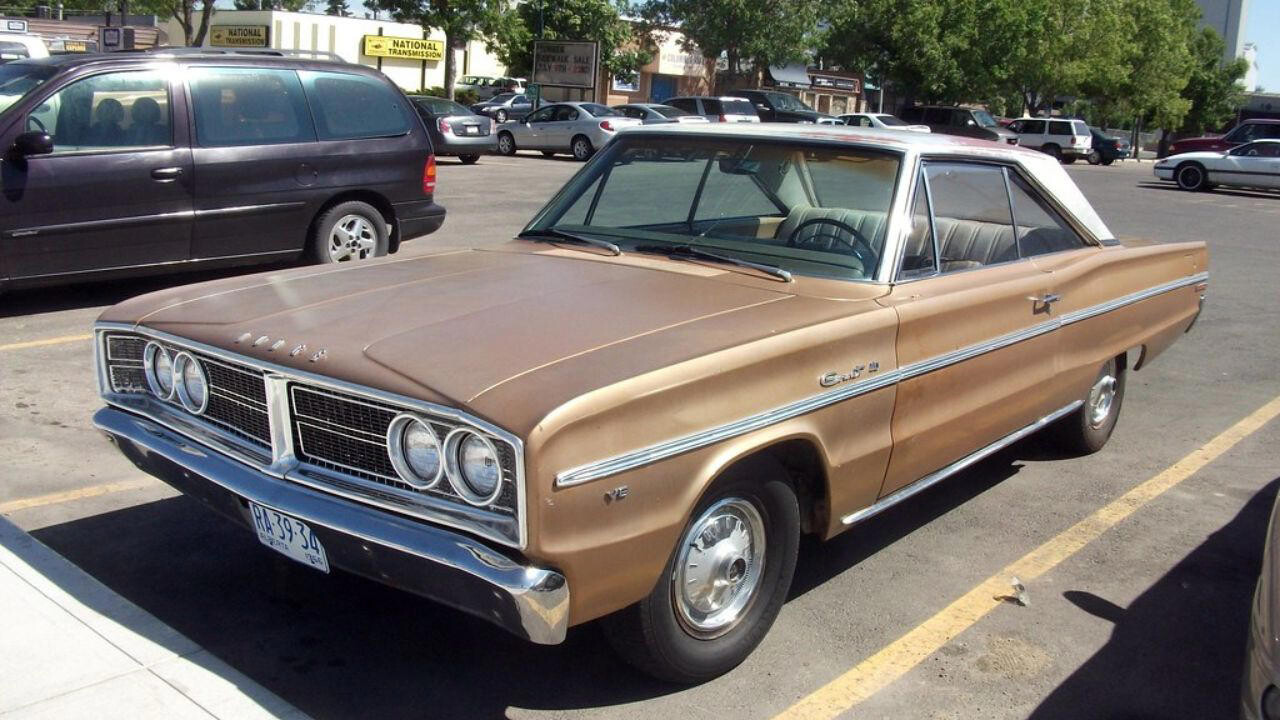
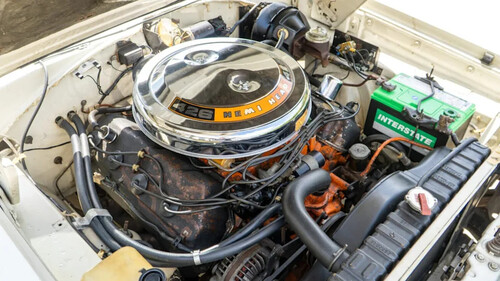
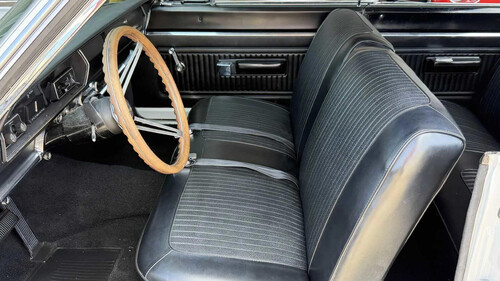
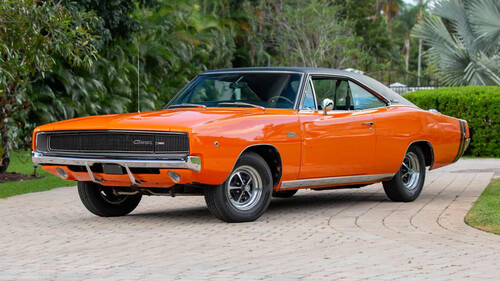
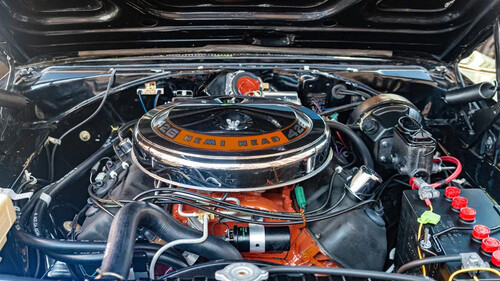
The 1966 Coronet was built to compete and it never backed downThe 1966 Coronet arrived as a quiet threat. It wore clean, almost conservative sheet metal, yet it was engineered to take on the toughest competition in American performance and prove that Dodge could run at the front on the street, the strip, and the oval. Built to compete from day one, it became the kind of car that rarely backed away from a challenge, whether that meant a green light, a timing tower, or the scrutiny of collectors decades later. Today the 1966 Dodge Coronet stands as one of the clearest expressions of how Detroit blended family-car practicality with race-bred hardware. Its story is not just about big horsepower, but about how a midsize platform, a few key options, and some determined engineers turned a workaday Dodge into a legend. The midsize Dodge that hid a mean streak In 1966 Dodge positioned the Coronet as a midsize model that could serve as a family sedan, a stylish hardtop, or a convertible. Underneath, it shared much with other Chrysler products, but the details mattered. Period descriptions of The Coronet describe it as a midsize model in Dodge’s lineup that became a foundation for legendary performance variants. The Coronet was available in multiple trims and body styles, from practical sedans to more upscale versions. Enthusiasts still single out the 1966 Dodge Coronet R/T as a classic American muscle car, with sleek lines wrapped around a powerful V8 that could turn heads wherever it went. One enthusiast group highlights how the Dodge Coronet combined visual presence with serious performance, which helped cement its reputation as a true American icon. At a glance, though, the Coronet looked almost understated compared with some of its rivals. Boxy fenders and straight character lines gave it a businesslike stance. That restraint turned out to be a feature, not a flaw, once Dodge started dropping its most serious engines between those fenders. The first Dodge with an optional HEMI The turning point came when Dodge decided to offer the big HEMI in a mainstream passenger car. Enthusiast accounts describe how the 1966 Dodge Coronet became the First Dodge with an Optional HEMI Engine, a milestone that turned an ordinary midsize into one of the ultimate sleepers of the muscle era. Under the hood, the 426 cubic inch V8 was the star. One detailed breakdown of the 1966 Coronet 500 HEMI convertible notes that this 426 engine used hemispherical combustion chambers, huge 2.25-inch intake valves, and a 10.25:1 compression ratio to deliver race-bred power in a street package. Those exact figures, 426 cubic inches, 2.25-inch intake valves, and 10.25:1 compression, defined a powerplant that was far from ordinary, especially in a car that could still haul groceries or kids. Technical specifications from period-correct sources describe the engine as an OHV V-8 with a cast-iron block and hemispherical combustion chamber cylinder heads. The official listing for the Coronet 500 HEMI spells it out under SPECIFICATIONS, with the line “Engine OHV V-8” and “Displacement 426-cu.in.” that confirm just how serious this package was. The 426-cu displacement figure became shorthand for factory-built dominance. The “Elephant Engine” and factory-built muscle Among enthusiasts, the 426 HEMI quickly earned a nickname. It was often called the Elephant Engine because of its massive size and power. That nickname captured both the physical bulk of the heads and block and the way the engine dominated on track. Commentary on the 1966 Dodge Coronet 426 HEMI often describes it as a classic example of raw factory-built muscle. The 426 HEMI, spelled in capital letters in many period references, was not just an engine option. It was a statement that Dodge intended to compete directly with the strongest rivals in American performance. Another enthusiast write-up on The Coronet emphasizes that this midsize Dodge served as a relatively unassuming but potent platform for the legendary 426 HEMI, highlighting its power and performance capabilities. Another perspective from Feb describes the Dodge Coronet 426 Hemi as one of the most iconic muscle cars ever produced, pointing out that the 1966 Dodge Coronet, when equipped with the legendary 426 Hemi engine, became a dream car for enthusiasts and a star in NASCAR and drag racing circles. That same account stresses the 426 figure again, tying it directly to the Hemi V8 that powered both street cars and competition machines. Homologation, NASCAR pressure, and the dragstrip The 1966 Coronet did not exist in a vacuum. Chrysler had a winner on its hands with the HEMI, but it needed to keep NASCAR and other sanctioning bodies satisfied. Homologation rules for 1966 required that engines used in competition be installed in a certain number of production cars. One detailed feature on a restored Coronet Deluxe HEMI explains that Chrysler had to build street-going versions to keep NASCAR and other rulemakers happy, which is how such ferocious engines ended up in relatively plain-looking Coronets. That same background helps explain why so many of these cars spent their lives at the dragstrip. The report on the Coronet Deluxe HEMI notes that the car in question spent most of its existence running quarter miles, with only minor trim and interior upgrades separating it from a pure race car. The A990 Hemi package, referenced in the Elephant Engine discussion, was part of this same push to dominate drag racing in the 1960s, and the Coronet became one of its most effective carriers. Another modern analysis of production cars that broke the 400 horsepower barrier points out that Hemi-powered 1966 Coronet and Satellite models are special not only because of their output but because they managed to exceed 400 horsepower without compromise. That piece notes that, however, the real significance of these Hemi models lies in how they brought race-level performance into showrooms, creating a direct link between NASCAR pits and suburban driveways. Street sleeper and family car in one Part of the 1966 Coronet’s charm lies in how ordinary it could appear. A Coronet 500 hardtop in a subtle color, with modest trim, could easily pass as a family car. Yet with a 426 under the hood, it was capable of humiliating flashier rivals. One enthusiast page explicitly calls the 1966 Dodge Coronet 500 HEMI one of the ultimate sleepers of the muscle era, a car that could surprise both on the streets and at the racetrack. Listings for surviving cars underline that dual nature. One marketplace description notes that the 1966 Dodge Coronet is essentially the same vehicle as the first generation Charger, except with a different fastback look and interior. The seller points out that The Coronet shared much of its structure with the Charger, which means it offered similar capability in a more understated wrapper. Even when owners did not choose the wildest engine, the Coronet could be specified in interesting ways. A modern video walkaround of a survivor car shows how quirky ordering patterns were. In that clip, Jul introduces himself as Tom from Rocketer Restorations and explains that they have just bought a 1966 Cornet, a two-door with a three-on-the-tree manual transmission and unusual option mix. The way Tom and Rocketer Restorations treat that Cornet as a time capsule underscores how even non-HEMI cars carried the same solid bones and period charm. How it looked from behind the wheel Contemporary footage and modern test drives help fill in the sensory side of the story. In one widely shared segment from Jay Leno’s Garage, Dec and Leno walk around a 1966 Dodge Coronet and then take it out on the road. At about six minutes in, Leno comments that “yeah this thing loves to breathe,” a simple line that captures how free-revving and eager a healthy big-block Coronet can feel. The video of Leno at the wheel shows the car pulling hard yet cruising calmly, exactly the dual personality Dodge was selling. Another video feature titled “Muscle Car Of The Week” spotlights a 66 Dodge Coronet 500 with a 426 under the hood. The host notes that these 66 Coronets have very cool 60s styling, and he always liked how the 500 trim level dressed up the basic body with just enough chrome and badging. The repeated use of the figures 66, 500, and 426 in that presentation reinforces how closely enthusiasts tie this model year, trim, and engine together. Period-correct restorations also show how owners used these cars. A feature on a 1966 Dodge Coronet R/T from Rev Muscle Cars traces ownership records ranging from 1968 to 1992 and concludes that the car was clearly well loved. The write-up then notes that, fast forward to around 2014, the car resurfaced after years as a pampered street machine, demonstrating how these Coronets often lived long, hard, but cherished lives. Technical character and driving dynamics Beyond raw power, the 1966 Coronet’s engineering gave it a distinct personality. The big-block layout with hemispherical heads created a broad torque curve that suited both drag racing and highway cruising. The Engine OHV design with a cast-iron block added weight over the front axle, but careful suspension tuning and wide rear tires helped channel that mass into straight-line traction. The 426-cu displacement was not the only choice, of course. Buyers could select smaller V8s or even six-cylinder engines, which made the Coronet accessible to a wide range of customers. Yet the existence of the HEMI option changed how the entire model line was perceived. Even a modest Coronet sedan carried a hint of menace, because everyone knew that some of these cars left the factory with 426 HEMI power. Modern owners often comment on the surprisingly refined ride. The long wheelbase and compliant suspension soak up bumps, while the steering and brakes remind drivers that this is still a 1960s machine that demands respect. That blend of comfort and rawness is part of the car’s enduring draw. Why collectors still chase the 1966 Coronet Rarity plays a significant role in the Coronet’s modern appeal. The 1966 Dodge Coronet 500 HEMI convertible, for example, is frequently described as extraordinarily rare. Detailed write-ups emphasize that only a small number were built, and that each surviving example combines the 426 engine, 2.25-inch intake valves, and 10.25:1 compression with open-air motoring. That combination explains why collectors treat such cars as blue-chip muscle. Even hardtop and sedan HEMI Coronets command attention. Enthusiast communities often point out that the Coronet and Satellite Hemi models are among the first production cars to legitimately break the 400 horsepower barrier. A modern analysis of early 400 horsepower production cars highlights the Hemi Coronet and Satellite as examples of street-legal machines that could exceed 400 horsepower without compromise, which adds another layer of historical significance. Beyond numbers, the Coronet represents a particular moment in American car culture. It arrived before insurance rates and emissions rules clamped down, when manufacturers could still sell near-race engines to ordinary buyers. The fact that a midsize Dodge could be ordered with a trunk full of luggage and a 426 HEMI up front captures that brief window perfectly. More from Fast Lane Only Unboxing the WWII Jeep in a Crate 15 rare Chevys collectors are quietly buying 10 underrated V8s still worth hunting down Police notice this before you even roll window down