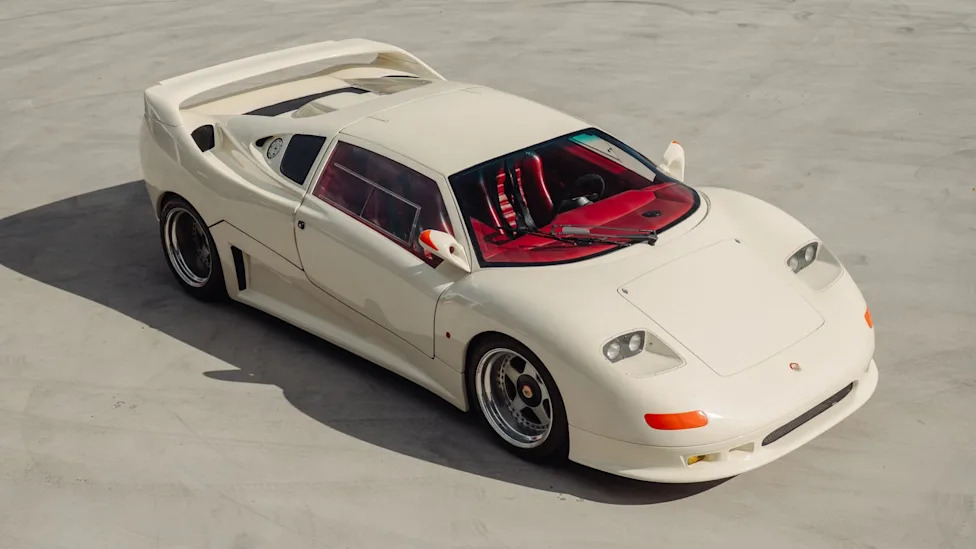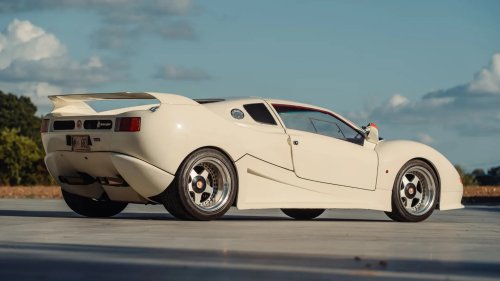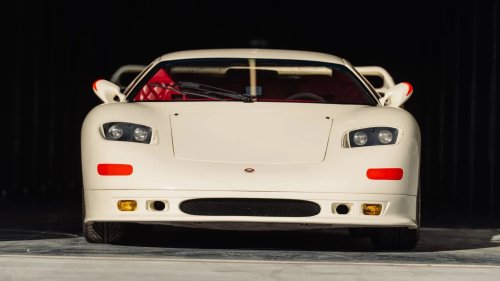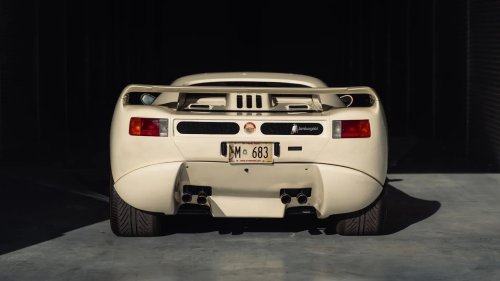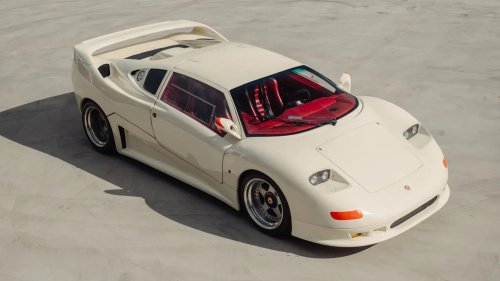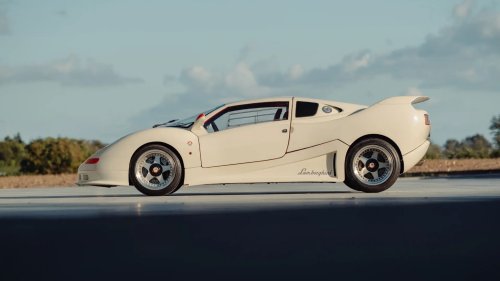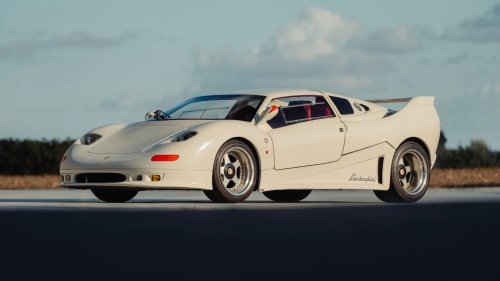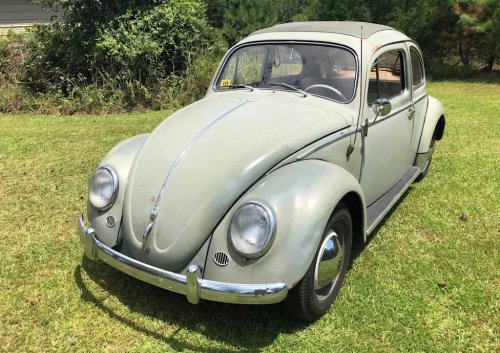























In the 1970s, American driveways became hotbeds of creativity thanks to the exploding popularity of kit cars. These home-assembled vehicles let you bolt wild-looking bodies onto humble underpinnings, usually from something affordable and reliable like a Volkswagen Beetle. One of the most radical examples to ever come out of this era was the Fiberfab Aztec 7, a car that looked like a futuristic concept from Italy but was actually a plastic-bodied VW in disguise.Fiberfab was one of the most prolific kit car manufacturers of the 1960s and 1970s, and the Aztec 7 was among its most visually aggressive designs. With dramatic proportions and gullwing doors, the Aztec 7 mimicked the ultra-rare Alfa Romeo Carabo concept while relying on accessible hardware from the VW Type 1. For many Americans, it was the closest thing to owning a supercar without spending Ferrari money. At the end of the day, the Aztec 7 symbolized a brief moment when imagination could be bolted together in your own garage. The Aztec 7 Was Designed To Resemble An Italian Concept Car ClassicItalianCarsForSaleThe Aztec 7’s styling was modeled directly after the 1968 Alfa Romeo Carabo, a one-off concept designed by Bertone’s Marcello Gandini. The Carabo introduced the wedge-shaped supercar language that would later define icons like the Lamborghini Countach and Lotus Esprit. It was low, sharp, and unapologetically futuristic. Fiberfab, spotting an opportunity, created a body that captured the Carabo’s essence but scaled it for backyard assembly.Visually, the Aztec 7 checked all the right boxes: pop-up headlights, a steeply raked windshield, deep rear louvers, and its most dramatic element: gullwing doors. The body was entirely fiberglass, with enough exaggerated flair to draw crowds at gas stations. But what made the design fascinating was how well it masked the car’s humble DNA. The stance was more aggressive than any Beetle ever built, and the proportions managed to convey a genuine mid-engine aesthetic, even though the engine sat in the back like any classic VW. In photos, it passed for a prototype supercar. However, in person, it made even mundane roads feel like the set of a sci-fi movie. Built On A Beetle Foundation Car Crushers ForumBeneath the show-stopping bodywork was the heart and bones of the Volkswagen Beetle. Like most kit cars of the era, the Aztec 7 was designed to bolt onto a standard VW Type 1 floorpan, making it easy for hobbyists to assemble using tools found in a typical garage. The Beetle’s rear-mounted engine layout simplified packaging and offered predictable performance, and because the chassis was self-contained and body-on-frame, no major welding or fabrication was required.Most Aztec 7s used the stock 1.6-liter air-cooled flat-four, which made around 60 horsepower. That wasn’t a lot, but the lightweight fiberglass body helped compensate. More creative builders sourced powerplants from donor vehicles like the Chevrolet Corvair or even rotary engines from Mazda RX cars.Thibsman (eBay) But the default formula (Volkswagen floorpan, engine, suspension, and transaxle) remained the core of the Aztec 7’s charm. While purists might scoff at the idea of a supercar lookalike with an economy car’s heart, the Beetle’s reliability, availability, and simplicity made it the ideal foundation for thousands of kit cars across North America. Surprisingly Ambitious For A Kit Car Thibsman (eBay)The Fiberfab Aztec 7 stood out not just for how it looked, but for how much it tried to achieve in a market where simplicity usually ruled. Most kit cars in the 1970s aimed to be lightweight and inexpensive, with basic open-top bodies and spartan interiors. The Aztec 7, by contrast, was packed with details that required significant time and effort to install. Chief among these was the gullwing door system, which used gas struts or hinges to lift the entire door panel vertically. While they added serious wow factor, they also added complexity. Installing them wasn’t for beginners.Thibsman (eBay)The ambitious nature extended inside the car as well. The fiberglass interior tub offered little in the way of pre-formed design, meaning builders had to fabricate dashboards, install gauges, mount seats, and handle upholstery from scratch. This led to a wide range of outcomes: some Aztec 7s ended up looking like show cars inside, while others bore all the marks of a garage build gone sideways. Still, the flexibility was part of the car’s appeal. No two Aztec 7s were exactly the same. You could make yours into a luxurious tourer or a minimalist street rocket. It all depended on your vision, and, of course, your patience. A Price Tag That Made Exotic Looks Accessible Thibsman (eBay)One of the main reasons kit cars like the Aztec 7 became popular was affordability. Fiberfab priced the Aztec 7 body kit at around $2,000 in the 1970s. That included the fiberglass body panels, mounting hardware, and basic instructions. In today's money, that’s roughly $15,000, and even with additional costs for paint, wheels, interior, and a donor Beetle, it was possible to build a head-turner for under $20,000 total. That was a fraction of what a Porsche or Lamborghini cost at the time.For a buyer with some mechanical know-how, it was a dream. You could create something that looked like a concept car from the future without breaking the bank. That democratization of design is what made kit cars such a cultural moment in the 1970s. The Aztec 7 was perhaps the ultimate expression of that dream: exotic styling, DIY spirit, and budget-level running costs. Even today, they remain relatively affordable on the used market, though well-built examples are getting harder to find. Expect to pay anywhere from $10,000 to $25,000, depending on build quality and condition. A Time Capsule Of The Kit Car Boom Thibsman (eBay)The Aztec 7 is a physical artifact from a time when kit cars represented freedom, expression, and counterculture cool. In the 1960s and 1970s, car customization was about horsepower, sure, but it was also about standing out. Mass-produced cars were occasionally dull, and import options were expensive. Kit cars gave the average enthusiast a way to build something funky, and the Aztec 7 was as funky as they came.Fiberfab itself was a pioneer in this world. Founded in the early 1960s, the company made everything from Corvette-inspired bodies to Cobra replicas. But the Aztec 7 was their wildest swing. It combined ambition with accessibility in a way few companies dared to replicate. The company eventually faded away, but cars like the Aztec 7 live on in backyards, garages, and dusty classifieds (unfortunately). They remind us that sometimes, the best cars aren’t mass-produced, but home-built, a little weird, and a lot of fun.